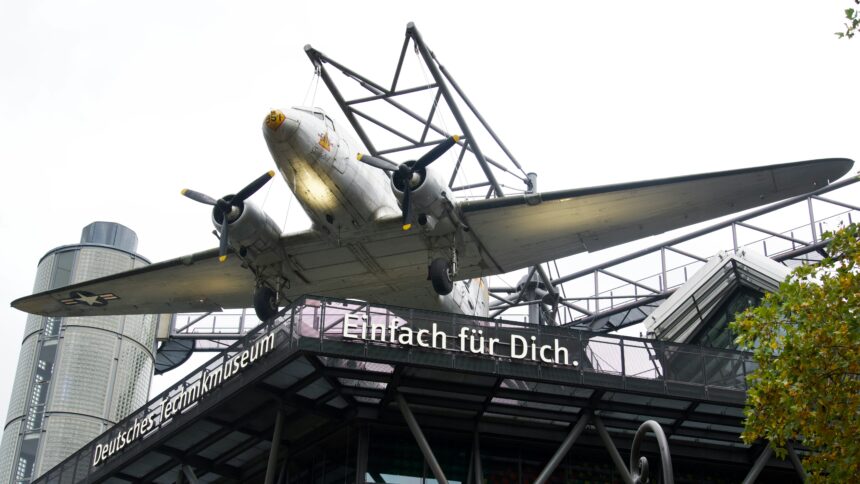
The Berlin Airlift, a monumental testament to human ingenuity and unwavering resolve, stands as a pivotal moment in the post-World War II era. Its success was not a foregone conclusion, but rather the result of meticulous planning, audacious execution, and a steadfast commitment to defending freedom. Central to this historic undertaking was the strategic securing and utilization of three vital air corridors, the arteries through which sustenance and hope flowed into the beleaguered city of West Berlin. These corridors, once mere lines on a map, transformed into lifelines, defying a Soviet blockade and preventing the complete subjugation of a democratic enclave within Soviet-controlled territory.
The ashes of World War II had barely cooled before the simmering tensions between the Allied powers and the Soviet Union erupted into a cold war. Germany, deeply scarred and divided, became a primary battleground for ideological conflict. Berlin, situated deep within the Soviet occupation zone, found itself a unique microcosm of this burgeoning global struggle. The city, like the country, was carved into four sectors: American, British, French, and Soviet. This arrangement, intended to facilitate post-war administration, quickly became a source of friction as ideological differences deepened.
The Seeds of Discord: Allied Reforms and Soviet Response
The Allied powers, seeking to rebuild a stable and democratic Western Germany, began implementing economic reforms. The introduction of the Deutsche Mark in the Western zones and West Berlin in June 1948 was a significant step, aimed at stabilizing the economy and fostering recovery. This move, however, was viewed by the Soviet Union as a direct affront, a deliberate attempt to consolidate Western influence and create a separate West German state, thereby undermining Soviet interests and its vision for a unified, albeit Soviet-aligned, Germany.
The Currency Reform: A Catalyst for Crisis
The currency reform, while essential for the economic viability of West Berlin, served as the immediate pretext for the Soviet Union’s drastic action. Soviet authorities, who had not adopted the new currency in their sector and had previously allowed goods to flow freely between sectors, abruptly halted all rail, road, and canal traffic into West Berlin. Their stated reason was to prevent the flow of counterfeit currency and to maintain order. However, the true intention was to force the Western Allies to abandon their reform and, ultimately, to cede control of West Berlin to the Soviet Union.
The Soviet Ultimatum: A Test of Will
The blockade was not a subtle maneuver; it was an overt act of aggression designed to starve West Berlin into submission. The city, with its population of over two million, was heavily reliant on supplies transported from the West. Without food, fuel, and essential goods, the city would inevitably fall. The Soviets believed that the Western powers, unwilling to risk a direct military confrontation, would eventually concede. This was a gamble based on the perception of Western weakness and a miscalculation of their commitment to the principles of self-determination and freedom.
The Strategic Importance of West Berlin
West Berlin represented more than just a city; it was a symbol of democracy and freedom within the heart of the communist bloc. Its continued existence as a free entity served as a beacon of hope for millions in Eastern Europe and a constant ideological challenge to Soviet dominance. Allowing it to fall would have been a devastating blow to Western prestige and a victory for communist expansionism. The decision to resist the blockade was therefore not merely a strategic one, but a moral imperative.
The Berlin Airlift, a pivotal event during the Cold War, relied on three vital air corridors established to facilitate the transport of supplies to West Berlin amidst the Soviet blockade. For a deeper understanding of the strategic significance and operational challenges faced during this historic operation, you can read a related article on the topic at In the War Room. This resource provides valuable insights into the logistics and geopolitical implications of the airlift, highlighting its impact on international relations during that era.
Securing the Lifeline: The Three Air Corridors
The immediate challenge facing the Western Allies was how to supply West Berlin without capitulating to Soviet demands. A military response risked escalating into a full-scale war, a prospect both sides sought to avoid. The only viable alternative was to airlift supplies. However, the airspace over Germany was governed by specific agreements made during the post-war conferences. These agreements stipulated three designated air corridors, narrow strips of sky connecting the Western zones of Germany to West Berlin.
The Tripartite Agreement: Defining the Skies
Following World War II, the Allied powers, through a series of agreements, established the framework for the administration of occupied Germany. Crucially, these agreements also delineated the designated routes for air traffic between the Western zones and West Berlin. These routes were not arbitrary; they were carefully chosen to avoid heavily populated areas and to ensure a relatively efficient flow of traffic. There were three primary corridors:
The Northern Corridor: The British Domain
The Northern Air Corridor, stretching from Hamburg to Berlin, was primarily designated for British air traffic. This corridor was the longest of the three, presenting unique navigational challenges due to its length and the need to traverse significant distances. The British Royal Air Force (RAF), along with civilian carriers contracted by the British government, would become instrumental in utilizing this vital artery.
The Southern Corridor: The American Domain
The Southern Air Corridor, originating from Frankfurt and extending to Berlin, was assigned to the United States Air Force (USAF) and American civilian operators. This corridor was geographically distinct from the northern one, offering a complementary route for airborne supplies. The Americans, with their vast logistical capabilities and a substantial fleet of transport aircraft, would play a leading role in the airlift’s overall success.
The Southwestern Corridor: The French Domain
The Southwestern Air Corridor, connecting West Berlin to the French sector of occupied Germany, was utilized by the French Air Force and French civilian aviation. While smaller in scope compared to the British and American contributions, the French corridor provided an essential supplementary route, contributing to the overall capacity and redundancy of the airlift.
The Soviet Acknowledgment and the Implicit Guarantee
It is crucial to understand that the existence and utilization of these air corridors were not a secret. They were part of established post-war agreements that the Soviet Union had, at least tacitly, acknowledged. While the Soviets could restrict land and water access, they had no explicit right to close these air corridors. The blockade was, in essence, a violation of these agreements, a brazen attempt to unilaterally change the established order. The Western Allies’ insistence on their right to use these corridors was a crucial legal and diplomatic front in their stand against the blockade.
The Herculean Task: Sustaining a City Through the Air

The decision to launch an airlift was met with skepticism by many. The sheer scale of the operation, the logistical complexities, and the prevailing belief that it was an impossible feat were daunting. However, the alternative – abandoning West Berlin – was unthinkable. Thus, the “Operation Vittles” (US) and “Operation Plainfare” (UK) commenced, embarking on a mission that would redefine the capabilities of air transport and etch itself into the annals of history.
The Initial Challenges: Bridging the Gap
The initial days of the airlift were fraught with immense challenges. The available transport aircraft were not designed for the sustained, high-volume operations that the blockade demanded. Aircraft like the Douglas C-47 Skytrain, though reliable, had limited cargo capacity. Moreover, the infrastructure in West Berlin – its airfields, unloading facilities, and ground transportation networks – was not equipped to handle the influx of aircraft and supplies.
Building Airfield Capacity: From Grass to Concrete
Tempelhof Airport in West Berlin, a symbol of the city’s resilience, became the central hub of the airlift. However, its runways and facilities were quickly overwhelmed. Allied engineers and German workers toiled tirelessly to expand and improve the airfields. Runways were extended, new taxiways were constructed, and cargo handling equipment was brought in. This rapid infrastructure development was crucial for increasing the number of landings and takeoffs per day.
The Aircraft of the Airlift: Wings of Hope
The airlift saw a diverse array of aircraft pressed into service, each contributing to the colossal effort. The backbone of the operation was initially the C-47 Skytrain, but as the airlift progressed, larger and more capable aircraft were introduced, significantly boosting the tonnage delivered.
The Douglas C-47 Skytrain: The Workhorse
The C-47 Skytrain, a military version of the Douglas DC-3, was the workhorse of the early airlift. Its reliability and maneuverability made it ideal for operating from the sometimes-challenging runways of West Berlin. Despite its limitations in cargo capacity, thousands of sorties were flown by this iconic aircraft.
The C-54 Skymaster: The Game Changer
The introduction of the Douglas C-54 Skymaster, a four-engine heavy transport aircraft, marked a significant turning point in the airlift. With its substantially larger cargo hold, the C-54 could carry much heavier loads of coal, flour, and other essential supplies. Its deployment allowed for a dramatic increase in the amount of tonnage delivered daily, transforming the airlift from a desperate measure into a sustainable operation.
The Avro York and Handley Page Hastings: British Contributions
The British contributed significantly with aircraft like the Avro York and the Handley Page Hastings. These aircraft, though perhaps less numerous than their American counterparts, played a vital role in carrying supplies, particularly coal, which was essential for heating and powering West Berlin’s industries.
The Scale of Operation: Numbers Speak Louder Than Words
The sheer scale of the Berlin Airlift is difficult to comprehend. Over 15 months, from June 1948 to May 1949, Allied aircraft flew more than 278,000 missions. These flights transported approximately 2.3 million tons of essential supplies, including food, coal, medicine, and raw materials. The average daily tonnage delivered grew from a few hundred tons in the early days to over 8,000 tons at its peak.
The “Rosinenbomber” and the Spirit of Generosity
Beyond the essential supplies, the pilots also carried a precious cargo of hope and goodwill. In a touching gesture that captured the spirit of the airlift, pilots began dropping small parachutes laden with candy for the children of West Berlin. These “Rosinenbomber” (raisin bombers), as they became known, became a powerful symbol of friendship and solidarity, forging a deep emotional connection between the people of Berlin and the airmen who sustained them.
Navigating the Corridors: Precision, Protocol, and Peril

The success of the airlift hinged not only on the number of aircraft and the volume of supplies but also on the precise and disciplined utilization of the three air corridors. These narrow aerial highways were constantly monitored, and adherence to strict flight regulations was paramount to avoid collisions and maintain the flow of traffic.
The ATC Challenge: Orchestrating the Sky
Air Traffic Control (ATC) in the congested skies over Germany and Berlin was an immense undertaking. With hundreds of aircraft operating simultaneously within the limited confines of the corridors, maintaining separation and ensuring a safe landing sequence was a constant challenge.
The Role of Radar and Radio Communication
Advanced radar systems and robust radio communication networks were essential for tracking aircraft, managing flight paths, and relaying critical information between aircraft and ground control. The precision of these systems allowed controllers to guide aircraft through the corridors with minimal deviation.
The Rules of the Corridor: A Tight Schedule
The agreement establishing the air corridors also stipulated specific rules for their use. These included altitude restrictions, speed limits, and designated flight paths within each corridor. The tight scheduling of takeoffs and landings was crucial to maximize the efficiency of the airlift. Aircraft were dispatched at precise intervals, ensuring a continuous flow without undue congestion.
The Threat of Soviet Interference: A Constant Shadow
While the Soviets did not militarily challenge the air corridors themselves, the constant threat of interference, whether through jamming communications or creating navigational hazards, was a persistent concern. Allied forces remained vigilant, prepared to respond to any escalation. The pilots operated under the implicit understanding that any misstep could have severe consequences.
The Berlin Airlift, a pivotal event during the Cold War, relied on three crucial air corridors that facilitated the transport of supplies to West Berlin amidst the Soviet blockade. Understanding the significance of these corridors provides insight into the logistical challenges faced by the Allies during this tense period. For a deeper exploration of the strategies and operations involved, you can read more in this related article on the topic. The importance of these air routes cannot be overstated, as they were vital for maintaining the morale and sustenance of the city’s inhabitants. For further details, check out this related article.
The Soviet Capitulation: A Victory for Resilience
| Corridor | Length (miles) | Flights per day | Total tonnage |
|---|---|---|---|
| Northern Corridor | 218 | 100 | 1,433,000 |
| Central Corridor | 176 | 150 | 1,239,000 |
| Southern Corridor | 235 | 100 | 1,689,000 |
The relentless and ultimately successful Berlin Airlift had a profound impact on the geopolitical landscape. The Soviet blockade, intended to force the West’s hand, instead resulted in a humiliating defeat and a significant blow to Soviet prestige. The sheer logistical prowess and unwavering determination of the Western Allies demonstrated their commitment to their allies and their willingness to defend democratic values.
The Economic and Psychological Toll on the Soviets
The blockade proved to be a costly endeavor for the Soviet Union, both economically and psychologically. The international condemnation of their actions, coupled with the failure to achieve their objective, weakened their diplomatic standing. The image of the West’s ability to sustain a besieged city through the air contrasted sharply with the perception of Soviet authoritarianism.
The Reopening of Land and Water Routes
By May 1949, the Soviets recognized the futility of their blockade. The Western Allies had not only sustained West Berlin but had also demonstrated their resolve and capacity for sustained logistical operations. Facing international pressure and the undeniable success of the airlift, the Soviet Union lifted the blockade. The land and water routes into West Berlin were reopened, marking the end of a tense 11-month standoff.
The Lasting Legacy: A Symbol of Freedom
The Berlin Airlift transcended its immediate purpose of supplying a city. It became a powerful symbol of freedom, resilience, and international cooperation. It solidified the Western alliance, demonstrated the effectiveness of air power in a non-combat role, and underscored the importance of resolute action in the face of aggression.
The Strengthening of NATO and Western Resolve
The crisis highlighted the need for a collective security arrangement among Western nations. The successful airlift contributed to the momentum that led to the formation of the North Atlantic Treaty Organization (NATO) in April 1949, a military alliance designed to deter Soviet aggression. The confidence gained from overcoming the blockade bolstered Western resolve and set the stage for the decades-long Cold War.
The story of the Berlin Airlift, and specifically the securing of its three air corridors, is a testament to human courage, ingenuity, and the enduring power of freedom. It is a stark reminder that even in the face of overwhelming odds, determined individuals and nations can overcome seemingly insurmountable challenges, securing not just physical sustenance, but the very essence of liberty.

How 90 Seconds Kept 2 Million People Alive
FAQs
What was the Berlin Airlift?
The Berlin Airlift was a massive humanitarian effort to supply the citizens of West Berlin with food, fuel, and other necessities after the Soviet Union blockaded the city in 1948.
What were the three air corridors used during the Berlin Airlift?
The three air corridors used during the Berlin Airlift were the Hamburg Corridor, the Southwest Corridor, and the Northwest Corridor. These routes were used by the Western Allies to fly supplies into West Berlin.
How long did the Berlin Airlift last?
The Berlin Airlift lasted for 11 months, from June 1948 to May 1949. During this time, over 200,000 flights delivered approximately 2.3 million tons of supplies to West Berlin.
What was the significance of the Berlin Airlift?
The Berlin Airlift was significant because it demonstrated the resolve of the Western Allies to support West Berlin in the face of Soviet aggression. It also marked a turning point in the Cold War, as it showed that the United States and its allies were willing to take a stand against Soviet expansion.
How did the Berlin Airlift end?
The Berlin Airlift ended on May 12, 1949, when the Soviet Union lifted the blockade of West Berlin. The Western Allies continued to supply the city by air for several months after the blockade was lifted, to ensure that West Berlin had enough supplies to last through the transition.