The blinding glare of the desert sun was a fitting backdrop for the dawn of a new era in warfare. Operation Desert Storm, a pivotal conflict that reshaped the geopolitical landscape, was not solely defined by tank battles and aerial dogfights. Beneath the visible operations, a silent, invisible war was being waged – a war of electronic signals, a war of information denial, and a war of strategic advantage. This was the domain of Coalition Electronic Warfare (EW), a sophisticated and integrated effort that proved instrumental in achieving swift and decisive victory for the allied forces.
The Coalition’s decision to embark on Operation Desert Storm was not taken lightly. Iraq, under Saddam Hussein, possessed a formidable conventional military, bolstered by a surprisingly sophisticated and Soviet-derived air defense network. This network, while technologically inferior to Western systems, was extensive and designed to inflict significant casualties on any attacking force. To overcome this threat and to ensure the safety of its own personnel, the Coalition recognized that achieving and maintaining electronic dominance was not merely desirable; it was an absolute imperative.
Understanding the Threat Landscape
The Iraqi air defense system, a layered network of early warning radars, surface-to-air missile (SAM) sites, and anti-aircraft artillery (AAA), represented the primary electronic threat. These systems were interconnected, with radars designed to detect incoming aircraft and cue SAM batteries to engage. The sheer volume of these systems, coupled with their potential to disrupt Coalition air operations, made them a prime target for EW operations. Beyond the air defense network, Iraq also possessed electronic intelligence (ELINT) capabilities designed to intercept Coalition communications and radar emissions, seeking to gain situational awareness and potentially identify vulnerabilities.
The Strategic Objectives of EW
The overarching strategic objective of Coalition EW was to blind, deafen, and confuse the Iraqi military, thereby degrading its ability to wage war and protecting Coalition assets. This translated into several key tactical and operational goals:
Degrading Air Defense Capabilities
A primary aim was to neutralize the effectiveness of Iraqi SAMs and AAA. This involved a multi-pronged approach, including jamming their guidance radars, deceiving their seekers, and making Coalition aircraft virtually invisible to their detection systems.
Disrupting Command and Control (C2)
The Iraqi military relied on established communication channels to coordinate its forces. EW efforts targeted these channels, disrupting voice and data transmissions, sowing confusion, and preventing timely responses to Coalition actions.
Protecting Coalition Forces
By neutralizing enemy threats and denying them critical information, EW directly contributed to the safety and survivability of Coalition aircrews, ground troops, and naval assets.
Gaining Information Superiority
While denying the enemy information, Coalition EW also focused on gathering intelligence through signals intelligence (SIGINT) and electronic intelligence (ELINT) to build a comprehensive picture of Iraqi capabilities and intentions.
During Operation Desert Storm, coalition electronic warfare played a crucial role in disrupting enemy communications and enhancing the effectiveness of allied forces. A related article that delves deeper into the strategies and technologies employed during this operation can be found at this link. This resource provides valuable insights into the impact of electronic warfare on the battlefield and its significance in modern military operations.
The Pillars of Coalition Electronic Warfare
Coalition EW was not a monolithic entity but rather a carefully orchestrated symphony of diverse capabilities, technologies, and tactics. Its success stemmed from the synergistic integration of these elements, each playing a crucial role in achieving the overall strategic objectives.
Airborne Electronic Warfare Platforms
The skies above the Persian Gulf and Iraq were patrolled by a formidable array of dedicated EW aircraft, acting as the eyes and ears of the electronic battlefield. These platforms, equipped with sophisticated jamming, deception, and reconnaissance systems, were at the forefront of the EW effort.
The EA-6B Prowler: The “Hunter-Killer” of the Skies
The Grumman EA-6B Prowler, a venerable but highly effective platform, was a cornerstone of US Navy and Marine Corps EW operations. Its advanced ALQ-99 jamming system could flood enemy radar frequencies with overwhelming signals, effectively rendering them useless. The Prowler’s ability to loiter for extended periods allowed it to provide continuous protection for strike packages, escorting them through heavily defended airspace.
The EC-130H Compass Call: Disrupting the Enemy’s Voice
The Lockheed EC-130H Compass Call, operated by the US Air Force, specialized in disrupting enemy command and control communications. Its sophisticated electronic support measures (ESM) could detect and locate Iraqi radio transmissions, while its powerful jamming capabilities could effectively silence enemy voices and data links. This directly impacted the Iraqi ability to coordinate their ground forces and react to Coalition advances.
The RC-135 Rivet Joint: The Intelligence Gathering Backbone
While not strictly a jamming platform, the Boeing RC-135 Rivet Joint was an indispensable element of the EW picture. Its advanced SIGINT and ELINT sensors collected vast amounts of electronic intelligence, providing invaluable insights into the operational status and deployment of Iraqi electronic systems. This intelligence fed directly into targeting decisions and EW planning, ensuring that jamming efforts were precisely targeted and most effective.
Ground-Based Electronic Warfare
The EW effort was not confined to the air. Ground-based EW systems played a vital role in complementing airborne operations and extending the reach of electronic disruption.
Vehicle-Mounted Jamming Systems
Many Coalition ground vehicles were equipped with vehicle-mounted jamming systems. These systems provided localized electronic protection for convoys and units, disrupting enemy attempts to communicate with or target them.
EW Support Teams
Specialized EW support teams were deployed alongside ground forces, providing on-the-ground electronic intelligence gathering and tactical jamming support. Their ability to adapt to evolving battlefield conditions and provide immediate EW solutions was crucial for the success of ground operations.
Electronic Warfare from Naval Platforms
The US Navy, with its carrier battle groups and amphibious forces, also contributed significantly to the EW effort.
Ship-Based EW Systems
Naval vessels were equipped with sophisticated EW suites capable of detecting, identifying, and jamming enemy radar and missile guidance systems. This provided a critical defensive layer for the fleet and supported airborne operations in the region.
Electronic Warfare Capabilities of Strike Aircraft
Many Coalition strike aircraft, such as the F-16 Fighting Falcon and the F-15 Eagle, carried their own integrated EW pods and systems. These allowed them to self-protect against radar threats and also contribute to the broader EW picture by jamming enemy sensors.
Tactics and Techniques: The Art of Electronic Deception and Suppression

The mere possession of advanced EW technology is insufficient without skilled operators and well-defined tactics. Coalition EW forces employed a range of sophisticated techniques to achieve their objectives, often in a highly dynamic and unpredictable environment.
Electronic Support Measures (ESM): Listening to the Enemy
The first step in any EW operation is to understand what the enemy is doing electronically. ESM systems were employed to passively detect and analyze enemy radar emissions, communications, and other electronic signals. This allowed for the identification of radar types, frequencies, and locations, providing crucial intelligence for targeting and jamming.
Electronic Countermeasures (ECM): Jamming the Signals
ECM, commonly referred to as jamming, involved the intentional transmission of signals to disrupt enemy radar and communications. Coalition EW platforms employed various jamming techniques, including:
Spot Jamming
Targeting specific enemy radar frequencies with powerful jamming signals, rendering them ineffective.
Barrage Jamming
Broad spectrum jamming that floods a wide range of frequencies, creating a significant electronic “fog.”
Deception Jamming
Transmitting false signals to mislead enemy sensors, such as creating ghost targets or altering the apparent speed or altitude of Coalition aircraft.
Electronic Counter-Countermeasures (ECCM): Fighting the Jammer
The Iraqis were not passive targets. They employed their own ECCM techniques to try and overcome Coalition jamming. This involved frequency hopping, sophisticated signal processing, and directional antennas. Coalition EW planners had to anticipate these countermeasures and adapt their jamming strategies accordingly, creating a constant cat-and-mouse game.
Radar Warning Receivers (RWRs): The Pilot’s Electronic Sixth Sense
RWRs fitted to Coalition aircraft provided pilots with critical information about the presence of enemy radar. These systems could identify the type of radar, its bearing, and its engagement status, allowing pilots to take evasive action or request EW support.
Decoy and Deception Operations
Beyond active jamming, the Coalition also employed passive deception tactics. This included the use of expendable decoys that mimicked the radar signature of Coalition aircraft, drawing enemy fire away from real targets. Electronic warfare also encompassed the use of spoofing technologies to create phantom threats, forcing the Iraqis to expend precious resources and divert attention from the main thrust of Coalition operations.
The Impact of EW on Desert Storm Operations

The strategic advantage conferred by Coalition EW was profound and manifested in numerous ways throughout Operation Desert Storm. The ability to operate with relative impunity in contested airspace was a direct result of successful EW operations.
Air Superiority Achieved Swiftly
The initial phases of Desert Storm focused on achieving air superiority. Coalition EW played a critical role in suppressing and neutralizing Iraqi air defenses, allowing US and allied aircraft to dominate the skies. This enabled unhindered bombing campaigns against Iraqi military infrastructure, command centers, and logistics.
Enabling Precision Strikes
The sophisticated EW capabilities allowed Coalition strike aircraft to penetrate deep into Iraqi territory and deliver precision-guided munitions with minimal losses. The ability to suppress enemy radars and missile guidance systems ensured that high-value targets could be destroyed with accuracy and efficiency.
Protecting Ground Forces
As Coalition ground forces advanced into Kuwait and Iraq, EW provided a crucial protective umbrella. By disrupting Iraqi command and control and denying them the ability to effectively target Coalition formations, EW significantly reduced the risk to ground troops.
Denying the Enemy Information
The constant electronic jamming and disruption made it incredibly difficult for the Iraqi military to assess the Coalition’s movements, intentions, and strengths. This information asymmetry was a significant strategic advantage, fostering confusion and paralysis within the Iraqi command structure.
Minimizing Coalition Casualties
Perhaps the most significant impact of EW was on the preservation of Coalition lives. The ability to neutralize enemy threats before they could engage Coalition aircraft and ground units directly contributed to the remarkably low casualty rates experienced by the allied forces.
During Operation Desert Storm, coalition electronic warfare played a crucial role in achieving air superiority and disrupting enemy communications. The effectiveness of these tactics is explored in detail in a related article that examines the strategic implementation of electronic warfare systems during the conflict. For further insights into this topic, you can read more about it in the article available at In the War Room. This analysis highlights how technological advancements in electronic warfare significantly impacted the outcome of the operation and set the stage for future military engagements.
Lessons Learned and the Future of Electronic Warfare
| Metrics | Data |
|---|---|
| Number of electronic warfare aircraft | Approximately 100 |
| Electronic warfare missions conducted | Over 1,000 |
| Electronic warfare systems used | ALQ-99 jamming pods, AGM-88 HARM missiles, AN/ALQ-184 jamming pods |
| Effectiveness of electronic warfare | Significantly disrupted Iraqi air defense and communication systems |
Operation Desert Storm served as a powerful validation of the importance of EW in modern warfare. The lessons learned from this conflict have continued to shape the development and deployment of EW capabilities in subsequent conflicts and have underscored its enduring strategic relevance.
The Importance of Integrated EW
Desert Storm demonstrated that EW is most effective when it is fully integrated with other military operations, rather than being a standalone capability. The seamless coordination between air, ground, and naval EW assets, intelligence gathering, and tactical planning proved essential for success.
The Ever-Evolving Threat Landscape
The conflict highlighted the constant evolution of EW threats and countermeasures. As EW technologies advance, so too do the methods employed to defeat them. This necessitates a continuous investment in research and development to stay ahead of potential adversaries.
The Rise of Cyber EW
The lines between traditional EW and cyber warfare are increasingly blurring. The ability to exploit and disrupt enemy electronic systems through both radio frequency emissions and cyber intrusions represents the next frontier of electronic conflict. Future EW strategies will undoubtedly incorporate these hybrid approaches.
The Strategic Imperative Remains
In an increasingly complex and interconnected world, the ability to control the electromagnetic spectrum remains a critical determinant of military success. As witnessed in Desert Storm, electronic warfare is not merely a supporting role; it is a fundamental strategic advantage that can enable decisive victories and protect national interests. The silent war waged in the electronic domain proved to be a thunderous success, forever altering the perception of warfare and solidifying EW’s place as an indispensable component of modern military power.
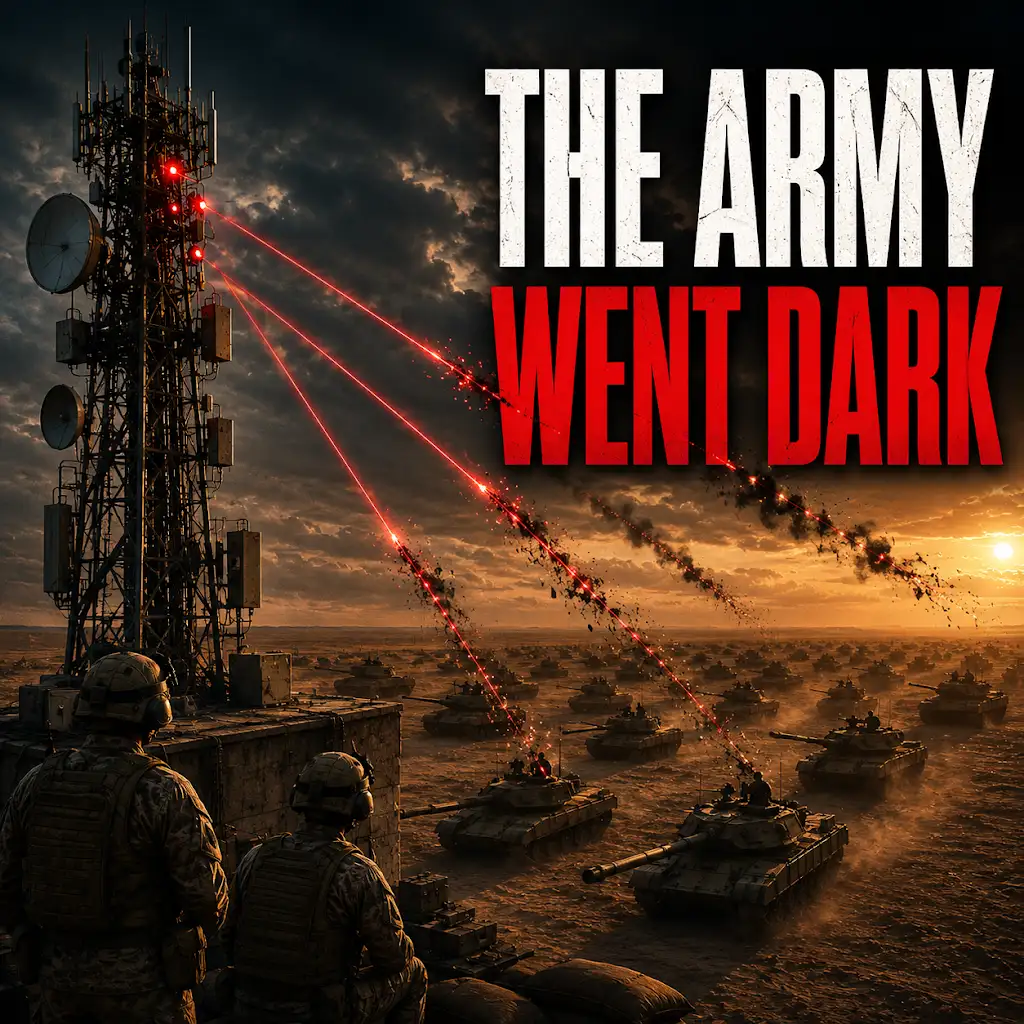
The Invisible Attack That Crippled Iraq’s Army | Desert Storm Documentary
FAQs
What was the role of electronic warfare during Desert Storm?
Electronic warfare played a crucial role in disrupting and degrading Iraqi communication and radar systems, as well as in protecting coalition aircraft and ground forces from enemy electronic threats.
What electronic warfare capabilities did the coalition forces utilize during Desert Storm?
The coalition forces utilized a range of electronic warfare capabilities, including jamming and spoofing of enemy radar and communication systems, as well as electronic countermeasures to protect their own forces from enemy electronic threats.
How did electronic warfare contribute to the success of coalition operations during Desert Storm?
Electronic warfare contributed to the success of coalition operations by disrupting and degrading Iraqi air defense systems, communication networks, and radar systems, which allowed coalition forces to operate with reduced risk and greater effectiveness.
What were some of the key electronic warfare challenges faced by the coalition forces during Desert Storm?
Some of the key electronic warfare challenges faced by the coalition forces included the need to counter sophisticated enemy radar and communication systems, as well as the need to protect their own forces from enemy electronic threats.
What lessons were learned from the electronic warfare operations during Desert Storm?
The electronic warfare operations during Desert Storm highlighted the importance of integrating electronic warfare capabilities into military operations, as well as the need for continued investment in electronic warfare technologies and training.