Mikhail Gorbachev’s tenure as the leader of the Soviet Union marked a seismic shift in the nation’s history, ushering in an era of unprecedented change that ultimately led to its dissolution. His policies of Glasnost (openness) and Perestroika (restructuring) were designed to revitalize a stagnant Soviet system, but their unintended consequences proved far more profound, irrevocably altering the geopolitical landscape and the lives of millions. Gorbachev, a figure who oscillated between being hailed as a reformer and reviled as a destroyer, remains a central and complex character in understanding the twilight of the Soviet empire.
The Soviet Union in the mid-1980s was a colossus burdened by internal contradictions and external pressures. Decades of rigid central planning had led to widespread economic inefficiency, technological backwardness, and a pervasive sense of apathy. The arms race with the West, while a source of national pride for some, placed an unsustainable strain on the Soviet economy. Furthermore, a growing disconnect existed between the pronouncements of the Communist Party and the lived realities of its citizens, fostering a deep-seated cynicism. It was into this environment that Mikhail Gorbachev ascended to power in 1985, inheriting a system ripe for introspection and, as it turned out, radical overhaul.
The “Era of Stagnation” and its Consequences
Before Gorbachev, the Soviet Union was characterized by what became known as the “Era of Stagnation” under Leonid Brezhnev. This period, roughly from the late 1970s to the early 1980s, witnessed a decline in economic growth, a lack of innovation, and an increasing reliance on the extraction of natural resources. The centrally planned economy, designed to mobilize resources for industrialization and military might, proved incapable of adapting to the complexities of a modern, information-driven world. Consumer goods were often of poor quality and in short supply, leading to widespread black markets and a decline in living standards for many.
Economic Paralysis and the Need for Change
The Soviet economy was increasingly falling behind its Western counterparts. The emphasis on heavy industry and military production at the expense of consumer goods and technological advancement created a lop-sided and inefficient system. Attempts at incremental reforms in the past, such as those under Alexei Kosygin in the late 1960s, had been stifled by conservative elements within the Party. Gorbachev recognized that a more fundamental and far-reaching approach was necessary to address the deep-seated structural problems.
Social Discontent and the Erosion of Ideals
Beneath the veneer of ideological unity, social discontent was simmering. The lack of political freedoms, the suppression of dissent, and the pervasive corruption within the Party apparatus alienated a significant portion of the population. The official ideology, once a source of inspiration, had become hollow rhetoric for many. Gorbachev understood that genuine revitalization required not just economic adjustments but also a reopening of the channels of communication and a re-engagement with the populace.
Mikhail Gorbachev played a pivotal role in the transformation of the Soviet Union during the late 20th century, implementing policies of glasnost and perestroika that aimed to reform the political and economic landscape. For a deeper understanding of Gorbachev’s impact and the subsequent dissolution of the Soviet Union, you can read a related article that explores these significant historical events in detail. Check it out here: Gorbachev and the Soviet Union.
Glasnost: The Unveiling of Truth and its Unintended Repercussions
Glasnost, meaning “openness,” was perhaps the most revolutionary of Gorbachev’s policies. It was intended to foster a more informed public discourse, to expose corruption and inefficiency, and to encourage constructive criticism within the Soviet system. However, the unleashing of long-suppressed truths and grievances had consequences far beyond what Gorbachev likely anticipated, acting as a catalyst for national awakening and ultimately, secessionist movements.
Breaking the Silence: Freedom of Expression and Information
Gorbachev’s decision to loosen censorship was a radical departure from Soviet tradition. Suddenly, the media began to report on issues previously deemed taboo. Historical injustices, such as the Holodomor (the Ukrainian famine of the 1930s) and the Stalinist purges, were openly discussed. Previously banned literature and films found their way into public consumption, sparking widespread intellectual and cultural ferment.
The Re-examination of Soviet History
The critical re-examination of Soviet history under Glasnost was a profound and often painful process. Citizens and historians alike began to question the narrative of Soviet triumph and the justifications for past atrocities. This historical reckoning chipped away at the legitimacy of the Communist Party, which had built its authority on a carefully curated and often falsified historical account.
The Rise of Independent Media and Public Discourse
The emergence of independent newspapers, journals, and television programs allowed for a diversity of opinions and perspectives. Public forums and debates, once unthinkable, became commonplace. This newfound freedom of expression fostered a sense of empowerment among citizens and created a space for organized opposition to the existing regime.
Glasnost’s Unforeseen Consequences: Fueling Nationalist Sentiments
While Glasnost aimed to strengthen the Soviet Union by addressing its flaws, it inadvertently provided fertile ground for nationalist aspirations to flourish. The exposure of historical grievances and the newfound freedom to express cultural identities allowed long-suppressed ethnic and national sentiments to re-emerge with force.
The Reawakening of National Identities
Within the diverse Soviet republics, Glasnost allowed for the reassertion of distinct national identities that had been suppressed under decades of Sovietization. Cultural organizations, historical societies, and nationalist movements began to gain traction, advocating for greater autonomy and, in some cases, outright independence.
The Baltic States: Pioneers of Independence
The Baltic states of Estonia, Latvia, and Lithuania, with their distinct histories of independent statehood prior to Soviet annexation, were at the forefront of the independence movement. Glasnost provided them with the opportunity to openly express their desires for secession, and their efforts served as an inspiration to other republics.
Perestroika: Restructuring the Economic and Political Landscape

Perestroika, meaning “restructuring,” was Gorbachev’s ambitious attempt to reform the Soviet economy and political system. It involved introducing market-like mechanisms into the planned economy, decentralizing decision-making, and allowing for a degree of political pluralism. The aim was to create a more dynamic and efficient Soviet Union, but the implementation of these reforms proved to be a complex and often chaotic undertaking.
Economic Reforms: Towards a Mixed Economy
Gorbachev’s economic reforms were a delicate balancing act. He sought to infuse socialist principles with market elements, but the transition was fraught with challenges. The old command economy was dismantled without a fully functional market system in place, leading to shortages, inflation, and a decline in production in many sectors.
Decentralization and Enterprise Autonomy
One key aspect of Perestroika was the decentralization of economic decision-making. Enterprises were given more autonomy, and the concept of self-financing was introduced. However, this often led to a lack of coordination and a struggle for resources between different enterprises and regions.
The Introduction of Market Mechanisms
Gorbachev experimented with introducing elements of market economics, such as limited private enterprise, cooperatives, and greater price flexibility. However, the deeply ingrained habits of central planning and the resistance from bureaucratic structures made these reforms difficult to implement effectively. The result was often confusion and a decline in overall economic output.
Political Reforms: Towards a More Democratic System
Beyond economic restructuring, Perestroika also encompassed significant political reforms. Gorbachev sought to democratize the Soviet political system, loosen the Communist Party’s monopoly on power, and introduce a greater degree of accountability.
The Establishment of the Congress of People’s Deputies
A significant step was the establishment of the Congress of People’s Deputies in 1989, a semi-free elected body that provided a platform for dissent and public debate. This marked a crucial shift away from the absolute control of the Communist Party.
The Erosion of the Party’s Monopoly on Power
The introduction of multi-candidate elections and the growing influence of the Congress of People’s Deputies gradually eroded the Communist Party’s once-absolute monopoly on power. This opened the door for new political forces to emerge and challenge the established order.
The Unraveling of the Union: From Reform to Collapse
The combined forces of Glasnost and Perestroika, while intended to strengthen the Soviet Union, ultimately unleashed centrifugal forces that led to its disintegration. The newfound freedoms allowed long-suppressed nationalisms to reassert themselves, and the economic dislocations of Perestroika created widespread discontent and instability.
The Growing Power of Republics and Nationalist Movements
As the central government in Moscow weakened, the individual Soviet republics began to assert their sovereignty. Nationalist movements, emboldened by Glasnost and the perceived ineffectiveness of the central authorities, gained momentum. Declarations of sovereignty and then outright independence became increasingly common.
The Baltic States’ Declaration of Independence
Estonia, Latvia, and Lithuania were among the first to declare their independence, triggering a complex and often tense process of negotiation and resistance with the central Soviet government. Their success inspired other republics to follow suit.
The Rise of Yeltsin and the Russian Federation
In Russia itself, Boris Yeltsin emerged as a powerful political figure, advocating for greater Russian sovereignty and challenging Gorbachev’s authority. His election as President of the Russian Federation in 1991 was a pivotal moment, effectively undermining the legitimacy of the Soviet Union as a unified entity.
The August Coup and the Final Demise
The attempted hardline coup in August 1991, orchestrated by a faction of the Communist Party who sought to reverse Gorbachev’s reforms, proved to be the death knell for the Soviet Union. The coup failed, largely due to popular resistance led by Yeltsin, but it fatally weakened Gorbachev’s authority and accelerated the disintegration process.
The Failed Coup and Gorbachev’s Diminished Authority
The August Coup exposed the deep divisions within the Soviet leadership and demonstrated the fragility of the central government. While Gorbachev returned to power, his authority was significantly diminished, and the momentum towards the dissolution of the Union was now unstoppable.
The Belovezha Accords and the Dissolution of the USSR
In December 1991, the leaders of Russia, Ukraine, and Belarus met at Belovezha Forest and signed an agreement declaring the dissolution of the Soviet Union and the establishment of the Commonwealth of Independent States (CIS). Gorbachev, recognizing the inevitable, resigned as President of the Soviet Union on December 25, 1991, marking the formal end of an empire.
Mikhail Gorbachev played a pivotal role in the transformation of the Soviet Union, and his policies of glasnost and perestroika are often credited with ushering in significant change during the late 20th century. For a deeper understanding of Gorbachev’s impact on global politics and the eventual dissolution of the Soviet Union, you can explore a related article that delves into these themes. This insightful piece provides context and analysis of the era, highlighting the complexities of Gorbachev’s leadership. To read more, visit this article.
Gorbachev’s Legacy: A Complex and Contested Figure
| Metrics | Data |
|---|---|
| Years of Gorbachev’s leadership | 1985-1991 |
| Perestroika (restructuring) policy | Introduced in 1986 |
| Glasnost (openness) policy | Implemented in 1988 |
| End of the Cold War | 1991 |
| Breakup of the Soviet Union | 1991 |
Mikhail Gorbachev’s impact on the Soviet Union is undeniable, yet his legacy remains a subject of intense debate. In the West, he is often lauded as a peacemaker who ended the Cold War and allowed for the peaceful reunification of Germany. Within Russia and some former Soviet republics, however, his image is more complex, with some viewing him as a weak leader who presided over the collapse of a great power, while others acknowledge his role in ushering in a new era.
The End of the Cold War and a New World Order
Gorbachev’s foreign policy initiatives, particularly his willingness to engage in arms control negotiations and his abandonment of the Brezhnev Doctrine (which asserted the Soviet Union’s right to intervene in socialist countries), were instrumental in de-escalating Cold War tensions. His efforts paved the way for the reunification of Germany and the emergence of a new geopolitical landscape.
Arms Control and Disarmament Initiatives
Gorbachev actively pursued arms control agreements with the United States, most notably the Intermediate-Range Nuclear Forces Treaty (INF). These agreements significantly reduced the threat of nuclear war and demonstrated a genuine desire for a more peaceful international order.
The Fall of the Berlin Wall and Eastern European Liberation
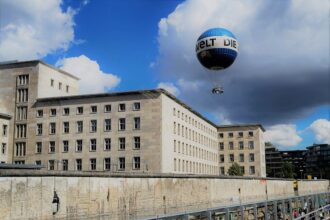
The Soviet Union’s non-intervention in the face of popular uprisings in Eastern Europe in 1989, a direct consequence of Gorbachev’s policies, led to the fall of the Berlin Wall and the liberation of nations that had been under Soviet influence for decades. This was a watershed moment in the end of the Cold War.
The Dissolution of the Soviet Union: A Necessary Evil or a Tragic Loss?
The question of whether the collapse of the Soviet Union was a positive or negative outcome is central to Gorbachev’s legacy. Supporters argue that the Soviet system was inherently unsustainable and that its dissolution was a necessary step towards democracy and freedom for the former republics. Critics, however, lament the loss of Soviet power and influence and point to the subsequent economic hardship and political instability experienced by many of the former Soviet states.
The Debate Over Economic Transformation and its Aftermath
The transition from a centrally planned economy to market economies was a painful process for many. The “shock therapy” implemented in some former Soviet republics led to hyperinflation, widespread unemployment, and a rise in social inequality, leading many to question the wisdom of the reforms.
The Resurgence of Nationalism and Ethnic Conflict
While Glasnost allowed for the expression of national identities, it also contributed to the resurgence of nationalist tensions and, in some cases, ethnic conflict in the post-Soviet space. The redrawing of borders and the assertion of new national identities proved to be a complex and often violent process in certain regions.
Gorbachev’s Place in History: A Reformer or a Destructive Force?
Gorbachev’s place in history remains a subject of ongoing historical and political analysis. He is undeniably a transformative figure who fundamentally altered the course of the 20th century. Whether he is ultimately remembered as a visionary reformer who liberated millions or as a flawed leader whose policies led to the disintegration of a great power, his impact on the Soviet Union and the world is profound and irreversible. His experiment with openness and restructuring, however unintended in its ultimate outcome, irrevocably reshaped the geopolitical map and the destinies of nations.

The $17 Million That Helped Destroy an Empire
FAQs
1. Who was Mikhail Gorbachev?
Mikhail Gorbachev was the last leader of the Soviet Union, serving as General Secretary of the Communist Party from 1985 to 1991 and as the country’s president from 1990 to 1991. He is known for his policies of perestroika (restructuring) and glasnost (openness), which aimed to reform the Soviet political and economic system.
2. What were the key reforms implemented by Gorbachev?
Gorbachev’s reforms included allowing more political and economic freedom, reducing the power of the Communist Party, and promoting transparency in government. He also pursued arms control agreements with the United States and other Western powers.
3. What impact did Gorbachev’s reforms have on the Soviet Union?
Gorbachev’s reforms led to significant changes in the Soviet Union, including the loosening of state control over the economy, the relaxation of censorship, and the opening up of political discourse. However, these changes also contributed to the eventual dissolution of the Soviet Union and the end of the Cold War.
4. How did Gorbachev’s leadership contribute to the end of the Soviet Union?
Gorbachev’s policies of perestroika and glasnost, while intended to revitalize the Soviet system, ultimately weakened the Communist Party’s control and led to increased demands for independence from the Soviet republics. This, combined with economic struggles and internal political turmoil, ultimately led to the collapse of the Soviet Union in 1991.
5. What is Gorbachev’s legacy in the history of the Soviet Union?
Gorbachev is often credited with initiating the end of the Cold War and bringing about significant political and social changes in the Soviet Union. However, his leadership is also controversial, as many Russians view the collapse of the Soviet Union as a period of economic hardship and political instability.