The History of the Iron Curtain: Dividing Europe
The term “Iron Curtain,” famously popularized by Winston Churchill in his 1946 Fulton, Missouri speech, conjures an indelible image of a divided Europe. It was not a physical barrier of iron, but a metaphorical and increasingly literal division that separated the Soviet Union and its Eastern European satellite states from the West. This ideological and political frontier, which solidified in the aftermath of World War II, dictated the geopolitical landscape of the continent for over four decades, profoundly impacting the lives of millions and shaping the course of global history. Understanding the history of the Iron Curtain is crucial to grasping the Cold War, the anxieties of the 20th century, and the eventual reunification of Europe.
The seeds of the Iron Curtain were sown in the ashes of World War II. The defeat of Nazi Germany left a power vacuum in Central and Eastern Europe, and the victorious Allied powers, primarily the United States, Great Britain, and the Soviet Union, had vastly different visions for the continent’s future. While initially united in their fight against fascism, their underlying ideologies and post-war ambitions soon diverged.
The Yalta and Potsdam Conferences: Seeds of Discord
The Allied conferences at Yalta (February 1945) and Potsdam (July-August 1945) were intended to shape the post-war world order. However, they also revealed the growing chasm between the Soviet Union and the Western Allies.
Ideological Divergence: Communism vs. Democracy
At the heart of the emerging tension was a fundamental ideological clash. The Soviet Union, under Joseph Stalin, was committed to expanding communism and establishing a buffer zone of friendly socialist states in Eastern Europe to prevent future invasions. The Western powers, led by the United States, championed democracy, free markets, and self-determination for nations. This inherent conflict in values made a unified and harmonious post-war Europe an increasingly distant prospect.
Spheres of Influence and Soviet Dominance
The agreements reached at Yalta, particularly regarding the division of Germany and the liberation of Eastern European countries, were interpreted differently by the Soviets and the West. Stalin, having borne the brunt of the Eastern Front fighting, saw Soviet influence in Eastern Europe as a legitimate security necessity. The Western Allies, while agreeing to some Soviet influence, expected free and fair elections as promised in various declarations. However, Stalin’s actions swiftly demonstrated his intention to establish firm Soviet control.
The “Liberation” of Eastern Europe: A Twisted Reality
As Soviet troops advanced and liberated Eastern European nations from Nazi occupation, they did not withdraw. Instead, they actively supported the establishment of communist regimes, often through manipulated elections, purges of opposition figures, and the suppression of democratic movements. Countries like Poland, Czechoslovakia, Hungary, Romania, Bulgaria, and Albania found themselves under the sway of Moscow, their sovereignty curtailed.
The history of the Iron Curtain, which symbolized the division between Eastern and Western Europe during the Cold War, is a fascinating topic that reveals the complexities of geopolitical tensions in the 20th century. For a deeper understanding of this era and its implications, you might find the article on the Cold War’s impact on global politics particularly insightful. You can read it here: The Cold War’s Impact on Global Politics.
The Iron Curtain Descends: The Consolidation of Soviet Bloc
The period between 1945 and the early 1950s witnessed the systematic consolidation of Soviet power in Eastern Europe, effectively creating the Iron Curtain. This was not a sudden event but a gradual process of political, economic, and social subjugation.
The Churchill Speech and the Naming of the Divide
Winston Churchill’s address at Westminster College in Fulton, Missouri, on March 5, 1946, is widely credited with coining the term “Iron Curtain.” He declared: “From Stettin in the Baltic to Trieste in the Adriatic, an iron curtain has descended across the Continent.” This powerful metaphor resonated deeply, articulating the fears and realities of a divided Europe.
The Rhetoric of Division: Framing the Conflict
Churchill’s speech was not merely an observation; it was a call to recognize the gravity of the situation and to counter Soviet expansionism. It galvanized public opinion in the West and contributed to the hardening of attitudes towards the Soviet Union, laying the groundwork for the Cold War narrative of an existential struggle between two opposing ideologies.
The Impact of the Speech: Shifting Perceptions
The “Iron Curtain” speech marked a turning point in public discourse. It moved the abstract geopolitical tensions into a tangible and emotionally charged concept. It helped to unify Western nations against what was perceived as a monolithic Soviet threat and solidified the idea of a stark division between East and West.
Sovietization of Eastern Europe: Imposing the Communist Model
The Soviet Union implemented a deliberate policy of “Sovietization” in its satellite states, aiming to remold their societies in the Soviet image. This involved political repression, economic integration into the Soviet bloc, and the suppression of any form of dissent.
Political Repression and One-Party Rule
Communist parties, loyal to Moscow, seized power through a combination of coercion and propaganda. Multi-party systems were dismantled, and opposition parties were outlawed or infiltrated. Independent trade unions, student groups, and religious organizations were either suppressed or brought under party control. Fear and surveillance became pervasive.
Economic Integration: The COMECON Bloc
The establishment of the Council for Mutual Economic Assistance (COMECON) in 1949 formalized economic ties between the Soviet Union and its Eastern European allies. While ostensibly promoting cooperation, COMECON primarily served Soviet economic interests, forcing satellite states to align their economies with the Soviet model, often at the expense of their own development and trade with the West. This created a closed economic bloc that reinforced the Iron Curtain.
Cultural and Ideological Control: The Battle for Minds
Beyond politics and economics, the Soviet Union exerted control over cultural and ideological spheres. Media was strictly controlled and used for propaganda purposes. Art, literature, and education were scrutinized to ensure they conformed to Marxist-Leninist ideology. Independent thought was discouraged, and the dissemination of Western ideas was actively prevented.
The Physical Manifestations of the Iron Curtain: Borders and Barriers

While the Iron Curtain was primarily an ideological and political divide, it also manifested in tangible physical barriers that restricted movement and reinforced the separation. These border fortifications became symbols of the division and the oppression experienced by those living on either side.
Border Fortifications: Walls, Fences, and Watchtowers
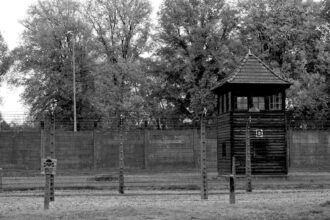
The most notorious physical manifestation of the Iron Curtain was the Berlin Wall, but similar, albeit less famous, fortifications existed along the entire length of the border between Eastern and Western Europe. These included extensive minefields, barbed wire fences, watchtowers, and heavily armed border guards.
The Berlin Wall: A Symbol of Division
Erected in 1961, the Berlin Wall became the most potent symbol of the Iron Curtain. It physically divided the city of Berlin, separating families, friends, and a nation. Its stark concrete structure, topped with barbed wire and patrolled by armed guards with shoot-to-kill orders, represented the ultimate barrier against freedom of movement.
Border Zones and Minefields: Deadly Frontiers
Beyond the Berlin Wall, the entire border between East and West Germany was a heavily fortified zone, often referred to as the “death strip.” This included extensive minefields, guard dog runs, and patrol paths designed to prevent any unauthorized crossing. Similar, though varying in intensity, border fortifications existed along the frontiers of other Eastern Bloc countries.
Restricted Travel and Emigration: Trapped Populations
The physical barriers were complemented by strict regulations on travel and emigration. Citizens of Eastern Bloc countries were generally not permitted to travel to the West without official approval, which was rarely granted. This trapped millions within the Soviet sphere, fueling a deep sense of frustration and a yearning for freedom.
The Role of Technology and Surveillance
Technology played a significant role in maintaining the Iron Curtain, not just in terms of physical barriers but also through surveillance and control.
Electronic Surveillance and Interception
The Eastern Bloc countries employed sophisticated methods of electronic surveillance to monitor their populations and intercept communications. Radio jamming was common to prevent access to Western broadcasts. Security forces actively monitored telephone conversations and mail.
Propaganda and Information Control
The control of information was a cornerstone of maintaining the Iron Curtain. State-controlled media disseminated a constant stream of propaganda, demonizing the West and glorifying the socialist system. Access to independent news sources was severely restricted, creating an information vacuum for many citizens.
The Iron Curtain in Action: Espionage, Proxy Wars, and Ideological Struggle

The division of Europe fostered an environment of constant tension, mistrust, and covert conflict. The Iron Curtain became the stage for a global struggle between two superpowers, played out through intelligence agencies, proxy conflicts, and ideological battles.
Espionage and Intelligence Gathering: The Shadow War
The Cold War was as much a war of spies as it was of ideologies. Intelligence agencies on both sides, most notably the CIA in the West and the KGB in the East, engaged in extensive espionage, counter-espionage, and covert operations.
The KGB and the CIA: Masters of Deception
The Soviet Komitet Gosudarstvennoy Bezopasnosti (KGB) and the American Central Intelligence Agency (CIA) were at the forefront of this shadow war. They sought to gather intelligence, sow discord, and influence events within the opposing bloc, often through daring and dangerous missions.
Defections and Double Agents: The Human Cost
The Iron Curtain led to numerous defections from East to West and vice versa. These high-profile events, often involving scientists, artists, or military personnel, provided valuable intelligence but also highlighted the human cost of the division and the lengths to which people would go to escape oppression or pursue their agendas. The presence of double agents further blurred the lines and fueled paranoia.
Proxy Wars and International Tensions
While direct military confrontation between NATO and the Warsaw Pact was avoided, the Cold War saw numerous proxy wars fought in various regions around the globe. These conflicts were often fueled by the superpower rivalry, with each side supporting opposing factions.
The Korean War and the Vietnam War: Global Battlegrounds
The Korean War (1950-1953) and the Vietnam War (1955-1975) are prime examples of proxy conflicts where the United States and the Soviet Union, respectively, backed opposing sides. These brutal wars resulted in millions of deaths and solidified the global reach of the Cold War.
The Arms Race and the Threat of Nuclear Annihilation
The competition between the superpowers led to an unprecedented arms race, particularly in nuclear weapons. The constant threat of nuclear annihilation loomed over the world, a terrifying consequence of the division and the inability of the two blocs to find common ground.
The Ideological Struggle: Propaganda and Cultural Diplomacy
Beyond military and intelligence operations, the Cold War was also a battle for hearts and minds. Both sides engaged in extensive propaganda campaigns and cultural diplomacy to win over international opinion and to discredit the opposing ideology.
Western Cultural Exports: Jazz, Rock, and Hollywood
Western culture, with its emphasis on individual freedom and consumerism, proved to be a potent ideological weapon. Music, film, and literature from the West gradually seeped through the Iron Curtain, offering an enticing alternative to the drab realities of communist life.
Soviet Propaganda and International Movements
The Soviet Union countered with its own propaganda, highlighting the perceived injustices of capitalism and promoting the virtues of socialism. They also actively supported international peace movements and anti-colonial struggles, attempting to position themselves as champions of the oppressed.
The history of the Iron Curtain is a fascinating topic that explores the division of Europe during the Cold War and its lasting impact on international relations. For those interested in delving deeper into this subject, a related article can be found at this link, which provides a comprehensive overview of the geopolitical tensions that defined the era. Understanding the Iron Curtain not only sheds light on past conflicts but also helps us comprehend the complexities of modern diplomacy.
The Unraveling of the Iron Curtain: Reforms, Revolutions, and Reunification
| Year | Event |
|---|---|
| 1945 | Division of Germany and Berlin into East and West |
| 1946 | Winston Churchill’s “Iron Curtain” speech |
| 1947 | Marshall Plan to aid Western Europe |
| 1948 | Berlin Blockade and Airlift |
| 1955 | Formation of the Warsaw Pact |
| 1961 | Construction of the Berlin Wall |
| 1989 | Fall of the Berlin Wall |
The Iron Curtain, though seemingly impenetrable, was not immutable. Internal pressures within the Eastern Bloc, coupled with a changing geopolitical landscape, ultimately led to its dramatic and largely peaceful collapse.
The Winds of Change: Internal Dissatisfaction and Reform Movements
Beneath the surface of Soviet control, deep-seated dissatisfaction and a longing for freedom simmered within the Eastern Bloc. Various reform movements emerged, challenging the communist regimes.
The Prague Spring and the Hungarian Uprising: Early Challenges
The Prague Spring of 1968 in Czechoslovakia, a period of liberalization and reform, was brutally suppressed by Soviet-led forces. Similarly, the Hungarian Uprising of 1956, a nationwide revolt against Soviet domination, was crushed. These events, while tragic, demonstrated the persistent desire for change.
Dissident Movements and Intellectual Resistance
Throughout the Eastern Bloc, dissident movements and intellectual circles worked to preserve banned literature, disseminate information, and advocate for human rights. Figures like Václav Havel in Czechoslovakia became international symbols of resistance.
Gorbachev’s Reforms: Glasnost and Perestroika
The rise of Mikhail Gorbachev as the leader of the Soviet Union in 1985 marked a crucial turning point. His policies of glasnost (openness) and perestroika (restructuring) aimed to revitalize the Soviet system but inadvertently unleashed forces that would dismantle the Iron Curtain.
The Relaxation of Control: Allowing for Expression
Gorbachev’s decision to loosen Soviet control over Eastern Europe and his refusal to use military force to suppress reform movements allowed these long-suppressed aspirations to surface. This was a radical departure from previous Soviet policy.
The Domino Effect of Revolutions: Fall of the Wall
Inspired by the changes in Moscow, and emboldened by the apparent lack of Soviet intervention, a wave of largely peaceful revolutions swept across Eastern Europe in 1989. The fall of the Berlin Wall on November 9, 1989, became the iconic moment of the Iron Curtain’s demise.
The Reunification of Germany and the End of an Era
The fall of the Berlin Wall paved the way for the reunification of Germany less than a year later, on October 3, 1990. This momentous event symbolized the end of the Cold War and the dismantling of the Iron Curtain.
The Collapse of the Warsaw Pact and the Soviet Union
Following the revolutions in Eastern Europe, the Warsaw Pact, the Soviet-led military alliance, dissolved in 1991. Later that year, the Soviet Union itself disintegrated into independent republics, marking the definitive end of the bipolar world order that had defined the Iron Curtain era.
A Continent Reunited, But Not Without Scars
The collapse of the Iron Curtain brought about the reunification of Europe and the end of decades of division and fear. However, the legacy of the Iron Curtain continued to shape the continent, with economic disparities, social challenges, and the lingering memories of oppression. Nevertheless, the fall of the Iron Curtain heralded a new era of hope and cooperation for Europe and the world.

The $17 Million That Helped Destroy an Empire
FAQs
What was the Iron Curtain?
The Iron Curtain was a political and ideological barrier that divided Europe into two separate areas from the end of World War II in 1945 until the end of the Cold War in 1991. It was a physical and symbolic representation of the divide between Western Europe and the Eastern Bloc, which was dominated by the Soviet Union.
What were the main reasons for the creation of the Iron Curtain?
The main reasons for the creation of the Iron Curtain were the ideological differences between the Western democracies and the Eastern Bloc, as well as the geopolitical struggle for influence and control in Europe between the United States and the Soviet Union. The Iron Curtain was also a response to the fear of Soviet expansionism and the desire to contain communism.
What were the key events that led to the establishment of the Iron Curtain?
The key events that led to the establishment of the Iron Curtain include the division of Germany and Berlin after World War II, the Soviet takeover of Eastern European countries, the Marshall Plan and the Truman Doctrine, and the establishment of NATO and the Warsaw Pact. These events solidified the divide between the Western and Eastern blocs and set the stage for the Cold War.
How did the Iron Curtain impact the countries and people it divided?
The Iron Curtain had a profound impact on the countries and people it divided. It led to the establishment of repressive communist regimes in Eastern Europe, limited freedom of movement and communication between the two sides, and created a climate of fear and suspicion. It also resulted in the division of families and communities, and the loss of personal freedoms and human rights.
When and how did the Iron Curtain come to an end?
The Iron Curtain began to come to an end in the late 1980s with the rise of political and social movements in Eastern Europe, such as Solidarity in Poland and the Velvet Revolution in Czechoslovakia. The fall of the Berlin Wall in 1989 and the collapse of the Soviet Union in 1991 marked the official end of the Iron Curtain and the beginning of a new era in European history.