
So, you’re curious about this “Exploring the Frontiers: A Science and Engineering Documentary”? Think of it as your front-row seat to the cutting edge of human ingenuity. It’s not about dusty textbooks or abstract theories; it’s about the real people, the big ideas, and the incredible machines and processes that are shaping our future, right now. If you want to understand where we’re headed, and how we’re getting there, this is the kind of documentary that pulls back the curtain.
At its core, “Exploring the Frontiers” is a deep dive into the most exciting and impactful advancements happening in science and engineering. It’s designed to be accessible, meaning you don’t need a PhD to follow along, but it’s packed with enough substance to make you think. The documentary isn’t just showcasing cool gadgets; it’s exploring the fundamental science behind them, the engineering challenges overcome, and the potential societal impact. Expect to see everything from the microscopic world of material science to the vastness of space exploration, all explained in a way that makes sense. It’s about the “how” and the “why” of innovation.
Science That’s Changing Our World
This isn’t about yesterday’s breakthroughs. “Exploring the Frontiers” focuses on the science that is actively being developed and applied today, and that will undoubtedly shape tomorrow. You’ll get a look at how researchers are understanding complex systems, from the human body to climate patterns, and how that understanding is being translated into tangible solutions. It’s about the raw process of discovery and how it moves from a lab bench to the real world.
Engineering the Future
The engineering aspect is where the rubber meets the road. Once the scientific principles are understood, it’s the engineers who figure out how to build, create, and implement them. This documentary shines a light on those who are designing and constructing the next generation of technologies, pushing the boundaries of what’s physically possible. It’s about problem-solving on an epic scale, with significant implications for how we live, work, and interact with our planet.
For those interested in the intersection of science and engineering, a fascinating article titled “Innovations in Renewable Energy: The Future of Sustainable Engineering” can be found at this link: Innovations in Renewable Energy. This article delves into the latest advancements in renewable energy technologies and their implications for engineering practices, providing insights that are essential for understanding the future of sustainable development.
Glimpses into Groundbreaking Fields
The documentary doesn’t shy away from covering a broad spectrum of scientific and engineering disciplines. It’s curated to provide a well-rounded perspective on where innovation is thriving, offering glimpses into fields that are experiencing rapid evolution.
The Digital Revolution Continues
This section would likely delve into the ongoing transformations driven by digital technologies. Think about the advancements in artificial intelligence, machine learning, and quantum computing. It’s not just about faster processors; it’s about algorithms that are learning to diagnose diseases, systems that can predict weather patterns with unprecedented accuracy, and entirely new ways of processing information that could solve problems previously deemed impossible. The documentary would likely showcase how these digital tools are being integrated into existing industries and creating entirely new ones.
Artificial Intelligence: Beyond the Hype
Here, the focus would be on the practical applications of AI. Rather than theoretical discussions about consciousness, you’d see examples of AI being used in:
- Healthcare: AI-powered diagnostics for early disease detection, personalized treatment plans, and robotic surgery assistance.
- Transportation: Autonomous vehicles, intelligent traffic management systems, and optimized logistics.
- Manufacturing: Predictive maintenance, automated quality control, and optimized production lines.
- Scientific Research: AI as a tool for accelerating drug discovery, analyzing vast datasets, and identifying new patterns in complex phenomena.
The segment would aim to demystify AI, showing its current capabilities and the practical engineering feats required to make it a reality. It would also touch upon the ongoing ethical considerations and the engineering challenges in ensuring AI is developed responsibly.
Quantum Computing: Unlocking New Possibilities
This part would tackle the enigmatic world of quantum computing. It’s a field that promises to revolutionize computation, but often sounds like science fiction. The documentary would likely explain the fundamental principles of quantum mechanics that power these machines in a simplified, yet accurate, way. You’d learn about qubits, superposition, and entanglement, and how these concepts allow quantum computers to perform calculations that are impossible for even the most powerful classical supercomputers. Examples of potential applications would be explored, such as:
- Drug and Material Discovery: Simulating molecular interactions with unprecedented accuracy to design new medicines and materials.
- Cryptography: Breaking current encryption methods and developing new, quantum-resistant ones.
- Optimization Problems: Solving highly complex logistical and financial optimization challenges.
The engineering aspect would highlight the immense technical hurdles in building and maintaining quantum computers, from controlling delicate quantum states to mitigating errors.
The Material World Transformed
Materials science is a foundational element of nearly all technological advancement. “Exploring the Frontiers” would undoubtedly dedicate a significant portion to how we are designing and utilizing materials in entirely new ways. This isn’t just about stronger or lighter stuff; it’s about materials with inherent intelligence, self-healing properties, and the ability to interact with their environment.
Nanotechnology: Building from the Bottom Up
This segment would focus on the manipulation of matter at the atomic and molecular scale. You’d see how scientists are engineering materials with incredibly precise properties by working with tiny building blocks. This could include:
- Advanced Manufacturing: Creating new materials with unique electrical, optical, and mechanical properties.
- Medicine: Nanoparticles for targeted drug delivery, diagnostic tools, and regenerative medicine.
- Energy: More efficient solar cells, improved battery technology, and catalysts for chemical reactions.
- Environmental Remediation: Nanomaterials for filtering pollutants from water and air.
The engineering challenges here involve the precise assembly of nanoscale components, scaling up production, and ensuring the safety and longevity of nano-enabled products.
Smart Materials: Responding to Their Environment
This part would explore materials that can change their properties in response to external stimuli like temperature, light, electric fields, or magnetic fields. Examples would include:
- Self-healing polymers: Materials that can repair themselves after damage.
- Shape-memory alloys: Metals that can return to their original shape after being deformed.
- Piezoelectric materials: Materials that generate electricity when stressed, or change shape when an electric field is applied.
- Conductive inks and flexible electronics: Enabling wearable technology and novel display solutions.
The documentary would show how engineers are integrating these smart materials into functional products, from aerospace components to responsive textiles.
In the realm of science and engineering documentaries, one fascinating piece is the exploration of renewable energy technologies and their impact on the future. For those interested in delving deeper into this subject, you can check out a related article that discusses innovative approaches to sustainable energy solutions. This insightful read can be found at this link, where it highlights the latest advancements and challenges in the field.
Engineering Our Ecosystem
With growing awareness of environmental challenges, the documentary would likely dedicate substantial time to the scientific and engineering efforts aimed at understanding and mitigating our impact on the planet. This is about sustainability, resilience, and finding innovative solutions to complex ecological problems.
Sustainable Energy Solutions: Powering the Future
This section would go beyond just solar panels and wind turbines, exploring the next generation of clean energy technologies. It might cover:
- Advanced Battery Technology: Innovations in storing renewable energy, from solid-state batteries to flow batteries.
- Fusion Power: The long-term promise of virtually limitless clean energy, detailing the engineering challenges and progress.
- Geothermal Energy: Harnessing the Earth’s internal heat more effectively and in new locations.
- Hydrogen Fuel Cells: Exploring advancements in hydrogen production, storage, and utilization for transport and industry.
The engineering breakthroughs in efficiency, cost reduction, and reliability would be a key focus.
Climate Science and Engineering: Adapting and Innovating
This segment would address how science and engineering are being applied to both understand and respond to climate change. It could feature:
- Carbon Capture and Utilization: Technologies to remove CO2 from the atmosphere and find uses for it.
- Climate Modeling and Monitoring: Advanced sensing technologies and computational power to better predict climate behavior.
- Resilient Infrastructure: Engineering solutions for adapting to rising sea levels, extreme weather events, and resource scarcity.
- Biodiversity Conservation Technologies: Using AI, drones, and genetic engineering to protect endangered species and ecosystems.
The documentary would likely highlight the urgency and the collaborative nature of these efforts, showcasing how different scientific and engineering disciplines are converging to address this critical global challenge.
The Frontier of Biology and Medicine
Our understanding of life itself is expanding at an incredible pace, and the engineering applications in this field are nothing short of revolutionary. “Exploring the Frontiers” would undoubtedly showcase how we are manipulating biological systems, treating diseases in new ways, and even extending human capabilities.
Gene Editing and Biotechnology: Rewriting the Blueprint
This would be a deep dive into technologies like CRISPR-Cas9 and its implications. You’d learn about:
- Treating Genetic Diseases: The potential to correct the underlying genetic causes of inherited conditions.
- Developing New Therapies: Engineering viruses, bacteria, and cells to act as living medicines.
- Agricultural Advancements: Creating more resilient and nutritious crops.
- Synthetic Biology: Designing novel biological systems with specific functions.
The documentary would emphasize the ethical considerations and the rigorous engineering required to ensure precision and safety in these molecular interventions.
Regenerative Medicine and Prosthetics: Repairing and Replacing
This segment would explore how scientists and engineers are working to repair damaged tissues and organs, and to create advanced prosthetics that enhance human abilities. Topics might include:
- Stem Cell Therapies: Using stem cells to regenerate damaged tissues like nerve cells, heart muscle, or cartilage.
- 3D Bioprinting: Creating living tissues and organs layer by layer.
- Advanced Prosthetics: Brain-computer interfaces, robotic limbs with sensory feedback, and adaptive prosthetic devices.
- Tissue Engineering: Developing lab-grown tissues and organs for transplantation.
The engineering focus would be on the precision, integration, and biocompatibility of these technologies, aiming to restore function and improve quality of life.
Pushing the Boundaries of Exploration
Finally, no look at the frontiers of science and engineering would be complete without exploring what lies beyond our planet and into the unknown. This segment would capture the spirit of discovery and the immense engineering required to venture into these challenging environments.
Space Exploration: Reaching for the Stars
This would showcase the incredible engineering feats that enable us to explore the cosmos. It could include:
- Advanced Propulsion Systems: Next-generation rockets, ion drives, and concepts for interstellar travel.
- Robotic Exploration: Perseverance rovers on Mars, probes to distant moons, and the engineering behind their sophisticated instruments.
- Space Telescopes: The James Webb Space Telescope and its role in unraveling cosmic mysteries.
- Habitation and Life Support: Innovations for human missions to the Moon, Mars, and beyond.
The documentary would highlight the ingenuity required to overcome the harsh conditions of space, the vast distances, and the sheer complexity of these missions.
Deep-Sea and Extreme Environment Research
Beyond space, there are vast frontiers right here on Earth that are just as challenging to explore. This could cover:
- Submersible Technology: Advanced deep-sea submersibles capable of reaching extreme depths.
- Underwater Robotics: Autonomous underwater vehicles (AUVs) for scientific research and resource exploration.
- Engineered Habitats: Technologies and strategies for surviving and working in extreme terrestrial environments like deserts, polar regions, or even within volcanoes.
The film would emphasize the scientific questions being asked – about biodiversity, geology, and the origins of life – and the engineering solutions that allow us to answer them, despite the immense environmental pressures.
Why It Matters: The Practical Takeaway
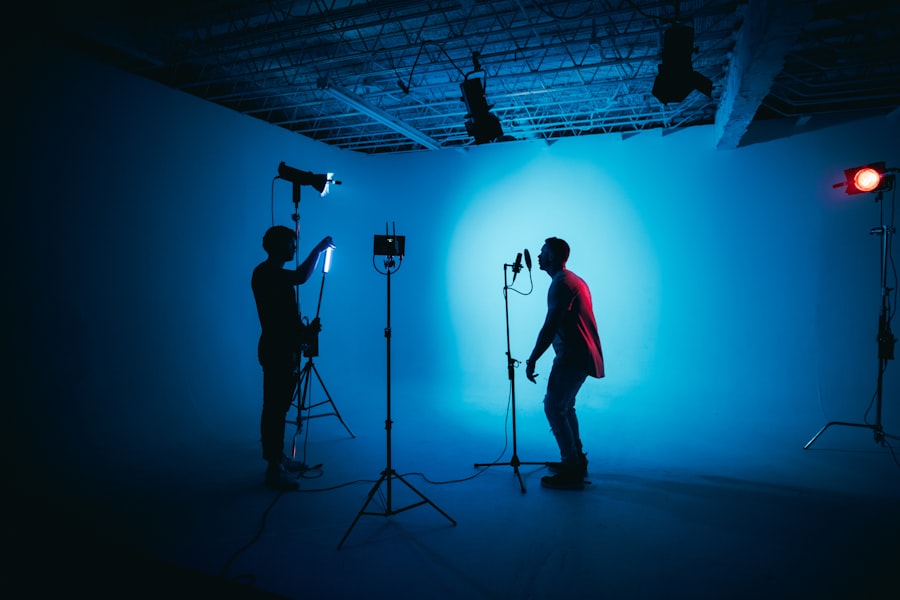
“Exploring the Frontiers” isn’t just an exercise in awe; it’s about understanding the forces that are shaping our world and our future. It’s about the tangible impact of scientific discovery and the engineering prowess that brings those discoveries to life. Seeing these advancements presented in a clear, engaging way helps us all to:
- Make Informed Decisions: As citizens, understanding these technologies allows us to engage in more meaningful discussions about their development, regulation, and societal integration.
- Inspire the Next Generation: By showcasing the excitement and impact of science and engineering, the documentary can spark curiosity and encourage young people to pursue careers in these vital fields.
- Appreciate Human Ingenuity: It’s a testament to our capacity for innovation, problem-solving, and our relentless drive to understand and improve our world.
- Grasp the Scope of Global Challenges: The documentary underscores the scale of issues like climate change and disease, and the collaborative, interdisciplinary approach needed to tackle them.
Ultimately, “Exploring the Frontiers: A Science and Engineering Documentary” is an invitation to look closer, to ask more questions, and to appreciate the incredible journey of human progress that is unfolding all around us. It’s a practical guide to the future, built on the foundations of today’s most groundbreaking work.

Why Modern Medicine Can’t Store Tomorrow

FAQs
What is a science and engineering documentary?
A science and engineering documentary is a film or video production that explores and explains various scientific and engineering concepts, discoveries, and innovations. These documentaries often feature interviews with experts, demonstrations of experiments, and visualizations of complex theories to educate and engage viewers.
What are the benefits of watching science and engineering documentaries?
Watching science and engineering documentaries can provide valuable insights into the latest advancements in these fields, as well as inspire curiosity and interest in science and engineering among viewers. These documentaries also offer opportunities to learn about the impact of scientific and engineering breakthroughs on society and the environment.
Where can I find science and engineering documentaries?
Science and engineering documentaries can be found on various streaming platforms, such as Netflix, Amazon Prime, and Hulu, as well as on educational websites and channels like PBS, National Geographic, and the Discovery Channel. Additionally, many documentaries are available for purchase or rental on DVD or Blu-ray.
What are some popular science and engineering documentaries?
Some popular science and engineering documentaries include “Cosmos: A Spacetime Odyssey,” “Particle Fever,” “The Farthest: Voyager in Space,” “The Mars Generation,” and “Dream Big: Engineering Our World.” These documentaries cover a wide range of topics, from space exploration and particle physics to engineering marvels and environmental sustainability.
How can science and engineering documentaries inspire future generations?
Science and engineering documentaries have the potential to inspire future generations by showcasing the wonders of the natural world, the possibilities of technological innovation, and the importance of critical thinking and problem-solving. By highlighting the achievements of scientists and engineers, these documentaries can encourage young people to pursue careers in STEM fields and contribute to the advancement of knowledge and technology.