Satellites: Crucial Support for Modern Warfare
The modern battlefield is no longer a theater of solely ground, air, and sea forces. Instead, it has evolved into a complex, interconnected domain where information, communication, and precision are paramount. In this dynamic environment, satellites have emerged not as mere auxiliaries, but as indispensable pillars of modern warfare, providing a fundamental framework upon which military operations are built. Their omnipresence, unwavering gaze, and ability to operate beyond terrestrial constraints have revolutionized the way nations wage war, from intelligence gathering to the execution of precision strikes. Without the silent, orbiting sentinels, the sophisticated military capabilities taken for granted today would simply cease to function.
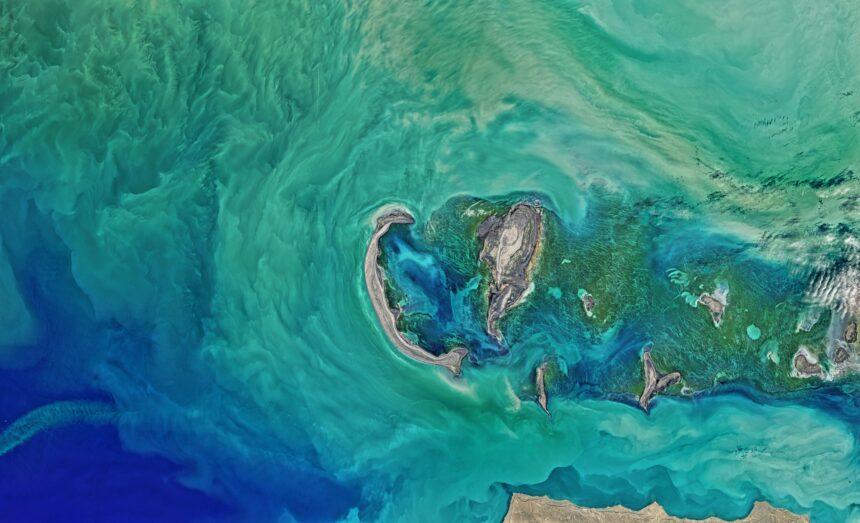
The most fundamental contribution of satellites to modern warfare lies in their unparalleled capacity for reconnaissance and intelligence gathering. Orbiting at varying altitudes, these celestial observatories provide a consistent and pervasive view of the Earth’s surface, offering information that was once the exclusive domain of highly specialized and often risky human missions. The sheer volume and detail of data collected by satellite constellations have transformed the understanding of an adversary’s capabilities, intentions, and dispositions.
Electro-Optical and Infrared Imaging
Satellites equipped with advanced electro-optical (EO) and infrared (IR) sensors offer a visual spectrum of intelligence. EO sensors capture images similar to what the human eye can perceive, allowing for the identification of military installations, troop movements, and the characteristics of vehicles and equipment. These sensors are crucial for initial target identification and ongoing situational awareness, providing a clear visual record of events unfolding on the ground.
Night Vision and All-Weather Capabilities
Infrared sensors, on the other hand, detect heat signatures. This capability is invaluable for operations conducted under the cover of darkness, through smoke, or concealed by cloud cover. IR imaging can reveal the presence of operational engines, human bodies, and even recently used launch sites, effectively piercing through camouflage and atmospheric obscurity. The combination of EO and IR imaging provides a comprehensive visual understanding, day or night, and in a variety of environmental conditions.
Synthetic Aperture Radar (SAR) for Persistent Surveillance
Synthetic Aperture Radar (SAR) represents a significant leap in reconnaissance capabilities. Unlike optical sensors, SAR systems emit radio waves that can penetrate clouds, fog, and even vegetation, enabling all-weather and 24/7 surveillance. By analyzing the backscattered signals, SAR can create detailed images of the terrain, identify changes like newly constructed fortifications or vehicle tracks, and even measure the height and shape of objects.
Change Detection and Pattern Analysis
The persistent surveillance provided by SAR satellites is particularly effective for change detection. By comparing successive SAR images of the same area, military analysts can automatically identify alterations in the landscape, signaling potential enemy activities. This capability allows for the continuous monitoring of sensitive regions, detecting the subtle build-up of forces or the clandestine movement of assets that might otherwise go unnoticed.
Signals Intelligence (SIGINT) and Electronic Warfare Support
Beyond visual data, satellites are also integral to signals intelligence (SIGINT). Various satellites are equipped to intercept and analyze a wide range of electromagnetic emissions, including radio communications, radar signals, and electronic command and control transmissions. This information is vital for understanding an adversary’s operational tempo, their technological sophistication, and their network vulnerabilities.
Communications Interception and Analysis
By intercepting enemy communications, SIGINT satellites provide insights into their plans, orders, and the morale of their forces. Analysts can decipher encrypted messages, identify key personnel, and gain a strategic understanding of the enemy’s strategic objectives. This intelligence can inform defensive strategies, preempt attacks, and guide offensive planning.
Radar and Electronic Order of Battle (EOB)
Satellites can also detect and characterize enemy radar systems, providing crucial information about their operational ranges, frequencies, and types. This data contributes to the development of an Electronic Order of Battle (EOB), which maps out the enemy’s electronic assets and their operational capabilities. Understanding the EOB is critical for electronic warfare operations, enabling the jamming or spoofing of enemy radar and communication systems.
Satellites play a crucial role in modern warfare by providing real-time intelligence, surveillance, and reconnaissance capabilities that enhance military operations. For a deeper understanding of how these technologies are integrated into contemporary combat strategies, you can read the article on this topic at In the War Room. This resource explores the various ways satellites contribute to situational awareness and decision-making on the battlefield, highlighting their importance in maintaining a strategic advantage.
The Lifeline of Command: Communication and Navigation
The interconnected nature of modern warfare demands robust, resilient, and secure communication channels. Satellites provide the essential infrastructure for this global connectivity, ensuring that commanders can communicate with their forces, and that forces can coordinate their actions, regardless of geographical distance or terrain obstacles. Furthermore, satellite-based navigation systems have fundamentally reshaped the execution of military maneuvers.
Secure and Global Communication Networks
Military satellites form the backbone of secure, global communication networks. These networks allow for the transmission of voice, data, and video across vast distances, enabling real-time command and control. This is particularly crucial for expeditionary forces operating far from home bases, ensuring they remain connected to headquarters and can receive timely intelligence and orders.
Redundant and Resilient Communication Pathways
The redundancy offered by satellite communication is a key advantage. Even if terrestrial communication infrastructure is damaged or disrupted, satellite links can remain operational, providing a vital lifeline for military operations. This resilience is essential for maintaining command and control in contested environments where physical infrastructure is vulnerable.
Encrypted Data Transmission for Confidentiality
The confidentiality of military communications is paramount. Satellite communication systems employ sophisticated encryption techniques to ensure that sensitive information remains secure from eavesdropping and interception by adversaries. This prevents the compromise of operational plans, troop movements, and other critical intelligence.
Global Positioning Systems (GPS) and Beyond
Satellite-based navigation, most notably the Global Positioning System (GPS), has become an indispensable tool for modern military operations. GPS provides highly accurate positioning, navigation, and timing (PNT) data to military units on land, at sea, and in the air.
Precision Targeting and Navigation
The accuracy of GPS enables precision-guided munitions (PGMs) to strike targets with unprecedented accuracy, minimizing collateral damage and maximizing effectiveness. It also allows for precise navigation of aircraft, ships, and ground vehicles, ensuring they reach their intended destinations efficiently and safely, even in featureless terrain or hostile conditions.
Situational Awareness and Tracking of Friendly Forces
Beyond navigation, GPS data enhances situational awareness by allowing commanders to track the location of their own forces in real-time. This information is critical for coordinating maneuvers, avoiding fratricide, and managing the overall battlefield picture. The ability to know where friendly assets are located at all times is a significant tactical advantage.
Time Synchronization for Complex Operations
The precise timing provided by GPS is also essential for synchronizing complex military operations. This includes coordinating multi-unit attacks, synchronizing reconnaissance efforts, and ensuring the timely execution of time-sensitive missions. Without accurate time synchronization, large-scale, coordinated military actions would be significantly more challenging, if not impossible.
Enhancing Lethality: Precision Strikes and Targeting

Satellites are not only observers but also enablers of enhanced lethality through their role in precision targeting and the guidance of advanced weaponry. The ability to pinpoint targets with extreme accuracy and to guide munitions directly to them has fundamentally altered the calculus of warfare, allowing for surgical strikes with minimal collateral damage.
Target Identification and Verification
Before any weapon is deployed, accurate target identification and verification are crucial. Satellites, with their high-resolution imaging capabilities, provide the initial intelligence for identifying potential targets. Subsequent satellite observations can then be used to confirm the target’s identity, assess its vulnerability, and determine the most appropriate weapon system for engagement.
Identifying High-Value Targets (HVTs)
Satellites are instrumental in the identification and tracking of High-Value Targets (HVTs), such as enemy command centers, critical infrastructure, or key military leaders. Their persistent surveillance allows for the monitoring of these targets over time, providing valuable intelligence for planning interdiction operations.
Assessing Target Environments and Potential Collateral Damage
Beyond identifying the target itself, satellites can also provide detailed information about the surrounding environment. This allows for the assessment of potential collateral damage to civilian infrastructure or populations, enabling commanders to make informed decisions about engagement and minimize unintended consequences.
Guiding Precision-Guided Munitions (PGMs)
Many modern PGMs rely on satellite navigation for guidance. Bombs, missiles, and even artillery shells equipped with GPS receivers can navigate themselves to their intended targets with remarkable accuracy. This is a significant departure from less precise unguided munitions.
GPS-Guided Bombs and Missiles
The most common application is in GPS-guided bombs and missiles, which receive PNT updates from satellites throughout their flight. This allows them to adjust their trajectory in real-time, compensating for wind, atmospheric conditions, and even minor target movements.
Advancements in Terminal Guidance with Satellite Integration
While GPS provides the primary navigation, some advanced PGMs also integrate other satellite-enabled technologies for enhanced terminal guidance. This can include laser designation from ground forces that is then relayed via satellite, or even infrared imaging that allows the munition to independently track its target in the terminal phase.
Beyond the Horizon: Early Warning and Space Situational Awareness

The battlefield is no longer confined to terrestrial considerations. The increasing reliance on space-based assets by all major powers necessitates a vigilant watch over the space domain itself. Satellites play a critical role in early warning of threats and in maintaining space situational awareness (SSA).
Missile Detection and Early Warning
Satellites are the first line of defense against ballistic missile attacks. Satellites equipped with infrared sensors can detect the heat signature of missile launches, providing crucial early warning to defensive forces and decision-makers.
Tracking Ballistic Missile Trajectories
Once a missile is launched, satellites can track its trajectory, providing critical information about its likely impact point. This allows for the timely deployment of defensive assets, such as missile interceptors, and the issuance of warnings to affected populations.
Differentiating Warheads from Decoys
The challenge of differentiating between actual warheads and decoys is something that advanced satellite systems are designed to address. By analyzing the characteristics of incoming objects, satellites can help identify the most significant threats, improving the effectiveness of missile defense systems.
Space Debris Monitoring and Collision Avoidance
The growing number of satellites in orbit, both civilian and military, has led to an increasing concern about space debris. Satellites are used to monitor the orbital environment, identify potential collision risks, and track the movement of debris.
Cataloging and Tracking Orbital Objects
Comprehensive catalogs of all orbiting objects, including satellites, rocket bodies, and debris, are maintained and constantly updated. This is a crucial function of space situational awareness, allowing for the prediction of potential future collisions.
Predicting and Mitigating Collision Risks
By accurately tracking orbital objects, SSA systems can predict potential collision trajectories. This information is then used to maneuver operational satellites out of harm’s way, thereby preventing catastrophic damage and maintaining the integrity of space-based capabilities.
Satellites play a crucial role in modern warfare by providing real-time intelligence, surveillance, and reconnaissance capabilities that enhance military operations. For a deeper understanding of how these technologies are integrated into contemporary combat strategies, you can explore a related article that discusses the implications of satellite systems on military effectiveness. This insightful piece can be found at In the War Room, where you will discover how advancements in satellite technology are reshaping the battlefield landscape.
The Future of Space-Enabled Warfare: Autonomous Systems and Disruption
| Aspect | Explanation |
|---|---|
| Intelligence gathering | Satellites provide real-time intelligence on enemy movements, capabilities, and intentions. |
| Communication | Satellites enable secure and reliable communication for military operations, including command and control. |
| Navigation | Satellite-based navigation systems like GPS allow for precise targeting and coordination of forces. |
| Surveillance | Satellites can monitor and track enemy activities, providing valuable situational awareness. |
| Targeting | Satellites help identify and track potential targets for precision strikes. |
The integration of satellites into modern warfare is a continuously evolving process. The development of autonomous systems, artificial intelligence, and the increasing emphasis on the space domain as a contested arena are shaping the future of space-enabled conflict.
Swarming Satellites and Distributed Architectures
The concept of satellite swarms, where numerous small, interconnected satellites operate in a coordinated manner, is gaining traction. This “Internet of Satellites” can offer increased resilience and redundancy compared to relying on a few large, high-value assets.
Enhanced Resilience and Redundancy in Orbit
If one satellite in a swarm is disabled, the mission can continue with its peers. This distributed architecture makes it far more difficult for an adversary to cripple an entire capability.
More Cost-Effective and Rapid Deployment
Smaller, mass-producible satellites can be deployed more rapidly and at a lower cost than traditional, complex satellite systems, allowing for quicker adaptation to evolving threats.
Counter-Space Operations and Denying Adversary Access
As the reliance on space assets grows, so too does the motivation to deny adversaries access to them. Counter-space operations, aimed at degrading or destroying enemy satellites, are becoming an increasingly important aspect of military planning.
Directed Energy Weapons and Anti-Satellite Missiles
The development of directed energy weapons and advanced anti-satellite missiles represents a significant threat to space-based infrastructure. Satellites are not invulnerable, and the potential for kinetic or non-kinetic attacks is a growing concern.
Cyber Warfare Targeting Space Systems
Furthermore, the ground control systems and communication links that manage satellites are vulnerable to cyberattacks. Disrupting these links can effectively render a satellite useless without physically destroying it.
Artificial Intelligence (AI) and Autonomous Operations in Space
The integration of AI and autonomous capabilities into satellites promises to revolutionize their operational effectiveness. AI can enable satellites to perform complex tasks without constant human intervention, from sophisticated data analysis to independent decision-making in contested environments.
Autonomous Target Recognition and Engagement
Future satellites may be capable of autonomously identifying, tracking, and even engaging targets based on pre-programmed parameters and real-time battlefield data, reducing the reaction time for critical military responses.
Enhanced Data Processing and Decision Support
AI can drastically improve the speed and efficiency of satellite data processing, allowing for more rapid dissemination of actionable intelligence and providing commanders with more sophisticated decision support tools.
In conclusion, satellites are no longer optional extras in the military arsenal; they are fundamental enablers of virtually every aspect of modern warfare. From the initial gathering of intelligence to the precise execution of strikes, from the seamless flow of communications to the critical task of early warning, the silent, orbiting eyes and ears are indispensable. As the nature of conflict continues to evolve, the role of satellites will only become more pronounced, solidifying their position as the crucial support system for the wars of today and tomorrow.

The Hidden Weakness Behind Modern Warfare
FAQs
What role do satellites play in modern warfare?
Satellites play a crucial role in modern warfare by providing communication, navigation, intelligence, surveillance, and reconnaissance capabilities to military forces. They enable real-time information sharing, target identification, and precision-guided munitions.
How do satellites support communication in modern warfare?
Satellites support communication in modern warfare by enabling secure and reliable long-range communication between military units, command centers, and deployed forces. They facilitate the transmission of voice, data, and video, allowing for coordinated operations and situational awareness.
What role do satellites play in intelligence gathering for modern warfare?
Satellites play a vital role in intelligence gathering for modern warfare by providing high-resolution imagery, signals intelligence, and other critical data to military decision-makers. They enable the monitoring of enemy activities, identification of potential threats, and assessment of battlefield conditions.
How do satellites support navigation and targeting in modern warfare?
Satellites support navigation and targeting in modern warfare by providing accurate positioning, navigation, and timing (PNT) information to military platforms and weapons systems. This enables precision-guided munitions, effective targeting, and the ability to operate in GPS-denied environments.
What are the advantages of using satellites in modern warfare?
The advantages of using satellites in modern warfare include global coverage, real-time information sharing, enhanced situational awareness, improved communication capabilities, and the ability to conduct operations in remote or denied areas. Satellites also enable the integration of various military systems and platforms for more effective and coordinated operations.