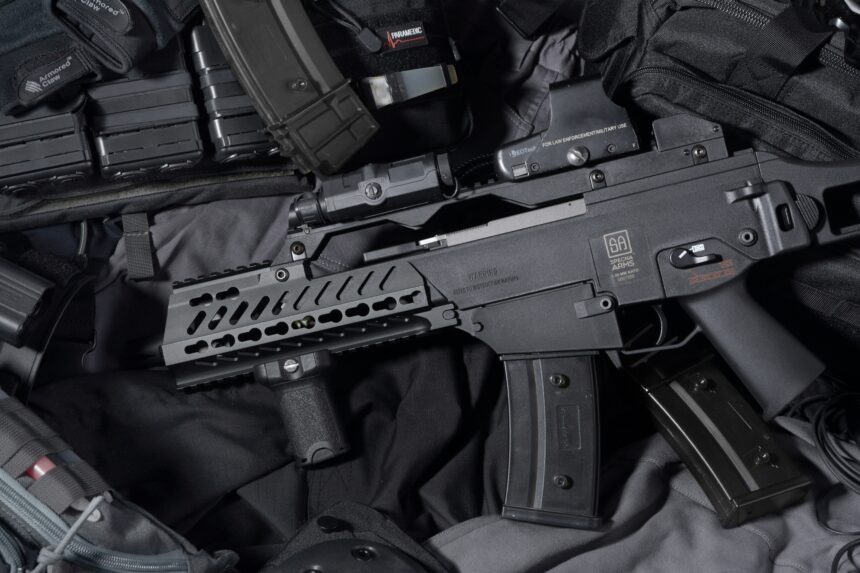
The dawn of the 21st century has been indelibly shaped by the relentless march of technological innovation, and nowhere is this more profoundly evident than in the realm of weaponry. Modern weapons, born from sophisticated scientific research and engineering prowess, represent a quantum leap from their historical predecessors, offering unprecedented levels of precision, destructive capacity, and strategic advantage. This evolution, while undeniably a testament to human ingenuity, simultaneously casts a long shadow of concern regarding the potential for catastrophic conflict. The power wielded by these advanced instruments of war is not merely a matter of brute force; it is a complex interplay of sophisticated electronics, advanced materials science, and intricate logistical planning, all converging to create a lethality that dwarfs anything seen in past eras. Understanding this power requires a deep dive into the technological underpinnings, the strategic implications, and the ethical considerations that define the modern battlefield.
The potency of contemporary weaponry is intrinsically linked to the foundational scientific and engineering principles that underpin their design and operation. From the microscopic intricacies of microprocessors to the macroscopic application of physics, a confluence of disciplines has birthed systems capable of extraordinary feats of destruction and surveillance. The very definition of a “weapon” has expanded beyond simple projectile launchers to encompass a vast array of technologies that can inflict damage, disrupt operations, and surveil adversaries with unparalleled efficiency. This evolution is not a static phenomenon; it is a continuous cycle of research, development, and deployment, where each incremental advancement builds upon the last, pushing the boundaries of what is considered possible in warfare.
Precision Guidance and the Eradication of the “Collateral Damage” Myth
Perhaps the most significant transformation in modern weaponry lies in the realm of precision. The days of indiscriminate bombing and widespread destruction are increasingly being supplanted by systems designed to strike specific targets with pinpoint accuracy. This shift is primarily driven by the development and integration of advanced guidance systems, which allow munitions to actively seek out and neutralize their intended targets, irrespective of battlefield conditions or enemy countermeasures.
Global Positioning Systems (GPS) and Inertial Navigation Systems (INS)
The ubiquity of GPS has revolutionized navigation and targeting. By triangulating signals from a constellation of satellites, these systems provide incredibly accurate location data, enabling missiles, bombs, and even artillery shells to be guided with remarkable precision. When coupled with Inertial Navigation Systems, which use accelerometers and gyroscopes to track movement and orientation, the accuracy is further enhanced, allowing for navigation even in GPS-denied environments. This synergy is critical for ensuring that weapons strike only their intended targets, theoretically minimizing unintended harm.
Laser and Infrared Seekers
Beyond initial targeting, active seeker technologies ensure that munitions can correct their trajectory mid-flight based on real-time sensor data. Laser-guided bombs, for instance, are illuminated by a laser designator (either ground-based or airborne) and home in on that reflected laser energy. Infrared seekers, on the other hand, detect the heat signature of a target, making them effective against vehicles and other heat-emitting sources, particularly in the dark or through smoke. This ability to adapt to a moving target or to counter evasive maneuvers significantly increases the probability of a successful strike.
Advanced Materials and Energetic Compounds
The physical integrity and destructive potential of modern weapons are also significantly enhanced by advancements in materials science and the development of more potent energetic compounds. These innovations allow for weapons that are lighter, stronger, more durable, and capable of delivering greater explosive force with less mass. The continuous pursuit of superior materials directly translates to enhanced performance and survivability on the battlefield.
Composites and Exotic Alloys
The development of lightweight yet incredibly strong composite materials, such as carbon fiber reinforced polymers, and high-strength alloys, like titanium and specialized steel, has allowed for the construction of more robust and agile platforms – from aircraft and vehicles to the casings of munitions themselves. These materials can withstand greater stresses and strains, enabling higher speeds, increased maneuverability, and an extended operational lifespan.
Next-Generation Explosives and Propellants
Research into novel energetic compounds has yielded explosives that are more stable, more powerful, and capable of producing a wider range of effects. This includes the development of insensitive munitions (IM) that are less prone to accidental detonation, enhancing safety for personnel. Simultaneously, researchers are exploring propellants that offer higher specific impulse, leading to greater range and velocity for projectiles and missiles.
Cyber Warfare and Electronic Countermeasures
The modern battlefield is no longer solely a physical domain. The proliferation of digital networks and interconnected systems has opened up a new frontier: cyber warfare. The ability to disrupt, degrade, or destroy enemy systems through digital means is a potent and increasingly vital component of modern military strategy. Furthermore, the development of sophisticated electronic countermeasures is crucial for protecting one’s own digital infrastructure and operational capabilities.
Network Exploitation and Disruption
Cyber warfare encompasses a broad spectrum of malicious activities, from gaining unauthorized access to sensitive military networks to deploying malware that can cripple command and control systems, disrupt communication, or even disable critical infrastructure. The goal is to achieve strategic objectives by degrading the enemy’s ability to function, often without firing a single physical shot.
Jamming and Spoofing Technologies
Countermeasures against enemy surveillance and guidance systems are equally critical. Jamming technologies can disrupt radio frequency communications and radar signals, while spoofing involves broadcasting false signals to mislead enemy sensors and weapons systems. These capabilities are vital for protecting friendly forces and ensuring the unimpeded operation of their own advanced technologies.
Modern weapons are powered by a combination of advanced technologies, including sophisticated materials, precision engineering, and cutting-edge electronics. These innovations enhance the effectiveness and reliability of military systems, allowing for improved targeting, increased range, and greater lethality. For a deeper understanding of the technological advancements that drive modern weaponry, you can read a related article at this link.
The Evolving Landscape of Modern Weaponry
The sheer diversity of modern weapon systems reflects the multifaceted nature of contemporary conflict. From the strategic deterrence of nuclear arsenals to the tactical agility of unmanned aerial vehicles, each category of weapon plays a distinct role in shaping the global security calculus. This evolution is driven by a constant re-evaluation of military doctrine, emerging threats, and the relentless pursuit of technological dominance.
Strategic Deterrence and Nuclear Arsenals
While the overt use of nuclear weapons remains a terrifying prospect, their existence continues to exert a profound influence on international relations and military planning. The development of increasingly sophisticated delivery systems and warheads underscores the ongoing commitment to nuclear deterrence, with the potential for catastrophic annihilation always looming.
Hypersonic Delivery Systems
The pursuit of hypersonic technology, capable of traveling at speeds exceeding Mach 5, poses a new challenge to traditional missile defense systems. Hypersonic glide vehicles and cruise missiles are more difficult to track and intercept, potentially reducing the warning time available to adversaries and increasing the perceived effectiveness of a first strike.
Miniaturized Nuclear Warheads
Advancements in miniaturization allow for the development of smaller, more versatile nuclear warheads that can be fitted to a wider range of delivery platforms, including cruise missiles and even, in some projections, artillery shells. This could blur the lines between conventional and nuclear conflict, increasing the risk of escalation.
Modern weapons are powered by a combination of advanced technologies, including sophisticated materials, precision engineering, and cutting-edge electronics. These innovations enable greater accuracy, increased lethality, and enhanced operational capabilities on the battlefield. For a deeper understanding of the technological advancements driving these modern armaments, you can explore a related article that delves into the complexities of military technology and its implications for warfare. To read more about this topic, visit this insightful article.
Unmanned Systems and the Remotely Piloted Battlefield
Perhaps the most visible manifestation of modern technological advancement in warfare is the proliferation of unmanned systems, particularly drones. These platforms have fundamentally altered reconnaissance, surveillance, and, increasingly, offensive operations, offering capabilities previously unimaginable with manned platforms.
Unmanned Aerial Vehicles (UAVs) – The Eyes and Streaks of the Sky
UAVs, ranging from small hand-launched reconnaissance drones to large, sophisticated combat aircraft, have become indispensable. They provide persistent aerial surveillance, can carry precision-guided munitions, and can be deployed in high-risk environments without endangering pilots. Their low cost and adaptability have made them a cornerstone of modern military operations.
Unmanned Ground Vehicles (UGVs) and Underwater Vehicles (UUVs)
The development extends beyond the air, with UGVs performing tasks such as bomb disposal, reconnaissance in hazardous areas, and even combat roles. Similarly, UUVs are being developed for mine detection, underwater surveillance, and the deployment of naval ordnance. This expanding network of autonomous systems creates a more pervasive and multi-domain operational capability.
Directed Energy Weapons and the Future of Battlefield Engagement
Directed energy weapons (DEWs) represent a paradigm shift in how force can be applied. Instead of relying on kinetic projectiles, DEWs utilize concentrated beams of energy to disable, damage, or destroy targets. This technology holds the promise of highly precise and virtually limitless ammunition, though significant challenges remain in their development and deployment.
High-Energy Lasers (HELs)
HELs can deliver intense beams of light to heat and damage targets. Potential applications include anti-missile defense, disabling drones, and even incapacitating enemy personnel. The limitations currently lie in power generation, atmospheric distortion, and the ability to maintain a stable beam on a moving target.
High-Power Microwaves (HPMs)
HPM weapons generate intense bursts of microwave radiation that can disrupt or destroy electronic systems. They are particularly effective against electronic equipment, rendering it inoperable without causing physical destruction. This makes them a potent tool for non-lethal electronic warfare.
The Strategic Imperatives of Advanced Lethality

The power of modern weapons is not merely an abstract technological concept; it has direct and profound implications for global strategy, military doctrine, and the very nature of warfare. Nations invest heavily in these technologies not just for defense, but to project power, deter adversaries, and achieve decisive advantages on the battlefield.
Information Dominance and the Network-Centric Battlefield
Modern warfare is increasingly defined by the ability to gather, process, and disseminate information faster and more effectively than the adversary. The concept of the “network-centric battlefield” emphasizes the interconnectedness of all assets, from individual soldiers to strategic command centers, allowing for real-time situational awareness and rapid decision-making.
Intelligence, Surveillance, and Reconnaissance (ISR) Capabilities
Advanced ISR platforms, including satellites, high-altitude drones, and sophisticated sensors, provide unprecedented levels of battlefield visibility. This intelligence allows commanders to identify targets, assess threats, and plan operations with a level of detail previously unattainable.
C4ISR Integration and Decision Superiority
The effective integration of Command, Control, Communications, Computers, Intelligence, Surveillance, and Reconnaissance (C4ISR) systems is paramount. This integration enables a “decision superiority” advantage, where a force can make critical decisions and execute them faster and more effectively than its opponent, thereby dictating the tempo of the conflict.
Asymmetric Warfare and the Non-State Actor Threat
While major powers often focus on peer-to-peer conflict, the rise of non-state actors and the prevalence of asymmetric warfare present unique challenges. Modern weaponry, while conceived for conventional conflicts, can also be adapted or acquired by these groups, leading to novel and unsettling forms of threat.
The Proliferation of Advanced Technology to Non-State Actors
The increasing availability and decreasing cost of certain advanced technologies, such as commercial drones capable of carrying explosives, pose a significant challenge. Terrorist organizations and insurgent groups can leverage these tools to conduct attacks with devastating effect, bypassing traditional defenses.
Counter-Insurgency and Irregular Warfare Implications
The deployment of sophisticated weaponry in irregular warfare scenarios requires careful consideration. The precision offered by modern arms can be crucial in minimizing civilian casualties, but the psychological impact of advanced technology can also be a factor in shaping perceptions and influencing the narrative of a conflict.
The Economic and Industrial Complex of Modern Weaponry
The development and production of modern weapons systems represent a colossal global industry, with significant economic implications. The vast sums invested in research, development, and manufacturing drive innovation but also raise questions about resource allocation and the potential for a self-perpetuating arms race.
Defense Spending and Technological Escalation
Global defense spending remains at historically high levels, driven by the perceived need to maintain a technological edge. This constant investment fuels further innovation, creating a cycle where advancements in one area necessitate the development of countermeasures and subsequent improvements in others.
The Arms Trade and Global Security
The international arms trade is a complex and often contentious issue. The transfer of advanced weaponry to various nations can stabilize or destabilize regions, depending on the geopolitical context. The ethical considerations surrounding the sale of lethal force to authoritarian regimes or nations engaged in internal conflict are a persistent concern.
The Ethical and Societal Implications of Unleashed Power

The formidable power of modern weapons brings with it a heavy burden of ethical responsibility. The potential for widespread destruction, the changing nature of warfare, and the societal impact of militarization demand careful and ongoing deliberation. The pursuit of technological superiority must be tempered by a commitment to humanitarian principles and the preservation of peace.
The Debate on Lethal Autonomous Weapons Systems (LAWS)
Perhaps one of the most contentious debates in modern military ethics revolves around Lethal Autonomous Weapons Systems (LAWS). These are weapons that can identify, select, and engage targets without direct human intervention. The prospect of machines making life-and-death decisions raises profound moral and legal questions.
Accountability and the “Human in the Loop”
A central concern with LAWS is the question of accountability. Who is responsible when an autonomous weapon makes an erroneous or unethical engagement? The concept of the “human in the loop,” where a human operator retains ultimate control, is a focal point of this debate, aiming to maintain human judgment and oversight in lethal decision-making.
The Dehumanization of Warfare
Critics argue that the further automation of warfare risks dehumanizing the act of killing. Removing human empathy and moral reasoning from the decision to use lethal force could lead to a more callous and less restrained approach to conflict. This raises concerns about the long-term impact on human values and international norms.
The Impact of Weaponry on Civilian Populations
While modern weapons are often touted for their precision, the reality of conflict can still result in devastating consequences for civilian populations. The intersection of advanced technology with the inherent chaos of war necessitates a constant re-evaluation of the principles of distinction and proportionality.
The Principle of Distinction and Proportionality
International humanitarian law mandates that combatants distinguish between combatants and civilians and ensure that any attack is proportionate to the military advantage gained, minimizing harm to non-combatants. The use of advanced weaponry must be constantly scrutinized against these fundamental principles.
The Psychological and Societal Scars of Modern Conflict
Even with precision, the deployment of modern weapons can inflict deep psychological and societal scars. The impact of witnessing advanced destructive capabilities, the displacement of communities, and the long-term consequences of environmental damage are all critical considerations in the ethical calculus of warfare.
Arms Control, Disarmament, and the Pursuit of Peace
In the face of increasingly powerful weaponry, the efforts towards arms control and disarmament remain crucial. While complete disarmament may seem idealistic, limiting the proliferation of certain weapon systems and fostering transparency can contribute to global stability and reduce the risk of catastrophic conflict.
The Role of International Treaties and Agreements
International treaties and agreements, such as the Nuclear Non-Proliferation Treaty (NPT) and various conventions on conventional weapons, play a vital role in regulating the development and use of military technology. The ongoing commitment to these frameworks is essential for managing the inherent risks of advanced weaponry.
The Future of Warfare and the Imperative of Diplomacy
As technology continues to advance, the imperative for diplomatic solutions and the peaceful resolution of conflicts becomes even more pronounced. Understanding the power of modern weapons should not lead to a fatalistic acceptance of perpetual warfare, but rather to a heightened resolve to prevent it. The ultimate power lies not in the ability to destroy, but in the capacity to build and to coexist.
The ongoing evolution of weaponry, fueled by ceaseless technological innovation, presents a complex and often daunting panorama. The power of modern weapons, born from the crucible of scientific endeavor and engineering brilliance, offers unprecedented capabilities for both defense and destruction. It is a power that demands not only careful understanding of its technological underpinnings and strategic implications but also a profound and unwavering commitment to ethical reflection and the tireless pursuit of peace. The future of humanity hinges on our ability to harness the intellect that creates these formidable tools for constructive progress, rather than succumbing to their destructive potential.

China’s Invisible Chokehold on Modern Weapons
FAQs
What powers modern weapons?
Modern weapons are powered by a variety of sources, including chemical energy, electrical energy, and nuclear energy.
How are modern firearms powered?
Most modern firearms are powered by chemical energy, specifically gunpowder or other propellants. When the trigger is pulled, the propellant ignites, creating high-pressure gas that propels the bullet out of the barrel.
What powers modern missiles and rockets?
Missiles and rockets are typically powered by chemical energy, using a combination of fuel and oxidizer to create a controlled explosion that propels the projectile forward.
How are modern drones powered?
Modern drones are powered by electrical energy, typically from rechargeable batteries or fuel cells. Some military drones also use hybrid power systems that combine electrical and internal combustion engines.
Are there any modern weapons powered by nuclear energy?
Yes, there are some modern weapons, such as nuclear submarines and nuclear-powered aircraft carriers, that are powered by nuclear energy. These weapons use nuclear reactors to generate heat, which is then converted into electrical or mechanical power.