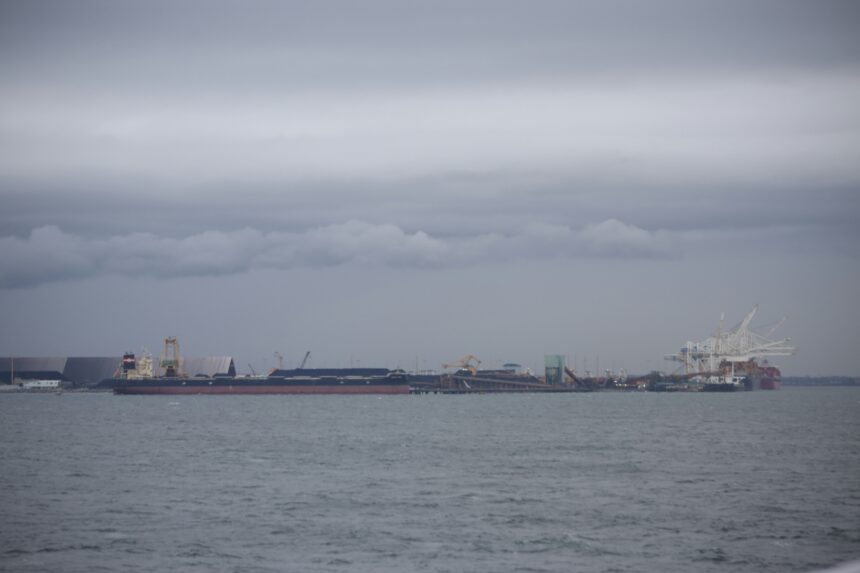
The Pacific Ocean, a vast expanse of blue that has historically served as a bridge between cultures and a canvas for exploration, is now increasingly becoming a theater of geopolitical friction. Beneath its seemingly tranquil surface, a chilling tension is steadily growing, signaling the emergence of a new Cold War, one that casts its shadow over the Indo-Pacific region. This burgeoning rivalry, characterized by strategic posturing, technological arms races, and ideological divides, is reshaping alliances, testing diplomatic channels, and raising concerns about regional stability.
The Indo-Pacific, once seen as a region of primarily economic dynamism, is now at the epicenter of a profound power struggle. For decades, the United States and its allies have enjoyed a relatively stable, albeit evolving, security architecture. However, the rapid ascent of China, coupled with a more assertive foreign policy, has fundamentally altered this equilibrium. This shift is not merely about military might; it encompasses economic influence, technological dominance, and the shaping of international norms and institutions.
The Rise of a New Hegemon: China’s Assertive Ambitions
China’s economic miracle has translated into a significant expansion of its military capabilities and global aspirations. Its increasing presence in the South China Sea, its Belt and Road Initiative, and its growing naval power are all indicative of a nation determined to play a larger role on the world stage, and importantly, to recalter the existing Pacific order. This assertiveness, while framed by Beijing as a pursuit of its rightful interests, is perceived by many regional players and the United States as a challenge to freedom of navigation, established international law, and the existing balance of power.
Navigating the South China Sea: A Crucible of Conflict
The South China Sea, a vital global trade route and a region rich in natural resources, has become a focal point of territorial disputes and military posturing. China’s expansive claims, often referred to as the “nine-dash line,” are contested by several Southeast Asian nations, including Vietnam, the Philippines, Malaysia, and Brunei. Beijing’s construction of artificial islands and the militarization of these features have further inflamed tensions, leading to frequent naval patrols, freedom of navigation operations by the US Navy, and diplomatic standoffs. The potential for miscalculation or accidental escalation in this strategically critical waterway remains a persistent concern.
International Law vs. Geopolitical Realities: A Conte nstient Struggle
The United Nations Convention on the Law of the Sea (UNCLOS) provides a legal framework for maritime claims, but its interpretation and enforcement in the South China Sea have become deeply politicized. China’s rejection of the Permanent Court of Arbitration’s ruling in 2016, which invalidated its expansive claims, underscores a fundamental divergence in how international law is perceived and applied. This creates a precarious situation where legal principles are often overshadowed by raw geopolitical power, leaving smaller nations vulnerable and uncertain about their sovereign rights.
The Scramble for Influence: Economic Levers and Diplomatic Maneuvers
Beyond the military dimension, the Pacific Cold War is also being fought on economic and diplomatic fronts. China’s Belt and Road Initiative, a monumental infrastructure development plan, has been lauded by some for its potential to foster growth but criticized by others as a means of expanding Beijing’s economic and political influence, potentially creating debt traps for recipient nations. The United States and its allies are countering these efforts with their own initiatives, such as the Indo-Pacific Economic Framework for Prosperity (IPEF), aiming to offer alternative models of economic partnership.
The Technology Race: From 5G to Artificial Intelligence
The battle for technological supremacy is another critical front in this evolving conflict. The development and deployment of advanced technologies like 5G networks, artificial intelligence, and quantum computing are seen as crucial for both economic competitiveness and national security. Concerns about the security implications of Chinese technology, particularly in telecommunications, have led to restrictions and bans in several Western countries. This technological competition is not just about innovation; it’s about securing supply chains, preventing espionage, and maintaining a strategic advantage in the digital realm.
The Pacific Ocean Cold War, a term that encapsulates the geopolitical tensions and military strategies employed by superpowers in the Pacific region during the latter half of the 20th century, is a fascinating topic that intertwines with various historical events and analyses. For a deeper understanding of the intricacies involved in this period, you may find the article titled “Strategic Waters: The Pacific Theater in the Cold War” particularly insightful. It explores the naval strategies and diplomatic maneuvers that defined the era. You can read it here: Strategic Waters: The Pacific Theater in the Cold War.
The United States’ Rebalancing Act: Reinvigorating Alliances in the Pacific
In response to China’s growing assertiveness, the United States has embarked on a significant rebalancing of its strategic priorities, shifting its focus and resources back towards the Indo-Pacific. This involves strengthening existing alliances, forging new partnerships, and bolstering its military presence in the region. The aim is to create a credible deterrent, reassure allies, and promote a free and open Indo-Pacific, a vision that emphasizes adherence to international law and the prevention of any single power from dominating the region.
Strengthening the Pillars of Security: Revitalizing Core Alliances
The US has historically relied on a network of bilateral alliances in the Pacific, including those with Japan, South Korea, Australia, and the Philippines. Recent years have seen a renewed emphasis on these partnerships, with increased joint military exercises, enhanced interoperability, and a deeper level of strategic coordination. These alliances are seen as vital for collective security and for presenting a united front against potential aggression.
The AUKUS Pact: A New Era of Trilateral Cooperation
The establishment of the trilateral security pact between Australia, the United Kingdom, and the United States (AUKUS) marked a significant development. This agreement, which includes the provision of nuclear-powered submarines to Australia, signals a deeper commitment to security cooperation and a recognition of the evolving security challenges in the Indo-Pacific. AUKUS is widely seen as a direct response to China’s growing naval power and its ambitions in the region.
Decades of Trust and Evolving Threats: The Japan-US Alliance
The alliance between the United States and Japan remains a cornerstone of regional security. With the world’s third-largest economy and a powerful, technologically advanced military, Japan plays a crucial role in maintaining stability. The alliance has adapted to new threats, with expanded cooperation on missile defense, cyber security, and space-based capabilities. Tokyo’s own recent increase in defense spending and its more proactive security posture reflect the changing regional dynamics.
The Quad Awakens: A Multilateral Dialogue for a Free and Open Indo-Pacific
The Quadrilateral Security Dialogue, or the Quad, comprising the United States, Japan, India, and Australia, has emerged as a key forum for multiparty cooperation. While initially viewed with suspicion by some, the Quad has evolved into a substantive mechanism for discussing and coordinating strategies on issues ranging from maritime security and climate change to vaccine distribution and critical and emerging technologies. Its focus on promoting a “free and open Indo-Pacific” resonates with many regional nations.
Beyond Military Might: The Quad’s Expanding Agenda
The Quad’s agenda has moved beyond purely military considerations. It is increasingly addressing areas of civilian importance to enhance regional resilience and prosperity. This includes initiatives on vaccine equity, critical and emerging technologies, climate action, and supply chain resilience. This broader approach allows the Quad to engage a wider range of partners and to address the multifaceted challenges facing the Indo-Pacific.
The Unsettled Neighborhood: Concerns of Regional Neighbors

The growing tensions in the Pacific are not distant geopolitical posturing; they are directly impacting the nations within the region, creating a sense of apprehension and forcing them to navigate a complex and increasingly uncertain security environment. Many countries find themselves caught between the competing interests of major powers, necessitating careful diplomatic maneuvering and a prioritization of their own national interests.
Navigating the Currents of Influence: Southeast Asia’s Dilemma
Southeast Asian nations, geographically situated between the major powers, are particularly sensitive to the escalating tensions. They value their economic ties with China but are also wary of its growing assertiveness and its disregard for international law in the South China Sea. Simultaneously, they rely on the United States for security and economic partnerships. This precarious balancing act requires constant diplomatic effort and a commitment to multilateralism.
ASEAN’s Role: Maintaining Unity in a Divided World
The Association of Southeast Asian Nations (ASEAN) plays a crucial role in mediating regional disputes and promoting dialogue. However, ASEAN’s effectiveness is often tested by the divergent interests of its member states, particularly when it comes to taking a strong collective stance against external pressures. Preserving ASEAN’s centrality and its ability to foster consensus remains a significant challenge.
The Peninsula’s Precarious Peace: North Korea’s Nuclear Shadow
The Korean Peninsula remains a volatile flashpoint, with North Korea’s nuclear weapons program posing a constant threat to regional and global security. While often viewed through a separate lens, North Korea’s provocative missile tests and its alignment with certain powers add another layer of complexity to the broader Pacific Cold War dynamics. The pursuit of denuclearization remains an elusive but critical goal.
Deterrence and Diplomacy: A Tightrope Walk on the Korean Peninsula
The international community continues to grapple with the challenge of denuclearizing North Korea. A combination of deterrence through strengthened alliances with South Korea and Japan, coupled with diplomatic engagement, remains the primary strategy. However, sanctions and diplomatic efforts have so far failed to achieve lasting breakthroughs, leaving the region in a state of perpetual unease.
The Arms Race Escalates: Lethal Technologies and Destabilizing Doctrines

The chilling tensions are fueling a regional arms race, with nations investing heavily in advanced military capabilities. This is not just about numbers; it’s about the qualitative advancement of weaponry, the development of sophisticated technologies, and the potential for a more destructive form of conflict. The implications for regional stability are profound and deeply concerning.
Modernizing Arsenals: From Submarines to Missiles
Navies are expanding and modernizing their fleets, with a particular emphasis on submarines, aircraft carriers, and advanced missile systems. Air forces are acquiring stealth aircraft and sophisticated surveillance technologies. Land forces are also undergoing modernization, with a focus on rapid deployment and asymmetric warfare capabilities. This relentless build-up risks creating a dangerous spiral of escalation.
Hypersonic Missiles and Cyber Warfare: New Frontiers of Conflict
The development of hypersonic missiles, capable of evading current missile defense systems, has added a new dimension to strategic deterrence. Similarly, the growing sophistication of cyber warfare capabilities poses a significant threat to critical infrastructure and military command and control systems. These emerging technologies blur the lines between peace and conflict and raise the specter of rapid, devastating attacks.
The Nuclear Question: Re-emerging Concerns and Proliferation Risks
While the focus has often been on conventional and emerging technologies, the specter of nuclear weapons remains a significant concern. Increased focus on tactical nuclear weapons and the modernization of existing nuclear arsenals by some powers contribute to an atmosphere of heightened nuclear risk. The potential for proliferation also remains a constant worry.
Deterrence Through Uncertainty: The Role of Nuclear Capabilities
Nuclear weapons continue to play a central role in the doctrines of several major powers in the region. The concept of mutually assured destruction (MAD) remains a theoretical bulwark against full-scale conflict, but the increasing number of actors and the evolving nature of warfare raise questions about the stability of nuclear deterrence in the 21st century.
The Pacific Ocean Cold War has been a subject of extensive analysis, particularly in understanding the geopolitical tensions that shaped the region during the latter half of the 20th century. For those interested in exploring this topic further, a related article provides valuable insights into the strategic maneuvers and military developments that characterized this era. You can read more about it in this detailed analysis which delves into the complexities of international relations in the Pacific.
The Brink of Conflict? Navigating the Path to De-escalation
| Event | Date | Location | Participants |
|---|---|---|---|
| Pacific Ocean Cold War | 1945-1991 | Pacific Ocean | United States, Soviet Union, China, Japan |
The Pacific Ocean Cold War is not yet a hot war, but the underlying tensions are palpable and the risks of miscalculation are significant. The path forward requires a delicate balance of deterrence, diplomacy, and a renewed commitment to international cooperation. The future of regional stability hinges on whether nations can find common ground and de-escalate the current trajectory before it leads to irreparable consequences.
The Importance of Dialogue: Open Channels for Communication
Maintaining open channels of communication at all levels – between military leaders, diplomats, and political representatives – is paramount. Transparency about military activities, clear signaling of intentions, and a willingness to engage in honest dialogue can help prevent misunderstandings and reduce the likelihood of accidental escalation.
Confidence-Building Measures: Fostering Trust in a Mistrustful Era
Implementing confidence-building measures, such as joint patrols in less sensitive areas, reciprocal observation of military exercises, and established protocols for encounters at sea and in the air, can help build trust and reduce friction. These measures, while seemingly small, can have a significant impact on de-escalating tensions.
The Role of International Law and Institutions: Upholding the Rules-Based Order
Strengthening and upholding international law and institutions is crucial for managing disputes and preventing the resort to force. Reinforcing the principles of UNCLOS, supporting the jurisdiction of international courts, and ensuring the effectiveness of regional organizations like ASEAN are vital steps in safeguarding peace and stability.
The Pursuit of a Multipolar World: Balancing Power Without Conflict
The reality of a multipolar world, with multiple centers of power, is likely to persist. The challenge lies in managing this multipolarity in a way that avoids zero-sum competition and promotes cooperation. A focus on shared challenges and mutual interests, rather than solely on rivalry, is essential for navigating this complex landscape and preventing the Pacific Ocean from becoming a permanent theater of cold war. The waters of the Pacific have seen immense change, and the current trajectory demands urgent attention to avert a chilling future.

How the CIA Tried to Steal a Soviet Nuclear Submarine
FAQs
What was the Pacific Ocean Cold War?
The Pacific Ocean Cold War refers to the period of geopolitical tension and rivalry between the United States and the Soviet Union in the Pacific region following World War II.
When did the Pacific Ocean Cold War take place?
The Pacific Ocean Cold War took place from the end of World War II in 1945 until the collapse of the Soviet Union in 1991.
What were the main events and developments during the Pacific Ocean Cold War?
Key events and developments during the Pacific Ocean Cold War included the Korean War, the Vietnam War, the Cuban Missile Crisis, and the ongoing arms race between the United States and the Soviet Union.
How did the Pacific Ocean Cold War impact the countries in the region?
The Pacific Ocean Cold War had significant impacts on countries in the region, including the division of Korea, the Vietnam War, and the establishment of military bases and alliances in the Pacific.
What is the legacy of the Pacific Ocean Cold War today?
The legacy of the Pacific Ocean Cold War includes ongoing geopolitical tensions in the region, the presence of military alliances and bases, and the lasting impact of the conflicts and proxy wars that took place during this period.