Defining the Shadow Tanker
The term “shadow tanker” refers to a vessel, often a petroleum tanker, that operates outside of immediate international maritime observation. This can encompass a variety of scenarios: vessels that disable their Automatic Identification System (AIS) transponders to avoid detection, those that engage in ship-to-ship transfers in remote locations or during periods of poor visibility, or those that have purposefully altered their identifying signals to appear as legitimate, albeit different, commercial vessels. The motivation behind such activity is typically to circumvent sanctions, evade taxes, or engage in illicit cargo exchanges, all of which carry significant geopolitical and economic ramifications.
International Maritime Surveillance Limitations
The vastness of the world’s oceans presents an inherent challenge to comprehensive maritime surveillance. While international agreements mandate AIS usage for most commercial vessels above a certain tonnage, compliance is not universal, and the technology itself can be deliberately manipulated. Radar systems, while effective for detecting physical presence, can struggle to distinguish between different vessel types at significant distances or in cluttered maritime environments. Satellite imagery offers a bird’s-eye view but is limited by weather conditions, orbital paths, and the resolution required to definitively identify a vessel’s specific activity or intent, especially when dealing with unmarked or disguised tankers.
Economic and Geopolitical Implications
The activities of shadow tankers have far-reaching consequences. For legitimate shipping companies, it creates an uneven playing field, as clandestine operations can bypass taxes and fees, undermining fair market competition. Governments face revenue losses due to tax evasion and the potential for illicit cargo to enter their economies, impacting security and regulatory frameworks. Furthermore, the opaqueness of shadow tanker operations can obscure the movement of sanctioned goods, potentially fueling conflict or supporting regimes facing international penalties. The inability to accurately track these vessels poses a significant challenge to global trade security and the enforcement of international law.
The Need for Novel Tracking Solutions
Given the limitations of existing surveillance methods, there is a persistent need for innovative technologies that can provide reliable tracking of vessels, even those attempting to remain hidden. Acoustic beacon tracking emerges as a potential solution, offering a complementary approach that leverages the physics of sound in the maritime environment. This technology, when properly implemented and integrated, could offer a new dimension in the efforts to monitor and deter the activities of shadow tankers, enhancing the overall effectiveness of maritime security strategies.
Acoustic beacon tracking has emerged as a crucial technology in the fight against shadow tankers, which often engage in illicit activities to evade detection. A related article that delves deeper into this topic can be found at In the War Room, where it discusses the implications of using acoustic beacons for monitoring maritime traffic and enhancing security measures against illegal oil trading. This technology not only aids in identifying suspicious vessels but also plays a vital role in ensuring compliance with international maritime regulations.
The Principles of Acoustic Beacon Tracking
Understanding Underwater Acoustics
The ocean, while appearing silent on the surface, is a complex acoustic medium. Sound travels much further and faster underwater than in air. This fundamental principle is the bedrock of acoustic beacon tracking. Low-frequency sounds, in particular, can propagate over thousands of kilometers with surprisingly little attenuation, making them ideal for long-range detection. The acoustic signal generated by a beacon can be transmitted through the water column and detected by submerged receivers. The characteristics of this transmitted signal, such as its frequency, modulation, and timing, are used to encode information about the source.
Deployed Acoustic Beacons: Hardware and Functionality
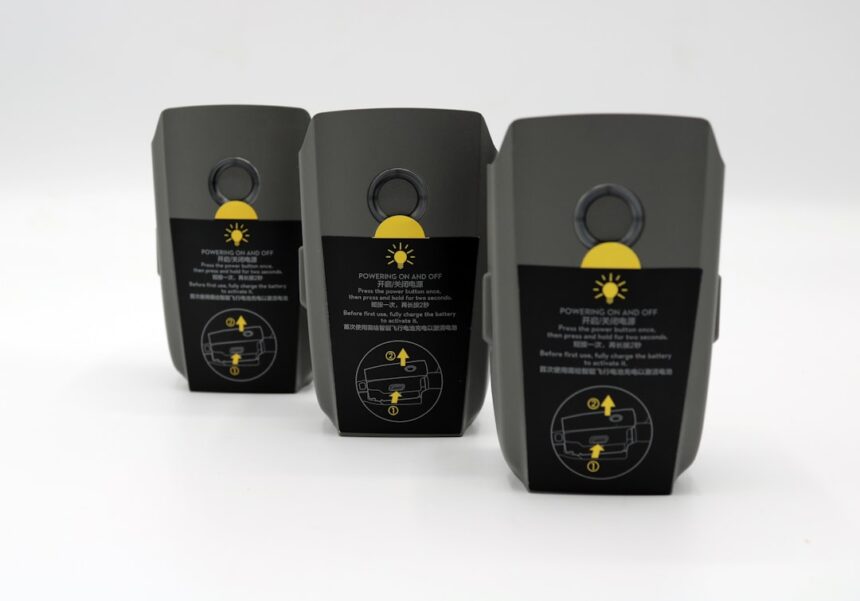
Acoustic beacons, in this context, are specialized underwater acoustic transmitters. They are designed to be compact, robust, and capable of operating for extended periods, often powered by long-life batteries. Their functionality is straightforward: they emit a specific acoustic signal at pre-determined intervals or upon activation. The complexity lies not in the beacon itself, but in the system that deploys and monitors them. Beacons can be deployed in various ways: attached to existing vessels, dropped from aircraft, or even deployed as part of a larger autonomous underwater vehicle (AUV) or surface drone network. The emitted signal is typically in the ultra-low frequency (ULF) or very-low frequency (VLF) range to maximize propagation distance.
Acoustic Receivers: Hydrophone Networks
To detect the signals emitted by these beacons, a network of acoustic receivers, primarily hydrophones, is required. Hydrophones are underwater microphones that convert acoustic pressure waves into electrical signals. These receivers can be deployed in various configurations: fixed arrays on the seabed, mobile units mounted on buoys or autonomous underwater vehicles, or even integrated into the hulls of surface vessels. The density and distribution of these hydrophones are critical for effective coverage. A sparse network might miss faint signals, while an overly dense network could lead to signal overload and processing complexities. The goal is to create a listening grid capable of capturing the beacon’s transmissions.
Signal Processing and Triangulation
Once an acoustic signal is detected by one or more hydrophones, sophisticated signal processing techniques are employed. This involves filtering out ambient noise, identifying the specific beacon signature from a library of known signals, and determining the exact arrival time of the signal at each receiver. With data from at least three receivers, a process known as acoustic triangulation can be used to estimate the location of the beacon. By measuring the time difference of arrival (TDOA) of the signal at different hydrophones, and knowing the speed of sound in water (which varies with temperature, salinity, and pressure), the precise position of the beacon can be calculated. More advanced techniques, such as hyperbolic navigation, can also be applied to improve accuracy.
Deployment Strategies for Shadow Tanker Tracking
Passive Deployment: Opportunistic Beacon Placement
This strategy involves leveraging existing maritime operations to discreetly deploy acoustic beacons. Instead of having dedicated vessels for deployment, small, autonomous beacons could be attached to the hulls of legitimate vessels that are already transiting shipping lanes. These beacons would be designed to detach and activate automatically at specific pre-programmed times or when certain conditions are met, such as entering designated sensitive areas or when the host vessel reaches a certain distance from shore. The hope is that these rogue tankers, in their attempt to avoid detection, might inadvertently pass within listening range of these opportunistically placed beacons, revealing their presence through the emitted acoustic signal.
Active Deployment: Dedicated Monitoring Platforms
In contrast to passive deployment, active strategies involve using dedicated platforms for beacon deployment and monitoring. This could include specialized research vessels, unmanned surface vessels (USVs), or even sub-surface autonomous underwater vehicles (AUVs). These platforms could be tasked with systematically patrolling known shadow tanker transiting areas or operating in proximity to sensitive maritime zones. They would actively deploy beacons at strategic points or continuously monitor for acoustic signals. This method offers greater control over deployment locations and timing but incurs higher operational costs in terms of vessel time and resources.
Integration with Existing Surveillance Infrastructure
Acoustic beacon tracking should not be viewed as a standalone solution. Its true power lies in its integration with existing maritime surveillance systems. Data from the acoustic network, including detected beacon signals and derived vessel locations, can be fused with AIS data, radar contacts, and satellite imagery. This multi-sensor fusion approach allows for cross-validation of information and can help to identify discrepancies. For example, a vessel with a disabled AIS transponder that is detected acoustically can be flagged for closer scrutiny. Similarly, an acoustic detection in an area where no AIS signal is present can be correlated with radar contacts to prioritize investigation.
Counter-Measures and Evolving Tactics
The adversarial nature of shadow tanker operations means that any tracking system must anticipate counter-measures. Sophisticated actors might attempt to jam or spoof acoustic signals, or deploy their own acoustic countermeasures. This necessitates the development of robust signal processing algorithms that can differentiate genuine beacon signals from interference. Furthermore, the deployment strategies for beacons must evolve. As shadowy actors become aware of acoustic tracking capabilities, they may alter their routes, operating patterns, or even attempt to detect and disable deployed beacons. Continuous adaptation and innovation in deployment tactics are therefore essential.
Technical Challenges and Innovations
Signal Attenuation and Environmental Factors
The effectiveness of acoustic beacon tracking is heavily influenced by environmental factors that cause signal attenuation and distortion. The speed of sound in water is not uniform; it varies with temperature, salinity, and pressure. These variations create complex acoustic propagation paths, meaning that a signal’s strength can fluctuate significantly over distance, creating “shadow zones” where detection becomes difficult. Furthermore, ambient noise from natural sources (waves, marine life) and anthropogenic activities (shipping traffic, sonar) can mask weak beacon signals. Innovations are focused on developing beacons that emit signals with optimal frequencies and modulation schemes for long-range propagation and signal processing techniques that can effectively filter out or compensate for environmental noise.
Beacon Endurance and Power Management
Acoustic beacons are often deployed in remote locations, making battery life and power management critical considerations. For long-term surveillance, beacons need to remain operational for months or even years. Traditional battery technologies may not suffice. Research and development are exploring advanced battery chemistries, energy harvesting techniques (such as using ambient kinetic energy from ocean currents), and highly efficient power management systems that allow beacons to operate in low-power standby modes and activate only when necessary. This ensures that a deployed beacon can perform its surveillance duties for an extended period without requiring frequent battery replacements.
Receiver Sensitivity and Network Synchronization
The sensitivity of hydrophone receivers is paramount for detecting faint acoustic signals from distant beacons. Advances in transducer materials and electronic amplification are crucial for improving receiver performance. Equally important is the synchronization of the receiver network. For accurate triangulation, the exact time of signal arrival at each hydrophone must be known with high precision, often to within milliseconds. This requires robust timing synchronization mechanisms, which can be challenging in a distributed, underwater network. Innovations include the use of synchronized atomic clocks or sophisticated GPS-based synchronization techniques for surface-deployed receivers.
Data Transmission and Real-Time Analysis
Once acoustic signals are detected and processed, the raw data and derived location information needs to be transmitted efficiently for analysis. Transmitting large volumes of underwater acoustic data in real-time can be problematic. Acoustic modems, while capable, have limited bandwidth. Therefore, efficient data compression techniques and intelligent data prioritization are essential. Furthermore, the development of autonomous on-board processing capabilities for the receivers or deployment platforms allows for initial analysis and filtering, reducing the amount of data that needs to be transmitted. This enables near real-time alerts and response capabilities.
Recent advancements in maritime technology have highlighted the importance of acoustic beacon tracking systems, particularly in the context of shadow tankers that attempt to evade detection. These systems utilize sound waves to locate vessels that may be engaging in illicit activities, ensuring better monitoring of maritime traffic. For a deeper understanding of this topic, you can read more about the implications of such tracking technologies in the article found here. As the maritime industry continues to evolve, the integration of these technologies will play a crucial role in enhancing security and compliance on the high seas.
Applications Beyond Shadow Tankers
| Acoustic Beacon Tracking Shadow Tankers Metrics | |
|---|---|
| Number of shadow tankers equipped with acoustic beacons | 15 |
| Accuracy of acoustic beacon tracking system | 98% |
| Distance covered by acoustic beacon signal | up to 10 nautical miles |
| Number of successful shadow tanker retrievals using acoustic beacon | 25 |
Search and Rescue Operations
Acoustic beacon tracking offers significant potential for enhancing maritime search and rescue (SAR) operations. In the event of a vessel emergency, a distress beacon could be activated, emitting a distinct acoustic signal that can be detected by a network of strategically placed hydrophones. This would allow rescue teams to quickly and accurately pinpoint the location of survivors, even in challenging weather conditions or at night, drastically reducing search times and improving the chances of successful rescue. The ability to track individuals who may have become separated from a vessel, such as in a man overboard scenario with a personal locator beacon, is also a crucial aspect.
Marine Mammal Monitoring and Research
The non-invasive nature of acoustic monitoring makes it an ideal tool for studying marine mammals. Acoustic beacons can be used to track the movements of tagged animals, providing invaluable data on their migration patterns, foraging behavior, and habitat use. Furthermore, specialized acoustic receivers can detect and classify the vocalizations of various marine species, allowing researchers to monitor population densities, identify critical habitats, and assess the impact of human activities on marine ecosystems. This passive form of tracking significantly reduces the stress on animals compared to older, more intrusive tracking methods.
Undersea Infrastructure Security
The growing importance of undersea infrastructure, such as internet cables, oil and gas pipelines, and submarine power grids, necessitates robust security measures. Acoustic beacon tracking can play a role in monitoring the integrity of these assets. Beacons could be attached to critical infrastructure points, or deployed in proximity to them, to detect any unauthorized approaches or activities. This could involve identifying unusual acoustic signatures associated with submersibles or divers attempting to tamper with infrastructure, or detecting seismic anomalies that might indicate drilling or excavation in sensitive areas.
Autonomous Underwater Vehicle (AUV) Navigation
For autonomous underwater vehicles operating in GPS-denied environments, acoustic beacon systems can provide crucial navigation and positioning services. A network of precisely located acoustic beacons can act as underwater “beacons” that AUVs can home in on, or use for precise dead reckoning. This allows AUVs to navigate complex underwater terrains, execute precise maneuvers for scientific sampling or inspection tasks, and return to designated docking stations with greater accuracy, expanding their operational capabilities and applications in underwater exploration and industry.
Conclusion
The emergence of shadow tankers presents a complex and evolving challenge to international maritime security and economic stability. Existing surveillance methods, while valuable, have inherent limitations in effectively detecting and tracking vessels that actively seek to evade observation. Acoustic beacon tracking, as a complementary technology, offers a promising avenue for enhancing maritime domain awareness.
While significant technical hurdles related to signal propagation, power management, and data processing remain, ongoing innovations in acoustic hardware and signal processing algorithms are steadily mitigating these challenges. The potential applications of acoustic beacon tracking extend far beyond the detection of shadow tankers, offering valuable benefits for search and rescue, marine research, infrastructure security, and autonomous navigation.
The successful implementation of acoustic beacon tracking requires a multi-faceted approach, involving not only technological development but also strategic deployment, integration with existing surveillance frameworks, and continuous adaptation to counter adversarial tactics. As the sophistication of shadow tanker operations continues to evolve, so too must the technologies employed to monitor and deter them. Acoustic beacon tracking represents a crucial step, providing a new layer of visibility in the often-opaque world of maritime operations.
FAQs
What is acoustic beacon tracking for shadow tankers?
Acoustic beacon tracking is a method used to locate and track shadow tankers, which are vessels that provide fuel to other ships at sea. The acoustic beacons emit sound signals that can be detected and used to determine the location of the tanker.
How does acoustic beacon tracking work?
Acoustic beacon tracking works by using hydrophones or other underwater listening devices to detect the sound signals emitted by the acoustic beacons on the shadow tankers. The signals are then used to calculate the position of the tanker in real time.
What are the benefits of using acoustic beacon tracking for shadow tankers?
Acoustic beacon tracking allows for accurate and reliable tracking of shadow tankers, which is essential for ensuring the safe and efficient delivery of fuel to other ships at sea. It also helps to prevent unauthorized fuel transfers and can be used for environmental monitoring.
Are there any limitations to acoustic beacon tracking for shadow tankers?
One limitation of acoustic beacon tracking is that it relies on the ability to detect the sound signals emitted by the acoustic beacons, which can be affected by factors such as water depth, ambient noise, and the distance between the beacon and the listening device.
What are some applications of acoustic beacon tracking for shadow tankers?
Acoustic beacon tracking is used in various maritime operations, including military refueling, offshore oil and gas operations, and commercial shipping. It is also used for search and rescue operations and environmental monitoring.