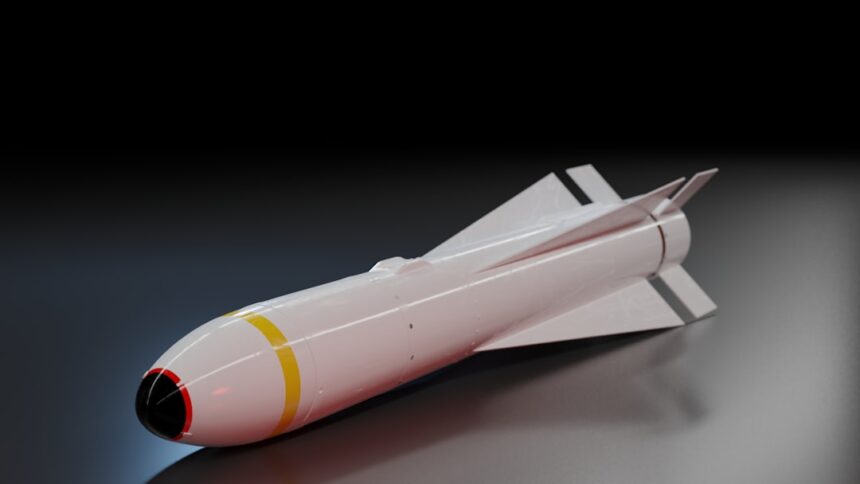
The USS Georgia SSGN is a formidable submarine, a repurposed Ohio-class ballistic missile submarine modified for a new strategic role. Its transformation into a guided missile submarine (SSGN) has significantly amplified its offensive capabilities, primarily through its substantial Tomahawk missile capacity. This article will delve into the specifics of this capacity, its implications for naval strategy, and the technology that underpins it.
Genesis of the SSGN Role
The genesis of the SSGN role can be traced back to the strategic shifts in global security following the end of the Cold War. With the reduction in deployed intercontinental ballistic missiles (ICBMs) and submarine-launched ballistic missiles (SLBMs), the United States Navy sought to redefine the role of its large, potent submarine fleet. The Ohio-class submarines, originally designed to carry the Trident D5 SLBM for nuclear deterrence, possessed a flexible internal architecture that offered potential for adaptation. The SSGN conversion program emerged as a solution to leverage these existing platforms for conventional land-attack missions, providing a flexible and survivable means of projecting power. This conversion was not merely a minor modification; it represented a fundamental reimagining of these vessels’ purpose and contribution to national security. The vast internal volume of the ballistic missile tubes, once dedicated to nuclear warheads, held the key to unlocking a new dimension of conventional offensive capability.
Technological Rationale for Conversion
The technological rationale for converting the Ohio-class submarines into SSGNs was rooted in efficiency and strategic necessity. Instead of building entirely new platforms, the Navy opted to modernize and reconfigure existing highly capable submarines. This approach offered significant cost savings and a reduced timeline for introducing advanced conventional strike capabilities. The core technology that facilitated this conversion was the ability to repurpose the Vertical Launch System (VLS) tubes that previously housed SLBMs. These tubes, designed to withstand the immense pressures of launching a ballistic missile, were perfectly suited for housing and launching a wide array of conventional cruise missiles, most notably the Tomahawk. The conversion also involved extensive rewiring, software upgrades, and the integration of new command and control systems to manage the expanded conventional strike payload.
The Ohio-Class Submarine Baseline
The Ohio-class submarine, as the foundation for the SSGN conversion, provided a robust and proven platform. Commissioned from the 1980s onwards, these boats were designed for sustained underwater operations, stealth, and a high degree of survivability. Their large size, coupled with advanced quieting technologies, made them exceptionally difficult to detect and track. This inherent stealth characteristic is crucial for the SSGN’s role, enabling it to operate in contested environments and deliver its strike package with a reduced risk of interception. The operational endurance of the Ohio-class, measured in weeks or even months submerged, allows SSGNs to remain on station for extended periods, providing persistent strike capability and intelligence gathering.
The USS Georgia (SSGN-729) is a crucial asset in the U.S. Navy’s strategic arsenal, particularly due to its capacity to launch Tomahawk missiles. This advanced submarine not only enhances the United States’ strike capabilities but also plays a significant role in deterrence and power projection. For a deeper understanding of the USS Georgia’s operational capabilities and its role in modern naval warfare, you can read a related article at In The War Room.
Tomahawk Missile Capacity: The Core Strength
The Vertical Launch System (VLS) Revolution
The heart of the USS Georgia’s enhanced offensive capability lies in its Vertical Launch System (VLS). This system, originally designed for ballistic missiles, has been ingeniously repurposed to accommodate a large number of Tomahawk cruise missiles. Each of the 24 Large Missile Cans (LMCs) within the submarine can hold a significant number of these missiles, allowing for a devastatingly effective land-attack volley. The VLS offers several advantages over older missile launch methods, including increased missile capacity, faster launch rates, and enhanced flexibility in missile loadouts. Furthermore, the vertical orientation of the launch system allows for a more compact and efficient arrangement of missiles within the submarine’s hull.
Evolution of VLS Technology
The VLS technology itself has undergone continuous evolution, enhancing its reliability and operational effectiveness. Early VLS systems, while groundbreaking, have been refined through decades of development and operational experience. Modern VLS are designed for greater fault tolerance, more precise targeting, and improved missile integration. For the SSGN conversion, the existing VLS infrastructure was adapted and augmented to handle the specific requirements of the Tomahawk missile, ensuring seamless integration and reliable deployment. The complexity of managing such a large number of missiles and their launch systems necessitates sophisticated onboard computer systems and redundant controls, all of which were a significant part of the SSGN upgrade.
Integration with SSGN Architecture
The integration of the VLS with the overall SSGN architecture was a monumental engineering task. This involved not only the physical installation and connection of the launch tubes but also the seamless incorporation of the VLS into the submarine’s combat systems. This includes the targeting computers, fire control systems, and communication links necessary to accurately cue and launch the Tomahawk missiles. The SSGN’s internal layout was reconfigured to accommodate the necessary power, cooling, and support systems for the VLS and its associated ordnance. Every aspect of the submarine’s operational command and control had to be adapted to manage this new strike capability effectively.
The Tomahawk Cruise Missile Family
The Tomahawk cruise missile is a subsonic, all-weather, long-range precision strike weapon. Its versatility and accuracy make it a cornerstone of modern naval power projection. For the SSGN missions, various variants of the Tomahawk are employed, primarily the Block IV variant, which offers improved capabilities over its predecessors, including greater range, enhanced navigation, and the ability to retarget mid-flight. This retargeting capability is a significant tactical advantage, allowing for dynamic adjustments to strike plans based on evolving battlefield conditions. The Tomahawk’s ability to fly at low altitudes, hugging the terrain, further enhances its survivability against enemy air defenses.
Tomahawk Block IV Capabilities
The Tomahawk Block IV, also known as the Tactical Tomahawk, represents a significant leap in cruise missile technology. It incorporates a two-way satellite data link that allows for in-flight retasking, enabling operators to change the missile’s target, loiter over an area, or even recall the missile if circumstances dictate. This feature dramatically increases flexibility and reduces the risk of striking unintended targets in complex or rapidly changing environments. Its enhanced GPS and inertial navigation systems ensure superior accuracy, while its increased range allows it to engage targets much farther inland. Understanding these advancements is crucial to appreciating the potency of the SSGN’s payload.
Payload Options and Versatility
While the Tomahawk is the primary missile employed, the SSGN’s VLS can theoretically accommodate other missile types, offering a degree of payload flexibility. This could include anti-ship missiles or even guided rockets, although the primary focus of the SSGN role is land-attack. The ability to tailor the missile loadout to specific mission requirements underscores the strategic adaptability of the SSGN platform. This adaptability ensures that the submarine can respond effectively to a wide spectrum of potential threats and operational objectives.
Quantifying the Missile Capacity
The precise number of Tomahawk missiles that can be carried by a USS Georgia SSGN is a subject of considerable strategic interest. While official figures are often not publicly disclosed for operational security reasons, it is widely understood that each of the submarine’s 24 LMCs can house a configurable number of missiles. Depending on the specific variant and configuration, these tubes are generally believed to accommodate four Tomahawk missiles each. This translates to a theoretical maximum capacity of approximately 154 Tomahawk missiles when the entire complement of LMCs is dedicated to this weaponry.
Factors Influencing Loadout
Several factors influence the actual missile loadout of an SSGN. These include the specific mission profile, the anticipated threat environment, and the potential need for other specialized equipment or ordnance. For instance, a mission focused on deep inland strikes might prioritize the maximum number of Tomahawks, while a mission requiring extended operations could necessitate a reduced missile load to accommodate additional supplies or specialized equipment for intelligence gathering. The Navy’s doctrine of flexible response means that the optimal loadout is determined on a case-by-case basis.
Strategic Implications of Capacity
The sheer number of missiles that can be launched from a single SSGN platform has profound strategic implications. It provides a sustained, precision strike capability that can overwhelm enemy defenses or degrade critical infrastructure over a wide area. This “brute force” conventional strike capability, delivered with the inherent stealth of a submarine, offers a unique strategic advantage. The ability to deliver such a concentrated volley of precision-guided munitions from a survivable platform significantly alters the calculus for potential adversaries.
Operational Roles and Strategic Employment
Conventional Deterrence and Prompt Global Strike
The SSGN’s Tomahawk capacity plays a pivotal role in conventional deterrence and the concept of Prompt Global Strike (PGS).PGS aims to provide the capability to deliver precision conventional munitions anywhere on the globe within one hour. SSGNs, with their ability to maintain stealthy patrol stations in strategic ocean areas and then rapidly deploy their Tomahawk payload, are a key component of this strategy. Their submerged presence offers a persistent threat that can dissuade potential aggressors. The ability to strike rapidly and effectively from an unexpected direction significantly enhances the credibility of such deterrence.
Non-Kinetic and Kinetic Strike Options
Beyond purely kinetic strikes, the Tomahawk missile can also be employed in a variety of non-kinetic roles, though its primary purpose remains the delivery of explosive warheads. The Block IV’s ability to loiter and provide targeting data, or even carry an inert payload for reconnaissance in certain scenarios, offers a degree of multi-role capability. However, the overwhelming strategic value of the SSGN lies in its ability to deliver a massive kinetic punch, capable of neutralizing heavily defended targets or inflicting significant damage on enemy infrastructure. The precision of the Tomahawk minimizes collateral damage, a key consideration in modern warfare.
Targeting Strategic Infrastructure
With its extensive Tomahawk capacity, the USS Georgia SSGN is capable of targeting a wide array of strategic infrastructure. This includes command and control centers, airfields, missile sites, naval bases, and critical industrial facilities. The ability to prosecute multiple targets simultaneously or in rapid succession from a submerged platform makes it an invaluable asset for degrading an adversary’s ability to wage war or conduct hostile actions. The accuracy of the Tomahawk ensures that these strikes can be executed with a high degree of precision, minimizing unintended consequences.
Supporting Amphibious Operations and Special Forces
SSGNs can also provide crucial fire support for amphibious operations and Special Operations Forces (SOF). Their ability to deliver precision strikes close to shore can neutralize enemy defenses in preparation for an assault or provide overflight protection for insertion and extraction missions. The stealth and endurance of the submarine allow it to operate in denied or contested waters, providing vital support to forces operating ashore without the same level of risk faced by surface vessels. This clandestine support role significantly enhances the survivability and effectiveness of other military assets.
Technological Underpinnings of Tomahawk Deployment

Advanced Navigation and Targeting Systems
The effectiveness of the Tomahawk missile relies heavily on sophisticated navigation and targeting systems. The SSGN itself is equipped with advanced sonar, radar, and electronic warfare systems to navigate safely and detect potential threats. More importantly, the Tomahawk missiles themselves utilize a combination of GPS, inertial navigation systems (INS), and terrain contour matching (TERCOM) or digital scene matching area correlation (DSMAC) to achieve their remarkable accuracy. The Block IV’s two-way data link further refines its targeting capabilities by allowing for real-time updates and adjustments.
GPS and INS Integration
The integration of Global Positioning System (GPS) and Inertial Navigation System (INS) is fundamental to the Tomahawk’s guidance. GPS provides absolute position data, while INS tracks the missile’s movement from its launch point. By fusing data from both systems, the missile can maintain a highly accurate trajectory, even in environments where GPS signals might be degraded or unavailable. The SSGN’s own navigation systems are critical for ensuring the precise launch point and initial trajectory data are fed to the missiles.
TERCOM and DSMAC for Precision
For enhanced precision, particularly against fixed targets, Tomahawk missiles employ TERCOM and DSMAC. TERCOM compares the missile’s altitude and corresponding terrain profile with a pre-programmed map of the target area. DSMAC uses imagery of the target area to refine the missile’s position. These systems enable the Tomahawk to achieve extremely low circular error probabilities (CEP), meaning the missile is likely to land very close to its intended target. The development of these technologies has been a key factor in the missile’s enduring relevance.
Command, Control, and Communications (C3)
Effective Command, Control, and Communications (C3) are paramount for the successful deployment of Tomahawk missiles from an SSGN. The submarine’s internal C3 systems are responsible for receiving targeting data, mission orders, and for initiating the launch sequence. Communication with higher command centers, often via secure satellite links, is essential for tasking the SSGN and receiving intelligence updates. The Block IV Tomahawk’s data link also allows for communication with the submarine or other command assets during its flight.
Secure Data Links and Communication Protocols
The nature of the SSGN’s missions necessitates highly secure data links and communication protocols. Information regarding targeting, launch orders, and missile status must be transmitted and received without compromise. The Navy employs a layered approach to secure communications, utilizing encryption, authentication, and resilient network architectures to ensure the integrity and confidentiality of data. The challenge of maintaining secure underwater communications is also a factor, often relying on towed sonar arrays or pre-arranged communication windows.
Battle Management and Fire Control
The battle management and fire control systems onboard the SSGN are responsible for integrating all the necessary information to plan and execute a Tomahawk strike. This includes processing intelligence, selecting targets, allocating missiles, and managing the launch sequence in coordination with other assets. The complexity of managing a large number of missiles and their precise trajectories requires highly sophisticated software and hardware. The human element, through trained operators and commanders, remains critical in overseeing these systems and making final decisions.
The USS Georgia SSGN is a crucial asset in the United States Navy’s arsenal, particularly due to its impressive capacity to launch Tomahawk missiles, which enhances its strategic capabilities. For a deeper understanding of the operational impact and technological advancements of these submarines, you can read a related article that explores their role in modern warfare. This insightful piece provides valuable context on how the USS Georgia and similar vessels are reshaping naval strategies. To learn more, visit this article.
Future Prospects and Strategic Evolution
| Missile Type | Capacity |
|---|---|
| Tomahawk Missile | 154 |
Role in Future Naval Warfare
The role of the USS Georgia SSGN, with its substantial Tomahawk capacity, is expected to remain significant in future naval warfare. As naval powers continue to develop advanced air defenses and anti-access/area denial (A2/AD) capabilities, the submarine’s ability to deliver precision strikes from stealthy, submerged platforms will become even more valuable. The SSGN represents a highly survivable and potent component of a multi-domain naval strategy, capable of projecting power in contested environments where surface vessels might be at greater risk. Its adaptability ensures it will likely remain relevant even as missile technology evolves.
Potential for New Weapon Systems Integration
While the focus has been on the Tomahawk, future modifications or operational concepts could potentially see the integration of new weapon systems onto the SSGN platform. The flexible nature of the SSGN’s VLS and its internal architecture allows for the possibility of adapting to emerging technologies and munitions. This could include hypersonic missiles or advanced anti-ship weapons, further expanding the submarine’s already formidable offensive capabilities. The Navy’s doctrine emphasizes adaptability, and the SSGN is well-positioned to incorporate future advancements.
Hypersonic Missile Integration
The integration of hypersonic missiles is a significant area of future development for naval platforms. Hypersonic weapons, traveling at speeds exceeding Mach 5, offer a distinct advantage in penetrating defenses. While the current SSGN configuration is optimized for Tomahawks, the potential exists for future adaptations or successors to carry these next-generation offensive systems. The sheer speed and maneuverability of hypersonics would present a new set of challenges for adversaries and further enhance the offensive power of submarine-based strike options.
Emerging Munitions and Technologies
Beyond hypersonics, the continuous evolution of munitions and related technologies may also influence the future role of SSGNs. This could encompass advancements in seeker technologies, warhead designs, or even directed energy weapons. The large internal volume and adaptable launch systems of the SSGN provide a degree of future-proofing, allowing it to potentially host and deploy a range of novel offensive capabilities as they mature. The Navy’s continuous investment in research and development suggests that such integrations are not beyond the realm of possibility.
The USS Georgia SSGN stands as a testament to the U.S. Navy’s ability to adapt and innovate. Its substantial Tomahawk missile capacity, enabled by the conversion of a proven ballistic missile submarine platform, provides a unique and potent conventional strike capability. This capacity fundamentally enhances the Navy’s ability to deter potential adversaries, project power globally, and support a wide range of military operations. The ongoing evolution of naval warfare and missile technology suggests that the SSGN, and its impressive offensive payload, will remain a critical component of national security for the foreseeable future.
FAQs
What is the capacity of Tomahawk missiles on the USS Georgia SSGN?
The USS Georgia SSGN is capable of carrying up to 154 Tomahawk missiles.
What type of Tomahawk missiles does the USS Georgia SSGN carry?
The USS Georgia SSGN is equipped with the Block IV Tomahawk missiles, which have an improved capability for precision strikes.
What is the range of the Tomahawk missiles on the USS Georgia SSGN?
The Tomahawk missiles on the USS Georgia SSGN have a range of over 1,000 miles.
What is the purpose of the Tomahawk missiles on the USS Georgia SSGN?
The Tomahawk missiles on the USS Georgia SSGN are used for long-range precision strikes against a variety of targets, including enemy ships, land-based targets, and infrastructure.
How does the USS Georgia SSGN deploy its Tomahawk missiles?
The USS Georgia SSGN can launch its Tomahawk missiles from vertical launch tubes, allowing for rapid and stealthy deployment of the missiles.