Babrak Karmal: The Face of the Soviet Puppet Government
Babrak Karmal, a name intrinsically linked to a tumultuous period in Afghan history, served as the leader of Afghanistan from 1979 to 1986. His tenure was marked by significant political upheaval, the Soviet military intervention, and a protracted insurgency that would scar the nation for decades. Karmal’s rise to power, his leadership under Soviet patronage, and the lasting legacy of his rule offer a complex and often tragic narrative. He became the principal figurehead for a government established and sustained by Moscow, a fact that irrevocably shaped perceptions of his leadership and the Afghan resistance’s struggle against what they viewed as foreign occupation.
Karmal’s political journey began long before his elevation to the presidency. Born in 1929, he hailed from a family with a political background, his father having served in the Afghan military. His early adult life was steeped in the burgeoning communist and nationalist movements that were gaining traction in Afghanistan in the post-World War II era. Karmal was an active participant, and his commitment led him to join the People’s Democratic Party of Afghanistan (PDPA) – a party that would eventually fracture and engage in internal power struggles.
Early Political Activism and Ideological Roots
Babrak Karmal’s formative years were influenced by the intellectual currents of the time, which included Marxist-Leninist ideas alongside Afghan nationalism. He was a gifted orator and a charismatic figure within the nascent leftist circles of Kabul. His initial involvement in politics was characterized by a fervent belief in revolutionary change and a desire to modernize Afghanistan, casting off what he and his compatriots perceived as the shackles of feudalism and foreign influence. This ideological fervor would both fuel his ambition and ultimately contribute to his downfall.
The PDPA and Internal Divisions
The formation of the PDPA in 1965 marked a significant moment for Afghanistan’s political left. However, the party was far from monolithic. Karmal was a key figure in the Parcham faction, which was often contrasted with the Khalq faction. The ideological nuances and personal rivalries between these factions were intense, and their internal disputes would have profound consequences for Afghanistan’s stability. While both factions broadly adhered to Marxist-Leninist principles, their strategies and approaches to achieving power differed, leading to a bitter and ultimately destructive schism. Karmal’s position within Parcham, often seen as more pragmatic or moderate than Khalq’s, would play a crucial role in his subsequent political maneuvering.
Karmal’s Ascent and Connections
Karmal’s political acumen and his ability to navigate the complex internal dynamics of the PDPA allowed him to steadily climb the party ranks. He served in various capacities within the party and, temporarily, in government. His early association with figures who would later become prominent in the Saur Revolution, even if their paths diverged, placed him at the center of Afghan political discourse. Crucially, his political activities and connections increasingly drew the attention of the Soviet Union, which monitored Afghan politics with keen interest and sought to cultivate allies within the country.
Babrak Karmal’s role as the leader of the Soviet-backed government in Afghanistan is a significant chapter in the history of Cold War politics. For a deeper understanding of the implications of his regime and the broader context of Soviet intervention in Afghanistan, you can read a related article that explores these themes in detail. Check it out here: In the War Room.
The Saur Revolution and its Aftermath
The year 1978 witnessed the dramatic overthrow of the Daud Khan regime in the Saur Revolution, largely orchestrated by the PDPA’s Khalq faction. This event ushered in a period of radical transformation and subsequent turmoil for Afghanistan, with Karmal initially finding himself on the periphery of direct power. The promises of rapid social and economic reform, coupled with the brutal implementation of some policies, quickly polarized Afghan society and sowed the seeds of rebellion.
The Khalq Dominance and the Purge of Parcham
Following the Saur Revolution, the Khalq faction, led by Nur Muhammad Taraki and later Hafizullah Amin, consolidated power. Karmal, along with other Parcham members, were sidelined, with some sent abroad as diplomats, a common tactic to remove potential rivals. This period was characterized by a fierce internal struggle within the PDPA, as Khalq sought to eliminate any perceived threats to its absolute control. The paranoia and violence that defined this era further destabilized the country and increased the likelihood of external intervention.
The Soviet Union’s Growing Concerns
The escalating internal conflict and escalating brutality within Afghanistan were a cause for increasing concern in Moscow. While the Soviet Union had supported the PDPA’s rise, the chaotic and violent nature of the Khalq regime, particularly under Hafizullah Amin, began to be viewed as a threat to Soviet interests. Amin’s increasingly erratic behavior and his perceived defiance of Moscow’s directives prompted the Soviets to consider more direct intervention. Amin’s alleged ties to elements hostile to Soviet interests further exacerbated these concerns.
Amin’s Assumption of Power and Soviet Alarm
Hafizullah Amin’s seizure of power from Taraki in September 1979 marked a critical turning point. The manner of Taraki’s death, reportedly at Amin’s instigation, further alarmed the Soviet leadership. Amin’s ruthless consolidation of power and his opaque foreign policy maneuvers led Moscow to believe that he was becoming an unreliable and potentially dangerous leader. The Soviets feared that Amin’s actions could destabilize the region and create an opportunity for hostile forces to gain influence. This perception provided the casus belli for the Soviet military intervention.
The Soviet Intervention and Karmal’s Installment
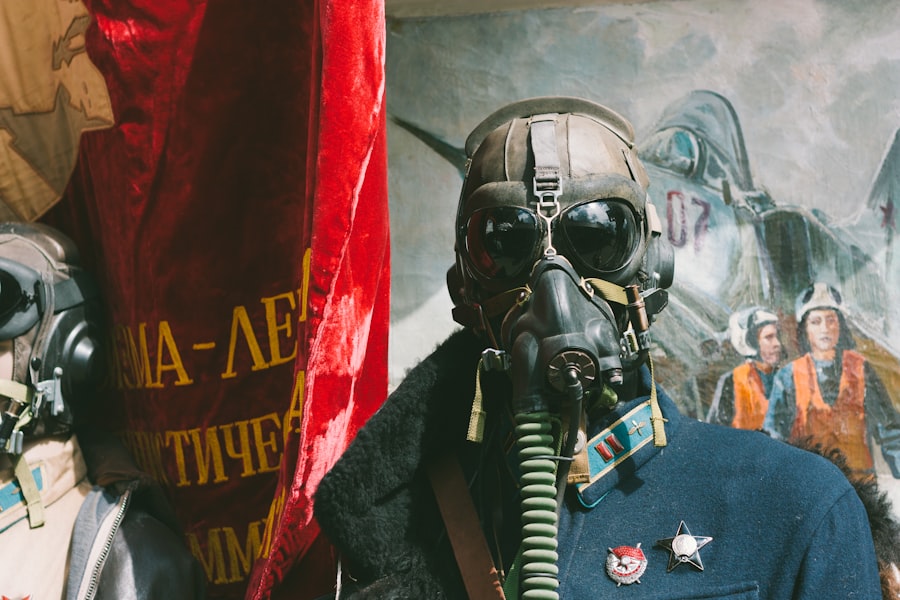
In late December 1979, the Soviet Union launched a full-scale military invasion of Afghanistan. Their primary objective was to secure the country and install a government more amenable to Soviet influence. Babrak Karmal, living in exile in Prague, was chosen to lead this new regime, a decision driven by his perceived loyalty and his potential to unite factions under Soviet guidance.
The Invasion and the Overthrow of Amin
The Soviet invasion was swift and decisive. Soviet forces stormed Kabul, assassinated Hafizullah Amin, and installed Babrak Karmal as the new head of state. This act of installing a foreign-backed leader fundamentally altered the nature of the conflict, transforming it from an internal power struggle into a national resistance against foreign occupation. The international community condemned the invasion as a violation of Afghan sovereignty.
Karmal as the Soviet Protégé
Upon his return to Kabul, Karmal was presented as the rightful leader, tasked with restoring order and rebuilding the nation. However, his authority was inherently dependent on the presence and support of the Soviet military. He became the face of a government deeply indebted to Moscow, a fact that significantly undermined his legitimacy both domestically and internationally. His pronouncements and policies were often viewed through the lens of Soviet interests, making it difficult for him to establish genuine national consensus.
The Fractured Afghan Republic
The government led by Karmal was a fragile entity, struggling to gain popular support. While he attempted to implement some of the PDPA’s reformist agenda, the widespread opposition, fueled by the presence of Soviet troops, made progress difficult. The deep divisions within Afghan society, exacerbated by years of political turmoil and now a foreign occupation, made the task of nation-building an insurmountable challenge.
Governing Under Soviet Patronage
Karmal’s years in power were defined by his reliance on Soviet military and economic assistance. He served as the chairman of the Revolutionary Council and later president, but the ultimate decision-making authority resided with the Soviet advisors and commanders on the ground. His administration was characterized by efforts to consolidate power, implement reforms, and combat the growing insurgency, all within the parameters set by Moscow.
The Economic and Social Reforms
Karmal’s government attempted to implement a series of reforms aimed at modernizing Afghan society, including land reform, improved education, and women’s rights. However, these initiatives were often hampered by the ongoing conflict and the lack of resources. The country’s infrastructure was heavily damaged, and the economy was in ruins. The reforms, therefore, struggled to gain traction amidst the widespread disruptions and animosity towards the imposed government.
The Intensification of the Insurgency
The Soviet intervention and Karmal’s installation galvanized the opposition. Mujahideen groups, supported by various foreign powers including the United States, Pakistan, and Saudi Arabia, launched a tenacious insurgency against the Soviet-backed government. This protracted guerrilla war drained Afghanistan’s resources and contributed to a climate of perpetual instability. The fight against Karmal’s government became synonymous with the fight against Soviet influence.
The Role of Soviet Advisors
Soviet advisors were embedded throughout the Afghan bureaucracy and military, wielding significant influence over policy and operations. They played a crucial role in shaping Karmal’s administration, from strategic planning to day-to-day governance. This pervasive Soviet presence meant that Karmal operated within a tightly controlled environment, limiting his autonomy and further cementing his image as a puppet leader.
Babrak Karmal’s tenure as the leader of the Soviet-backed government in Afghanistan marked a significant period in the Cold War, reflecting the complexities of international politics and local resistance. His administration faced immense challenges, including widespread opposition from various factions, which ultimately led to a prolonged conflict that drew in multiple global powers. For a deeper understanding of the geopolitical implications of Karmal’s regime and the subsequent Soviet-Afghan War, you can read a related article that explores these themes in detail. Check it out here.
Karmal’s Legacy and Departure
| Metrics | Data |
|---|---|
| Duration of rule | 1979-1986 |
| Support from Soviet Union | Extensive military and financial support |
| Opposition groups | Mujahideen fighters |
| Impact on Afghanistan | Increased instability and civil war |
Babrak Karmal’s leadership came to an end in 1986 when he was replaced by Mohammad Najibullah. His tenure left behind a deeply divided and devastated nation, struggling with the consequences of a brutal war and foreign intervention. The perception of his government as a Soviet imposition profoundly shaped his legacy.
The Internal Power Struggles Continue
Even under Karmal’s rule, internal power struggles within the PDPA did not cease. While he was installed by the Soviets, his leadership was not universally accepted even within his own party. This constant internal jockeying for position and influence, coupled with the external pressures from the insurgency, contributed to the instability of his government. The Soviets themselves were reportedly growing weary of Karmal’s leadership and his inability to effectively pacify the country.
The Transition to Najibullah
By the mid-1980s, the Soviet Union recognized that Karmal was no longer the most effective leader to manage the ongoing conflict. His health was also reportedly failing. In 1986, Moscow orchestrated his removal, replacing him with Mohammad Najibullah, a former head of the KHAD (Afghan secret police). Najibullah was seen as a more pragmatic and decisive leader, capable of potentially navigating the complex political landscape and presenting a more unified front against the insurgency, albeit still under Soviet direction.
The Enduring Image of a Puppet Leader
Babrak Karmal is remembered primarily as the figurehead of a Soviet-backed regime. During his leadership, Afghanistan became a proxy battleground in the Cold War, with devastating consequences for its people. The widespread perception of his government as imposed by a foreign power, rather than emerging organically from the will of the Afghan people, remains a defining aspect of his historical narrative. His name is inextricably linked to a period of immense suffering and national trauma, a testament to the complex and often tragic confluence of Afghan nationalism and superpower intervention. His departure from power did little to erase this indelible mark.
FAQs
Who was Babrak Karmal?
Babrak Karmal was an Afghan political leader who served as the General Secretary of the People’s Democratic Party of Afghanistan (PDPA) and as the President of Afghanistan from 1979 to 1986.
What was the Soviet puppet government?
The Soviet puppet government refers to the regime established in Afghanistan by the Soviet Union following the Soviet invasion of Afghanistan in 1979. Babrak Karmal was installed as the leader of this government, which was widely seen as being controlled by the Soviet Union.
How did Babrak Karmal come to power?
Babrak Karmal came to power in Afghanistan after the Soviet Union intervened in the country’s internal affairs in 1979. The Soviet invasion led to the overthrow of the existing government and the installation of Karmal as the new leader.
What were the key characteristics of Babrak Karmal’s government?
Babrak Karmal’s government was characterized by its close ties to the Soviet Union, its implementation of socialist policies, and its suppression of opposition groups. The government faced significant resistance from various Afghan factions and was unable to establish widespread legitimacy.
What was the legacy of Babrak Karmal’s government?
Babrak Karmal’s government is widely regarded as a failed experiment in Soviet-backed governance in Afghanistan. It faced significant opposition from various Afghan factions and ultimately collapsed in 1986, leading to further instability in the country.