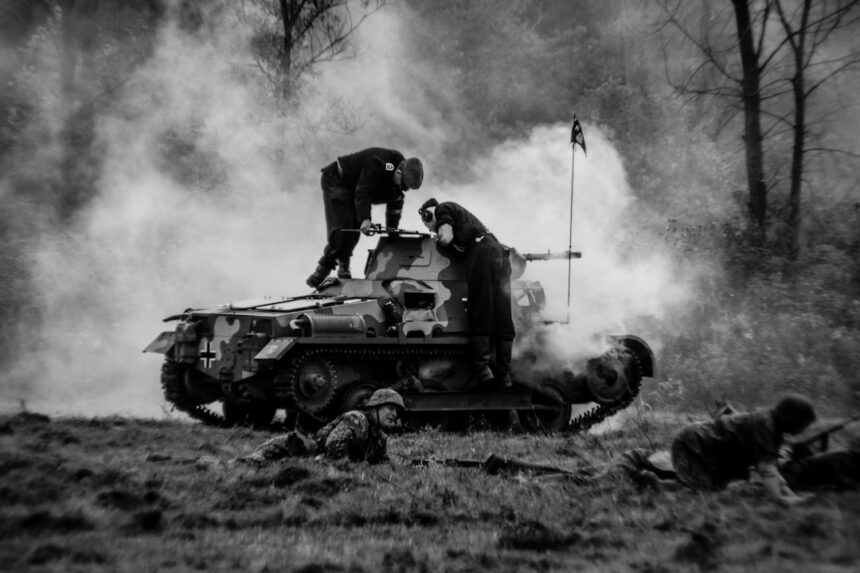
The dense, ancient woods of the Oskil Forest have long been a natural barrier, their tangled undergrowth and shadowed depths a formidable obstacle for any invading force. In the latter months of a protracted conflict, these very woods became the crucible for a significant military event: the costly disengagement, and subsequent strategic disruption, of the Russian 1st Guards Tank Army. What was intended as a swift penetration and a dominant advance devolved into a protracted struggle, ultimately marked by substantial materiel losses and a significant setback for the Russian offensive operations in that sector.
The 1st Guards Tank Army, a formation with a storied history and substantial armored and mechanized components, was tasked with spearheading a critical phase of the broader offensive. Its deployment signaled a clear intent to achieve a decisive breakthrough and exploit operational depth.
Strategic Objectives and Force Composition
The army’s overarching strategic objectives were ambitious, involving the seizure of key logistical hubs and the disruption of Ukrainian defensive lines. To this end, the 1st Guards Tank Army was assembled with a formidable array of assets, including numerous main battle tanks, infantry fighting vehicles, self-propelled artillery, and supporting elements. This concentration of force was intended to overwhelm any local Ukrainian resistance through sheer armored might and operational tempo.
The Oskil Forest as a Forward Operating Area
The edge of the immense Oskil Forest offered a plausible staging ground and initial axis of advance. Its proximity to contested territories suggested it could serve as a springboard for rapid maneuver warfare, allowing the armored formations to move with relative speed once through the initial tree lines. However, the forest’s inherent characteristics were not fully accounted for within the initial operational planning.
Reconstituting and Re-tasking the 1st Guards Tank Army
Following prior engagements and operational setbacks in other areas, the 1st Guards Tank Army had undergone reconstitution. Its inclusion in this particular offensive was a testament to its perceived importance and the need to deploy experienced formations to critical sectors. The army’s leadership was under pressure to deliver tangible results and reverse negative operational trends.
The defeat of the 1st Guards Tank Army in the Oskil Forest marked a significant turning point in the conflict, showcasing the challenges faced by armored divisions in complex terrain. For a deeper understanding of this pivotal moment and its implications on the broader military strategy, you can read a related article that delves into the tactics employed and the consequences of this defeat. For more information, visit this article.
Entry into the Oskil Forest: Encountering Unexpected Resistance
The initial ingress into the Oskil Forest was not the uncontested movement that Russian military doctrine often posits for armored formations. Instead, it quickly became a battleground of attrition, where the terrain and well-prepared Ukrainian defenses combined to negate the conventional advantages of the attacking force.
The Transition from Open Ground to Forest Combat
The shift from the relatively open terrain preceding the forest to the dense woodland environment presented an immediate operational challenge. The ability of armored vehicles to maneuver freely was drastically curtailed. Visibility was reduced, and the battlefield became more confined, favoring dismounted troops and ambushes.
Initial Contact and Stuttering Advance
As Russian units pushed deeper into the forest, they encountered prepared Ukrainian defensive positions. These were not static strongholds, but rather adaptive networks of trenches, minefields, and anti-tank obstacles, often augmented by the natural features of the dense woodland. The advance, therefore, quickly transitioned from a rapid armored thrust to a laborious process of dislodging entrenched defenders.
The Psychological Impact of Forest Warfare
The enclosed nature of forest combat can have a significant psychological impact on attacking forces, particularly those accustomed to more open operations. The constant sense of being observed, the limited fields of fire, and the increased risk of localized engagements can erode morale and increase operational friction.
Early Indicators of Operational Difficulties
Even in the initial phase of the forest penetration, there were indications of the difficulties the 1st Guards Tank Army was facing. Reports of increased artillery exchanges and the need for infantry to advance ahead of armor to clear obstacles suggested that the expected swift breakthrough was not materializing.
The Entanglement: A Battle of Attrition and Maneuver
The Oskil Forest became a theatre of intense and attritional fighting. The Russian forces, designed for swift, decisive armored operations, found themselves enmeshed in a brutal contest where their strengths were diminished and their vulnerabilities exploited.
The Forest as a Defensive Advantage
The Ukrainian defenders effectively leveraged the Oskil Forest to their advantage. The dense tree cover provided excellent concealment for artillery positions and anti-tank teams. Minefields, strategically placed along likely avenues of advance, significantly slowed down and channeled the Russian armored columns, making them vulnerable to flanking attacks.
The Limitations of Armored Warfare in Dense Woodland
The inherent characteristics of the Oskil Forest presented significant limitations for the 1st Guards Tank Army’s primary assets: its tanks and armored personnel carriers. Restricted lines of sight, confined terrain that limited turning radii and maximum speeds, and the proliferation of anti-tank obstacles rendered large-scale armored maneuvers exceptionally difficult and dangerous.
Ukrainian Anti-Tank Capabilities and Tactics
Ukrainian forces employed a range of anti-tank weapons and tactics, from modern anti-tank guided missiles (ATGMs) to more traditional rocket-propelled grenades. These were often deployed by small, mobile groups of infantry who could effectively utilize the forest cover to approach Russian armor undetected, strike, and then withdraw before counter-battery fire or supporting infantry could engage them. The dispersed nature of these units made them difficult to target and destroy definitively.
The Role of Artillery and Mortars
Artillery and mortar fire played a critical role in the engagements within the Oskil Forest. Ukrainian batteries, often repositioned frequently to avoid detection and counter-battery fire, were able to inflict significant damage on Russian formations as they navigated the dense terrain. The forest canopy also aided in masking the sound and flash of their firing positions.
The Erosion of Russian Mechanized Superiority
The combination of terrain, prepared defenses, and effective Ukrainian tactics significantly eroded the perceived mechanized superiority of the 1st Guards Tank Army. Tanks became less mobile platforms and more vulnerable targets, often bogged down or immobilized by mines and under constant threat from dismounted anti-tank teams.
The Turning Tide: Strategic Disruption and Materiel Losses
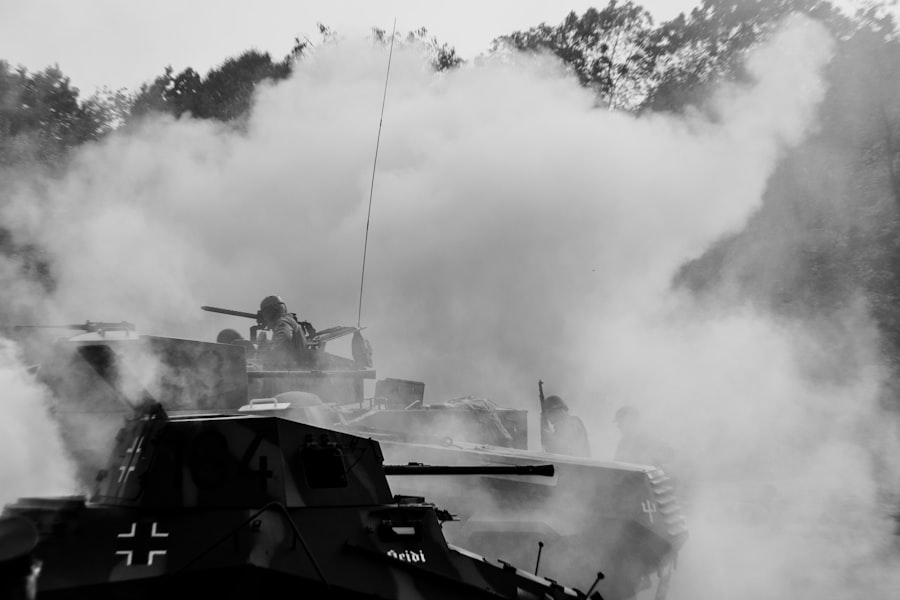
As the engagement progressed, the initial Russian offensive stalled, and the initiative gradually shifted. The attritional nature of the fighting led to substantial materiel losses for the 1st Guards Tank Army, impacting its combat effectiveness and forcing a strategic re-evaluation of its operations in the sector.
The Inability to Achieve Breakthrough Objectives
The primary objectives of rapid penetration and exploitation proved unattainable within the Oskil Forest. The fortified Ukrainian defenses, combined with the challenging terrain, created a quagmire for the armored formations. The army’s ability to fulfill its strategic mission was severely compromised.
Quantifiable Losses in Armored and Mechanized Platforms
Evidence from open-source intelligence and post-engagement analysis indicated significant losses in terms of tanks, infantry fighting vehicles, and other armored platforms. These losses were not isolated incidents but represented a sustained erosion of the army’s combat power, requiring extensive logistical support and replacement efforts that were themselves constrained.
The Impact on Russian Logistics and Sustainment
Sustaining an offensive operation deep within a contested forest environment proved exceptionally challenging for the Russian logistics network. The forest’s terrain made resupply difficult and dangerous, exposing supply convoys to ambushes. The loss of operational tempo also meant that previously planned supply routes and logistical nodes became vulnerable, further straining the army’s ability to continue its advance.
The Strategic Implications of the Setback
The failure to achieve a decisive breakthrough in the Oskil Forest had broader strategic implications. It not only reduced the operational maneuverability of the 1st Guards Tank Army but also allowed Ukrainian forces to consolidate their defenses and potentially reinforce other sectors. The perceived invincibility of armored spearheads was further challenged.
The Decision to Disengage and Reorganize
Facing mounting losses and the inability to achieve its objectives, a decision was made for the 1st Guards Tank Army to disengage from its forward positions in and around the Oskil Forest. This was not a rout, but a carefully managed withdrawal, aimed at preserving remaining combat power and reorganizing for future operations.
The defeat of the 1st Guards Tank Army in the Oskil Forest marked a significant turning point in the conflict, showcasing the challenges faced by armored units in difficult terrain. This event has been analyzed in depth in a related article, which provides insights into the strategic implications of the battle and its impact on subsequent military operations. For a more comprehensive understanding, you can read the full analysis in this article.
The Aftermath and Lingering Effects
| Metrics | Data |
|---|---|
| Date of Defeat | August 1941 |
| Location | Oskil Forest, Ukraine |
| Opposing Forces | German Wehrmacht |
| Casualties | Over 20,000 Soviet soldiers |
| Outcome | Decisive German victory |
The engagement in the Oskil Forest left a lasting impact on the operational landscape and the operational capabilities of the 1st Guards Tank Army. The costly lessons learned from this engagement would inform future Russian military planning and execution in similar environments.
The Shift from Offensive to Defensive Postures
Following the intense fighting and subsequent disengagement, elements of the 1st Guards Tank Army were observed redeploying to defensive positions. This marked a shift from the initial offensive ambitions to a more static posture, aimed at holding ground and preventing further Ukrainian advances.
Reconstitution and Re-equipment Challenges
The significant materiel losses necessitated a period of reconstitution for the 1st Guards Tank Army. This involved not only personnel replacements but also the challenging task of re-equipping and repairing damaged vehicles, a process that often requires significant time, resources, and access to specialized industrial capacity.
Lessons Learned Regarding Forest and Urban Combat
The Oskil Forest engagement provided stark and costly lessons regarding the conduct of warfare in dense woodland environments. It highlighted the limitations of conventional armored warfare when confronted with terrain that negates maneuverability and the effectiveness of well-prepared, dispersed infantry. This experience would likely influence future tactical and operational planning for similar theatres.
The Enduring Threat of Ukrainian Defensive Adaptability
The Ukrainian defense in the Oskil Forest demonstrated a high degree of adaptability and resilience. Their ability to effectively utilize the terrain, employ a variety of anti-tank weapons, and conduct coordinated defensive operations underscored the evolving nature of modern warfare and the effectiveness of agile, decentralized defensive strategies against numerically superior, conventionally oriented forces.
The Long-Term Operational Impact on the 1st Guards Tank Army
The defeat, or more accurately, the failure to achieve its offensive objectives and the associated materiel losses, had a debilitating effect on the combat readiness and operational tempo of the 1st Guards Tank Army. Its effectiveness as a forward offensive formation for a period was significantly diminished, requiring substantial efforts to restore its capabilities. The Oskil Forest stands as a testament to the complex interplay of terrain, tactics, and resolute defense in shaping the outcomes of large-scale military operations.
FAQs
What is the 1st Guards Tank Army?
The 1st Guards Tank Army was a Soviet Red Army formation during World War II. It was one of the most powerful formations of the Red Army and played a significant role in several major battles.
What was the Oskil Forest?
The Oskil Forest was a heavily wooded area in Ukraine, where the 1st Guards Tank Army suffered a significant defeat during World War II. The forest was the site of intense fighting between Soviet and German forces.
What led to the defeat of the 1st Guards Tank Army in the Oskil Forest?
The defeat of the 1st Guards Tank Army in the Oskil Forest was attributed to a combination of factors, including the difficult terrain, strong German defenses, and logistical challenges faced by the Soviet forces.
What were the consequences of the defeat for the 1st Guards Tank Army?
The defeat in the Oskil Forest was a significant setback for the 1st Guards Tank Army, resulting in heavy casualties and loss of equipment. It also impacted the overall Soviet offensive in the region.
How did the defeat in the Oskil Forest impact the outcome of World War II?
The defeat of the 1st Guards Tank Army in the Oskil Forest had a temporary impact on the Soviet offensive in the region, but it did not significantly alter the overall outcome of World War II. The Red Army was able to regroup and continue its advance towards victory.