The efficacy of traditional armored fighting vehicles, particularly the main battle tank, has been a subject of ongoing debate within military circles for decades. However, the accelerated integration of unmanned aerial systems, commonly known as drones, into modern warfare has amplified this discussion, leading many to question the continued relevance of tanks in the contemporary operational environment of the 2020s. While tanks possess formidable firepower and protection, the evolving threat landscape, coupled with the inherent advantages offered by drone technology, suggests a paradigm shift where their role may be increasingly marginalized.
The battlefield of the 21st century is a complex and dynamic entity, profoundly different from the theaters of operation for which the tank was originally conceived. The advent of sophisticated anti-tank guided missiles (ATGMs), pervasive electronic warfare capabilities, and the increasing proliferation of cheap, effective drone technology have fundamentally altered the calculus of armored warfare. Tanks, designed for engagements in relatively open terrain against similarly equipped adversaries, now face threats from multiple vectors, often from unexpected directions and at distances that challenge their traditional strengths.
The Tank’s Design Philosophy and Its Limitations
The main battle tank, a symbol of armored power since World War I, was engineered to achieve battlefield dominance through a combination of offensive firepower, defensive armor, and mobility. Its design prioritizes a heavily armored hull and turret to withstand direct enemy fire, a powerful main gun to engage and destroy enemy armor and fortifications, and tracks for maneuverability across challenging terrain. This enduring design philosophy, while effective against past threats, harbors inherent limitations when confronted with the realities of modern conflict.
Mass and Vulnerability
The very attributes that make a tank a formidable platform – its substantial weight and thick armor – also contribute to its vulnerability. These heavy machines are relatively slow to deploy and transport, requiring specialized logistical chains. Once on the battlefield, their substantial thermal and acoustic signatures make them prime targets for detection by advanced sensor systems, including infrared cameras and acoustic sensors. Furthermore, while armor is designed to defeat kinetic energy penetrators and explosive rounds, it is not impervious to all threats. Advances in top-attack munitions, precisely delivered by drones, can bypass the thickest frontal armor, exploiting the tank’s more lightly protected upper surfaces.
Crew Safety and Situational Awareness
The crew of a tank, typically numbering three to four individuals, is inherently vulnerable within their confined metal shell. While modern tanks incorporate advanced survivability features, including spall liners and fire suppression systems, the psychological and physical toll of combat within such a confined space is significant. Moreover, the crew’s situational awareness is often limited to line-of-sight, augmented by advanced optics. This can be a critical disadvantage in environments where threats can emerge from beyond the visible horizon or from multiple angles simultaneously.
The Shifting Threat Landscape
The battlefield is no longer solely defined by direct, frontal engagements. The proliferation of precision-guided munitions, coupled with advancements in intelligence, surveillance, and reconnaissance (ISR), has created an environment where threats can be identified, targeted, and engaged with unprecedented accuracy. This has directly impacted the tank’s survivability.
The Rise of Anti-Tank Guided Missiles (ATGMs)
ATGMs have evolved significantly since their inception. Modern variants offer extended ranges, increased accuracy, and a variety of guidance systems, including laser, infrared, and fire-and-forget technologies. These missiles can be launched from a multitude of platforms, including infantry-operated systems, light vehicles, and helicopters, posing a constant and significant threat to armored vehicles. The ability to engage tanks from beyond their own effective firing range presents a strategic dilemma for tank commanders.
The Pervasive Impact of Electronic Warfare
Electronic warfare (EW) encompasses a broad range of capabilities designed to disrupt, deceive, or deny the enemy’s use of the electromagnetic spectrum. Tanks, with their reliance on radio communications for command and control, and sophisticated targeting systems, are particularly susceptible to EW measures. Jamming communications can isolate tanks, while spoofing GPS signals can lead them astray. Advanced EW systems can even target a tank’s fire control systems, rendering its weaponry ineffective.
The Tank’s Diminishing Tactical Advantage
The combination of an evolving threat landscape and the inherent limitations of tank design has begun to erode the tank’s traditional tactical advantages. While still potent in certain scenarios, its dominance is no longer assured.
The Cost of Engagement
Engaging a tank often requires a significant investment of resources. However, the cost of destroying a tank has dramatically decreased. A single advanced ATGM, costing tens of thousands of dollars, can neutralize a tank valued in the millions. This asymmetry in cost makes tanks an increasingly attractive, albeit high-value, target for adversaries.
Mobility Challenges in Modern Operations
While tanks are designed for mobility, their operational deployment in the 2020s often faces significant logistical hurdles. The sheer weight of modern tanks necessitates specialized transport and road infrastructure, limiting their rapid deployment to areas lacking such support. Urban environments, increasingly common in modern conflicts, present further challenges due to confined spaces, blocked avenues of approach, and the abundance of concealed ambush points.
As military technology continues to evolve, the relevance of traditional armored tanks is increasingly being called into question. A related article discusses the factors contributing to the obsolescence of tanks in the 2020s, highlighting advancements in drone warfare, anti-tank missiles, and urban combat tactics that render these massive vehicles vulnerable. For a deeper understanding of this shift in modern warfare, you can read more in the article available at In The War Room.
The Unmanned Aerial Revolution: A New Paradigm
The most significant factor contributing to the questioning of tank obsolescence is the meteoric rise of drone technology. What began as niche reconnaissance tools has rapidly evolved into versatile platforms capable of a wide array of offensive and defensive missions, fundamentally altering the information and kinetic battlefield.
The Versatility of Drones: Beyond Reconnaissance
Drones are no longer confined to simple aerial observation. Their rapid development has led to the integration of increasingly sophisticated payloads and autonomous capabilities, allowing them to execute complex missions previously exclusive to manned aircraft or ground forces.
Intelligence, Surveillance, and Reconnaissance (ISR) Dominance
Drones, from small quadcopters to large, uncrewed combat aerial vehicles (UCAVs), provide an unparalleled ISR capability. Their ability to loiter for extended periods, capture high-resolution imagery and video, and provide real-time battlefield awareness over extended areas offers a significant advantage. This omnipresent eye-in-the-sky can detect enemy movements, identify hidden threats, and provide continuous targeting information that traditional ISR platforms struggle to match.
Micro and Small Tactical Drones
The proliferation of micro and small tactical drones (STUsAS) has democratized aerial ISR. These inexpensive, easily deployable drones can be operated by individual soldiers or small units, providing immediate local situational awareness. They can scout ahead, identify enemy positions, and even provide real-time video feeds directly to the operator, dramatically reducing the fog of war at the tactical level.
Medium and Large Endurance Drones
Larger drones, with their extended flight times and advanced sensor suites, offer strategic ISR capabilities. They can monitor vast swaths of territory for days, providing persistent surveillance and intelligence gathering. Their ability to carry advanced radar, electronic intelligence (ELINT) payloads, and signals intelligence (SIGINT) equipment makes them invaluable for understanding the enemy’s order of battle and electronic capabilities.
Offensive Capabilities: From Loitering Munitions to Precision Strikes
The evolution of drones has expanded their role from purely reconnaissance to direct offensive action. The integration of guided munitions has transformed them into highly effective precision strike platforms, capable of engaging targets with remarkable accuracy.
Loitering Munitions: The “Kamikaze Drones”
Loitering munitions, often referred to as “kamikaze drones,” represent a significant leap in drone offensive capabilities. These drones are designed to patrol an area, identify a target, and then dive onto it, detonating their explosive payload. Their significant advantage lies in their ability to provide a persistent strike capability. Unlike traditional missiles that have a fixed trajectory, loitering munitions can wait for the opportune moment to strike, providing a flexible and unpredictable threat to high-value targets.
Armed Drones with Precision-Guided Munitions
Beyond loitering munitions, larger drones are increasingly armed with conventional precision-guided missiles and guided bombs. This allows them to engage enemy armor, artillery, and other hardened targets with a degree of precision that rivals or exceeds manned aircraft, but with significantly reduced risk to personnel. The ability to rapidly re-task these drones for new targets, or to engage targets of opportunity identified by other ISR assets, makes them exceptionally agile offensive weapons.
The Drone as the Ultimate Tank Killer
The combined capabilities of drones—their ISR, precision strike, and persistent presence—position them as perhaps the most formidable threat to the contemporary tank. The very vulnerabilities that plague modern tanks are precisely the areas where drones excel.
Detection and Targeting of Armored Vehicles
Drones’ advanced sensors, including high-resolution electro-optical and infrared cameras, are adept at detecting tanks. Their ability to hover undetected or to operate from unexpected angles allows them to pinpoint tanks even in complex terrain or urban environments. Once a tank is identified, the drone can transmit its precise location to other assets, including other drones or ground-based missile launchers, for rapid engagement.
Precision Strikes Against Vulnerable Areas
The top-attack trajectory of many drone-delivered munitions bypasses the heaviest frontal armor of tanks. This allows for the exploitation of the tank’s often less protected roof or engine deck. A precisely aimed strike from a drone can disable or destroy a tank with a fraction of the ordnance required by a traditional direct-fire engagement.
The Swarming Threat: Overwhelming Defenses
A particularly concerning development is the concept of drone swarms. By fielding multiple drones in a coordinated attack, adversaries can overwhelm a tank’s limited defensive countermeasures. Even if some drones are intercepted, a sufficient number may penetrate and deliver their payload, making coordinated drone attacks a potent and increasingly plausible threat to armored formations.
The Economic and Logistical Advantages of Drones

Beyond their immediate battlefield performance, drones offer significant economic and logistical advantages that further contribute to the diminished relevance of tanks.
Reduced Development and Production Costs
The development and production of advanced drones, especially in large numbers, are generally far less expensive than those of main battle tanks. While sophisticated UCAVs can be costly, the proliferation of smaller, more accessible drone platforms has drastically lowered the barrier to entry for numerous armed forces and even non-state actors. This cost differential allows for the fielding of a larger number of effective, albeit potentially less heavily armored, platforms.
Streamlined Deployment and Maintenance
Drones are significantly easier and less resource-intensive to deploy and maintain than tanks. They require less specialized transport infrastructure, can be operated from forward-deployed airfields or even improvised landing zones, and their modular design often simplifies repair and maintenance. This agility in logistics allows for more rapid and flexible force projection.
Reduced Training Burden for Operators
While operating complex drone systems still requires skilled personnel, the training pipeline for drone operators is generally shorter and less demanding than that for tank crews. This allows for a quicker build-up of operational capacity within a military.
Lower Operational Overhead
The operational costs associated with maintaining and deploying a drone fleet are typically lower than those of a tank battalion. Fuel consumption, crew attrition, and the need for extensive logistical support for a tank unit are all significantly reduced when employing unmanned systems.
The “Expendability” Factor
A critical, albeit grim, economic advantage of drones is their perceived expendability. In a conflict where a tank is lost, it represents a significant loss of life, equipment, and a substantial financial investment. Drones, particularly the more numerous and less expensive variants, can be considered more “expendable.” While losses are still undesirable, they do not carry the same weight of human cost or financial outlay, allowing for a more aggressive and risk-tolerant operational tempo.
The Future of Land Warfare: A Shift in Focus
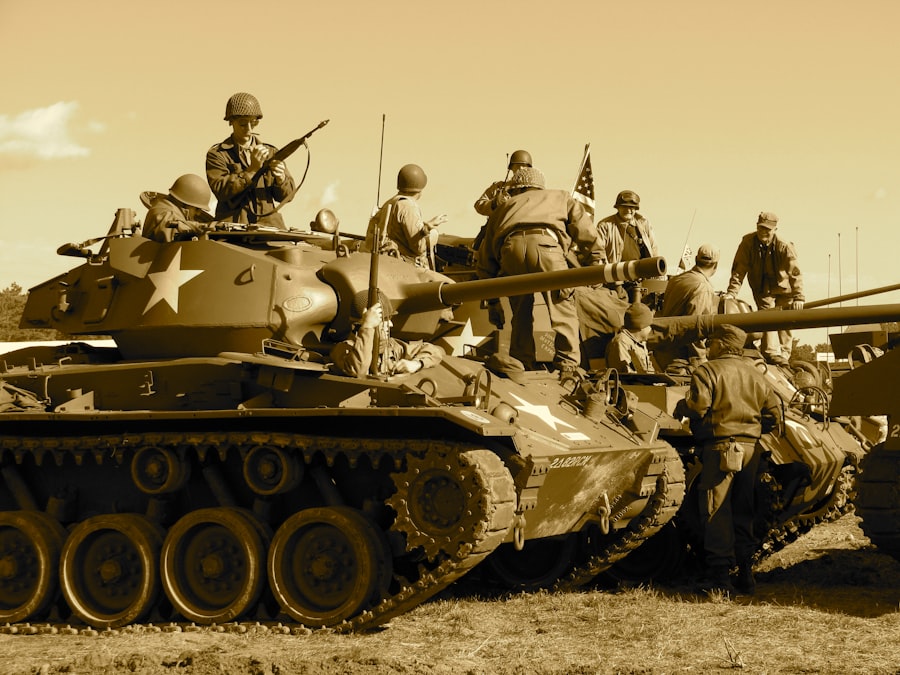
The confluence of evolving threats, the rise of drone technology, and the economic realities of modern warfare paints a clear picture: the traditional role of the tank, as the undisputed king of the land battlefield, is being challenged. This does not necessarily signal the immediate eradication of tanks, but rather a significant recalibration of their purpose and deployment.
The Tank’s Evolving Role: From Main Battle to Specialized Platform
While tanks may not become entirely obsolete in the immediate future, their role will likely transform. They may transition from being the primary offensive weapon system to a more specialized platform, employed in specific scenarios where their unique capabilities remain relevant.
Fire Support and Defensive Roles
Tanks could still serve effectively in roles that leverage their heavy firepower and armor, such as providing direct fire support to infantry in heavily fortified positions or acting as mobile strongpoints in defensive operations against massed ground assaults. However, even in these roles, they will be vulnerable to meticulously planned drone-based attacks.
Specialized Counter-Armor Units
Perhaps the most plausible future for tanks lies in highly specialized counter-armor units, equipped with advanced anti-drone defenses and operating in coordination with dedicated air defense assets. These units would be tasked with actively hunting and destroying enemy armored vehicles, a mission for which tanks remain exceptionally capable, provided they can overcome the threats posed by ubiquitous drones.
The Rise of “Dronified” Ground Vehicles
The principles of unmanned operation and distributed lethality that define drone warfare will inevitably influence the development of ground vehicles. Future armored platforms may incorporate significant unmanned or semi-unmanned capabilities, blurring the lines between manned and unmanned systems.
Semi-Autonomous and Remote-Controlled Platforms
The next generation of ground combat vehicles may feature a manned component for oversight and decision-making, but with significant autonomous capabilities for movement, targeting, and even engagement. This would offer improved survivability by reducing the number of personnel directly exposed to harm.
Integrated Drone Launchers and Control Systems
Future armored vehicles are likely to be equipped with integrated drone launch and recovery systems, allowing them to deploy and control their own aerial reconnaissance and attack assets. This would provide them with an organic ISR and strike capability, reducing their reliance on external support and enhancing their ability to detect and engage threats before they become critical.
The Need for Integrated Air and Ground Defense
The dominance of drones on the battlefield necessitates a fundamental shift in how air and ground defense are integrated. Future military strategies will require a holistic approach that combines sophisticated air defense systems with ground-based platforms capable of detecting and neutralizing aerial threats.
Counter-Drone Systems and Technologies
The development of effective counter-drone systems is paramount. This includes a range of technologies, such as directed energy weapons (lasers and high-powered microwaves), electronic jamming and spoofing capabilities, and the use of interceptor drones themselves.
A Multi-Layered Defense Strategy
A successful defense against the drone threat will require a multi-layered strategy. This involves not only dedicated air defense units but also the integration of counter-drone capabilities into all levels of ground forces, from individual soldiers to armored formations. The ability to detect, track, and neutralize drones at various ranges and altitudes will be critical.
As military technology continues to evolve, many experts argue that tanks are becoming obsolete in the 2020s, primarily due to advancements in drone warfare and precision-guided munitions. A related article discusses how these innovations are reshaping modern combat and the role of traditional armored vehicles. For a deeper understanding of this shift in military strategy, you can read more about it in this insightful piece on the future of warfare found here.
Conclusion: The Irreversible Tides of Technological Change
| Reasons | Explanation |
|---|---|
| Technological advancements | New weapons and defense systems make tanks more vulnerable. |
| Urban warfare | Tanks are less effective in densely populated urban areas. |
| Cyber warfare | New threats from cyber attacks can compromise tank operations. |
| Cost | Tanks are expensive to build, maintain, and operate. |
| Environmental concerns | Tanks have a significant environmental impact. |
The notion that tanks are obsolete in the 2020s is a provocative assertion, yet one that increasingly finds support in the evolving realities of modern warfare. The unparalleled versatility, precision, and cost-effectiveness of drone technology have fundamentally reshaped the battlefield, creating an environment where traditional armored behemoths are increasingly vulnerable and their strategic advantage eroded. While the tank may yet find niche roles and evolve into hybrid systems, its era of undisputed land dominance has demonstrably passed. The future of land warfare will undoubtedly be shaped by the persistent, intelligent, and lethal presence of unmanned aerial systems, rendering the heavily armored, crewed tank an increasingly anachronistic and vulnerable relic of a bygone era. The military landscapes that emerge from the conflicts of this decade will bear the indelible imprint of the drone, forever altering the balance of power on the ground.
FAQs
1. Why are tanks becoming obsolete in the 2020s?
Tanks are becoming obsolete due to advancements in military technology, such as drones, precision-guided munitions, and anti-tank missiles, which have made them more vulnerable on the modern battlefield.
2. What role do drones play in making tanks obsolete?
Drones have the ability to conduct reconnaissance, surveillance, and precision strikes, which reduces the need for tanks to perform these tasks. Additionally, drones can target and destroy tanks from a distance, making them a more effective and efficient option in modern warfare.
3. How have precision-guided munitions contributed to the obsolescence of tanks?
Precision-guided munitions have increased the accuracy and lethality of artillery and airstrikes, making it easier to target and destroy tanks without the need for direct ground combat. This reduces the effectiveness of tanks on the battlefield.
4. What impact have anti-tank missiles had on the relevance of tanks in modern warfare?
Anti-tank missiles have become more advanced and widespread, posing a significant threat to tanks. These missiles can be launched from a distance, making it difficult for tanks to defend against them, further diminishing their effectiveness in combat.
5. Are there any other factors contributing to the obsolescence of tanks in the 2020s?
Other factors contributing to the obsolescence of tanks include the increasing use of urban warfare, where tanks are less maneuverable, as well as the high cost of developing and maintaining modern tank fleets. Additionally, the shift towards asymmetric warfare and counterinsurgency operations has reduced the need for heavy armored vehicles like tanks.