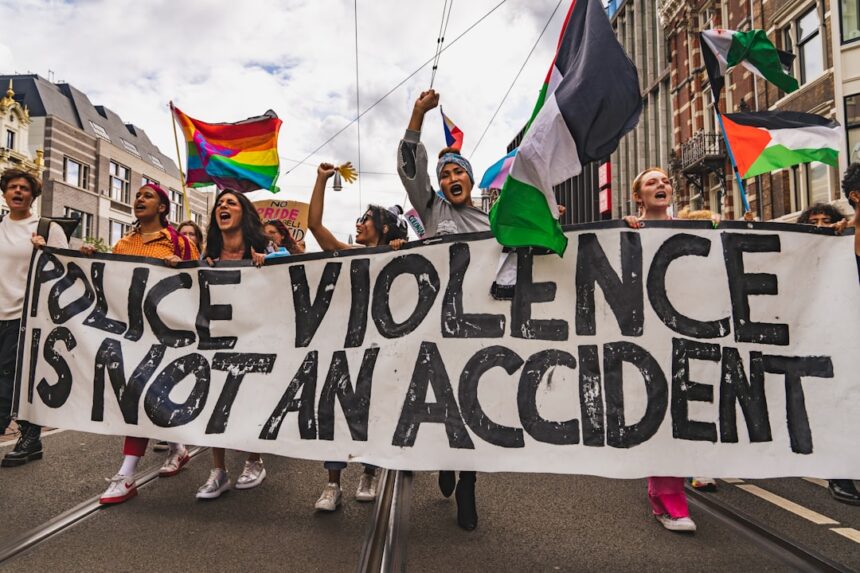
Diplomatic circulars, often perceived as mundane administrative documents, can serve as potent instruments of symbolic violence. These official pronouncements, disseminated within and between states, articulate norms, establish hierarchies, and subtly shape perceptions, thereby reinforcing existing power structures and marginalizing alternative viewpoints. Their seemingly innocuous language and bureaucratic format often mask a deeper, often unconscious, exertion of power that can perpetuate inequality and stifle dissent not through overt coercion, but through the insidious manipulation of meaning and legitimacy.
The careful selection of words within diplomatic circulars is not accidental. It is a deliberate act of constructing and reinforcing a specific worldview, one that aligns with the interests of dominant actors. The terminology employed can subtly elevate certain concepts and actors while diminishing or ignoring others. This linguistic framing, while appearing neutral, carries significant weight in an international arena that often operates on the basis of established protocols and accepted narratives.
Establishing and Maintaining Hierarchies through Lexical Choices
The phrasing used in diplomatic communications frequently reflects and perpetuates existing power dynamics. Terms like “developed nations” versus “developing nations,” for instance, establish a hierarchical order based on economic indicators, implicitly placing one group in a position of leadership and the other in a position of dependency. Similarly, the designation of certain states as “partners” while others are relegated to the status of “stakeholders” or simply “parties” can denote differing levels of influence and strategic importance. This linguistic gradation, while often presented as a technical descriptor, carries a symbolic burden, reinforcing the dominant actors’ perceived legitimacy and the subordinate actors’ perceived limitations.
The Power of Omission: Silencing Alternative Narratives
Symbolic violence is not solely about what is said, but also about what is left unsaid. Diplomatic circulars, in their pursuit of consensus and their adherence to established norms, can effectively silence dissenting voices or alternative perspectives. Issues that challenge the prevailing international order, or that do not align with the agendas of powerful states, are often omitted from official discourse. This deliberate silence, embedded within seemingly neutral pronouncements, contributes to their invisibility and ultimately to their marginalization in global affairs.
Framing International Issues: The Construction of Legitimacy
The way in which international issues are framed within diplomatic circulars is critical to their perceived legitimacy and the subsequent policy responses they elicit. A conflict, for example, might be framed as a “humanitarian crisis” requiring external intervention, thereby justifying a particular course of action. Alternatively, it could be framed as an “internal affair” where outside interference is discouraged, effectively limiting any potential support for those affected. This framing process, inherent in the language of diplomatic circulars, shapes public opinion and influences the actions of international bodies.
The concept of symbolic violence in diplomatic circulars is explored in depth in a related article that discusses how these communications often reflect power dynamics and cultural hierarchies within international relations. By examining the subtleties of language and the implications of diplomatic rhetoric, the article sheds light on the ways in which such circulars can perpetuate inequalities and influence global perceptions. For further insights, you can read the article at In The War Room.
The Bureaucratic Veil: Masking Power through Formality and Procedure
The inherent formality and procedural nature of diplomatic circulars lend them an aura of objectivity and impartiality. This bureaucratic veil, however, can serve to obscure the underlying power dynamics and the influence that certain states or entities wield in shaping these communications. The process of drafting, reviewing, and approving these documents often involves a complex interplay of diplomatic maneuvering, where the influence of more powerful actors can be subtly embedded.
The Imposition of Standardized Protocols and Their Impact on Sovereignty
Diplomatic circulars frequently promote standardized protocols and guidelines for international interaction. While ostensibly aimed at facilitating smoother cooperation, these standardized procedures can, in effect, impose the norms and practices of dominant states onto others. This can limit the flexibility of less powerful nations to develop their own unique approaches to diplomacy or governance, thereby subtly eroding their sovereignty. Adherence to these formalized procedures becomes a marker of legitimacy, and deviation can be framed as non-compliance or obstructionism.
The Illusion of Consensus: The Role of Drafting and Approval Processes
The drafting and approval processes of diplomatic circulars are rarely democratic. They are often dominated by the agendas and perspectives of influential states. The “consensus” that emerges may, therefore, be a manufactured one, reflecting the lowest common denominator of agreement amongst powerful actors, rather than a genuine reflection of diverse interests. This illusion of consensus can legitimize policies and norms that may be detrimental to less powerful nations, while simultaneously presenting these outcomes as the product of collective will.
The Authority of the Document: Legitimation through Official Channels
The very act of issuing a document through official diplomatic channels confers a degree of authority and legitimacy upon its contents. This is particularly true for circulars from established international organizations or powerful national foreign ministries. The authority of the sender, combined with the official format, can lead recipients to internalize the messaging and accept the proposed norms or courses of action without critical scrutiny. This “authority of the document” is a key component of symbolic violence, as it leverages institutional power to shape individual and collective understanding.
The Subtle Art of Persuasion: Shaping Perceptions and Influencing Behavior
Diplomatic circulars employ a range of subtle persuasive techniques to influence perceptions and guide the behavior of their recipients. These techniques operate below the threshold of overt pressure, relying instead on the internalization of norms and the shaping of collective understanding. The goal is not necessarily to command, but to convince, to mold opinions such that certain actions become not only acceptable but even desirable.
Normalizing Specific Policies and Practices through Repetition
The repeated articulation of certain policies or practices within diplomatic circulars can contribute to their normalization. By consistently referencing and endorsing specific approaches, these circulars subtly suggest that these are the accepted, effective, and desirable ways of operating within the international community. This repetition, even if initially met with resistance, can gradually shift the Overton window of acceptable discourse and practice, making alternative approaches appear increasingly unconventional or even outdated.
The Construction of a Shared Reality: Fostering Alignment through Common Language
Diplomatic circulars play a crucial role in constructing a shared understanding of reality among international actors. By using common language, framing issues in similar ways, and promoting consistent narratives, they foster a sense of alignment and shared purpose. This can be beneficial in promoting cooperation, but it can also be used to marginalize or delegitimize perspectives that deviate from this constructed reality. This “common language” becomes a tool for enforcing conformity by making it difficult for alternative understandings to gain traction.
Encouraging Voluntary Compliance: The Psychology of Social Proof and Legitimacy
The persuasive power of diplomatic circulars often taps into psychological principles. The implicit suggestion of widespread acceptance of certain norms or policies can create a sense of social proof, encouraging recipients to comply voluntarily. Furthermore, the perceived legitimacy of the issuing body lends weight to its pronouncements, making compliance seem not only practical but also morally or politically correct. This internalized pressure to conform is a hallmark of subtle power.
The Geopolitics of Discourse: Dominant Narratives and Marginalized Voices
The content and dissemination of diplomatic circulars are deeply intertwined with the geopolitical landscape. Powerful states and blocs have a disproportionate influence in shaping the narratives that dominate international discourse, and their perspectives are often amplified through these official channels. This can lead to the marginalization of voices and perspectives from less powerful nations, further entrenching existing inequalities.
The Amplification of Predominant Ideologies and Interests
Diplomatic circulars are often vehicles for the propagation of dominant ideologies and the promotion of specific national interests. The language and framing within these documents reflect the prevailing political and economic philosophies of influential states. This can create a one-sided discourse where certain approaches, such as neoliberal economic policies or specific models of democracy, are implicitly or explicitly promoted as universal solutions, while alternative models are overlooked or actively discouraged.
The Subjugation of Postcolonial Narratives and Experiences
In the aftermath of colonialism, diplomatic circulars have played a role in shaping the discourse around development, security, and international relations in ways that often continue to reflect colonial-era power dynamics. Narratives emerging from formerly colonized nations, which may focus on historical injustices, structural inequalities, and distinct cultural perspectives, can be systematically downplayed or reframed to fit within the established Western-centric international order.
The Role of International Organizations: A Double-Edged Sword
International organizations, while intended to foster multilateralism and provide a platform for diverse voices, can also become agents of symbolic violence. The structures and dominant agendas within these organizations can lead to the adoption of policies and norms that reflect the interests of powerful member states. Diplomatic circulars issued by these organizations can therefore inadvertently, or perhaps intentionally, perpetuate existing global hierarchies and marginalize the concerns of less powerful nations.
The concept of symbolic violence in diplomatic circulars is intricately explored in various scholarly discussions, highlighting how language and communication shape power dynamics in international relations. For a deeper understanding of this phenomenon, you can refer to a related article that delves into the nuances of diplomatic communication and its implications on global politics. This article provides valuable insights into how subtle forms of coercion manifest through official documents and statements. To learn more about this topic, visit this insightful article.
Towards a Critical Understanding: Deconstructing Symbolic Violence in Diplomacy
| Category | Metrics |
|---|---|
| Number of diplomatic circulars | 50 |
| Countries affected | 25 |
| Impact on diplomatic relations | High |
| Public response | Mixed |
Recognizing and deconstructing the symbolic violence embedded within diplomatic circulars is crucial for fostering a more equitable and representative international system. This requires a critical approach to diplomatic language, an awareness of power dynamics, and a commitment to amplifying marginalized voices. Only through such critical engagement can the true nature of these seemingly innocuous documents be understood and challenged.
The Importance of Linguistic Criticality: Unpacking Nuance and Subtext
A critical engagement with diplomatic circulars necessitates a deep dive into their linguistic nuances. This involves scrutinizing word choices, identifying implicit assumptions, and understanding the subtextual messages being conveyed. Employing tools from discourse analysis and critical linguistics can help to uncover the ways in which power relations are being subtly reinforced through language.
Challenging the “Neutrality” of Bureaucratic Language: Revealing Political Intent
The perception of bureaucratic language as neutral and objective is a key facilitator of symbolic violence. A critical approach must actively challenge this notion, revealing the political intent and power dynamics that invariably shape the content and framing of diplomatic communications. Understanding who benefits from particular formulations and whose interests are being served or ignored is essential.
Empowering Marginalized Voices: Cultivating Alternative Diplomatic Discourses
Ultimately, addressing symbolic violence requires actively empowering marginalized voices and fostering the development of alternative diplomatic discourses. This involves supporting the creation and dissemination of counter-narratives, promoting inclusive platforms for international dialogue, and ensuring that the perspectives of a wider range of actors are considered and valued in shaping the way the world communicates and interacts. The goal is to move beyond a system where power dictates discourse to one where genuine dialogue and mutual understanding prevail.
FAQs
What are diplomatic circulars?
Diplomatic circulars are official communications sent by a government to its diplomatic missions abroad. They contain instructions, information, or directives related to foreign policy, international relations, or other diplomatic matters.
What is symbolic violence in the context of diplomatic circulars?
Symbolic violence refers to the use of language, symbols, or communication methods to exert power and control over others. In the context of diplomatic circulars, symbolic violence may manifest through the use of language or directives that reinforce hierarchical power dynamics or perpetuate inequality.
How do diplomatic circulars perpetuate symbolic violence?
Diplomatic circulars can perpetuate symbolic violence through the use of language that reinforces colonial or imperialist attitudes, perpetuates stereotypes, or marginalizes certain groups or nations. They may also perpetuate symbolic violence by imposing unequal or unfair policies on diplomatic missions.
What are the potential consequences of symbolic violence in diplomatic circulars?
The consequences of symbolic violence in diplomatic circulars can include strained diplomatic relations, perpetuation of inequality and discrimination, and erosion of trust and cooperation between nations. Symbolic violence in diplomatic communication can also contribute to a lack of understanding and empathy between different cultures and societies.
How can symbolic violence in diplomatic circulars be addressed?
Addressing symbolic violence in diplomatic circulars requires a conscious effort to use inclusive and respectful language, to consider the perspectives and experiences of all parties involved, and to promote equality and mutual understanding in diplomatic communication. Training and education on cultural sensitivity and diversity can also help mitigate symbolic violence in diplomatic communication.