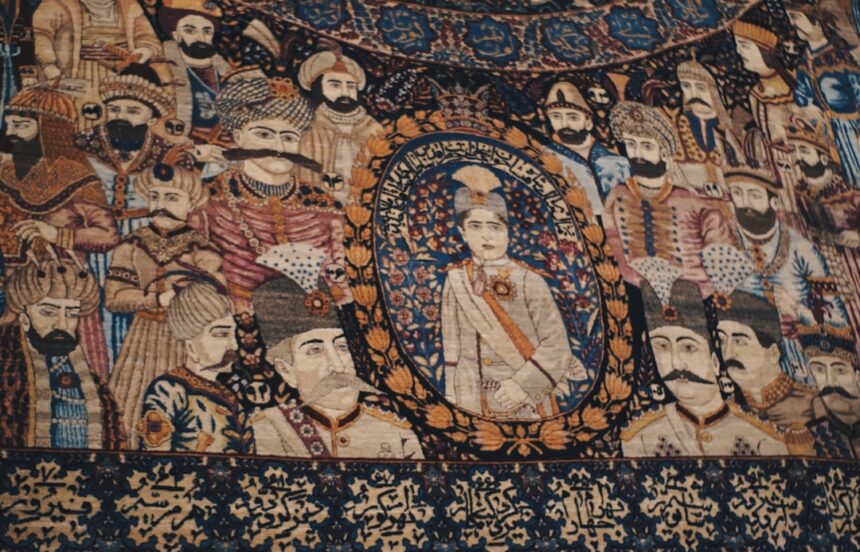
The grandeur of the Achaemenid, Sasanian, and other historically dominant Persian empires is a subject of considerable academic and popular fascination. Their contributions to art, architecture, governance, and philosophy resonate through history. Yet, in contemporary discourse, the explicit recognition and active preservation of this imperial identity face multifaceted challenges, leading to a phenomenon that can be characterized as its silent and insidious erasure. This erasure is not a singular event, but rather a gradual process stemming from a confluence of internal and external pressures, shaping how this rich heritage is perceived, taught, and integrated into the modern world.
The Shifting Sands of National Narratives
The construction of national identity is a dynamic process, often shaped by the prevailing political, social, and ideological currents. For nations with a long and complex history, this process involves selective emphasis and de-emphasis of past glory. In the case of Persian imperial identity, this has manifested in several ways:
The Rise of Post-Revolutionary Ideology
The Islamic Revolution of 1979 marked a profound shift in Iran’s national narrative. While the revolution sought to reclaim a distinct Islamic identity, it also, in practice, led to a reevaluation of pre-Islamic historical periods.
Religious Nationalism and Pre-Islamic Eras
The emphasis on Islamic history and revolutionary ideals often relegated the achievements of the ancient Persian empires to a secondary status. The appropriation of certain historical symbols and figures by the Pahlavi monarchy, which the revolution sought to overthrow, further complicated the relationship. This led to a cautious, and at times critical, approach towards symbols associated with the pre-Islamic imperial past.
The Secular vs. Religious Divide
A persistent tension exists between secular interpretations of Iranian history, which often champion the pre-Islamic imperial legacy, and religious interpretations that prioritize Islamic civilization. This ideological divide influences public discourse and academic research, impacting the prominence given to imperial narratives.
The Influence of Geopolitics and Foreign Perceptions
Global power dynamics and the perceptions of external actors have also played a role in the subtle marginalization of Persian imperial identity.
The Cold War’s Shadow
During the Cold War, Iran’s strategic importance often overshadowed its historical cultural contributions in international relations. The focus was on geopolitical alliances and the nation’s role in regional security, rather than its deep imperial past.
Post-9/11 Orientalism and Stereotyping
In the aftermath of significant global events, particularly 9/11, prejudicial historical narratives about the Middle East often resurfaced. This can lead to a reductionist view of the region, where complex and diverse imperial histories are flattened into monolithic stereotypes, obscuring the nuanced achievements of Persian empires.
The silent erasure of Persian imperial identity has been a topic of significant discussion, particularly in the context of historical narratives and cultural representation. An insightful article that delves into this subject can be found on In The War Room, where the complexities of identity and memory in relation to Persian history are explored. For more information, you can read the article here: In The War Room.
Academic Marginalization and Curricular Gaps
The academic landscape, while often dedicated to rigorous historical inquiry, is not immune to the forces shaping national narratives. Certain trends can contribute to the underrepresentation or misrepresentation of Persian imperial history.
Research Priorities and Funding Allocation
The allocation of research grants and academic positions can influence the direction of scholarly inquiry. When funding bodies, influenced by current political or social agendas, prioritize certain historical periods or themes over others, it can lead to a diminishment in research output on specific eras, including aspects of Persian imperial history.
The Influence of Global Academic Trends
Shifting academic trends in areas like postcolonial studies or gender studies, while valuable in their own right, can sometimes draw attention away from traditional grand narratives of empire. Without dedicated efforts to integrate these new perspectives with existing imperial histories, the latter risks being overlooked.
The Content and Delivery of Educational Curricula
The way history is taught in schools often shapes the foundational understanding of national identity for younger generations. Gaps or imbalanced representations in curricula can contribute to erasure.
Emphasis on Modern History
Many educational systems, including in Iran, tend to place a greater emphasis on more recent history, particularly the events of the last century and the Islamic Revolution. This focus, while important for understanding contemporary realities, can leave less time and space for in-depth exploration of earlier imperial periods.
The Nuances of Imperialism in Education
Teaching about empires inevitably involves confronting the complexities of conquest, power, and oppression. When curricula are pressured to present a simplified, uncritical, or overly nationalistic narrative, or conversely, a purely negative portrayal of empires without acknowledging their societal contributions, the richness and multidimensionality of Persian imperial identity are lost.
The Erosion of Cultural Heritage and Symbols
The tangible and intangible manifestations of Persian imperial identity are vital anchors to its past. Challenges in preserving and promoting these aspects contribute to erasure.
The Decline of Archaeological Preservation and Tourism
The physical remnants of ancient empires – their cities, palaces, and artifacts – are crucial touchstones. Neglect in their preservation and promotion can lead to their decay and obscurity.
Funding and Political Will for Heritage Sites
The maintenance and excavation of significant archaeological sites require substantial financial investment and sustained political will. In contexts of economic hardship or shifting national priorities, heritage preservation can be relegated to lower importance.
The Impact of Conflict and Neglect on Historical Sites
Regional conflicts and political instability can pose direct threats to archaeological sites, leading to damage, looting, and the cessation of preservation efforts.
The Digital Divide and the Globalized Cultural Landscape
In the digital age, the online presence and accessibility of cultural heritage are paramount. However, challenges exist in ensuring proper representation and engagement.
Underrepresentation in Global Digital Archives
While significant efforts are made by global organizations to digitize and archive cultural heritage, Persian imperial artifacts and sites may be underrepresented compared to those from other historically dominant civilizations. This can make them harder to access for global audiences and researchers.
The Dominance of Popular Culture Narratives
The vast and often uncritical consumption of globalized popular culture can dilute the appreciation for distinct historical cultural identities. Without actively promoted counter-narratives, the visual and narrative power of Persian imperial heritage can be overshadowed.
Linguistic Shifts and the Power of Translation
Language is a key carrier of cultural identity. Changes in language use and the dynamics of translation can subtly impact the perception of a heritage.
The Dominance of English in Academia and Global Discourse
English has become the lingua franca of academia and international diplomacy. This dominance can lead to a situation where scholarly work and public discourse on Persian history, if not adequately translated or promoted in English, remain confined to national or regional circles.
The Translation Gap and Access to Knowledge
A lack of readily available, high-quality translations of key Persian texts and scholarship related to imperial history can limit their reach and influence in the global academic sphere.
The Nuances Lost in Translation
Even with good translations, the unique cultural context, historical connotations, and poetic nuances embedded within the Persian language can be difficult to fully capture, potentially leading to a less vibrant or accurate understanding of imperial achievements.
The Decline of Classical Persian in Contemporary Use
While modern Persian is vibrant, the use of classical Persian, the language of many imperial-era literary and administrative texts, has diminished. This creates a barrier for understanding original sources.
Loss of Direct Engagement with Historical Texts
Without proficiency in classical Persian, contemporary scholars and the general public are often reliant on secondary sources and translations, which can filter or contextualize the original material, potentially altering the perception of imperial values and achievements.
The Intergenerational Transmission of Language and Culture
The decline in the use of classical Persian can also impact the intergenerational transmission of a deeper connection to the pre-Islamic imperial past, as the language itself served as a conduit for cultural heritage.
The gradual erosion of Persian imperial identity has been a topic of significant discussion among historians and cultural scholars. An insightful article that delves into this theme can be found at this link, where it explores the various factors contributing to the diminishing recognition of Persia’s rich heritage. The piece highlights how political shifts and cultural assimilation have played a crucial role in this silent erasure, prompting a reevaluation of how we understand Persian history today.
The Commodification and Misappropriation of Identity
The allure of ancient empires can also lead to their simplification and instrumentalization, where their historical significance is sacrificed for present-day gains.
The Trivialization of Imperial Symbols in Modern Media
Imperial symbols and imagery can be readily co-opted and trivialized in advertising, popular media, and tourism. This can strip them of their historical weight and reduce them to superficial aesthetics.
Superficial Branding and Superficial Understanding
When the grandeur of Persepolis or the coinage of Darius the Great are reduced to mere decorative elements or branding, it fosters a superficial understanding that bypasses the complex social, political, and economic realities of the empires they represent.
The Danger of Presentism in Historical Representation
Modern interpretations of imperial history can be susceptible to “presentism” – the anachronistic interpretation of historical events and people from the perspective of modern values and concepts. This can lead to an inaccurate and often biased portrayal of imperial societies.
The Politics of Nationalistic Revivals and Their Consequences
While a desire to reconnect with a glorious past is understandable, certain nationalistic revivals can lead to a distorted and exclusionary interpretation of imperial identity.
Exclusive Patriotism and the Othering of Internal Identities
When the focus on Persian imperial identity becomes overly nationalistic, it can lead to the exclusion or marginalization of other ethnic, religious, or linguistic groups within contemporary Iran, who may have had different historical relationships with imperial power.
The Appropriation by Authoritarian Regimes
Imperial legacies can be strategically appropriated by authoritarian regimes to legitimize their rule and project an image of historical continuity and strength. This instrumentalization can distort the actual historical context and ideals of the empires themselves.
In conclusion, the silent erasure of Persian imperial identity is not a deliberate act of destruction, but rather a complex interplay of historical forces, geopolitical shifts, academic trends, cultural evolution, and the inherent challenges of preserving and presenting a vast ancient heritage in the modern world. Recognizing these subtle erosions is the first step towards fostering a more nuanced, inclusive, and historically accurate appreciation of the profound and lasting impact of the Persian empires on global civilization. The echoes of their grandeur may be fading, but understanding the forces behind this fading is crucial for their potential reclamation and continued relevance.
FAQs
What is the Persian imperial identity?
The Persian imperial identity refers to the historical and cultural heritage of the ancient Persian Empire, which was one of the most powerful and influential empires in the ancient world. It encompasses the language, art, architecture, and traditions of the Persian people.
What is meant by the “silent erase” of Persian imperial identity?
The “silent erase” refers to the gradual disappearance or neglect of the Persian imperial identity in historical narratives, cultural representations, and educational curricula. This erasure can occur through intentional or unintentional neglect of Persian history and culture.
What are some examples of the silent erase of Persian imperial identity?
Examples of the silent erase of Persian imperial identity include the omission of Persian contributions to world history in textbooks, the lack of representation of Persian art and architecture in mainstream media, and the marginalization of Persian language and literature in academic discourse.
Why is it important to preserve the Persian imperial identity?
Preserving the Persian imperial identity is important for understanding the rich and diverse history of the ancient world, acknowledging the contributions of Persian civilization to human progress, and promoting cultural diversity and inclusivity in global narratives.
What can be done to address the silent erase of Persian imperial identity?
Efforts to address the silent erase of Persian imperial identity include advocating for more inclusive and accurate representations of Persian history and culture in educational materials, promoting the study of Persian language and literature, and supporting initiatives that celebrate and preserve Persian heritage.