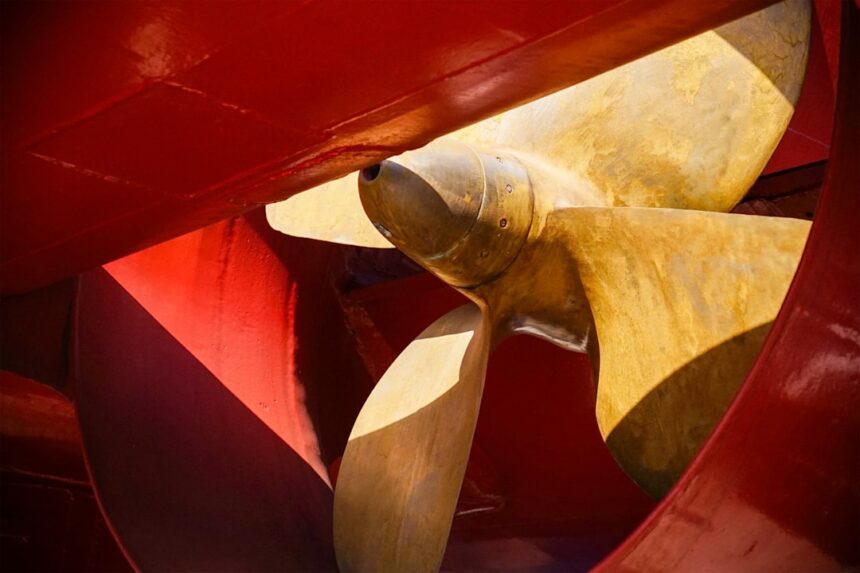
The silent hunter, the submarine, relies on a multitude of advanced technologies to fulfill its mission. Among these, the propeller stands as a critical, yet often overlooked, component. Its role in propulsion is undeniable, but its contribution to acoustic signature is equally significant. Modern submarines, particularly those designed for stealth operations, demand propellers that are not merely efficient but extraordinarily quiet. This requires a rigorous and precise approach to machining, a process that transforms raw materials into acoustic anomalies. This guide delves into the intricate world of silent submarine propeller machining, outlining the essential steps and considerations that ensure these vital components operate with minimal discernibility.
Understanding the Acoustic Imperative
The fundamental challenge in submarine propeller design and manufacturing lies in mitigating hydrodynamic noise. This noise, often referred to as singing, whistling, or cavitation noise, originates from the complex interaction of the propeller blades with the surrounding water.
Sources of Propeller Noise
- Cavitation: This is the most significant contributor to propeller noise. It occurs when the pressure on the blade surface drops below the vapor pressure of the water, forming bubbles. When these bubbles collapse, they generate a shockwave that propagates as acoustic energy.
- ### Blade Form and Cavitation Susceptibility:
The shape, thickness, and angle of attack of propeller blades directly influence the likelihood and severity of cavitation. Highly loaded blades, sharp leading edges, and aggressive angles of attack are more prone to this phenomenon.
- ### Hydrodynamic Loads and Pressure Fluctuations:
The varying pressures experienced by different sections of the blade during rotation create localized low-pressure zones conducive to cavitation.
- Vortices: The shedding of vortices from the blade tips and trailing edges also generates acoustic noise. These turbulent wake structures can induce vibrations and radiate sound.
- ### Tip Vortices and Noise Radiation:
The intense swirling motion at the blade tips can lead to the formation of stable vortices, which, when periodically shed, act as miniature acoustic sources.
- ### Trailing Edge Noise:
The flow separation and turbulence at the trailing edge of the blade can generate broadband noise.
- Blade Vibration: Uneven stresses and imbalances within the propeller can lead to vibrations, which can then radiate as acoustic signals into the water.
- ### Manufacturing Tolerances and Material Homogeneity:
Deviations from intended dimensions and inconsistencies in the propeller material can introduce imbalances and stress concentrations, promoting vibration.
- ### Operational Stresses and Fatigue:
The constant dynamic forces experienced during operation, especially at high speeds, can induce vibrations that may be exacerbated by manufacturing imperfections.
The Goal of Acoustic Quieting
The primary objective of silent propeller machining is to minimize these noise sources to the greatest extent possible. This involves a multi-pronged approach that starts with design and extends meticulously through every stage of manufacturing.
- ### Design for Silence:
The foundation of a silent propeller is laid during the design phase, where advanced computational fluid dynamics (CFD) and acoustic modeling are employed to predict and mitigate noise generation.
- ### Material Selection and Treatment:
The choice of material and its subsequent treatment play a crucial role in both structural integrity and acoustic performance.
- ### Precision Machining for Acoustic Performance:
This is where the theoretical designs are translated into tangible reality, with an unwavering focus on achieving acoustically optimal geometry.
For those interested in the intricate process of designing and manufacturing silent submarine propellers, a related article can provide valuable insights into the latest advancements in underwater acoustics and propulsion technology. This article explores innovative techniques and materials that enhance the stealth capabilities of submarines, making them less detectable by enemy sonar systems. To learn more about these developments, you can read the full article here: Silent Submarine Propellers: Innovations and Techniques.
Material Selection and Preparation: The Bedrock of Quietude
The selection of appropriate materials and their thorough preparation are foundational to manufacturing a silent propeller. The material must not only possess the required strength and corrosion resistance but also characteristics that minimize acoustic radiation.
Advanced Alloys and Composites
Modern submarine propellers are typically manufactured from high-strength, low-manganese bronze alloys, nickel-aluminum bronze, or advanced composite materials. Each offers distinct advantages:
- ### Nickel-Aluminum Bronze (NAB):
This alloy provides excellent strength-to-weight ratio, good corrosion resistance, and a favorable damping characteristic compared to traditional bronze.
- ### Metallurgical Purity and Inclusion Control:
The presence of undesirable inclusions (e.g., oxides, sulfides) within the alloy can act as nucleation sites for cavitation and also contribute to internal damping of vibrations, but they must be carefully controlled to avoid detrimental effects.
- ### Grain Structure and Homogeneity:
A fine, uniform grain structure is desirable for both strength and acoustic performance, as it contributes to consistent material properties.
- ### Composite Materials:
Fiber-reinforced polymer composites offer significant weight savings, high strength, and inherent vibration damping properties.
- ### Fiber Orientation and Layup:
The precise orientation of reinforcing fibers is critical to achieving the desired stiffness and strength distribution across the blade, which directly impacts vibration modes.
- ### Matrix Material Selection:
The polymer matrix must exhibit good fatigue resistance, low moisture absorption, and suitable damping characteristics.
Material Processing and Pre-Treatment
Before machining can commence, the raw material undergoes rigorous processing to ensure its suitability for critical applications.
- ### Ingot Casting and Homogenization:
The initial casting of alloys is performed under controlled conditions to minimize porosity and segregation of alloying elements. Subsequent heat treatments (homogenization) are employed to create a more uniform microstructure.
- ### Vacuum Casting Techniques:
To further reduce gas porosity and improve material integrity, vacuum casting is often utilized, especially for critical components.
- ### Controlled Cooling Rates:
The cooling rate after solidification significantly influences the grain size and phase distribution, making controlled cooling essential.
- ### Non-Destructive Testing (NDT):
Extensive NDT is performed to detect any internal flaws before commencing expensive machining operations.
- ### Ultrasonic Testing (UT):
This is a primary method for detecting internal voids, cracks, and inclusions. Precise scanning and interpretation are vital.
- ### Radiographic Testing (RT):
X-ray or gamma-ray inspection can reveal internal defects and confirm material density.
- ### Eddy Current Testing (ECT):
Applied primarily for surface and near-surface defect detection in conductive materials.
CNC Machining: The Precision Engine of Propeller Manufacturing
Computer Numerical Control (CNC) machining has revolutionized propeller manufacturing, offering the unparalleled precision and repeatability required for acoustically silent operation. The journey from raw material to a finished propeller is a tightly controlled, multi-axis endeavor.
Advanced Machining Strategies
The complexity of propeller blade geometries necessitates sophisticated machining techniques.
- ### Multi-Axis Milling:
Propeller blades possess intricate, three-dimensional contours that demand simultaneous control of multiple axes of movement on the CNC machine.
- ### 5-Axis Machining Centers:
These machines allow the cutting tool to approach the workpiece from virtually any angle, enabling the creation of complex curvatures and undercuts without the need for extensive re fixturing.
- ### Toolpath Optimization:
Sophisticated CAM (Computer-Aided Manufacturing) software is used to generate optimized toolpaths that minimize material removal time, ensure surface finish, and avoid excessive tool pressure.
- ### High-Precision Tooling:
The cutting tools themselves are critical. They must be manufactured to exacting tolerances and possess specific geometries to ensure accurate material removal and a superior surface finish.
- ### Diamond and Carbide Tooling:
For non-ferrous materials like bronze alloys, specialized carbide or diamond-tipped tools are employed to achieve a clean cut and long tool life.
- ### Tool Geometry and Coatings:
The rake angles, clearance angles, and cutting edge preparation of the tools are precisely designed to reduce cutting forces, minimize heat generation, and prevent material smearing.
Surface Finish and Dimensional Tolerances
The surface finish and dimensional accuracy of the propeller blades are paramount for acoustic performance. Even microscopic imperfections can become sources of noise.
- ### Surface Roughness Requirements:
The trailing edges and pressure sides of the blades, in particular, require extremely smooth surfaces to minimize flow separation and turbulence.
- ### Grinding and Polishing Operations:
Following initial milling, specialized grinding and polishing processes are employed to achieve very low surface roughness values, often measured in microns.
- ### Traceability of Surface Finish:
Each stage of surface treatment is meticulously documented and verified to ensure compliance with stringent specifications.
- ### Dimensional Accuracy:
Deviations from the designed profile, thickness, and pitch of the blades can lead to imbalances, increased vibration, and altered hydrodynamic performance.
- ### In-Process Metrology:
Automated metrology systems, such as Coordinate Measuring Machines (CMMs), are integrated into the machining process to monitor dimensions in real-time, allowing for immediate adjustments if deviations are detected.
- ### Blade Angle and Pitch Verification:
Specialized fixtures and laser measurement systems are used to verify the precise angle and pitch of each blade relative to others.
Balancing and Vibration Analysis: The Quest for Equilibrium
Once the individual blades are machined to their precise geometric forms, they must be assembled and balanced to ensure that the propeller rotates smoothly and without inducing excessive vibration. This phase is critical for mitigating noise generated by imbalances.
Static and Dynamic Balancing
Balancing is a two-stage process that addresses imbalances both when the propeller is stationary and when it is rotating.
- ### Static Balancing:
This initial balancing is performed to equalize the weight distribution of the propeller at rest.
- ### Balance Stands and Measurement Devices:
The propeller is mounted on a sensitive balance stand, and any tendency to rotate with a specific section consistently settling at the bottom indicates a heavier spot.
- ### Material Removal at Imbalance Points:
Small amounts of material are carefully removed from the heavier areas to achieve equilibrium. The amount of material removed and its location are precisely recorded.
- ### Dynamic Balancing:
This more critical balancing process takes place when the propeller is rotated at speeds approaching its operational range. It accounts for the effects of centrifugal force and the distribution of mass in relation to the axis of rotation.
- ### Balancing Machines:
Specialized balancing machines are used to spin the propeller and detect even minute imbalances that create vibrations.
- ### Correction Techniques:
Corrections can involve both removing material (similar to static balancing but with dynamic considerations) and, in some cases, adding small, precisely placed weights.
Advanced Vibration Analysis
Beyond basic balancing, detailed analysis of potential vibration modes is conducted to identify and mitigate any inherent resonant frequencies or problematic vibrational behaviors.
- ### Finite Element Analysis (FEA):
Prior to machining, FEA is used to predict how the propeller will respond to various operational forces and identify potential structural weaknesses or problematic vibration modes.
- ### Modal Analysis:
This simulates the propeller’s natural vibration frequencies and mode shapes, allowing designers to avoid operational speeds that might excite these modes.
- ### Stress Analysis:
FEA also predicts stress distribution under various loading conditions, ensuring the propeller’s structural integrity.
- ### Operational Vibration Monitoring:
During testing and operation, advanced sensors are employed to monitor vibration levels.
- ### Accelerometers and Strain Gauges:
These sensors provide real-time data on the propeller’s vibrational response, which can be compared against predictive models.
- ### Acoustic Signature Measurement:
Simultaneously, hydrophones are used to measure the acoustic output, correlating any detected vibrations with specific noise signatures.
In the quest for stealth in naval operations, the development of silent submarine propellers has become a critical focus for engineers and designers. These advanced propellers are essential for reducing noise levels, which can significantly enhance a submarine’s ability to remain undetected. For those interested in exploring the intricacies of this technology, a related article can be found that delves into the methods and innovations behind creating these silent propellers. You can read more about it in this insightful piece on submarine technology.
Surface Treatment and Finishing: The Final Polish for Silence
The final stages of propeller manufacturing focus on applying specialized surface treatments and achieving an impeccable finish. These steps are not merely aesthetic but are crucial for optimizing hydrodynamic performance and reducing acoustic noise.
Protective Coatings and Their Acoustic Implications
Propellers are exposed to harsh marine environments. Protective coatings are applied to prevent corrosion and erosion, but their acoustic properties must also be considered.
- ### Anti-Corrosion Primers and Topcoats:
These coatings protect the base material from seawater, preventing pitting and other forms of degradation that could affect hydrodynamic surfaces.
- ### Material Compatibility:
The primers and topcoats must be chemically compatible with the propeller material and the marine environment.
- ### Smoothness of Application:
Even application is critical to avoid introducing surface irregularities.
- ### Hydrodynamic Coatings:
Specialized coatings are developed to improve water flow over the blades, reducing drag and potentially minimizing cavitation.
- ### Low-Friction Surfaces:
Some coatings aim to reduce the friction between the blade surface and the water, leading to more efficient and quieter operation.
- ### Cavitation-Resistant Coatings:
Certain advanced coatings are designed to withstand the erosive effects of bubble collapse during cavitation, thus maintaining the blade’s surface integrity and acoustic profile.
Final Inspection and Quality Assurance
The culmination of the manufacturing process is a rigorous final inspection to ensure that every aspect of the propeller meets the stringent specifications.
- ### Visual Inspection:
A thorough visual examination checks for any surface defects, such as scratches, dents, or imperfections in the coating.
- ### Magnified Inspection:
High-magnification techniques are used to detect even the smallest flaws.
- ### Lighting Conditions:
Inspection is carried out under controlled lighting to ensure maximum visibility of surface characteristics.
- ### Metrological Verification:
Final measurements confirm that the propeller’s geometry, pitch, and dimensions are within the specified tolerances.
- ### Laser Scanning and CMM Verification:
Advanced metrology tools are used to create a digital model of the finished propeller and compare it against the design data.
- ### Documentation and Certification:
Detailed reports are generated that document all inspections, measurements, and any corrective actions taken, providing a comprehensive record of quality assurance.
- ### Acoustic Signature Testing:
In dedicated test facilities, the finished propeller, or a model thereof, may undergo acoustic signature testing to verify its performance against required noise levels.
- ### Anechoic Water Tanks:
These specialized tanks are designed to minimize reflections and external noise, allowing for precise measurement of the propeller’s acoustic output.
- ### Hydrophone Arrays:
Multiple hydrophones are strategically placed to capture the radiated sound field from various angles and frequencies.
The creation of a silent submarine propeller is an endeavor that demands an exceptional level of precision, expertise, and unwavering attention to detail. It is a testament to the intricate interplay of advanced materials, sophisticated machining techniques, rigorous testing, and a deep understanding of hydrodynamic acoustics, all culminating in a component that is as crucial to a submarine’s survivability as its hull.
FAQs
What are silent submarine propellers?
Silent submarine propellers are specially designed propellers that minimize noise and vibration to make submarines less detectable by sonar and other detection systems.
Why is it important to machine silent submarine propellers?
Machining silent submarine propellers is important to ensure that the propellers are precisely crafted to reduce noise and vibration, thus enhancing the stealth capabilities of the submarine.
What are the key considerations when machining silent submarine propellers?
Key considerations when machining silent submarine propellers include material selection, precision machining techniques, surface finish, and balancing to achieve the desired noise reduction and performance.
What are the challenges in machining silent submarine propellers?
Challenges in machining silent submarine propellers include working with specialized materials, achieving tight tolerances, and ensuring the propellers maintain their hydrodynamic efficiency while reducing noise.
What are the benefits of using silent submarine propellers?
The benefits of using silent submarine propellers include improved stealth capabilities, reduced detection by enemy vessels, and enhanced overall operational effectiveness of the submarine.