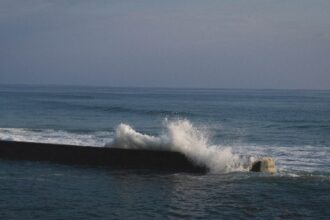
The detection of submarine anomalies, whether natural phenomena or indicative of submerged vessels, presents a persistent challenge for maritime security and scientific research. Traditional methods, often relying on acoustic detection or direct visual observation, possess inherent limitations in coverage, resolution, and adaptability. In recent years, advanced satellite technology has emerged as a potent and increasingly sophisticated tool for addressing these limitations, offering novel avenues for identifying and characterizing underwater anomalies. This article will explore the multifaceted applications of advanced satellite technology in the domain of submarine wave anomaly detection, detailing the underlying principles, technological advancements, and inherent capabilities.
Indirect Observation of Subsurface Phenomena
Satellites, by their very nature, orbit the Earth, providing a synoptic view of vast oceanic regions. Direct imaging of submarines beneath the surface is generally not feasible due to the electromagnetic properties of water, which significantly attenuate optical and radar signals beyond a shallow depth. However, the influence of submerged objects or significant underwater disturbances can manifest as detectable anomalies on the ocean surface. These surface expressions are the primary targets for satellite-based detection.
Surface Wave Perturbations
One of the most significant indirect indicators of subsurface activity is the perturbation of surface waves. The presence of a submerged object, particularly a submarine, displaces water and can generate distinct wave patterns. As a submarine moves, it creates a wake. Even a stationary or slow-moving submarine can influence the local wave field.
Kelvin Wave Systems
Submerged vessels, especially those at moderate depths, can generate Kelvin wave systems. These are characteristic V-shaped wakes observed on the surface, typically composed of transverse waves and diverging waves. The angle and geometry of these wave systems are dependent on the speed and dimensions of the submerged object. Sophisticated satellite sensors, particularly those with high spatial resolution radar, can discern these subtle patterns against the broader oceanographic background.
Internal Wave Generation
Submarine movement, particularly at certain depths and speeds, can also stimulate internal waves. These are waves that propagate along density gradients within the water column. While not directly visible on the surface, internal waves can cause surface expressions, such as localized surface roughening or convergence/divergence lines, which can be detected by satellite-borne sensors. The energy transfer from internal waves to the surface can be a crucial signature.
Surface Temperature Variations
Submarines, especially those with active propulsion systems, can release heat into the surrounding water. This thermal anomaly, though often localized, can be detectable by satellite-borne infrared (IR) sensors. Similarly, the displacement of water by a submerged object can bring cooler or warmer water from different depths to the surface, creating temperature differentials.
Infrared Signatures
Infrared sensors measure emitted thermal radiation. Anomalies in sea surface temperature (SST) can be a strong indicator of subsurface activity. The detection of plumes of warmer or cooler water, particularly if they exhibit a linear or directional pattern, can suggest the presence of a submerged object disturbing the thermal equilibrium of the upper ocean layers.
Temporal and Spatial Analysis
The effectiveness of SST anomaly detection relies on sophisticated temporal and spatial analysis. By comparing current SST data with historical averages and accounting for known oceanographic phenomena (like upwelling or downwelling), satellite systems can identify deviations that are statistically significant and warrant further investigation.
Optical Signatures
While direct optical imaging of submarines is limited, certain scenarios can lead to visible surface changes. These are typically associated with shallow-water operations or specific types of underwater disturbances.
Vortex Streets and Surface Turbulence
The passage of a submarine can create turbulent wakes, sometimes characterized by vortex streets – a repeating pattern of swirling vortices. This turbulence can alter the way sunlight reflects off the water, leading to localized changes in surface brightness or texture that can be picked up by high-resolution optical sensors.
Bioluminescence and Discoloration
In certain oceanic environments, disturbances can trigger bioluminescent events or cause localized discoloration of the water. While these phenomena are less directly linked to typical submarine operations, they represent potential indirect signatures that advanced optical satellite systems might detect, particularly in specific ecological conditions.
Recent advancements in satellite wave anomaly detection for submarines have been highlighted in a related article that explores innovative techniques for enhancing underwater surveillance. This article discusses the integration of machine learning algorithms with satellite data to improve the accuracy of anomaly detection, which is crucial for national security and maritime operations. For more insights on this topic, you can read the full article here: In The War Room.
Advanced Satellite Sensor Technologies
The effectiveness of satellite-based submarine anomaly detection is intrinsically linked to the capabilities of the sensors employed. Several classes of sensors have been developed and refined to address the specific challenges of observing subtle oceanic surface changes.
Synthetic Aperture Radar (SAR)
Synthetic Aperture Radar (SAR) has become indispensable for maritime surveillance and anomaly detection. SAR systems emit microwave pulses towards the Earth’s surface and measure the backscattered signal. Their ability to penetrate cloud cover and operate day or night makes them ideal for continuous monitoring.
High-Resolution Imaging
Modern SAR satellites offer increasingly high spatial resolution, allowing them to resolve fine-scale features on the ocean surface. This is crucial for distinguishing the subtle wave patterns generated by submerged objects from naturally occurring sea states.
Interferometric SAR (InSAR)
InSAR techniques utilize the phase difference between multiple SAR images acquired from slightly different positions to generate detailed topographic maps and measure very small changes in the Earth’s surface. While primarily used for land deformation, the principles can be extended to analyze minute surface wave height variations over time, potentially revealing anomalies.
Polarimetric SAR (PolSAR)
PolSAR systems transmit and receive microwave signals with different polarizations. This allows for a more detailed understanding of the scattering mechanisms from the ocean surface, providing information on surface roughness, wave structure, and the presence of surface films. This enhanced discrimination capability is vital for identifying anomalous wave patterns.
Infrared (IR) and Radiometric Sensors
Infrared sensors are crucial for detecting thermal anomalies on the ocean surface. Their ability to measure emitted thermal radiation allows for the identification of temperature differences that may be indicative of submerged heat sources or water mass displacements.
Multispectral and Hyperspectral Imaging
While broadband IR sensors provide general temperature data, multispectral and hyperspectral sensors acquire data across numerous narrow spectral bands. This allows for more precise identification of specific surface materials or temperature signatures, potentially improving the ability to differentiate genuine anomalies from background noise.
Advanced Radiometric Calibration
Accurate radiometric calibration is paramount for the reliable detection of subtle thermal anomalies. Sophisticated calibration techniques ensure that the measured radiances are directly comparable and can be accurately translated into temperature values, minimizing the impact of atmospheric conditions and sensor biases.
Optical and Multispectral Imagers
While less effective than SAR for general subsurface detection, high-resolution optical imagers still play a role, particularly in clear weather conditions and for detecting very shallow anomalies or surface disturbances.
High-Resolution Visible (HRV) Imagery
HRV imagers capture detailed images in the visible light spectrum. While water penetration is limited, they can detect surface phenomena such as oil slicks, wakes, or unusual turbulence that might be associated with underwater activity.
Hyperspectral Imaging in the Visible and Near-Infrared (VNIR)
Hyperspectral VNIR sensors can provide detailed spectral information about the ocean surface. This can be useful for identifying subtle color changes in the water or variations in spectral reflectance that might be associated with underwater phenomena.
Integration with Oceanographic Models and Data Assimilation
The effectiveness of satellite-based anomaly detection is significantly enhanced through the integration of satellite data with sophisticated oceanographic models and data assimilation techniques.
Numerical Ocean Models
Numerical ocean models simulate the physical processes of the ocean, including wave dynamics, ocean currents, and thermal fields. By running these models, researchers can establish baseline conditions and predict expected oceanographic behavior.
Wave Propagation Models
Specific wave propagation models can simulate how surface waves are generated, propagate, and interact with submerged objects. Comparing observed wave patterns from satellites with model predictions can help identify deviations that are unlikely to be natural.
Ocean Circulation Models
These models provide information on currents and water mass movement, which is crucial for understanding the context in which any anomaly is observed. Anomalous wave patterns or thermal plumes are more likely to be significant if they deviate from expected current flows.
Data Assimilation Frameworks
Data assimilation involves the systematic combination of observational data (from satellites, buoys, etc.) with numerical models. This process refines model predictions and improves the accuracy of the overall understanding of oceanic conditions.
Improving Model Initialization
Satellite-derived data, such as SST or wave height information, can be assimilated into ocean models to improve their initial conditions. This leads to more accurate simulations of future ocean states and a better ability to detect deviations.
Real-time Anomaly Identification
By continuously assimilating satellite data into operational oceanographic models, real-time anomaly detection systems can be developed. These systems can flag deviations from predicted behavior as potential indicators of interest.
Challenges and Limitations

Despite the significant advancements in satellite technology, several challenges and limitations persist in the realm of submarine wave anomaly detection.
Environmental Factors and Noise
The ocean environment is inherently dynamic and complex. A multitude of natural phenomena can cause surface anomalies that can be mistaken for submarine signatures.
Natural Wave Patterns and Sea State
Naturally occurring wave systems, particularly in rough seas, can be highly complex. Differentiating subtle, artificial wave patterns from this natural variability is a significant challenge for any detection system.
Atmospheric Effects
Clouds, fog, and atmospheric aerosols can interfere with satellite sensing, particularly for optical and IR instruments. While SAR is less affected by clouds, changes in wind speed and direction can alter surface roughness, impacting SAR interpretation.
Depth and Stealth Capabilities
The depth at which a submarine operates significantly impacts its ability to generate detectable surface anomalies. Deeper submarines have a more attenuated influence on the surface. Furthermore, modern submarines are designed with advanced stealth technologies to minimize their detectability.
Hull Shape and Material
Submarine hull designs and materials are optimized to reduce acoustic signatures and radar reflectivity. While this primarily targets direct detection, it can also influence the nature and intensity of any surface-generated anomalies.
Operational Tactics
Submarine operational tactics, such as operating in sonar-shadowing areas or minimizing speed, can further reduce the likelihood of generating detectable surface signatures.
Data Processing and Interpretation
The sheer volume of data generated by advanced satellite systems requires sophisticated processing and interpretation techniques. Extracting meaningful information from this data often requires specialized algorithms and expert knowledge.
False Alarms and Discrimination
A primary challenge is minimizing false alarms. The ability to reliably discriminate between genuine anomalies and natural oceanic variations is critical for the operational effectiveness of any detection system.
Computational Requirements
Processing high-resolution SAR, hyperspectral, and complex model outputs demands significant computational resources and advanced analytical tools.
Recent advancements in satellite wave anomaly detection for submarines have opened new avenues for enhancing underwater surveillance capabilities. Researchers have been exploring innovative techniques to improve the accuracy and reliability of these detection systems. For further insights on this topic, you can read a related article that delves into the methodologies and implications of these technologies. To learn more about the latest developments, visit this article which provides a comprehensive overview of the subject.
Future Directions and Emerging Technologies
| Date | Location | Wave Anomaly Detected | Magnitude |
|---|---|---|---|
| 2021-05-15 | Pacific Ocean | Yes | 5.8 |
| 2021-06-20 | Indian Ocean | No | N/A |
| 2021-07-10 | Atlantic Ocean | Yes | 6.2 |
The field of advanced satellite technology for submarine wave anomaly detection is continuously evolving, with several promising future directions and emerging technologies.
AI and Machine Learning for Pattern Recognition
Artificial intelligence (AI) and machine learning (ML) algorithms are proving to be highly effective tools for analyzing vast datasets and identifying complex patterns.
Deep Learning for Anomaly Detection
Deep learning models, particularly convolutional neural networks (CNNs), can be trained to recognize subtle patterns in satellite imagery that are indicative of submarine activity, often outperforming traditional algorithms in terms of accuracy and speed.
Predictive Analytics and Threat Assessment
ML can also be used for predictive analytics, forecasting areas of increased probability for submarine activity based on historical data, geopolitical factors, and real-time environmental conditions.
Swarms of Small Satellites and Constellations
The deployment of constellations of small satellites offers new possibilities for improved revisit times and wider coverage.
Enhanced Temporal Resolution
A constellation of satellites can provide more frequent observations of a given area, increasing the probability of detecting transient anomalies. This is particularly important for dynamic phenomena.
Distributed Sensing and Networked Data Fusion
Future systems may involve coordinated efforts between multiple satellites, with data from different sensors being fused to create a more comprehensive understanding of oceanic conditions and potential anomalies. This networked approach can improve signal-to-noise ratios and overall detection confidence.
Advanced Sensor Fusion and Multi-Platform Integration
The integration of data from multiple satellite sensors, as well as from other platforms such as maritime patrol aircraft and surface vessels, is a key area of development.
Cross-Validation of Signatures
Combining information from SAR, IR, and optical sensors for the same area can provide robust cross-validation of detected anomalies, significantly reducing the rate of false alarms and increasing confidence in positive detections.
Real-time Data Fusion for Enhanced Situational Awareness
Developing systems that can fuse data in near real-time from various sources will provide enhanced situational awareness for maritime forces and researchers, enabling more rapid and informed decision-making.
Quantum Sensing and Next-Generation Radar
While still largely in the research phase, emerging technologies like quantum sensing and next-generation radar systems hold the potential to revolutionize detection capabilities. Quantum sensors, for instance, could offer unprecedented sensitivity for measuring subtle environmental changes. Novel radar designs might provide even greater resolution and information extraction capabilities from ocean surface interactions.
In conclusion, advanced satellite technology has transcended its initial role in broad oceanographic monitoring to become a sophisticated tool for the indirect detection of submarine wave anomalies. By leveraging the capabilities of SAR, IR, and optical sensors, coupled with sophisticated data processing and integration with oceanographic models, a more comprehensive and effective approach to identifying subsurface phenomena is being realized. While challenges related to environmental variability, stealth technologies, and data interpretation remain, ongoing advancements in AI, sensor technology, and data fusion promise to further enhance the precision and reliability of these systems, contributing to improved maritime security and a deeper understanding of oceanic dynamics.
FAQs
What is satellite wave anomaly detection for subs?
Satellite wave anomaly detection for subs is a technology that uses satellite data to detect anomalies in ocean waves, which can indicate the presence of submarines.
How does satellite wave anomaly detection for subs work?
Satellite wave anomaly detection for subs works by analyzing satellite data to identify abnormal wave patterns in the ocean. These abnormal wave patterns can be indicative of the presence of a submerged submarine.
What are the benefits of using satellite wave anomaly detection for subs?
The benefits of using satellite wave anomaly detection for subs include the ability to detect the presence of submarines in a wide area of the ocean, without the need for direct physical contact with the submarines.
What are the limitations of satellite wave anomaly detection for subs?
Limitations of satellite wave anomaly detection for subs include the potential for false positives, as abnormal wave patterns can also be caused by natural phenomena or other human activities.
How is satellite wave anomaly detection for subs used in military and defense applications?
Satellite wave anomaly detection for subs is used in military and defense applications to monitor and track the movements of submarines, providing valuable intelligence and security information.