The dismantling of Saddam Hussein’s regime in 2003, a seismic event that reshaped the Middle East, inadvertently created a significant power vacuum. Into this void stepped Iran, a nation with a complex history and a burgeoning regional agenda. For decades, Iran had existed in the shadow of its Ba’athist neighbor, locked in a costly war and a geopolitical rivalry. The removal of Saddam allowed Tehran to significantly expand its influence, leveraging a combination of ideological appeal, economic leverage, and strategic alliances to solidify its position across the region. This expansion was not a sudden, orchestrated coup, but rather a gradual, multi-faceted process, adapting to the evolving realities of post-invasion Iraq and the broader geopolitical landscape.
Iran’s engagement in the post-Saddam era was not born out of a vacuum of ambition, but rather from a deep-seated understanding of its strategic environment and a desire to counter perceived threats. The fall of Saddam removed a hostile buffer state on its western border and, more importantly, presented an opportunity to reshape regional dynamics in a manner more favorable to Tehran’s interests.
Historical Tensions and Post-War Realities
For eight long years, Iran and Iraq were locked in a brutal war that claimed hundreds of thousands of lives and devastated both economies. This conflict left a deep scar on Iranian policy, fostering a strong sense of national security and a persistent wariness of instability on its borders. The invasion of Iraq in 2003 was viewed by Tehran with a mixture of apprehension and strategic calculation. While the initial US presence was a concern, the swift collapse of the Ba’athist regime opened up new avenues for Iranian influence, particularly among Iraq’s Shi’a majority, who shared linguistic, religious, and cultural ties with Iran.
Ideological Connections and the Shi’a Awakening
Iran’s most potent tool in its post-Saddam engagement was its ideological appeal, particularly to the Shi’a communities that had long been marginalized in Iraq under Saddam’s Sunni-dominated rule. The Islamic Revolution of 1979 had offered a model of religious governance and empowerment that resonated with many Shi’a clerics and their followers.
The Legacy of Ayatollah al-Sistani
The presence of Grand Ayatollah Ali al-Sistani in Najaf, a preeminent Shi’a cleric with immense moral authority, provided a crucial anchor for Iranian influence. While al-Sistani maintained a degree of theological independence, his fatwas and pronouncements profoundly shaped the political landscape of Iraq, often aligning with Iranian strategic interests in promoting a Shi’a-led government and ensuring stability.
The Rise of Shi’a Political Parties and Militias
Following the invasion, numerous Shi’a political parties and militias emerged, many of them with strong ties to Iran, ranging from ideological affinity to direct financial and logistical support. These groups became significant players in Iraqi politics and security, often serving as proxies that advanced Iranian objectives without overt direct military involvement.
The power vacuum in Iran following the fall of Saddam Hussein has significantly influenced the geopolitical landscape of the Middle East. In exploring this complex situation, a related article can provide valuable insights into the ramifications of this power shift. For a deeper understanding of the dynamics at play, you can read more in the article found at In the War Room.
The Multifaceted Nature of Iranian Influence in Iraq
Iran’s influence in Iraq is not monolithic but rather a complex web of political, economic, religious, and security connections. Tehran has skillfully navigated the post-invasion landscape, leveraging these various channels to secure its strategic interests and project power.
Political Leverage and Diplomatic Engagement
From the outset, Iran recognized the importance of influencing Iraq’s nascent political institutions. This manifested through sustained diplomatic engagement, support for political factions, and the cultivation of relationships with key Iraqi figures.
Cultivating Political Alliances
Tehran actively fostered alliances with Shi’a political parties that rose to prominence after 2003, such as the Islamic Dawa Party and the Supreme Islamic Council of Iraq. These relationships provided Iran with a degree of access to the highest levels of Iraqi government and a voice in policy decisions.
Shaping Electoral Outcomes
While direct interference is difficult to definitively prove, many analysts suggest that Iran exerted influence, both overt and covert, on Iraqi elections, often favoring candidates and blocs that were seen as amenable to its regional vision. This could involve financial support, media campaigns, or the mobilization of allied groups.
Security Networks and Proxy Forces
Perhaps the most visible manifestation of Iran’s growing influence has been the development of extensive security networks and the empowerment of various Shi’a militias. These groups have played a significant role in combating insurgent groups, but also in asserting Iranian regional power.
The Popular Mobilization Forces (PMF)
The rise of the Popular Mobilization Forces (PMF), also known as Hashd al-Sha’abi, following the emergence of ISIS in 2014, marked a pivotal moment. While ostensibly an Iraqi state entity, many of its constituent factions have strong ties to Iran, receiving training, equipment, and funding from Tehran. The PMF has become a formidable military and political force within Iraq.
Qods Force and its Role
The Islamic Revolutionary Guard Corps’ Qods Force, under the command of Qasem Soleimani, played a crucial role in orchestrating Iran’s regional strategy, including in Iraq. The Qods Force provided strategic advice, logistical support, and direct operational assistance to allied militias, effectively extending Iran’s military reach.
Economic Penetration and Reconstruction Efforts
Iran has also sought to deepen its influence in Iraq through economic means, recognizing the power of trade, investment, and reconstruction projects in forging lasting ties.
Trade and Cross-Border Commerce
Iraq remains a significant trading partner for Iran, particularly in energy products and consumer goods. The extensive border between the two countries facilitates a robust flow of commerce, often bypassing formal channels, which can create economic dependencies.
Infrastructure Development and Energy Deals
Iran has also invested in and undertaken reconstruction projects in Iraq, particularly in border regions and in areas with significant Shi’a populations. Energy deals, especially concerning the import of Iranian natural gas to power Iraqi electricity grids, have provided leverage and created a degree of energy interdependence.
Iran’s Expanding Regional Reach Beyond Iraq
The influence gained in Iraq has served as a springboard for Iran to further expand its strategic reach across the Middle East, creating a network of allies and instruments of power that challenge existing regional orders.
The Syrian Conflict and the “Axis of Resistance”
The Syrian civil war, which erupted in 2011, provided Iran with another critical theater to assert its regional ambitions and solidify its “Axis of Resistance.” Tehran threw its full support behind the Assad regime, viewing its survival as essential to maintaining its strategic depth and its connection to Hezbollah in Lebanon.
Military Intervention and Advisory Roles
Iranian forces, including the Qods Force, were directly involved in combat operations in Syria, providing crucial support to the Syrian army and its allied militias. Iran also facilitated the deployment of other regional fighters, such as Afghan and Pakistani Shi’a, to bolster the Assad regime’s efforts.
The Significance of Hezbollah
The Lebanese Hezbollah, a long-standing Iranian ally, played a pivotal role in Syria, fighting alongside Syrian government forces and Iranian advisors. Hezbollah’s involvement demonstrated the interconnectedness of the “Axis of Resistance” and provided Iran with a reliable and experienced proxy force.
The Lebanese Political Landscape and Hezbollah’s Dominance
Iran has exerted considerable influence over Lebanon for decades, primarily through its sustained support for Hezbollah. The militia has evolved from a resistance movement to a formidable political and military force, deeply embedded in the Lebanese state.
Hezbollah’s Military Might and Political Power
Hezbollah’s well-armed militia is often seen as more powerful than the Lebanese army itself. Its political influence extends to parliament, the cabinet, and other key state institutions, effectively making it a state within a state and a significant regional proxy for Iran.
Economic and Social Support Networks
Beyond its military and political power, Iran also provides significant economic and social support to Lebanon, particularly to Shi’a communities, further cementing its influence and fostering loyalty.
The Strategic Implications of Iranian Assertiveness
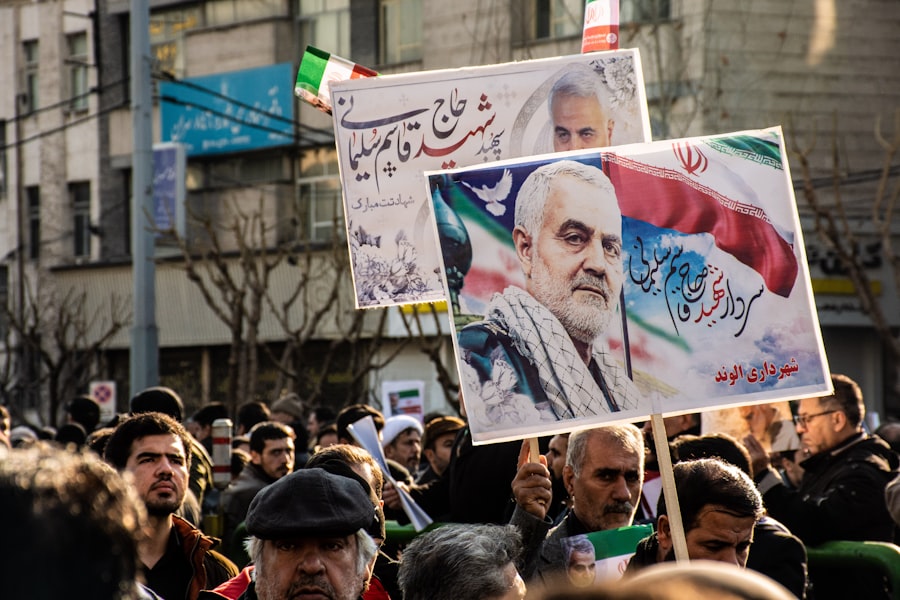
Iran’s growing influence has profound implications for regional security and the balance of power in the Middle East, sparking complex reactions from its rivals, particularly Saudi Arabia and Israel.
The Saudi-Iranian Rivalry Intensified
The rise of Iranian influence, particularly in Iraq and Syria, has directly exacerbated the long-standing rivalry between Saudi Arabia and Iran. Both nations view each other as existential threats and compete for dominance across the region.
Proxy Conflicts and Regional Competition
This rivalry has fueled proxy conflicts in various countries, including Yemen, where the Saudi-led coalition is pitted against the Houthi rebels, who are widely seen as being backed by Iran. The competition extends to political influence, economic ties, and ideological narratives.
Sectarian Narratives and Regional Polarization
Both Tehran and Riyadh have often employed sectarian narratives to mobilize support and demonize their opponents, contributing to the increasing polarization of the region along Shi’a-Sunni lines.
Israeli Concerns and the Threat of a “Shi’a Crescent”
Israel views Iran’s expanding influence with extreme concern, particularly the consolidation of a so-called “Shi’a crescent” stretching from Iran through Iraq, Syria, and Lebanon, directly bordering its northern frontier.
Iran’s Nuclear Ambitions and Ballistic Missile Program
Adding to Israeli anxieties are Iran’s persistent nuclear ambitions and its advanced ballistic missile program, which Israel perceives as direct threats to its security. Iran’s support for groups like Hezbollah further amplifies these concerns.
The Role of Hezbollah and Palestinian Militias
Hezbollah’s presence on Israel’s northern border, armed and supported by Iran, remains a major strategic challenge. Iran’s engagement with, and support for, Palestinian militant groups also contributes to regional instability from Israel’s perspective.
The power vacuum in Iran following the fall of Saddam Hussein has had significant implications for the region, leading to increased tensions and shifts in alliances. This situation is explored in detail in a related article that discusses the broader geopolitical consequences of Iraq’s instability and how it has allowed Iran to expand its influence. For more insights on this topic, you can read the article here. Understanding these dynamics is crucial for analyzing the current state of Middle Eastern politics and the ongoing challenges faced by neighboring countries.
Navigating the Future: Challenges and Opportunities
| Metrics | Data |
|---|---|
| Political Instability | High |
| Foreign Influence | Increasing |
| Economic Challenges | Growing |
| Military Presence | Strong |
Iran’s expanded regional influence presents a complex set of challenges and opportunities for stakeholders in the Middle East and on the international stage. The trajectory of this influence will be shaped by a confluence of internal Iranian dynamics, regional developments, and external pressures.
Domestic Constraints and Economic Pressures on Iran
Despite its regional successes, Iran faces significant domestic challenges. Economic sanctions, coupled with internal political and social pressures, can constrain Tehran’s ability to project power consistently and sustainably.
The Impact of Sanctions
The stringent economic sanctions imposed by the United States and other international actors have had a considerable impact on the Iranian economy, affecting its ability to fund its regional activities and provide domestic services.
Internal Political Divisions
Internal political divisions within Iran, between hardliners and reformists, can also influence foreign policy decisions and the willingness to undertake costly regional interventions.
The Evolving Role of the United States and International Actors
The future of Iran’s influence will also be contingent on the evolving role of the United States and other international actors in the region. Shifting US foreign policy priorities and the approach of other global powers will have a significant bearing on regional dynamics.
The JCPOA and its Aftermath
The fate of the Joint Comprehensive Plan of Action (JCPOA), the nuclear deal with Iran, and the broader framework of international engagement will continue to shape regional security architecture.
Diplomatic Engagement and Conflict Resolution
Ultimately, the long-term stability of the Middle East will likely hinge on diplomatic engagement and efforts toward conflict resolution, rather than purely military or unilateral approaches. The challenge lies in finding pathways for de-escalation and constructive dialogue in a region already marked by protracted disputes and proxy confrontations.
FAQs
What is the power vacuum in Iran after Saddam Hussein?
The power vacuum in Iran after Saddam Hussein refers to the destabilizing effect of the fall of the Iraqi leader on the balance of power in the region. With Saddam Hussein’s removal, Iran’s influence in the region increased, leading to a power struggle and instability.
How did Saddam Hussein’s fall impact Iran’s power in the region?
Saddam Hussein’s fall removed a major regional rival for Iran, allowing the country to expand its influence in the region. This led to increased involvement in Iraq and other neighboring countries, contributing to a power vacuum and instability in the region.
What are the implications of the power vacuum in Iran for the Middle East?
The power vacuum in Iran has led to increased regional tensions and conflicts, as various actors seek to fill the void left by Saddam Hussein’s fall. This has contributed to instability and insecurity in the Middle East.
How has the power vacuum in Iran affected the balance of power in the region?
The power vacuum in Iran has shifted the balance of power in the region, with Iran emerging as a more dominant player. This has led to increased competition and conflict among regional powers, contributing to instability and insecurity.
What are the potential consequences of the power vacuum in Iran for the international community?
The power vacuum in Iran has the potential to impact the international community by contributing to regional instability, conflicts, and humanitarian crises. It also has the potential to affect global energy markets and security.