
A recent study conducted by NASA has revealed a significant correlation between the amount of water stored in Earth’s reservoirs and the planet’s rotation. The findings indicate that the redistribution of large volumes of water due to dam construction and the creation of artificial lakes has a measurable impact on the speed and stability of Earth’s spin. This research underscores the complex interplay between human activities and geological processes, highlighting how even seemingly localized actions can contribute to global geophysical phenomena.
The Earth’s rotation is a fundamental geophysical process, dictating the length of our days and influencing various climatic patterns. This rotation is not absolute; it is susceptible to changes in the distribution of mass across the planet. Imagine a figure skater pulling their arms in to spin faster. Similarly, any significant redistribution of mass on Earth, whether it be ice caps melting, oceanic currents shifting, or, as this NASA study points out, the accumulation of vast quantities of water behind dams, can alter the planet’s rotational velocity and its axis of rotation.
The Principle of Conservation of Angular Momentum
At the heart of this phenomenon lies the principle of conservation of angular momentum. Angular momentum is a measure of an object’s tendency to continue rotating. For a rigid body like the Earth, it is calculated as the product of its moment of inertia (a measure of how resistant it is to changes in rotation) and its angular velocity (how fast it is spinning). In a closed system, the total angular momentum remains constant. Therefore, if the Earth’s moment of inertia changes – for instance, by a redistribution of mass closer to or further from the axis of rotation – its angular velocity must adjust to compensate, keeping the total angular momentum the same.
Moment of Inertia: A Key Factor
The moment of inertia is not uniform across the Earth. It depends on how mass is distributed relative to the axis of rotation. Mass concentrated closer to the axis contributes less to the moment of inertia than mass further away. When water is impounded behind a large dam, it creates a substantial reservoir of mass. The specific location and the depth changes of this water mass are crucial in determining its impact.
Quantifying the Impact of Reservoirs
NASA’s research, utilizing advanced satellite data and sophisticated geophysical models, has provided the most robust quantitative evidence to date linking reservoir storage to Earth’s rotation. By meticulously tracking the water levels in major reservoirs worldwide and correlating these changes with precise measurements of Earth’s rotational speed and the wobble of its axis, the scientists have been able to isolate the effect of these human-made water bodies.
Recent studies have highlighted the impact of large water reservoirs on the Earth’s rotation, revealing that the redistribution of water can lead to measurable shifts in the planet’s axis. For a deeper understanding of this phenomenon and its implications, you can read a related article that discusses these findings in detail. Check it out here: NASA Reservoir Load and Earth Rotation Shift.
Methodology: Satellites, Data, and Models
The NASA study employed a multi-pronged approach, integrating vast amounts of data from a variety of sources. The reliance on satellite technology was paramount, providing a global, consistent, and high-resolution perspective on crucial geophysical variables.
Satellite Altimetry and Gravimetry
Satellite altimetry, a technique that measures the height of the sea surface or lake surface relative to a reference ellipsoid, was used to monitor changes in water levels in reservoirs. Instruments like the Jason series of satellites provided precise measurements of these fluctuations over time. Complementing this was satellite gravimetry, employed by missions such as the Gravity Recovery and Climate Experiment (GRACE) and its successor GRACE Follow-On. These missions measure minute variations in Earth’s gravity field, which are directly indicative of changes in mass distribution. By analyzing these gravitational anomalies, scientists could infer the volume and distribution of water, including that held within reservoirs.
Earth Rotation Parameters
The precise measurement of Earth’s rotation is a field in itself, relying on a global network of instruments and techniques. The International Earth Rotation and Reference Systems Service (IERS) collects and processes data from observatories worldwide, providing crucial parameters such as the length of day (which measures the angular velocity of Earth’s rotation) and polar motion (the wobble of Earth’s axis). Techniques like Very Long Baseline Interferometry (VLBI), which uses radio telescopes to measure the direction of distant quasars, and the Global Navigation Satellite System (GNSS), a network of satellites used for positioning and timing, are instrumental in these measurements.
Geophysical Modeling
The collected satellite data and Earth rotation parameters were then fed into sophisticated geophysical models. These models are designed to simulate the complex dynamics of the Earth system, taking into account various factors that influence rotation, such as atmospheric pressure, oceanic currents, and ice mass changes. By incorporating the specific data on reservoir water levels and mass redistribution, the models could quantify the theoretical impact of these impoundments on Earth’s rotation and compare it with the observed changes.
Findings: Reservoir Contributions to Rotational Changes
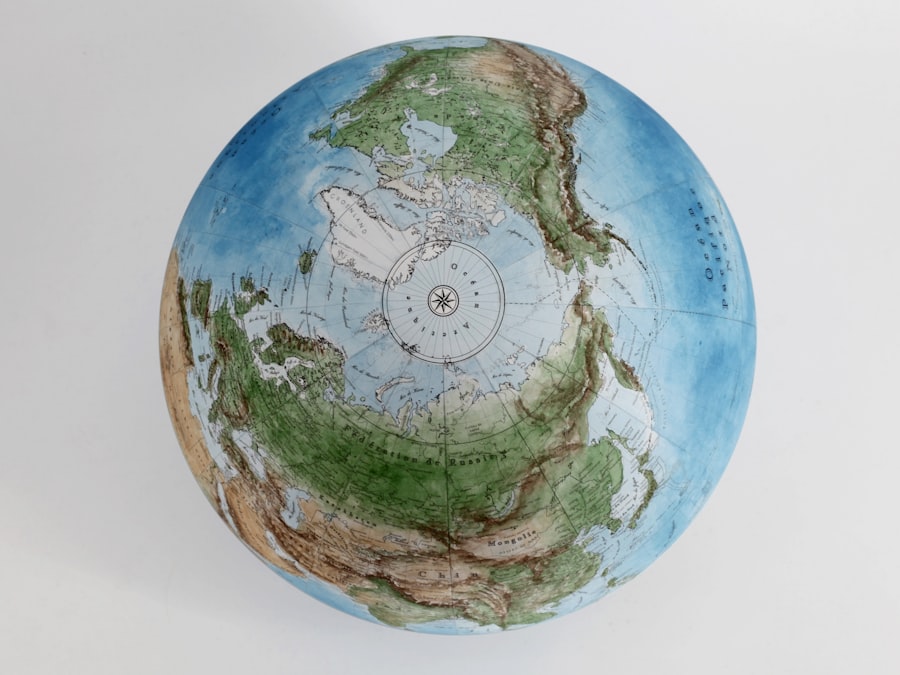
The NASA study’s most significant contribution lies in its quantifiable findings regarding the influence of reservoirs on Earth’s rotation. While the effect of individual reservoirs is minuscule, the cumulative impact of thousands of large dams worldwide, holding trillions of tons of water, becomes statistically significant and measurable.
Impact on Length of Day
The study found that the impoundment of water behind dams has a measurable effect on the length of the day. When water is stored in reservoirs, particularly those at lower latitudes, it effectively moves mass away from the Earth’s axis of rotation. This increases the Earth’s moment of inertia, causing it to spin slightly slower, thereby lengthening the day. Conversely, the draining of reservoirs, such as during periods of drought or for irrigation, can have the opposite effect, slightly shortening the day.
Polar Motion and Axial Wobble
Beyond the subtle lengthening of the day, the study also revealed a correlation between reservoir storage and polar motion, the irregular movement of Earth’s rotational axis. The uneven distribution of water mass added by reservoirs, especially when spread across different latitudes, can exert torques on the Earth, influencing the direction and magnitude of this axial wobble. This is akin to how a spinning top’s axis can be influenced by external forces.
Cumulative Effect and Temporal Trends
It is crucial to emphasize that the impact of any single reservoir is exceedingly small. However, the cumulative effect of the vast number of dams constructed over decades, and the continuous management of water levels within these reservoirs, creates a significant aggregate influence. The study was able to identify trends in rotational change that align with periods of substantial dam construction and reservoir filling, underscoring the long-term implications of this human-induced mass redistribution.
Implications and Future Research Directions
The findings of this NASA study carry significant implications for our understanding of Earth system dynamics and the long-term consequences of human interventions. It highlights the interconnectedness of various Earth processes and the potential for seemingly localized actions to have global geophysical impacts.
Understanding Earth System Dynamics
This research provides valuable empirical data for refining geophysical models that aim to simulate Earth’s rotation and its stability. By accounting for the influence of reservoir impoundment, scientists can improve the accuracy of predictions regarding the length of day and polar motion, which are critical for various scientific and technological applications.
Climate Change and Water Management
The study also underscores the importance of considering the geophysical consequences of water management strategies, especially in the context of a changing climate. As global temperatures rise, precipitation patterns are expected to shift, potentially leading to increased demand for water storage in some regions and draining in others. These shifts in reservoir water levels will continue to influence Earth’s rotation, adding another layer of complexity to climate change projections.
Long-Term Rotational Stability
While the current effects are subtle, the continuous creation and management of large reservoirs over extended periods could, in theory, contribute to certain long-term trends in Earth’s rotational stability. Future research will need to focus on modeling these cumulative effects over geological timescales and assessing their potential impact on the planet’s rotation over millennia.
The Need for Integrated Assessments
The findings advocate for more integrated assessments of large-scale hydrological projects. Beyond the immediate ecological and social impacts, the geophysical consequences of altering water distribution should be considered in the planning and evaluation phases of future dam and reservoir projects.
Recent studies have highlighted the intriguing relationship between the Earth’s rotation and the load of water in its reservoirs, revealing how significant changes in water distribution can influence our planet’s spin. For a deeper understanding of this phenomenon, you can explore a related article that discusses the implications of these shifts on climate and geological processes. This insightful piece can be found here, providing valuable context to the ongoing research in this fascinating area of Earth sciences.
Conclusion: Human Impact on a Planetary Scale
| Data | Metrics |
|---|---|
| NASA | Reservoir Load |
| Earth Rotation | Shift |
The NASA study’s revelation that reservoir load significantly affects Earth’s rotation is a compelling testament to the profound impact of human activities on planetary processes. It shifts the perspective from isolated engineering projects to their subtle, yet measurable, influence on the fundamental physics of our planet. The careful management of water resources, while essential for human civilization, necessitates an awareness of its broader geophysical ramifications.
A Subtle but Measurable Influence
The impact of reservoir water on Earth’s rotation is not a dramatic, immediate event. Instead, it is a subtle, ongoing adjustment driven by the continuous accumulation and redistribution of trillions of tons of water. The advanced observational capabilities of modern science have allowed us to detect these minute changes, demonstrating that human actions can indeed influence the very spin of our planet.
Interconnectedness of Earth Systems
This research reinforces the understanding that Earth is a complex, interconnected system. Changes in one component – be it the atmosphere, the oceans, the cryosphere, or the hydrosphere – inevitably have ripple effects throughout the entire system. The impoundment of water, a seemingly localized act, is now understood to be a factor contributing to global rotational dynamics.
Future Considerations for Water Infrastructure
As the global population continues to grow and the demands on freshwater resources intensify, the construction and management of reservoirs will remain a critical aspect of water infrastructure. This study serves as a vital reminder that such projects must be approached with a holistic understanding of their potential impacts, encompassing not only immediate human needs but also their geophysical consequences.
The Importance of Continued Monitoring and Research
The field of Earth rotation monitoring is vital for fundamental science and practical applications, including satellite navigation and geophysics. Continued investment in and development of technologies for measuring Earth’s rotation and mass distribution will be crucial for further understanding and quantifying the complex interplay between human activities and our planet’s geophysical behavior. This NASA study marks a significant step in that ongoing scientific endeavor.
FAQs
What is the NASA reservoir load and how does it affect Earth’s rotation shift?
The NASA reservoir load refers to the redistribution of water mass on Earth’s surface due to activities such as dam construction, groundwater extraction, and irrigation. This redistribution of water mass can cause a shift in Earth’s rotation by affecting its moment of inertia.
How does the NASA reservoir load impact Earth’s rotation?
The NASA reservoir load can impact Earth’s rotation by changing its distribution of mass, which in turn affects its rotation rate and axis. This can lead to a shift in the Earth’s rotation axis and changes in its rotational speed.
What are the potential consequences of the NASA reservoir load on Earth’s rotation shift?
The potential consequences of the NASA reservoir load on Earth’s rotation shift include changes in the length of the day, alterations in the Earth’s axial tilt, and shifts in the geographic location of the Earth’s rotational axis.
How does NASA monitor the reservoir load and its impact on Earth’s rotation?
NASA monitors the reservoir load and its impact on Earth’s rotation using satellite-based measurements of changes in the Earth’s mass distribution. These measurements help scientists track the effects of water redistribution on the Earth’s rotation and its implications for geophysical processes.
What are the implications of understanding the NASA reservoir load and its impact on Earth’s rotation shift?
Understanding the NASA reservoir load and its impact on Earth’s rotation shift is important for predicting and mitigating the potential effects of human activities on the Earth’s rotation and geophysical processes. This knowledge can also contribute to a better understanding of climate change and its impact on the Earth’s systems.