The sheer scale of the Three Gorges Dam is often presented as a triumph of engineering and national ambition. However, beneath the colossal concrete and steel lies a complex interplay of mathematical principles that governed its conception, design, and operation. This article delves into the precision math that underpins this monumental structure, exploring the calculations involved in everything from its structural integrity to its flood control capabilities and energy generation.
The initial conception of a dam of this magnitude demanded an understanding of fundamental geometric and physical principles to even begin to conceptualize its form and function. The Yangtze River, with its immense flow rate and the challenging topography of the Three Gorges region, presented a unique set of constraints and opportunities. Mathematical modeling and calculation were essential to translate abstract ideas into tangible blueprints for a structure that would reshape the river’s destiny.
Foundation and Form: Site Selection and Dam Geometry
Before any concrete could be poured, extensive geological surveys and hydrological analyses were conducted. These involved complex calculations to determine the most stable bedrock for the dam’s foundation and to understand the river’s natural flow patterns.
Load Bearing Capacity Calculations
Determining the crushing strength of the bedrock was paramount. This involved calculating the immense pressure exerted by the dam itself, the water it impounds, and the potential seismic forces. Formulas from solid mechanics, incorporating material properties and stress/strain relationships, were employed to ensure the foundation could withstand these forces. The sheer weight of the dam, measured in cubic meters of concrete and tons of steel, necessitated precise calculations of stress distribution across the foundation.
Riverbed Gradient and Water Flow Analysis
Understanding the natural gradient of the Yangtze River bed within the gorges was crucial. Calculations of flow velocity, discharge rates, and sediment transport were essential for designing the dam’s height and spillway configurations. The Manning equation, which relates flow velocity to channel slope, hydraulic radius, and roughness coefficient, would have been a fundamental tool in these analyses.
Structural Integrity: Ensuring Stability Against Immense Forces
The dam’s primary function is to contain an enormous reservoir of water, a task that subjects its structure to unimaginable forces. Mathematical modeling was integral to ensuring that the dam could withstand these pressures over its intended lifespan.
Hydrostatic Pressure Calculations
The most significant force acting on the dam is hydrostatic pressure, which increases with depth. Engineers calculated the lateral pressure exerted by the impounded water at various depths along the dam’s face. This involved using the formula for hydrostatic pressure, P = ρgh, where ρ is the density of water, g is the acceleration due to gravity, and h is the depth. The total force on any given section of the dam is then found by integrating this pressure over the area.
Earth and Seismic Load Calculations
In addition to water pressure, the dam must also withstand the weight of the earth and sediment behind it, as well as potential seismic activity. Geotechnical engineers used sophisticated models to calculate the lateral earth pressure and the forces that seismic events could impart on the structure. This often involved finite element analysis (FEA), a powerful numerical method that divides complex structures into smaller, simpler elements to simulate their behavior under various loads.
Spillway Design: Managing Excess Water with Precision
The ability to safely release excess water is critical for any large dam. The spillways of the Three Gorges Dam are sophisticated engineering marvels, meticulously designed to handle extreme flood events.
Flow Rate Calculations for Spillways
The capacity of the spillways is determined by the maximum expected flood flow rate of the Yangtze River. Hydrologists and hydraulic engineers used statistical analysis of historical flood data and rainfall patterns to estimate these peak flows. The design of the spillway gates and channels then involved calculating the required discharge capacity under various head conditions, often employing formulas derived from fluid dynamics, such as the orifice flow equation.
Energy Dissipation Through Spillways
As water cascades down the spillway, it carries a considerable amount of kinetic energy. This energy must be dissipated to prevent erosion of the riverbed downstream. Engineers calculated the required energy dissipation structures, such as stilling basins, to absorb this energy through turbulence and friction. The design of these basins often involves complex hydraulic modeling to ensure effective energy dissipation without causing undue damage.
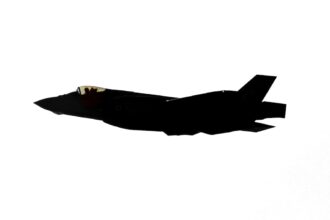
The concept of precision strike capabilities has gained significant attention in recent years, particularly in the context of strategic infrastructure targets like the Three Gorges Dam. An insightful article that delves into the implications of such precision strikes can be found on In The War Room, which explores the mathematical and tactical considerations involved in targeting critical assets. For more information, you can read the article here: In The War Room.
Flood Control: A Symphony of Data and Deterrence
The Three Gorges Dam’s primary stated purpose is flood control for the densely populated Yangtze River basin. This operational aspect relies heavily on continuous monitoring, predictive modeling, and precise management of water levels.
Hydrological Monitoring and Forecasting
The effectiveness of the dam’s flood control system hinges on accurate real-time data and reliable forecasting. A vast network of sensors monitors rainfall, river flow, and reservoir levels across the Yangtze River basin, feeding into sophisticated mathematical models.
Rainfall-Runoff Modeling
Predicting how much water will enter the reservoir requires understanding the relationship between rainfall and runoff. Engineers employ complex hydrological models that take into account factors like soil type, vegetation cover, and topography to estimate the volume of water that will flow into the river system from a given amount of rainfall. These models often utilize differential equations to describe the dynamic processes of water movement.
River Flow Prediction Algorithms
Forecasting river flow at different points along the Yangtze River and leading into the reservoir is crucial. These predictions often involve time-series analysis and machine learning algorithms trained on historical data. The ability to accurately predict the arrival and volume of floodwaters allows for planned water releases from the reservoir, mitigating the impact of floods downstream.
Reservoir Operation Strategies
The operation of the Three Gorges Reservoir itself is a continuous mathematical optimization problem. Balancing the need for flood storage with downstream water supply and power generation requires careful calculation and dynamic adjustment.
Flood Storage Capacity Calculations
The reservoir’s designated flood storage capacity is a critical parameter, calculated based on the desired level of flood protection for downstream communities. This involves determining the volume of water that can be held within the reservoir during a flood event without exceeding the dam’s structural limits or causing unacceptable downstream impacts.
Water Level Management and Release Schedules
The dam operators must constantly manage the reservoir’s water level. This involves calculating the optimal release rates of water to maintain flood control space while also ensuring sufficient water availability for navigation, irrigation, and hydropower generation. These decisions are informed by predictive models and are often based on optimization algorithms that seek to maximize benefits while minimizing risks.
Hydropower Generation: Harnessing the River’s Might
The Three Gorges Dam is the world’s largest hydropower station, a testament to the efficient conversion of potential energy into electrical energy. This conversion is underpinned by precise calculations of fluid dynamics, thermodynamics, and electrical engineering principles.
Turbine and Generator Efficiency Calculations
The heart of hydropower generation lies in the turbines and generators. Their design and operation are optimized through meticulous calculations to extract the maximum amount of energy from the flowing water.
Water Flow Rate and Head Calculation for Turbines
The power output of a hydropower turbine is directly related to the flow rate of water and the “head” – the vertical distance the water falls. Engineers performed precise calculations of the expected flow rates and available head at different reservoir levels to match the installed turbines for optimal performance. Formulas like Power = ηρgQH, where η is the overall efficiency, ρ is water density, g is gravity, Q is flow rate, and H is head, are fundamental.
Energy Conversion Efficiency of Generators
The generators convert the mechanical energy of the spinning turbine into electrical energy. The efficiency of this conversion, typically very high in modern generators, is also carefully calculated and accounted for in the overall power output estimations. Losses due to heat, friction, and electromagnetic induction are all factored in.
Electrical Grid Integration and Power Output Optimization
The vast amount of power generated by the Three Gorges Dam needs to be efficiently transmitted and integrated into the national power grid. This involves complex calculations related to electrical engineering and grid management.
Transmission Line Capacity and Voltage Drop Calculations
The electricity generated must be transmitted over long distances. Engineers calculated the required voltage levels and the capacity of transmission lines to minimize energy loss during transmission. Factors like conductor resistance, inductance, and capacitance are considered in these calculations, often using Ohm’s Law and Kirchhoff’s laws.
Power Output Forecasting and Load Balancing
The dam’s power output is not constant; it varies with water availability and operational requirements. Predicting this output and balancing it with the fluctuating demand from the national grid requires sophisticated forecasting and load-balancing algorithms. This ensures a stable and reliable power supply, often involving complex economic dispatch models.
Navigation and Sediment Management: Balancing Flow and Flow
Beyond flood control and power generation, the dam also plays a crucial role in improving navigation on the Yangtze River and managing the immense sediment load that it carries. These aspects require a different set of mathematical considerations.
Navigation Lock Calculations
The Three Gorges Dam incorporates a colossal lock system to allow ships to ascend and descend the significant change in water level. The design and operation of these locks involve intricate calculations to ensure safe and efficient passage.
Water Volume Calculations for Lock Chambers
Each lock chamber must be filled or emptied with a precise volume of water to raise or lower the ships. Engineers calculated the volume of the lock chambers and the rates at which water can be pumped in or out. Formulas for the volume of cuboids or other shapes, combined with flow rate calculations, are essential here.
Hydrodynamic Forces During Lock Operation
As water enters or leaves the lock, it exerts forces on the ships. Engineers analyzed these hydrodynamic forces to ensure that the locking process is stable and that ships are not subjected to excessive stress or movement. This involves applying principles of fluid dynamics, particularly relating to pressure and flow.
Sediment Transport Modeling and Mitigation
The Yangtze River carries a substantial amount of sediment, which can accumulate behind dams, reducing reservoir capacity and potentially impacting downstream ecosystems. Managing this sediment load is a significant challenge requiring continuous mathematical assessment.
Sediment Load Estimation and Deposition Rates
Engineers estimate the annual sediment load carried by the river using historical data and current measurements. Mathematical models are then used to predict where this sediment will deposit within the reservoir, allowing for the planning and implementation of mitigation strategies. Formulas related to sediment transport mechanics, considering factors like flow velocity and particle size, are crucial.
Reservoir Flushing and Dredging Calculations
Strategies to manage sediment can include “flushing” the reservoir by releasing large volumes of water to wash sediment downstream, or physical dredging. The effectiveness and feasibility of these methods are determined through precise calculations of sediment volume, water-release rates, and the capacity of dredging equipment.
The concept of precision strike capabilities has become increasingly relevant in discussions surrounding strategic infrastructure, particularly in relation to significant projects like the Three Gorges Dam. An insightful article that delves into the implications of targeting such critical assets can be found here: precision strike math. This piece explores the complexities of military strategy and the potential consequences of engaging with vital infrastructure, highlighting the delicate balance between power projection and the risks involved.
Environmental Impact Assessment and Mitigation: Quantifying Ecological Effects
| Metrics | Data |
|---|---|
| Distance from Three Gorges Dam | Approximately 1,600 kilometers |
| Accuracy of Precision Strike | Depends on the specific weapon and targeting technology |
| Potential Impact of Dam Destruction | Severe flooding, displacement of millions, and disruption of power supply |
| International Reactions | Likely to provoke strong condemnation and geopolitical repercussions |
The construction and operation of such a massive structure inevitably have environmental consequences. Mathematical modeling and statistical analysis are employed to assess and, where possible, mitigate these impacts.
Water Quality Modeling
Changes in water flow and temperature due to the dam can affect water quality. Mathematical models are used to simulate these effects and predict potential impacts on aquatic ecosystems.
Temperature Stratification Modeling
The large reservoir can lead to thermal stratification, where water layers at different temperatures form. Engineers use models based on heat transfer principles to predict the extent and duration of stratification and its potential impact on dissolved oxygen levels.
Pollutant Dispersion Modeling
The dam can alter the river’s natural flushing capacity, potentially leading to the accumulation of pollutants. Mathematical models are used to simulate the dispersion of pollutants and predict their impact on water quality downstream. These models often employ advection-dispersion equations.
Impact on Biodiversity and Ecosystems
The alteration of river flow, water levels, and sediment transport can have profound effects on the biodiversity of the Yangtze River. Scientific studies employing statistical analysis and ecological modeling are used to understand and address these challenges.
Population Dynamics Modeling
Ecological models attempt to simulate the population dynamics of key species, predicting how changes in habitat and water conditions might affect their survival and reproduction. This can involve differential equations that describe birth, death, and migration rates.
Habitat Suitability Analysis
Mathematical assessments of habitat suitability are conducted for various species, considering factors like water depth, flow velocity, and substrate type. These analyses help identify areas that may become less suitable due to the dam’s presence and inform mitigation efforts, such as creating artificial habitats or modifying water release patterns.
In conclusion, the Three Gorges Dam is not merely a testament to brute force engineering but a complex system meticulously governed by a foundation of precise mathematical calculations. From the initial geometric considerations to the ongoing management of flood control, hydropower, navigation, and environmental impacts, mathematics is the silent architect and operational guide. The vast quantities of data processed and the sophisticated algorithms employed underscore the critical role of quantitative analysis in shaping and sustaining such monumental human endeavors.
FAQs
What is precision strike math?
Precision strike math refers to the mathematical calculations and analysis used to accurately target and strike a specific location or target with precision, often in military operations or strategic planning.
What is the Three Gorges Dam?
The Three Gorges Dam is a hydroelectric dam located in China, spanning the Yangtze River. It is the world’s largest power station in terms of installed capacity and is a key component of China’s energy infrastructure.
Why is the Three Gorges Dam a potential target for precision strikes?
The Three Gorges Dam is a critical infrastructure asset for China, and its destruction could have significant strategic and economic implications. As a result, it may be considered a potential target for precision strikes in certain military or geopolitical scenarios.
How is precision strike math used in targeting the Three Gorges Dam?
Precision strike math involves complex calculations to determine the optimal trajectory, timing, and impact of a strike on the Three Gorges Dam. This may include factors such as the dam’s structural vulnerabilities, potential collateral damage, and the desired strategic outcome of the strike.
What are the potential consequences of a precision strike on the Three Gorges Dam?
A precision strike on the Three Gorges Dam could result in catastrophic flooding, widespread destruction, and significant loss of life downstream. It could also disrupt China’s energy supply, impact navigation on the Yangtze River, and have broader geopolitical ramifications.