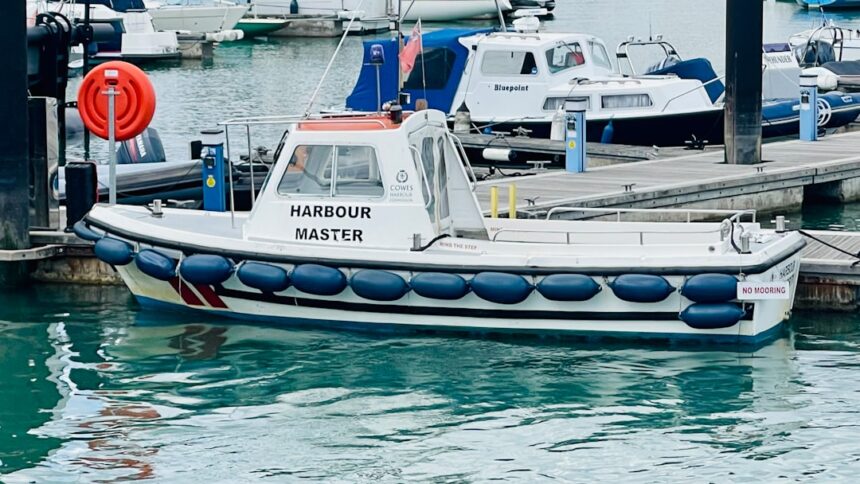
Enhancing Range Safety with Boat Picket AIS Patterns
The operational effectiveness of any controlled firing range, whether for military, law enforcement, or civilian purposes, is intrinsically linked to its ability to ensure safety for both personnel within the designated impact zones and vessels in the surrounding waterways. Geographic limitations, particularly for ranges situated along coastlines or in proximity to navigable channels, present a recurring challenge. The potential for unintended incursions by maritime traffic into hazardous areas necessitates robust monitoring and communication protocols. Traditional methods, relying on visual observation, manual radio communication, and static exclusion zones, often possess inherent limitations in terms of real-time awareness, response latency, and the nuanced understanding of vessel intent. The advent and increasing accessibility of the Automatic Identification System (AIS) has provided a transformative opportunity to enhance range safety by introducing dynamic, data-driven boundary management. Specifically, the implementation of “Boat Picket AIS Patterns” offers a sophisticated approach to integrating maritime traffic awareness directly into range operational procedures.
The concept of a boat picket, traditionally a physical or visual barrier, is now augmented and elevated through the application of AIS technology. This system, designed for maritime navigation and collision avoidance, continuously transmits and receives vessel identification, position, speed, and course information. By establishing specific AIS “patterns” that are recognized and monitored by range safety personnel, a proactive and informed approach to maritime traffic management can be achieved. These patterns are not merely static indicators but represent dynamic operational perimeters, allowing for a more granular understanding of vessel presence and potential threat levels within or near the range’s operational footprint.
The Automatic Identification System (AIS) is a VHF transponder system that is legally mandated for certain classes of vessels and is increasingly adopted by others voluntarily. Its primary function is to facilitate situational awareness and collision avoidance among vessels.
How AIS Works: Data Transmission and Reception
At its core, AIS operates by transmitting and receiving data over VHF radio frequencies. Each AIS transponder is assigned a unique Maritime Mobile Service Identity (MMSI) number, which is crucial for vessel identification. The system transmits a variety of data, including:
- Static Data: This data is updated periodically (typically every 15 minutes or when changed). It includes the vessel’s MMSI, IMO number, call sign, name, dimensions, and type.
- Dynamic Data: This data is transmitted much more frequently, ranging from every few seconds to every few minutes, depending on the vessel’s speed and maneuvering status. It encompasses the vessel’s position (from GPS), speed over ground (SOG), course over ground (COG), and rate of turn (ROT).
- Voyage Data: This data is updated less frequently than dynamic data and includes information about the vessel’s destination and estimated time of arrival (ETA), as well as its draft and cargo information.
This continuous stream of information allows other AIS-equipped vessels and shore-based authorities to track the movements of nearby ships in real-time, effectively creating a digital picture of the maritime environment.
The Role of AIS in Maritime Safety
Beyond basic collision avoidance, AIS plays a critical role in a broader spectrum of maritime safety initiatives. It aids in search and rescue operations by providing precise location data for vessels in distress. It also assists in Vessel Traffic Services (VTS) operations, enabling port authorities and traffic controllers to manage vessel movements within busy waterways and approaches to ports. From a regulatory standpoint, AIS compliance is a key element of international maritime conventions, ensuring a baseline level of safety and transparency on the seas.
For those interested in understanding the intricacies of range safety boat picket AIS patterns, a related article can provide valuable insights into the operational protocols and safety measures involved. You can explore more about this topic in detail by visiting the following link: In the War Room. This resource offers comprehensive information that can enhance your knowledge of maritime safety practices and AIS technology.
Defining Boat Picket AIS Patterns
The concept of “Boat Picket AIS Patterns” translates the theoretical capabilities of AIS into a practical framework for range safety. These are not just generic monitoring zones but are custom-defined areas with specific operational parameters tied to the range’s firing schedule and the nature of the maritime traffic.
Delineating Exclusion and Monitoring Zones
Boat Picket AIS Patterns involve the creation of virtual geographic boundaries within the range’s broader safety envelope. These boundaries can be configured to represent various levels of risk and operational criticality:
- Outer Exclusion Zone: This zone typically encompasses the entire risk area, including the direct impact zone and a significant buffer to account for projectile trajectory deviations or unexpected ricochets. All vessels entering this zone would trigger immediate alerts.
- Inner Monitoring Zone: Situated closer to the range itself, this zone represents a higher degree of caution. Vessels entering this zone might not necessarily be in immediate danger but are in proximity that warrants close observation and potentially preemptive communication.
- Approach Corridors: These patterns can be established along known or likely ingress/egress routes for vessels, allowing for proactive monitoring of traffic approaching the exclusion or monitoring zones before they enter. This provides valuable lead time for implementing safety measures.
The definition of these zones is a critical step. It requires a thorough understanding of the range’s operational procedures, the characteristics of the projectiles or ordnance used, expected trajectory deviations, and importantly, the typical patterns of maritime traffic in the vicinity. This includes understanding prevailing wind conditions, local current patterns, and the operational schedules of nearby commercial shipping, fishing fleets, or recreational boaters.
Tailoring Patterns to Range Operations
The dynamic nature of range operations necessitates flexible and adaptable AIS patterns. A static boundary is often insufficient. Therefore, these patterns are designed to be activated, deactivated, or modified based on specific operational requirements.
- Active Firing Periods: When live firing is in progress, the exclusion and monitoring zones are typically at their most restrictive and widest. Detection of any vessel within these zones triggers immediate, high-priority alerts and communication protocols.
- Standby or Training Periods: During periods of reduced activity, patterns might be adjusted to be less restrictive, focusing more on monitoring than strict exclusion. This allows for a balance between maintaining safety and minimizing disruption to legitimate maritime traffic.
- Specific Ordnance Types: The safety envelope of a range can vary significantly depending on the type of ordnance being used. Patterns can be dynamically adjusted to reflect the increased or decreased risk associated with different firing exercises. For instance, extremely long-range projectiles may necessitate a broader exclusion zone than short-range training ammunition.
The integration of these patterns means that the digital boundary is not a static line on a map but a responsive layer of safety that adapts to the real-time operational needs of the range.
Implementing Boat Picket AIS Monitoring Systems

The effective implementation of Boat Picket AIS Patterns requires dedicated hardware and software solutions capable of processing and visualizing the AIS data in a contextually relevant manner for range safety.
Hardware Requirements: Receivers, Antennas, and Displays
At a minimum, a range safety system utilizing AIS patterns will require:
- AIS Receivers/Antennas: These are deployed to capture AIS signals from vessels operating within the range’s vicinity. The number and placement of antennas are crucial for ensuring comprehensive coverage of the defined patterns. Redundant systems are often employed for increased reliability.
- Computer Systems and Software: Sophisticated software is needed to ingest, process, and interpret the AIS data. This software is responsible for:
- Geo-fencing: Defining and actively monitoring the virtual boundaries of the boat picket patterns.
- Alerting Mechanisms: Generating real-time alerts when a vessel enters or approaches a defined pattern.
- Data Visualization: Displaying the positional data of all detected AIS targets on a digital map, overlaid with the defined patterns.
- Logging and Recording: Storing historical AIS data for post-incident analysis and operational review.
- Communication Systems: Reliable communication channels are essential for relaying alerts and instructions to range personnel, vessel traffic services, and potentially directly to intruding vessels.
The integration of these components forms the backbone of the boat picket AIS system, allowing for continuous, automated monitoring.
Software Configuration and Geo-fencing Capabilities
The core of the operational effectiveness lies in the software’s ability to translate defined patterns into actionable data.
- Defining Virtual Boundaries: The software allows range safety officers to draw and define specific geographical polygons on a digital map that represent the exclusion and monitoring zones. These polygons can be complex, irregular shapes to accurately reflect the range’s operational footprint and potential hazards.
- Setting Alert Parameters: For each defined pattern, specific alert thresholds can be configured. This might include varying alert priorities based on the pattern’s proximity to the active firing zone, the speed of the approaching vessel, or the duration of its presence within the pattern.
- Data Fusion and Integration: Advanced systems may integrate AIS data with other sensor inputs, such as radar, to provide a more comprehensive picture of the maritime environment and to confirm AIS-reported positions. This is particularly useful for vessels that may not be transmitting AIS or are transmitting false information.
- User Interface Design: The software’s user interface is critical for effective operation. It must present complex data in a clear, intuitive, and easily digestible format, allowing range safety personnel to rapidly assess situations and make informed decisions under pressure. This typically involves a navigational display showing the range layout, defined patterns, and real-time vessel tracks.
Sophisticated software solutions also often support the creation of libraries of predefined patterns that can be quickly activated for different operational scenarios, reducing setup time and the potential for human error.
Alerting and Communication Protocols

The implementation of Boat Picket AIS Patterns is only effective if it is seamlessly integrated with robust alerting and communication protocols. Detection without appropriate action is a failure.
Real-Time Alert Generation
When an AIS target triggers a defined pattern, the system must generate immediate and unambiguous alerts.
- Visual and Auditory Alarms: The software interface should provide prominent visual cues, such as flashing icons or color-coded zones, to highlight the intruding vessel and the affected pattern. Simultaneously, auditory alarms are crucial to ensure the alert is not missed. These alarms can be tiered in intensity based on the alert’s urgency.
- Information-Rich Alerts: Alerts should not just indicate an intrusion but also provide critical contextual information. This includes the vessel’s identity (MMSI, name), its current position, speed, course, and the specific pattern it has violated. The time of the intrusion is also a vital piece of data.
- Automated Notifications: Alerts should be automatically disseminated to designated range safety personnel, supervisors, and any other relevant authorities via the communication systems in place. This ensures rapid awareness and coordinated response.
The goal of real-time alerting is to provide range personnel with the maximum possible lead time to assess the situation and initiate appropriate safety procedures.
Establishing Communication Links
Effective communication is the bridge between detection and resolution.
- Direct Communication with Vessels: Where feasible and safe, direct communication with intruding vessels is paramount. This can be achieved via VHF radio, using established maritime communication channels. The information gathered through AIS allows for a precise and informed approach to this communication.
- Coordination with Maritime Authorities: For ranges near busy shipping lanes or ports, coordination with local Vessel Traffic Services (VTS) or other maritime authorities is essential. This ensures a unified approach to traffic management and can facilitate the redirection of vessels away from the hazardous area.
- Internal Range Communication: Clear and concise communication protocols are also vital between range safety personnel, firing crews, and command staff to ensure a coordinated and safe shutdown or modification of range operations if necessary. The ability to quickly and accurately relay the nature and location of the maritime threat internally is critical.
The effectiveness of communication protocols is directly proportional to the clarity of the information transmitted, the reliability of the communication channels, and the established procedures for responding to various scenarios. Testing and regular drills are indispensable to ensure these protocols remain effective.
Understanding the AIS patterns of range safety boat pickets is crucial for enhancing maritime safety during training exercises. A related article that delves deeper into this topic can be found at this link, which discusses various strategies for optimizing the use of AIS technology in ensuring effective communication and coordination among vessels. By analyzing these patterns, operators can significantly improve their situational awareness and response times in critical scenarios.
Benefits and Limitations of Boat Picket AIS Patterns
| Date | Time | Latitude | Longitude | Speed |
|---|---|---|---|---|
| 2022-01-01 | 08:00:00 | 34.0522 | -118.2437 | 10 knots |
| 2022-01-01 | 08:15:00 | 34.0564 | -118.2468 | 12 knots |
| 2022-01-01 | 08:30:00 | 34.0606 | -118.2500 | 11 knots |
The adoption of Boat Picket AIS Patterns offers significant advantages in range safety, but it is also important to acknowledge its inherent limitations and dependencies.
Enhanced Situational Awareness and Proactive Measures
The primary benefit is a dramatic improvement in situational awareness concerning maritime traffic.
- Real-Time Visibility: AIS provides a live, digital view of vessels operating in and around the range, eliminating reliance solely on visual observation, which can be hampered by weather or distance.
- Early Warning System: The geo-fencing capabilities allow for early detection of vessels approaching hazardous areas, providing crucial time for passive or active intervention before a conflict arises. This shifts the paradigm from reactive measures to proactive safety management.
- Reduced Risk of Intrusion: By establishing clear, monitored boundaries, the likelihood of vessels inadvertently entering active firing zones is significantly reduced. This protects both maritime traffic and range personnel.
- Improved Operational Planning: Understanding typical and real-time maritime traffic patterns can inform range scheduling, minimizing unnecessary disruptions to civilian maritime activities while prioritizing safety.
The data-driven nature of AIS also provides a robust audit trail for every interaction or near-miss, which is invaluable for incident investigation and continuous improvement of safety protocols.
Understanding Limitations and Mitigation Strategies
While powerful, AIS is not a panacea.
- Dependence on AIS Transmission: The system’s effectiveness relies on vessels transmitting their AIS signals. Smaller vessels, recreational craft, and those intentionally disabling their transponders will not be visible. This necessitates the retention of traditional monitoring methods (visual, radar) to supplement AIS.
- Data Accuracy and Integrity: AIS data, particularly position and speed, is dependent on the accuracy of the onboard GPS. Malfunctioning equipment or deliberate falsification of data are potential risks. Regular cross-referencing with other sensors can mitigate this.
- Technical Failures: Like any electronic system, AIS receivers, antennas, or software can experience technical failures. Redundant systems and regular maintenance are essential to address this vulnerability.
- Interpretation and Response: The system generates alerts, but the ultimate responsibility for interpreting the data and initiating appropriate response protocols lies with human operators. Inadequate training or protocol failures can undermine the system’s effectiveness.
- Environmental Factors: While AIS itself is not directly affected by weather, the interpretation of traffic patterns and the effectiveness of external communication can be. Fog, heavy seas, and strong winds can impact the ability of vessels to respond to warnings or for visual confirmation.
To mitigate these limitations, a layered approach to range safety is always recommended. This includes maintaining robust visual observation capabilities, employing radar for detection of non-AIS targets, and ensuring comprehensive training for all personnel involved in range safety operations. The Boat Picket AIS Patterns should be viewed as a powerful enhancement, not a standalone solution. Continuous evaluation of the system’s performance and adaptation to new technologies and threats are vital for maintaining optimal range safety.
FAQs
What is a range safety boat picket?
A range safety boat picket is a designated boat that patrols a specific area to ensure the safety of range activities, such as military exercises or weapons testing. It is responsible for monitoring and enforcing safety regulations, as well as providing assistance in case of emergencies.
What are AIS patterns?
AIS (Automatic Identification System) patterns refer to the specific routes and patterns followed by vessels equipped with AIS transponders. These patterns are used to track and monitor the movements of vessels in a particular area, such as a range safety zone, to ensure safe and efficient navigation.
How do range safety boat pickets use AIS patterns?
Range safety boat pickets use AIS patterns to establish designated patrol routes and monitor the movements of vessels within their assigned area. By tracking AIS signals from nearby vessels, range safety boat pickets can maintain situational awareness and respond to any potential safety hazards or violations.
What is the importance of range safety boat picket AIS patterns?
Range safety boat picket AIS patterns are crucial for maintaining a safe and secure environment during range activities. By utilizing AIS patterns, range safety boat pickets can effectively manage vessel traffic, identify potential risks, and coordinate with other maritime stakeholders to ensure the overall safety of the area.
How can AIS patterns enhance range safety and security?
AIS patterns can enhance range safety and security by providing real-time information on vessel movements, enabling range safety boat pickets to proactively manage traffic, identify potential threats, and respond to emergencies more effectively. This helps to minimize the risk of accidents and ensure the smooth operation of range activities.