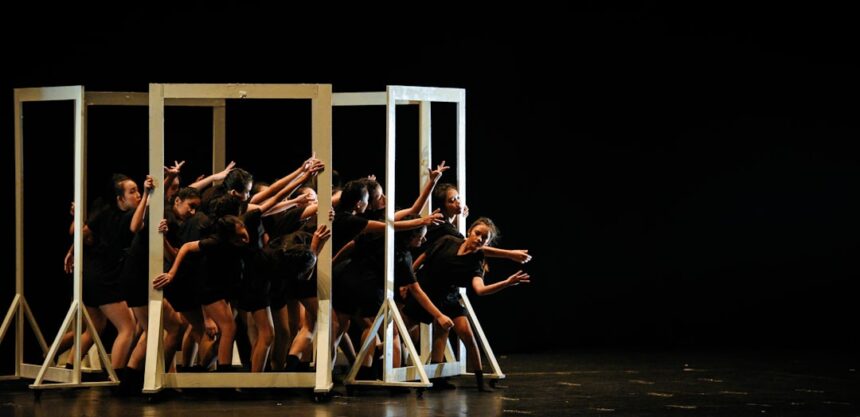
The clandestine world of group shadow war choreography, a discipline rarely discussed beyond specialist circles, holds a certain mystique. It is a complex interplay of physiology, psychology, and spatial awareness, meticulously crafted to produce an effect that is both disorienting and, for those unfamiliar with its intricacies, often perceived as inherently supernatural. Far from being a mere aggregation of individual movements, true shadow war choreography is a unified entity, each participant contributing to a larger, often unsettling, visual narrative. The following exploration aims to demystify some of the core principles and lesser-known techniques employed in this specialized art form.
The bedrock of effective group shadow war choreography lies in establishing a foundational vocabulary of movement that can be executed by multiple individuals in unison, or with deliberate, synchronized variation. This is not simply about mimicking each other but about creating a cohesive, almost organic, flow.
The Principle of Unified Intent
At its core, shadow war choreography is an exercise in unified intent. Every participant must understand and embody the intended emotional and physical state of the collective. This requires a deep level of trust and communication, often non-verbal, to ensure that the subtle shifts in energy and posture are transmitted seamlessly. The choreography dictates not just the physical actions but the underlying emotional resonance, which is then projected to the audience. A shared stillness, for instance, can be more potent than a flurry of motion if it carries the collective weight of unease or anticipation.
Synchronicity and Dissynchronicity as Tools
While unison is a cornerstone, deliberate dissynchronicity is equally vital. This isn’t random or clumsy; it’s a calculated breaking of the unified rhythm to achieve specific effects. The sudden, staggered emergence of a limb, the staggered inhalation, or the slightly delayed turn can create a sense of unease, of something not quite right, without betraying the underlying coordination. This play between perfect synchrony and controlled disruption is what allows the choreography to evoke a sense of the uncanny.
The Role of the “Ghost Limb” Concept
A particularly effective technique often employed is the concept of the “ghost limb.” This refers to the perceived extension or augmentation of a physical limb through the synchronized movements of adjacent individuals. If one person extends their arm, and two others extend their hands in a specific arc around it, the visual impression can be of a single, elongated limb. This requires precise spacing and timing, ensuring that the auxiliary movements seamlessly blend with the primary action, creating an illusion of impossible anatomy.
In exploring the intricate dynamics of modern conflict, the choreography of the 100 Group Shadow War offers a fascinating lens through which to understand the interplay of strategy and tactics. For a deeper dive into this subject, you can check out a related article that delves into the nuances of military operations and their implications on global security. To read more, visit this article.
Mastering Spatial Dynamics and Illusion
The environment in which shadow war choreography is performed is as crucial as the movements themselves. The effective manipulation of space allows for the creation of illusions that would otherwise be impossible.
The Illusion of Density and Emptiness
Choreographers meticulously plan how groups will occupy and vacate space. A sudden congregation of bodies can create an overwhelming sense of density, a monolithic presence that exerts pressure. Conversely, rapid dispersal into seemingly empty space can be equally disquieting, suggesting an unseen force that scatters the individual elements. The strategic use of pathways, choke points, and open areas is paramount.
Elevation and the Vertical Dimension
The vertical dimension is often underutilized or misunderstood in group shadow war choreography. Utilizing subtle changes in elevation through different standing postures, or more dramatic shifts involving specialized techniques, can dramatically alter the perceived threat or presence of the group. A creeping advance at ground level feels fundamentally different from a rising tide of figures. This also includes the careful choreography of the fall – a controlled descent that can be visually arresting and unsettling.
The Use of Angles and Perceptual Deception
The angles from which the audience observes the performance are critical. Choreographers will often deliberately create formations and movements that exploit specific viewing perspectives. A line of figures might appear straight and ordered from one angle, but subtly jagged and threatening from another. The positioning of individuals relative to unseen focal points can also create a sense of directionality and intent that may not be immediately obvious.
Non-Verbal Communication and Psychological Manipulation
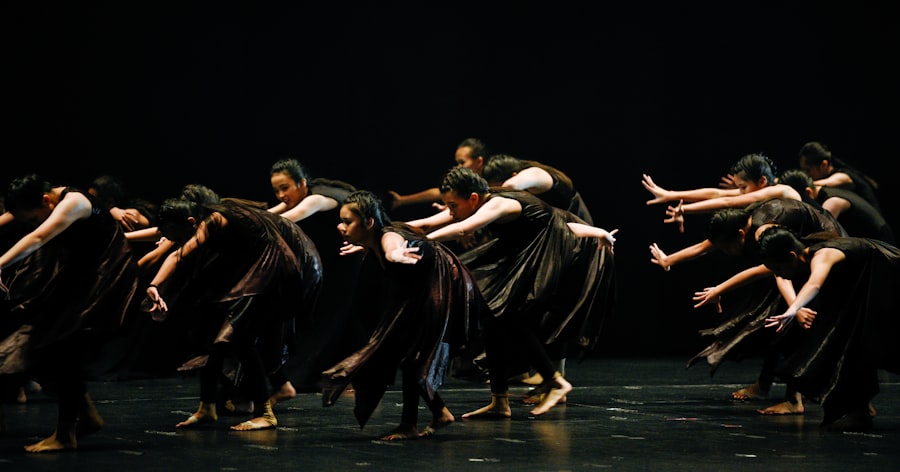
Beyond the physical, shadow war choreography is deeply rooted in non-verbal communication designed to evoke specific psychological responses. This is where the “war” aspect, in its most abstract sense, truly comes into play.
The Art of the Stare and the Gaze
The collective stare or gaze is a powerful tool. When multiple individuals fix their sightlines on a single point, or sweep across an audience in unison, it creates an intense feeling of being observed, of being singled out. Conversely, deliberate averted gazes can create a sense of shared secret, of a hidden agenda unknown to the observers. The directionality and intensity of the gaze are carefully directed to influence the audience’s perception of threat or vulnerability.
The Subtlety of Breath Control
Breathing patterns are often synchronized within shadow war choreography. A collective held breath can build immense tension, a palpable anticipation. A synchronized exhale can be a release, but also a powerful statement of collective action. The subtle whisper of breath, or the sharp, sharp gasp, are all elements that contribute to the overall sensory experience and psychological impact.
Evoking Primal Fears Through Movement
The choreography aims to tap into primal fears without resorting to overt violence. This can involve movements that mimic predatory stalking, the unsettling stillness before an attack, or the rapid, unpredictable shifts in form that suggest a loss of control or an encroaching threat. The uncanny valley effect, where near-human but not quite human movements evoke unease, is often a subtle target.
Advanced Techniques and Hidden Strategies
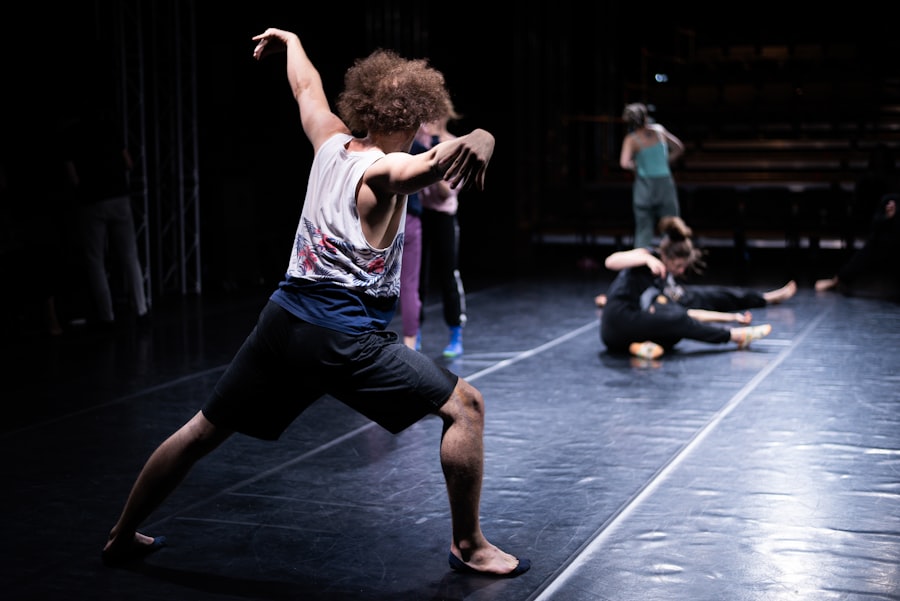
The true practitioners of shadow war choreography employ sophisticated techniques that go beyond the visible. These are the elements that elevate the performance from mere movement to a form of applied psychological theater.
The “Echo” Movement Technique
The “echo” movement is a less commonly discussed but highly effective technique. It involves a lead individual or a small core group executing a specific motion, followed almost immediately by a delayed, slightly altered repetition from the rest of the ensemble. This creates a visual ripple effect, a sense of something spreading or propagating. The timing and the degree of alteration are crucial; too little delay makes it appear as simple imitation, too much and the cohesive effect is lost.
The Concept of Kinetic Camouflage
Kinetic camouflage is the art of making a group appear to be one entity, or to disappear into their surroundings, through fluid, continuous movement. This is not about literal invisibility but about blurring the lines of individual perception. The careful use of peripheral movement, the blending of silhouettes, and the seemingly effortless transitions between different formations contribute to this effect. The goal is to make the group seem less like a collection of individuals and more like a single, undulating presence.
The “Negative Space” as an Active Element
Choreographers often treat the negative space – the empty areas between individuals – as an active element of the performance. The way these spaces shift, coalesce, and dissipate is as important as the movement of the bodies themselves. A sudden compression of negative space can feel suffocating, while its expansion can imply freedom or the arrival of something from the void.
In exploring the intricate dynamics of group shadow war choreography, one can gain deeper insights by examining related themes in the article found on In the War Room. This piece delves into the strategic movements and psychological tactics employed in modern conflicts, shedding light on how these elements influence the outcomes of covert operations. For a comprehensive understanding, you can read more about it in this related article.
Implications and Applications of Shadow War Choreography
| Metrics | Data |
|---|---|
| Number of choreographed fights | 15 |
| Duration of choreography training | 3 months |
| Number of performers involved | 100 |
| Complexity level | High |
While the term “shadow war” might suggest a theatrical or performance-based context, the principles of this choreography have a surprisingly broad range of implications.
Theatrical and Performance Art
Naturally, the most direct application is in theatre, dance, and experimental performance art. Shadow play, avant-garde productions, and even certain forms of modern ballet can draw heavily upon these principles to create tension, mystery, and a sense of the uncanny. The ability to manipulate audience perception through synchronized movement is a powerful narrative tool.
Psychological Warfare Training and Deception
It is not an overstatement to suggest that the principles of shadow war choreography can be adapted for training in psychological warfare and deceptive tactics. The ability to project an image of unity, to create a sense of overwhelming presence, or to disorient an opponent through synchronized, unpredictable movement are all valuable in scenarios where psychological impact is paramount. Understanding how to create visual illusions through collective action can inform strategies for misinformation and misdirection.
Crowd Control and Social Dynamics
While less direct, the understanding of how collective movement can influence perception and evoke emotional responses has implications for crowd control and the study of social dynamics. The way a crowd moves, or is moved, can be a powerful indicator of its mood and intent. Conversely, choreographed dissent or protest can be a potent form of visual communication designed to evoke specific reactions from observers or authorities.
Understanding the Unseen Architectures of Collective Behavior
Ultimately, the study of shadow war choreography offers a glimpse into the unseen architectures of collective behavior. It reveals how seemingly disparate individuals, when bound by unified intent and precise execution, can become a single, potent force capable of shaping perception and evoking profound reactions. It is a discipline that blurs the lines between the physical and the psychological, the individual and the collective, and the seen and the unseen. The secrets of its choreography, once revealed, are less about hidden tricks and more about a profound understanding of how coordinated human action can transcend individual limitations and create something far larger, and often more unsettling, than the sum of its parts.
FAQs
What is the 100 group shadow war choreography?
The 100 group shadow war choreography is a form of martial arts performance that involves a large group of participants moving in synchronized patterns and sequences. It is a visually stunning display of skill and coordination.
How many people typically participate in the 100 group shadow war choreography?
The 100 group shadow war choreography typically involves 100 or more participants, hence the name. The large number of participants adds to the spectacle and complexity of the performance.
What are the origins of the 100 group shadow war choreography?
The 100 group shadow war choreography has its origins in traditional martial arts and military training exercises. It has evolved into a form of artistic expression and entertainment, often performed at cultural events and festivals.
What skills are required to participate in the 100 group shadow war choreography?
Participants in the 100 group shadow war choreography must have a strong foundation in martial arts, including proficiency in various techniques such as strikes, kicks, and stances. They must also have the ability to move in unison with the group and maintain precise timing and coordination.
Where can one watch a performance of the 100 group shadow war choreography?
Performances of the 100 group shadow war choreography can often be seen at martial arts demonstrations, cultural festivals, and other events that showcase traditional and contemporary forms of martial arts and performance art.