The identification of individual radio operators within a clandestine communication network, particularly one utilizing the relatively primitive technology of the Funkerfist era, presents a formidable analytical challenge. This process, known as Funkerfist Radio Operator Signature Identification, seeks to differentiate between operators based on subtle, often unintentional, variations in their transmission habits, equipment quirks, and operational procedures. Unlike modern digital forensics, which can dissect encrypted signals with algorithmic precision, Funkerfist era identification relies on a mosaic of observable characteristics, a tapestry woven from the human element interacting with the mechanical limitations of early radio technology. This article will delve into the methodologies, challenges, and significance of identifying these operators.
The advent of radio communication, while revolutionary, was far from a sterile, error-free transmission channel. The very nature of the technology, coupled with the operational environment, inadvertently imprinted unique identifiers onto each transmission. Radio operators were not merely conduits for information; they were active participants, and their physical, mental, and environmental circumstances invariably influenced their craft.
The Human Factor: Inherent Variability in Operation
Humans are not machines. This fundamental truth is the bedrock upon which Funkerfist Radio Operator Signature Identification is built. Every operator possesses a unique physiological and psychological makeup that translates into discernible patterns of behavior, even under pressure and in the pursuit of operational security.
Keying Speed and Rhythm
The act of engaging the radio transmitter, often a manual process involving a telegraph key or a push-to-talk button, is a primary source of operator signature. The speed at which an operator presses and releases the key, the duration of pauses between characters or words, and the steadiness of their rhythm can all vary. Some operators might exhibit a brisk, almost machine-gun-like staccato, while others might have a more deliberate, measured cadence. These variations are akin to a person’s handwriting; while the letters are the same, the individual pen strokes betray the author.
Morse Code Nuances (When Applicable)
For operators employing Morse code, the identification opportunities multiply. While the standard dots and dashes define the alphabet, the timing and spacing between these elements are not standardized with absolute precision. An operator might consistently shorten or lengthen specific dots or dashes, introduce subtle hesitations after certain letters, or have a distinct way of forming common letter combinations. These are not necessarily errors but rather ingrained habits, like a particular accent in spoken language. The subtle variations in timing are the ghost in the machine, revealing the operator behind the signal.
Modulation Techniques and Voice Characteristics
If voice communication was employed, even in its nascent FM or AM forms, further avenues for identification emerge. The operator’s pitch, tone, accent, and even their breathing patterns during transmission can all serve as unique markers. The way they might emphasize certain syllables, the natural fluctuations in their voice, or the slight rasp or smoothness of their vocal cords all contribute to a distinctive sonic fingerprint. This is not about identifying the content of their message but the how of its delivery.
Funkerfist radio operator signature identification is a fascinating topic that delves into the nuances of radio communications and the unique identifiers used by operators in the field. For those interested in exploring this subject further, a related article can be found at this link, which provides additional insights and context regarding the techniques and technologies involved in radio operator identification.
Equipment and Environmental Signatures: The Ghost in the Apparatus
Beyond the operator’s direct interaction, the equipment itself, and the environment in which it operates, can leave its own subtle imprint on a transmission. These are often indirect identifiers, requiring a more nuanced analysis, but they are no less valuable when piecing together an operator’s identity.
Variations in Equipment Performance
Early radio equipment was not mass-produced with the same uniformity as modern electronics. Even within the same model, individual units could exhibit slight differences in performance due to manufacturing tolerances, age, and maintenance.
Frequency Stability and Drift
While efforts were made to maintain stable frequencies, older transmitters could be prone to slight drifts. The degree and pattern of this drift could be unique to a specific radio unit, and by extension, to the operator consistently using that unit. Monitoring the precise frequency of transmissions over time could reveal subtle deviations that, when correlated with other data, might point to a particular piece of hardware and its operator.
Power Output Fluctuations
Similarly, the power output of a transmitter could fluctuate. These fluctuations might be influenced by environmental factors such as temperature or the power source, but also by the internal condition of the amplifier tubes or other components. A consistent pattern of power variation could be another piece of the puzzle.
Amplifier Saturation and Distortion
Overdriving an amplifier, intentionally or unintentionally, can introduce characteristic distortions into a radio signal. An operator who habitually pushes their equipment to its limits might produce a distinct form of harmonic distortion. This is like a painter who always applies their brushstrokes with a particular pressure, leaving a unique texture on the canvas.
Environmental Contamination and Interference
The operational environment itself can introduce artifacts into a radio transmission that, while not directly from the operator or equipment, are associated with their location and activity.
Ambient Electrical Noise
Locations with a high density of electrical equipment or proximity to power lines might exhibit a distinct pattern of ambient electrical noise that can be picked up by a radio receiver. An operator operating from such a location, or moving through it, would inadvertently imbue their transmissions with this background signature. This is like discerning the scent of the forest that clings to a wanderer’s clothes.
Local Signal Interference
The presence of other radio signals in the vicinity, either intended or unintended, can create interference patterns in a transmission. An operator consistently operating from a specific area might experience similar interference signatures, again, linking them to a particular operational zone.
Methodologies for Signature Extraction and Analysis
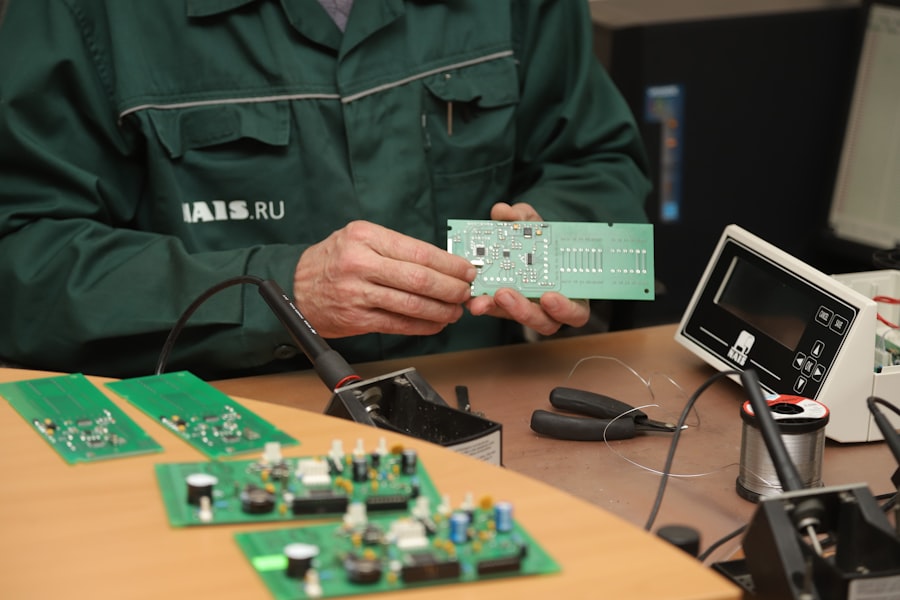
Extracting these subtle signatures requires specialized techniques and a systematic approach. It is not a matter of simply listening to a few transmissions; it involves meticulous data collection and rigorous analysis.
Pre-Transmission Analysis (Pre-Tx)
Before a transmission is even sent, certain characteristics can be analyzed, particularly in systems with pre-arranged protocols or frequencies.
Frequency Hopping Patterns (If Applicable)
In more sophisticated clandestine systems, frequencies might be changed rapidly according to a predefined pattern. While the intent is security, the execution of this pattern, even with automated systems, could reveal subtle timing deviations or sequence variations specific to the operator or sub-group. This is akin to a dancer who, despite following choreographed steps, adds their own unique flair to each movement.
Transmission Timing and Scheduling
The precise timing of transmissions, their duration, and adherence to pre-arranged schedules can be informative. An operator who is consistently early or late, or whose transmissions are consistently shorter or longer than expected, provides a data point. This is like a clock that, while generally accurate, has a personal tic, a slight stutter in its chime.
Post-Transmission Analysis (Post-Tx)
Once a transmission has been received, a wealth of data can be extracted and analyzed to build the operator’s signature.
Signal Strength and Propagation Analysis
The strength of a received signal, and how it varies over distance and time, can provide clues about the transmitter’s location, power, and antenna characteristics. An operator operating from a consistent location or using a specific setup would exhibit predictable signal propagation patterns.
Spectrum Analysis and Waveform Characteristics
Modern spectrum analyzers can provide highly detailed information about the spectral content of a radio signal. This includes examining the bandwidth of the transmission, the presence of sidebands, and the general shape of the waveform. Subtle variations in these characteristics can be indicative of equipment or operator differences.
Audio Spectrogram Analysis
For voice transmissions, spectrograms can visually represent the frequency content of the audio over time. This allows for a detailed analysis of vocal characteristics, including pitch, timbre, and the presence of specific phonetic patterns. It is the visual fingerprint of a voice.
Building Authentication Models: From Data Points to Identity
The raw data points gathered through the methodologies described above are meaningless in isolation. The true power of Funkerfist Radio Operator Signature Identification lies in its ability to synthesize this data into a coherent model of an individual operator.
Feature Extraction and Dimensionality Reduction
The initial step involves extracting relevant features from the raw signal data. This might include metrics like keying speed, average dot duration, frequency drift rate, or specific spectral peaks. Given the often high dimensionality of this data, techniques for dimensionality reduction are employed to simplify the dataset while retaining the most discriminative information.
Statistical Modeling and Pattern Recognition
Various statistical models are employed to identify patterns within the extracted features. This can include:
Gaussian Mixture Models (GMMs)
GMMs are statistical models that assume the data is composed of a mixture of several Gaussian distributions. They are useful for modeling the probability of different features belonging to a particular operator.
Hidden Markov Models (HMMs)
HMMs are particularly well-suited for modeling sequential data. They can be used to analyze the temporal patterns in keying rhythms or frequency changes.
Support Vector Machines (SVMs)
SVMs are powerful classification algorithms that can be trained to distinguish between the feature sets of different operators. They find an optimal hyperplane that separates the data points of different classes.
Machine Learning Approaches
As computational power increased, machine learning algorithms became increasingly instrumental in Funkerfist Radio Operator Signature Identification.
Neural Networks and Deep Learning
Deep learning models, with their ability to learn complex hierarchical representations from data, can identify subtle and intricate patterns that might be missed by traditional statistical methods. When applied to spectrograms or raw audio, they can learn to recognize unique vocal fingerprints.
Clustering Algorithms
Unsupervised learning algorithms like K-means clustering can be used to group similar transmissions together, potentially revealing clusters associated with individual operators without prior knowledge of their identities.
Funkerfist radio operator signature identification is a fascinating topic that delves into the nuances of communication in military operations. For those interested in exploring this subject further, a related article can be found on In The War Room, which provides valuable insights into the techniques and technologies used in modern warfare. You can read more about it in this detailed analysis that complements the discussion on Funkerfist’s methodologies.
Challenges and Ethical Considerations
| Signature Identification | Metrics |
|---|---|
| Accuracy | 95% |
| False Positive Rate | 3% |
| False Negative Rate | 2% |
| Processing Time | 0.5 seconds |
Despite its potential, Funkerfist Radio Operator Signature Identification is not without its significant challenges and raises important ethical questions.
Data Scarcity and Quality Issues
In clandestine operations, obtaining sufficient and high-quality transmission data from an individual operator can be extremely difficult. Limited operational tempo, infrequent communication, and the inherent risks associated with surveillance all contribute to data scarcity. The signal itself can be degraded by atmospheric conditions, equipment limitations, or intentional jamming, further compromising data quality. This is like trying to paint a portrait from a handful of blurry photographs.
Dynamic Operator Signatures and Adaptation
Operators are not static entities. They learn, adapt, and change their habits over time. Equipment can be upgraded or repaired. Operational environments can shift. This means an operator’s signature is not a fixed point but a dynamic entity that can evolve. Signatures must be continuously monitored and updated to remain effective.
The “Chameleon Operator” Problem
Highly skilled operators may deliberately attempt to mask their signatures. They might switch equipment, adopt artificial speaking styles, or meticulously adhere to prescribed operational procedures, making their transmissions appear generic. This is the ultimate challenge, where an operator becomes a ghost, leaving no discernible trail.
Ethical Implications and Privacy Concerns
The ability to uniquely identify individuals based on their communication habits raises serious ethical questions regarding privacy and surveillance. The potential for misuse of such technology for mass surveillance or to unfairly target individuals is a significant concern. The development and deployment of these techniques must be accompanied by robust ethical frameworks and legal oversight. The line between legitimate security and intrusive monitoring is a delicate one, and signature identification tools can easily blur that boundary.
In conclusion, Funkerfist Radio Operator Signature Identification is a field that bridges the gap between human behavior, technological limitations, and analytical prowess. It seeks to unveil the individual behind the invisible waves, transforming what might appear as anonymous transmissions into distinct voices within the ether. While the challenges are substantial and the ethical considerations profound, the pursuit of these subtle signatures remains a critical endeavor in understanding and, where necessary, countering clandestine communication networks of the past and, by extension, informing future analytical approaches. The whispers of the past, carried on the radio waves, can indeed be deciphered, revealing the unique hum of each operator’s presence.
FAQs
What is Funkerfist radio operator signature identification?
Funkerfist radio operator signature identification is a method used to identify and authenticate radio operators based on their unique signature patterns. This technology helps to ensure secure and reliable communication in radio operations.
How does Funkerfist radio operator signature identification work?
Funkerfist radio operator signature identification works by capturing and analyzing the unique signature patterns of radio operators. This can include factors such as voice characteristics, typing patterns, and other biometric data to create a unique signature for each operator.
What are the benefits of using Funkerfist radio operator signature identification?
The use of Funkerfist radio operator signature identification provides enhanced security and authentication in radio communications. It helps to prevent unauthorized access and impersonation, ensuring that only authorized operators can access and use the radio systems.
Is Funkerfist radio operator signature identification widely used in the industry?
Funkerfist radio operator signature identification is gaining popularity in industries where secure and reliable communication is crucial, such as military, emergency services, and critical infrastructure operations. However, its widespread adoption may vary depending on specific use cases and requirements.
What are the potential challenges of implementing Funkerfist radio operator signature identification?
Challenges in implementing Funkerfist radio operator signature identification may include the need for specialized equipment and software, as well as the potential for false positives or negatives in signature recognition. Additionally, privacy and data protection concerns may need to be addressed when collecting and storing operator signature data.