Indeed, the concept of time, both as a dimension and as a lived experience, has been a constant companion to humanity. To “embrace time to live” is not merely a modern platitude, but a historical trajectory of evolving understanding and intentionality. Delving into its brief history reveals a fascinating evolution from a purely biological imperative to a conscious, often deliberate, engagement with the passage of existence.
From the dawn of Homo sapiens, life was inextricably bound to the rhythms of the natural world. The sun dictated periods of activity and rest. Seasonal changes dictated patterns of migration, food gathering, and reproduction. This was time not as a abstract construct, but as a felt, embodied reality.
Circadian Rhythms: The Internal Compass
The most fundamental expression of biological time lies in the circadian rhythms, the approximately 24-hour cycles that govern sleep-wake patterns, hormone release, and other vital physiological processes. These internal clocks, deeply ingrained through evolutionary adaptation, ensured that organisms were active when resources were likely available and rested when they were not. This was the primal alarm clock, sounding the basic needs of survival.
Lunar and Solar Cycles: Navigating the Cosmos
Beyond the daily cycle, human societies long attuned themselves to larger celestial phenomena. The moon’s phases influenced agricultural practices, tides, and even cultural rituals. The sun’s yearly journey marked the transitions of seasons, a predictable ebb and flow that determined the feasibility of different modes of living. These cosmic rhythms provided the scaffolding for early human calendars, offering a framework for planning and collective action.
Instinct and Immediate Need: The Pre-Conscious Embrace
In this early phase, “embracing time to live” was largely an unconscious act. Survival was paramount, and life unfolded in a reactive, instinctual manner. The present moment, dictated by immediate hunger, danger, or the urge to procreate, was the primary focus. The future was a distant, uncertain horizon, and the past was a collection of learned behaviors and inherited wisdom. The embrace was not of an abstract concept, but of the raw, unfolding present.
The Time To Live (TTL) header is a crucial component in the management of data packets within networks, influencing how long a packet can exist before being discarded. For a deeper understanding of the evolution and significance of TTL in networking protocols, you can explore the related article on the topic at In The War Room. This resource provides valuable insights into the historical context and technical implications of TTL, making it an essential read for those interested in network architecture and performance.
The Dawn of Calendars: Quantifying Existence
As human societies grew more complex, the need for a more precise and predictable understanding of time became apparent. Agriculture required coordinated planting and harvesting. Trade demanded shared understandings of when goods would be available. This led to the development of calendars, the first attempts to carve up the continuous river of time into manageable units.
Early Lunar and Solar Calendars: The First Ticks of the Grandfather Clock
The earliest calendars were often lunar, tracking the cycles of the moon. However, the discrepancy between lunar and solar years presented challenges. The Egyptians, for instance, developed a solar calendar of 365 days, influenced by the predictable flooding of the Nile, a vital lifeblood for their civilization. These early calendars were like the first tentative clicks of a grand clockwork mechanism, providing a rudimentary but essential order.
The Mesopotamian Sexagesimal System: A Legacy Subtly Woven
The Mesopotamians, with their base-60 numeral system, contributed significantly to the way we still divide time today – 60 seconds to a minute, 60 minutes to an hour. This seemingly arbitrary division, deeply ingrained in our perception, is a testament to the enduring legacy of these ancient efforts to quantify temporal experience. This was a foundational layer, a subtler carving of the temporal landscape.
The Julian and Gregorian Reforms: Refining the Mechanism
Throughout history, efforts were made to refine these temporal systems. Julius Caesar’s calendar reform in 45 BCE, the Julian calendar, introduced a more accurate solar year but still had a slight drift. Pope Gregory XIII’s Gregorian calendar reform in 1582, which we use today, corrected for this accumulating error, ensuring a more stable alignment with the astronomical year. These reforms were like meticulous tunings of the celestial timepiece, aiming for greater accuracy and reliability.
The Philosophical Quandary: Time as Abstract and Experiential

Beyond the practicalities of measurement, philosophers and thinkers began to grapple with the more ephemeral nature of time. Is it a constant flow, an illusion, or something else entirely? This intellectual exploration began to shape how individuals and societies conceived of their relationship with time.
Plato and the Realm of Forms: Time as Shadow
For Plato, time was often seen as a moving image of eternity, a shadow cast by the unchanging realm of Forms. It was a measure of change in the sensible world, but ultimately less real than the perfect, timeless essences. This philosophical stance, though not directly advocating for embracing time, highlighted its perceived impermanence and its relationship to something more fundamental.
Aristotle and the Measurement of Change: Time’s Tangible Link
Aristotle, in contrast, viewed time as intrinsically linked to change. He defined it as “the number of motion with respect to before and after.” This conception grounded time in observable phenomena, making it something that could be measured and understood through the processes of the world. For Aristotle, time was not an abstract void, but a tangible attribute of existence.
St. Augustine and Subjective Experience: The Internal Clockwork
St. Augustine famously pondered the nature of time, concluding that while its objective measurement is elusive, its subjective experience is undeniable. He characterized time as existing primarily in the mind: the present of things past (memory), the present of things present (attention), and the present of things future (expectation). This introspective turn emphasized the individual’s internal relationship with time, hinting at the possibility of shaping that experience.
The Industrial Revolution: Time as a Commodity
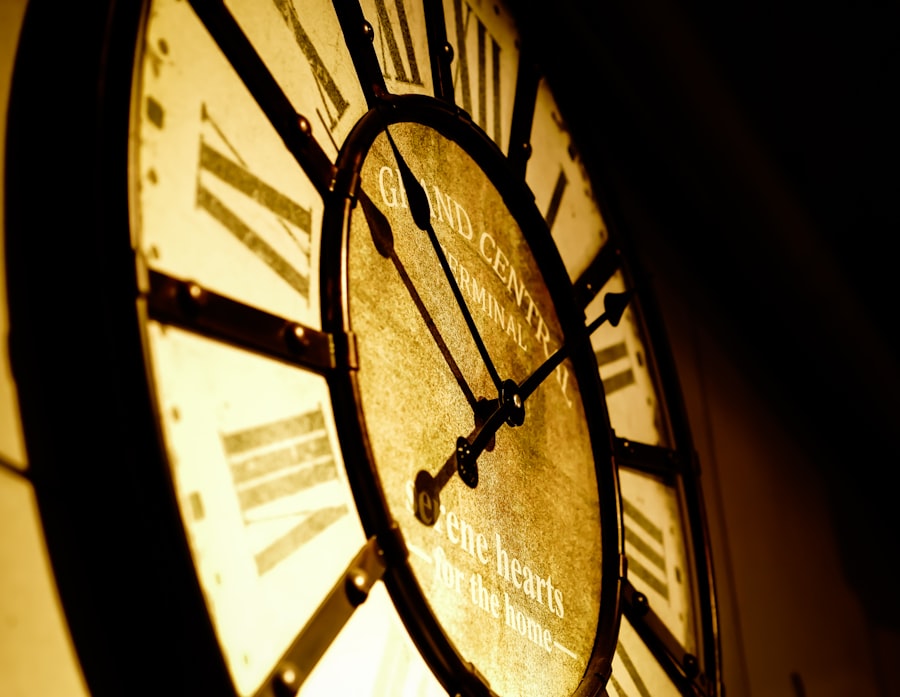
The advent of industrialization dramatically altered humanity’s relationship with time. The factory system, with its relentless machinery, demanded a synchronized and disciplined workforce. Time was no longer solely dictated by natural rhythms but by the ticking of the factory clock.
The Factory Whistle: The New Temporal Dictator
The introduction of the factory whistle became a powerful symbol of this shift. It dictated when work began, when breaks were taken, and when the workday ended. This synchronized regimentation of labor was a radical departure from agrarian or craft-based work, where time was often more fluid. The factory whistle was the unyielding metronome of an emerging industrial order.
Efficiency and Productivity: Time as Measurable Output
The industrial era fostered a cult of efficiency and productivity. Time became a precious resource to be optimized, a commodity to be squeezed for maximum output. Sundry inventions and methodologies were developed to make processes faster and more streamlined, viewing “wasted time” as a direct economic loss. This was the era of time as a quantifiable input for economic gain.
The Rise of the Clockmaker and the Timekeeper: Honoring Precision
The demand for precise timekeeping grew exponentially. The accuracy and reliability of clocks and watches became paramount. The profession of the clockmaker rose in prominence, and the idea of the individual timekeeper, meticulously managing their own schedule, began to take hold. These individuals were the custodians of the new temporal regime.
The Time To Live (TTL) header plays a crucial role in managing the lifespan of data packets in network communications, and its history reflects the evolution of internet protocols. For those interested in a deeper understanding of how TTL has shaped network efficiency and reliability, you can explore a related article that delves into its significance and development over the years. This insightful piece can be found at this link, where you will discover more about the intricacies of network management and the impact of TTL on modern internet usage.
Modernity and the Conscious Embrace: Reclaiming the Temporal Self
| Date | Time To Live Header Bit | Description |
|---|---|---|
| 1981 | 0 | Initial definition of Time To Live header bit in IPv4 |
| 1998 | Deprecated | Time To Live header bit deprecated in IPv6 |
| 2017 | 0 | Time To Live header bit still used in IPv4 for packet expiration |
In the wake of industrialization and the complexities of the modern world, a counter-movement emerged, emphasizing the deliberate and conscious engagement with time. The concept of “embracing time to live” began to take on a more active, intentional meaning, moving beyond mere measurement or biological imperative.
The Rise of Time Management: Tools for Temporal Mastery
The latter half of the 20th century saw the proliferation of time management techniques and tools. From personal planners to complex project management software, these innovations aimed to empower individuals to take control of their schedules, prioritize tasks, and allocate their temporal resources effectively. This was an attempt to forge a personal rudder for navigating the temporal currents.
Mindfulness and Being Present: Experiencing the Now
Concurrently, philosophical and psychological movements like mindfulness and the emphasis on “being present” gained traction. These approaches encouraged individuals to shift their focus from the anxieties of the future or regrets of the past to the richness of the current moment. This was an active cultivation of temporal awareness, an effort to truly inhabit the present.
The Work-Life Balance Debate: A Temporal Negotiation
The concept of work-life balance emerged as a significant discussion, reflecting a desire to carve out intentional spaces for personal life, leisure, and well-being within the often demanding framework of modern employment. This represented a conscious negotiation with temporal demands, seeking to ensure that time was not solely dedicated to productivity but also to enrichment and rejuvenation.
The Digital Age and Temporal Fragmentation: Navigating the Torrent
The rapid advancements of the digital age have introduced new challenges and opportunities for embracing time. While offering unprecedented connectivity and access to information, the constant influx of notifications and stimuli can lead to temporal fragmentation and a perpetual feeling of being “on.” This era demands a sophisticated approach to temporal self-management, a conscious effort to channel the digital torrent rather than be swept away by it. Embracing time to live in this context involves learning to filter, prioritize, and intentionally disconnect, creating pockets of focused engagement and restorative stillness. The individual now stands at a crossroads, equipped with powerful tools for temporal manipulation, yet facing the constant pressure of a hyper-connected, ever-accelerating world.
FAQs
What is the history of the Time To Live (TTL) header bit?
The Time To Live (TTL) header bit is a field in the Internet Protocol (IP) header that specifies the number of hops (routers) a packet is allowed to traverse before being discarded. It was first defined in RFC 791 in 1981 as a way to prevent packets from circulating indefinitely in the network.
How does the TTL header bit work?
When a packet is sent, the sending device sets the TTL value in the IP header. As the packet traverses each router, the TTL value is decremented by one. If the TTL reaches zero, the router discards the packet and sends an ICMP “time exceeded” message back to the sender.
What is the purpose of the TTL header bit?
The TTL header bit serves two main purposes. First, it prevents packets from circulating indefinitely in the network, which could lead to congestion and waste of network resources. Second, it helps to detect routing loops, where packets are stuck in a loop of routers and never reach their destination.
What is the typical default value for the TTL header bit?
The typical default value for the TTL header bit is 64 for most operating systems. However, it can be adjusted by network administrators based on their specific network requirements.
How does the TTL header bit impact network performance?
The TTL header bit has a minimal impact on network performance, as its primary function is to prevent packets from circulating indefinitely and to detect routing loops. However, setting the TTL value too low can result in increased ICMP “time exceeded” messages, which could potentially impact network performance.