The quest for a sustainable and powerful energy source has long been a central challenge for humanity. Among the most promising avenues lies nuclear fusion, a process that mimics the energy generation of stars. However, realizing controlled fusion on Earth requires overcoming numerous hurdles, one of the most significant being the reliable and efficient production of tritium. Tritium, a radioactive isotope of hydrogen, plays a crucial role as a fuel component in most proposed fusion reactor designs. Due to its scarcity and radioactivity, on-site production within the fusion reactor itself is a necessity. This article delves into the scientific principles and engineering considerations behind a leading method for tritium generation: neutron capture by Lithium-6.
Controlled nuclear fusion holds the potential to provide a clean, abundant, and secure energy supply. The most developed fusion concepts, such as the Deuterium-Tritium (D-T) reaction, rely on fusing two hydrogen isotopes: deuterium (a stable isotope) and tritium. When these two nuclei collide with sufficient energy, they fuse, releasing a significant amount of energy in the form of fast neutrons and alpha particles. While deuterium can be readily extracted from ordinary water, tritium is exceedingly rare in nature. Its natural abundance is minuscule, and its radioactive half-life of approximately 12.3 years means it decays relatively quickly. Consequently, relying on external sources for tritium is not a viable long-term strategy for a fusion power economy. The fusion reactor must therefore act as its own tritium factory.
The D-T Fusion Reaction: A Brief Overview
The D-T reaction equation is represented as:
$^2_1$H + $^3_1$H $\rightarrow$ $^4_2$He + n + 17.6 MeV
Here, deuterium ($^2_1$H) and tritium ($^3_1$H) fuse to produce an alpha particle ($^4_2$He), a neutron (n), and 17.6 million electron volts (MeV) of energy. This energy release is substantial, making the D-T reaction the prime candidate for initial fusion power plants.
The Half-Life Challenge: The Case for In-Situ Production
The short half-life of tritium presents a critical challenge for logistics and storage. If tritium were to be produced remotely and transported to fusion power plants, significant quantities would decay during transit and storage, leading to substantial material loss and increased costs. Therefore, the concept of “breeding” tritium within the fusion reactor itself, as part of the ongoing fusion process, is paramount. This requires incorporating materials into the reactor design that can capture neutrons and, through subsequent nuclear reactions, generate tritium.
Recent advancements in nuclear research have highlighted the significance of lithium-6 neutron capture in the production of tritium, a crucial isotope for fusion energy and nuclear weapons. An insightful article discussing the implications of lithium-6 in neutron capture processes can be found at In the War Room, where experts delve into the mechanisms and potential applications of tritium production in various fields. This resource provides a comprehensive overview of the topic, making it an essential read for those interested in nuclear science and its future.
The Core Principle: Neutron Capture by Lithium-6
The most widely investigated and promising method for in-situ tritium breeding revolves around the neutron capture reaction with Lithium-6. Lithium, an alkali metal, exists in nature as two primary isotopes: Lithium-6 ($^6$Li) and Lithium-7 ($^7$Li). While both isotopes can interact with neutrons, Lithium-6 exhibits a significantly higher probability, or “cross-section,” for absorbing neutrons to produce tritium. This selective reactivity makes it the preferred choice for tritium breeding.
The Nuclear Reaction Pathway
When a neutron strikes a Lithium-6 nucleus, a nuclear transformation occurs, resulting in the formation of a tritium nucleus and an alpha particle:
n + $^6_3$Li $\rightarrow$ $^3_1$H + $^4_2$He + 4.8 MeV
This reaction is exothermic, meaning it releases energy, albeit a smaller amount compared to the D-T fusion reaction itself. The generated tritium can then be extracted and fed back into the fusion plasma as fuel.
Cross-Sectional Insights: Why Lithium-6 Excels
The “neutron cross-section” is a measure of the probability that a neutron will interact with a particular nucleus. For tritium breeding, a high neutron cross-section at the energies present in a fusion reactor is highly desirable. Lithium-6 possesses a particularly large cross-section for neutron capture at thermal and near-thermal energies. While Lithium-7 also undergoes neutron capture, the primary reaction pathway that leads to tritium production is less favorable, or requires higher neutron energies. This stark difference in reactivity is the scientific bedrock upon which proposed tritium breeding strategies are built.
Reactor Design Integration: The Breeder Blanket
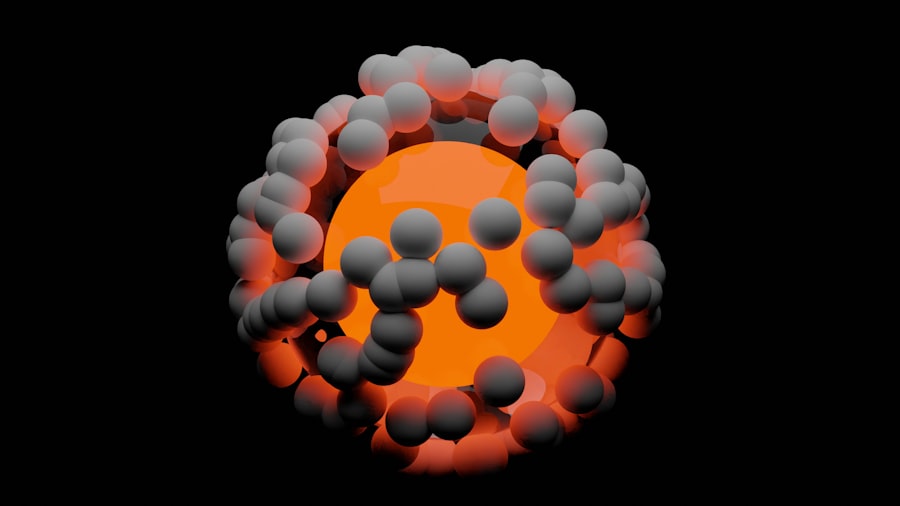
The neutron capture by Lithium-6 does not occur directly within the plasma where fusion takes place. Instead, it is designed to happen in a specialized component surrounding the plasma, known as the “breeder blanket.” The blanket serves multiple critical functions within a fusion reactor, one of the most important being the efficient capture of fusion neutrons and subsequent tritium production.
Blanket Structure and Composition
The breeder blanket is a robust structure that encases the fusion core. Its composition is carefully engineered to optimize neutron capture and tritium extraction. Typically, it is made of neutron-transparent structural materials, such as steel alloys, that can withstand the extreme conditions within the reactor. Embedded within this structure are the tritium breeding materials, primarily in the form of lithium compounds.
The Dual Role of Lithium: Breeding and Heat Transfer
Lithium can be incorporated into the blanket in various forms. Solid lithium ceramics, such as lithium orthosilicate (Li$_4$SiO$_4$) or lithium meta-zirconate (Li$_2$ZrO$_3$), are common proposals for solid breeder blankets. Liquid lithium metal or lithium-lead eutectic alloys are considered for liquid breeder blankets. Beyond their tritium breeding capabilities, these lithium-containing materials also play a crucial role in absorbing the kinetic energy of the fusion neutrons, thereby extracting heat. This heat is then used to generate steam and drive turbines for electricity production, mirroring the thermal cycles of conventional power plants.
Neutron Moderation: Optimizing the Capture Process
Fusion neutrons emerge from the D-T reaction with very high kinetic energies, typically in the range of 14 MeV. Lithium-6’s highest neutron capture cross-section is at lower, or “thermal,” energies. Therefore, a mechanism is needed within the blanket to slow down, or “moderate,” these fast neutrons to energies where Lithium-6 can efficiently absorb them. This is often achieved by incorporating neutron moderating materials, such as beryllium or graphite, within the blanket structure. These materials effectively “cushion” the neutrons, reducing their speed without absorbing them significantly, thus guiding them towards the Lithium-6 nuclei.
Tritium Extraction and Management: A Complex Network
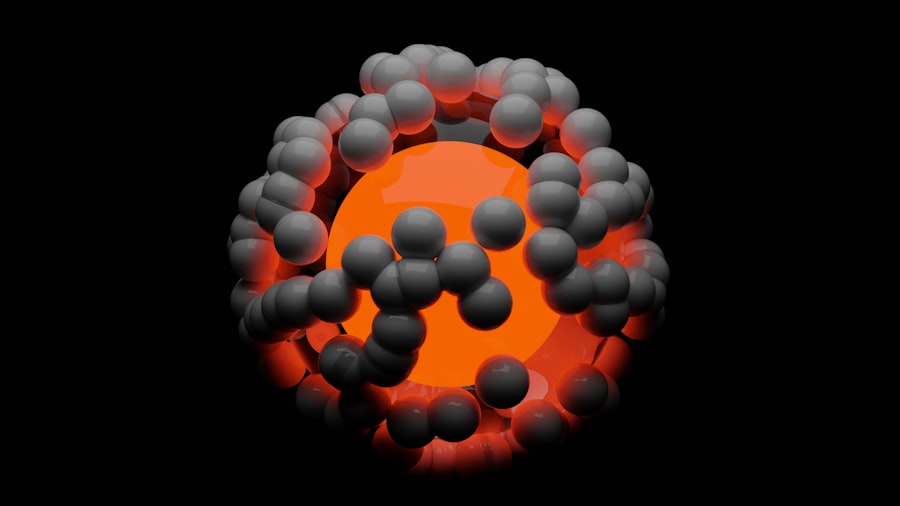
Once tritium is generated within the breeder blanket through neutron capture, it must be efficiently extracted and managed. This process is not trivial and involves a sophisticated system designed to collect the tritium, purify it, and reintroduce it into the fusion plasma.
Gas Phase Extraction: A Primary Approach
In many proposed blanket designs, tritium is produced as tritium gas (HT or T$_2$). The breeder blanket is typically operated under a flow of an inert gas, such as helium. This gas flows through the blanket, carrying with it the generated tritium. The gas stream then proceeds to a tritium processing plant.
The Journey of Tritium: From Blanket to Plasma
The helium sweep gas, laden with tritium, exits the blanket and enters a series of purification stages. These stages are designed to remove any impurities, such as unreacted lithium, other helium isotopes, or residual moisture, that may have been carried along. Once purified, the tritium gas is separated, processed to achieve the desired isotopic enrichment (if necessary), and then stored or directly fed back into the fusion reactor’s fueling system.
Liquid Metal Extraction: An Alternative Strategy
For liquid breeder blankets, such as those utilizing molten lithium or lithium-lead, tritium extraction involves different techniques. Tritium can dissolve in these liquid metals. Extraction can be achieved through processes like gas bubbling (purging the liquid metal with an inert gas to carry away dissolved tritium) or vacuum degassing. Temperature gradients and chemical getters can also be employed to facilitate tritium removal.
Challenges in Tritium Handling
Tritium is a radioactive isotope that emits beta particles and can be challenging to contain. Its small atomic size allows it to diffuse through many materials that are impermeable to other gases. Therefore, strict containment protocols and advanced material selection are crucial to prevent tritium leakage and minimize worker exposure. The entire system, from breeding to extraction to re-injection, must be designed with the highest levels of safety and efficiency in mind.
Recent advancements in nuclear research have highlighted the significance of lithium-6 neutron capture in the production of tritium, a key isotope used in various applications, including nuclear fusion. For a deeper understanding of the implications of this process, you can explore a related article that discusses the mechanisms and potential benefits of tritium production through lithium-6. This insightful piece can be found at this link, where you will find detailed information on the subject.
Beyond Lithium-6: Alternative and Complementary Approaches
| Parameter | Value | Unit | Description |
|---|---|---|---|
| Reaction | ⁶Li + n → ⁴He + ³H | – | Lithium-6 neutron capture producing helium-4 and tritium |
| Thermal Neutron Cross Section | 940 | barns | Probability of neutron capture by lithium-6 at thermal energies |
| Q-value | 4.78 | MeV | Energy released in the reaction |
| Tritium Production Rate | Depends on neutron flux | atoms/cm³/s | Rate of tritium atoms produced per unit volume per second |
| Neutron Energy Range | 0.025 | eV (thermal) | Typical neutron energy for capture reaction |
| Half-life of Tritium | 12.32 | years | Radioactive decay half-life of tritium |
While Lithium-6 neutron capture is the cornerstone of most tritium breeding strategies, research continues into alternative and complementary methods. These investigations aim to enhance tritium production efficiency, reduce reliance on enriched Lithium-6, or provide backup capabilities.
Lithium-7 Neutron Reactions: A Secondary Pathway
Lithium-7, the more abundant isotope of lithium, can also participate in neutron capture reactions. However, the primary reactions with Li-7 often produce helium and alpha particles, rather than tritium. There are some less probable pathways and higher energy neutrons that can lead to tritium production from Li-7, but these are generally less efficient than the Li-6 route. Nevertheless, in some blanket designs, Li-7 might contribute to overall tritium production or play a role in neutron moderation or heat removal.
Other Neutron Capture Materials: Exploring New Frontiers
Scientists are also exploring other neutron-absorbing materials that could potentially be used for tritium breeding or to complement lithium-based systems. These investigations are often in the early stages of research and development.
Exploring Exotic Isotopes and Compounds
The search for alternative breeding materials involves evaluating a wide range of isotopes and chemical compounds. The ideal candidate would possess a high neutron absorption cross-section, produce tritium efficiently, be stable under reactor conditions, and be economically viable. This research is akin to searching for hidden treasures in the vast landscape of nuclear physics.
Blanket Design Optimization: A Continuous Evolution
The design of tritium breeder blankets is a dynamic field, constantly evolving as new scientific insights and engineering solutions emerge. The goal is to create a blanket that maximizes tritium breeding ratio (TBR), ensures efficient heat removal, is structurally robust, and facilitates straightforward tritium extraction and maintenance. This ongoing evolution is like a sculptor refining their work, seeking to achieve perfect form and function.
In conclusion, the successful implementation of controlled nuclear fusion hinges on solving the tritium supply problem. The neutron capture reaction with Lithium-6, integrated into sophisticated breeder blanket designs, stands as the most promising and well-developed pathway for on-site tritium production. The meticulous engineering of these blankets, coupled with advanced tritium extraction and management systems, forms the backbone of future fusion power plants. While challenges remain, the scientific understanding and technological progress in this area offer a clear and compelling roadmap towards harnessing the power of the stars for Earth’s energy needs.
FAQs
What is lithium-6 neutron capture?
Lithium-6 neutron capture is a nuclear reaction in which a lithium-6 (^6Li) nucleus absorbs a neutron. This process typically results in the formation of an alpha particle (helium-4 nucleus) and a tritium nucleus (hydrogen-3).
How does lithium-6 produce tritium through neutron capture?
When lithium-6 captures a neutron, it undergoes a reaction that splits the nucleus into an alpha particle and a tritium nucleus. The reaction can be represented as:
^6Li + n → ^4He (alpha particle) + ^3H (tritium).
Why is tritium production from lithium-6 neutron capture important?
Tritium produced from lithium-6 neutron capture is important for various applications, including nuclear fusion research, where tritium serves as a fuel, and in nuclear weapons. It is also used in self-powered lighting and as a tracer in scientific studies.
Where is lithium-6 neutron capture commonly utilized?
This reaction is commonly utilized in nuclear reactors, fusion reactors, and neutron detectors. Lithium-6 is often used in control rods and shielding materials due to its ability to absorb neutrons and produce tritium.
What are the safety considerations related to tritium produced from lithium-6 neutron capture?
Tritium is a radioactive isotope of hydrogen and poses radiological hazards if released into the environment. Proper containment, handling, and disposal procedures are necessary to minimize exposure and environmental impact when producing or using tritium from lithium-6 neutron capture.