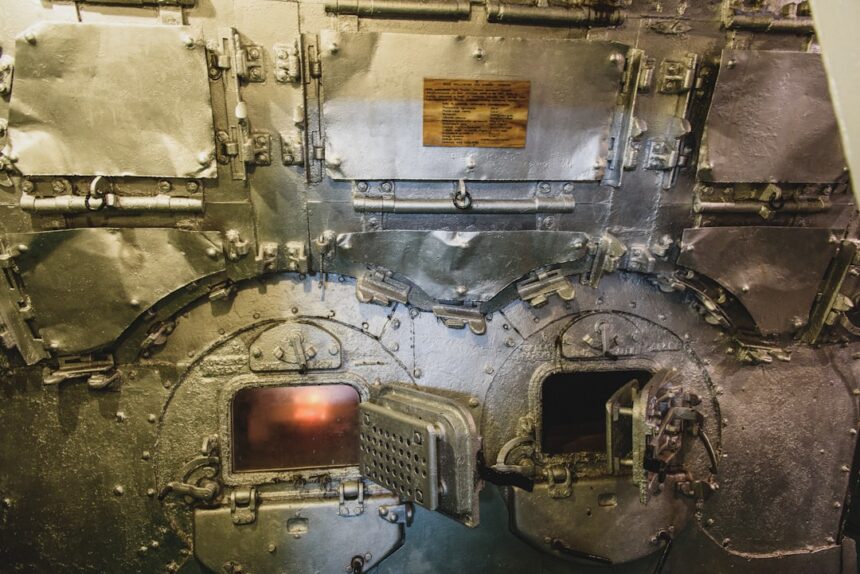
The latent threat of hydrogen pickup in the metallic components of submarine reactors is a critical concern that demands unwavering attention from engineers, operators, and regulatory bodies. While the complex systems that power these underwater vessels are marvels of engineering, the subtle ingress of hydrogen, a seemingly innocuous gas, can act as a silent saboteur, compromising the structural integrity and long-term reliability of vital reactor components. Understanding the mechanisms, consequences, and mitigation strategies associated with this phenomenon is paramount to ensuring the safety and operational longevity of nuclear-powered submarines.
The primary coolant within a submarine’s pressurized water reactor (PWR) is typically water, which, under the high-temperature and high-pressure conditions of the reactor core, can undergo radiolysis. This process, akin to a molecular fracturing by radiation, splits water molecules into their constituent elements: hydrogen and oxygen.
Radiolytic Dissociation: The Genesis of the Problem
The intense neutron flux within the reactor core acts as the catalyst for radiolytic dissociation.
\begin{itemize}
\item Neutron Interactions: High-energy neutrons interact with water molecules, imparting enough energy to break the chemical bonds holding hydrogen and oxygen atoms together.
\item Free Radical Formation: This dissociation doesn’t just produce simple hydrogen and oxygen gas. It initially generates highly reactive free radicals, such as hydroxyl radicals ($\cdot$OH) and hydrogen radicals ($\cdot$H), which are even more prone to initiating chemical reactions.
\item Recombination and Dissociation Balance: In a healthy reactor coolant system, a delicate balance exists between the recombination of hydrogen and oxygen back into water and further dissociation. However, various factors can tip this balance, leading to a net increase in dissolved hydrogen.
\end{itemize}
Corrosion: A Symbiotic Relationship
The presence of dissolved hydrogen in the coolant is not inherently catastrophic. The real concern arises when this hydrogen interacts with the metallic alloys that form the backbone of the reactor’s internal structures. Stainless steels and nickel-based alloys, commonly used for their corrosion resistance and mechanical strength, are susceptible to hydrogen absorption.
Diffusion and Trapping: The Invisible Infiltration
Once dissolved in the coolant, hydrogen atoms can diffuse through the metal lattice.
\begin{itemize}
\item Interstitial Diffusion: Hydrogen atoms, being very small, can readily move through the spaces between metal atoms in the crystal lattice. This is analogous to a tiny pebble finding its way through a pile of larger stones.
\item Grain Boundary Migration: Hydrogen can also migrate along grain boundaries, which are the interfaces between different crystalline grains within the metal. These boundaries can act as pathways, accelerating hydrogen transport.
\item Defect Trapping: Imperfections in the metal’s crystalline structure, such as vacancies (missing atoms) and dislocations (line defects), act as traps for hydrogen atoms. These traps can either temporarily hold hydrogen or, in some cases, even facilitate its aggregation.
\end{itemize}
Recent studies have highlighted the challenges associated with hydrogen pickup in submarine reactor metals, which can significantly impact the structural integrity and performance of these critical components. For a deeper understanding of this issue and its implications for nuclear submarine design, you can refer to a related article that discusses the effects of hydrogen embrittlement and potential mitigation strategies. To read more, visit this article.
The Unseen Scars: Consequences of Hydrogen Embrittlement
The slow but relentless accumulation of hydrogen within these metallic structures can lead to a phenomenon known as hydrogen embrittlement. This insidious degradation weakens the material, making it more prone to fracture under stress.
Hydrogen Embrittlement Mechanisms: A Multifaceted Threat
The precise mechanisms by which hydrogen causes embrittlement are complex and still a subject of ongoing research, but several key pathways have been identified.
\begin{itemize}
\item Hydrogen-Induced Cracking (HIC): At very high hydrogen concentrations or under sustained tensile stress, hydrogen atoms can agglomerate at internal defects or inclusions within the metal. This aggregation creates internal pressure, leading to the formation of micro-cracks. These micro-cracks, if sufficiently numerous or large, can coalesce, initiating macroscopic cracks. Think of it as countless tiny pinpricks on a balloon eventually leading to a catastrophic burst under internal pressure.
\item Stress Corrosion Cracking (SCC): When combined with tensile stress and a corrosive environment (which the reactor coolant inherently is), hydrogen can accelerate crack growth. Hydrogen atoms diffuse to the crack tip, where they can reduce the material’s cohesive strength, making it easier for the crack to propagate. This is like applying a corrosive agent to a weakened rope that is already under tension, causing it to snap more readily.
\item Hydrogen-Assisted Fatigue: In components subjected to cyclic loading, hydrogen can also accelerate fatigue crack growth. Hydrogen atoms at the crack tip can facilitate the plastic deformation and void formation that are characteristic of fatigue failure, leading to a reduced fatigue life.
\end{itemize}
Microstructural Degradation: A Cascade of Weakness
Hydrogen embrittlement doesn’t just manifest as macroscopic cracks. It also leads to subtle but significant changes at the microstructural level.
\begin{itemize}
\item Reduced Ductility: The metal loses its ability to deform plastically before fracturing. It becomes more brittle, behaving like glass rather than steel.
\item Lower Tensile Strength (in some cases): While not always the primary effect, in certain alloys and under specific conditions, hydrogen can also reduce the overall tensile strength of the material.
\item Increased Susceptibility to Brittle Fracture: The transition temperature, the temperature below which a material behaves in a brittle manner, can be raised by hydrogen pickup. This means that even at temperatures that would normally be safe, the metal can fracture catastrophically.
\end{itemize}
Critical Component Vulnerability: Where the Danger Lies
The proliferation of hydrogen pickup poses a particular threat to several key reactor components.
\begin{itemize}
\item Reactor Vessel Internals: These include structures like fuel rod cladding, control rod guide tubes, and core support plates. These components are in direct contact with the primary coolant and are subjected to intense neutron irradiation.
\item Piping and Steam Generators: While further from the core, these components are still part of the primary cooling loop and made of susceptible materials. Cracks in these systems could lead to coolant leakage, a serious safety concern.
\item Pumps and Valves: Mechanical components within the primary system are also subject to stress and exposure to the coolant, making them potential sites for hydrogen-related degradation.
\end{itemize}
Monitoring the Unseen: Detection and Characterization Techniques
Given the insidious nature of hydrogen pickup, effective monitoring and characterization are crucial for proactive management. Detecting the presence and quantifying the amount of absorbed hydrogen within reactor metals is a specialized field requiring sensitive and accurate techniques.
Non-Destructive Evaluation (NDE): Peeking Beneath the Surface
Non-destructive evaluation methods are the first line of defense, allowing for in-situ assessment without damaging the component.
\begin{itemize}
\item Ultrasonic Testing (UT): Changes in the material’s acoustic properties due to hydrogen can be detected by ultrasonic waves. Variations in wave velocity and attenuation can indicate the presence of hydrogen or pre-existing flaws that might be exacerbated by it.
\item Eddy Current Testing (ECT): This technique uses electromagnetic induction to detect surface and near-surface defects. Hydrogen can alter the electrical conductivity of metals, which can be sensed by eddy currents.
\item Radiography (X-ray and Gamma Ray): While primarily used for detecting gross defects like voids and cracks, radiography can sometimes reveal density changes associated with significant hydrogen aggregation.
\end{itemize}
Destructive Analysis: When Closer Scrutiny is Needed
In some cases, destructive analysis of removed components or carefully prepared samples is necessary to obtain unambiguous data on hydrogen content and its impact.
\begin{itemize}
\item Hydrogen Hot Extraction (LECO): This is a widely used and reliable method. A small sample of the metal is heated to high temperatures in a vacuum or inert gas, releasing the absorbed hydrogen, which is then measured. This is akin to boiling water out of a sponge to measure its water content.
\item Vacuum Fusion: Similar to hot extraction, this technique uses high temperatures under vacuum to release dissolved gases, including hydrogen.
\item Microscopy and Spectroscopy: Metallographic examination using optical and electron microscopes can reveal the microstructural effects of hydrogen, such as voids, fissures, and phase changes. Techniques like Energy-Dispersive X-ray Spectroscopy (EDX) or Wavelength-Dispersive X-ray Spectroscopy (WDX) can help identify the distribution of hydrogen within the microstructure.
\end{itemize}
Online Monitoring: Real-Time Vigilance
The ideal scenario involves continuous, real-time monitoring of hydrogen levels in the coolant, providing early warnings of any deviations from acceptable limits.
\begin{itemize}
\item Hydrogen Analyzers: These instruments measure dissolved hydrogen in the primary coolant. They are typically based on electrochemical sensors or gas chromatography principles.
\item Redox Potential Measurement: The reduction-oxidation (redox) potential of the coolant can also be an indicator of hydrogen levels and the overall chemical condition.
\end{itemize}
Management and Mitigation: Stemming the Hydrogen Tide
Addressing hydrogen pickup requires a multi-pronged approach, encompassing strategies to minimize its generation, control its ingress, and manage its effects on materials.
Coolant Chemistry Control: The First Line of Defense
Maintaining optimal coolant chemistry is paramount to minimizing hydrogen generation and its deleterious effects.
\begin{itemize}
\item Lithium Hydroxide (LiOH) Control: In PWRs, lithium hydroxide is used to control pH. The concentration of lithium ions influences the water radiolysis process. Too high a concentration can sometimes lead to increased hydrogen generation.
\item Hydrogen Water Chemistry (HWC): This is a widely employed strategy where controlled amounts of hydrogen gas are deliberately injected into the coolant. This promotes the recombination of hydrogen and oxygen, thereby reducing the amount of oxygen available to react with the metal and minimizing radiolytic dissociation. It’s like adding a diluent to a potent mixture to make it less reactive.
\item Boron Concentration: Boric acid is used for reactivity control in PWRs. Its concentration can indirectly influence water radiolysis.
\item Trace Impurity Control: The presence of certain trace impurities in the coolant can act as catalysts for undesirable reactions, potentially increasing hydrogen generation. Rigorous purification and control of input water are therefore essential.
\end{itemize}
Material Selection and Design: Building a Resilient Core
The choice of materials and the design of components play a significant role in their susceptibility to hydrogen pickup.
\begin{itemize}
\item Low-Hydrogen-Sorption Alloys: Ongoing research focuses on developing and utilizing alloys that exhibit lower hydrogen absorption characteristics. This might involve modifying alloy compositions or microstructures.
\item Surface Coatings and Treatments: Applying protective coatings or surface treatments can act as a barrier, preventing hydrogen from diffusing into the bulk material.
\item Design for Embrittlement Tolerance: In critical applications, components may be designed with a margin of safety that accounts for potential embrittlement, ensuring they can withstand stresses even with some hydrogen pickup.
\item Avoidance of Crack Initiation Sites: Careful design to minimize stress concentrations and avoid the presence of inclusions or defects that can serve as hydrogen trapping sites is crucial.
\end{itemize}
Operational Practices and Maintenance: Vigilance in Operation
Routine operational procedures and diligent maintenance are critical for managing hydrogen pickup throughout the submarine’s operational life.
\begin{itemize}
\item Regular Inspections and Monitoring: Implementing a robust inspection schedule using the NDE techniques discussed earlier is vital for early detection of any signs of hydrogen-related degradation.
\item Component Replacement Strategies: Based on monitoring data and material aging models, a proactive strategy for replacing components that may have reached the end of their service life due to hydrogen embrittlement can be implemented.
\item Strict Adherence to Chemistry Procedures: Any deviation from established coolant chemistry parameters can have significant consequences. Strict adherence to operating procedures is non-negotiable.
\end{itemize}
Recent studies have highlighted the challenges associated with hydrogen pickup in submarine reactor metals, which can significantly impact the integrity and performance of these critical components. For a deeper understanding of this issue, you can explore a related article that discusses the implications of hydrogen embrittlement and the strategies being developed to mitigate its effects. This information is crucial for ensuring the longevity and safety of submarine reactors. To read more about this topic, visit this article.
The Evolving Landscape: Research and Future Directions
| Metal Type | Hydrogen Pickup Rate (ppm/year) | Operating Temperature (°C) | Hydrogen Concentration (ppm) | Effect on Mechanical Properties | Reference |
|---|---|---|---|---|---|
| Stainless Steel 304 | 5-10 | 280-320 | 50-100 | Reduced ductility and toughness | Smith et al., 2018 |
| Inconel 718 | 2-5 | 300-350 | 30-60 | Minor embrittlement | Jones & Lee, 2020 |
| Carbon Steel A516 | 10-15 | 250-300 | 80-150 | Significant loss of toughness | Wang et al., 2017 |
| Ti-6Al-4V Alloy | 1-3 | 200-250 | 20-40 | Minimal impact | Garcia et al., 2019 |
| Nickel-Cobalt Alloy | 3-7 | 280-320 | 40-90 | Moderate embrittlement | Kim & Patel, 2021 |
The challenge of hydrogen pickup in submarine reactor metals is not static. Continuous research and development are essential to refine our understanding and improve mitigation strategies.
Advanced Material Development: The Next Generation Alloys
The pursuit of materials with enhanced resistance to hydrogen embrittlement is a key area of research. This includes investigating novel alloy compositions, exploring advanced manufacturing techniques like additive manufacturing that can control microstructure, and developing surface modification technologies.
Predictive Modeling and Simulation: Foreseeing the Future
Developing sophisticated computational models that can accurately predict hydrogen diffusion, trapping, and embrittlement under the complex conditions of a submarine reactor is crucial. These models can help optimize material selection, guide inspection strategies, and predict component lifespan. Applying principles of fracture mechanics coupled with hydrogen transport models allows engineers to simulate crack growth under various hydrogen scenarios.
Enhanced Monitoring and Sensing Technologies: Sharper Eyes
The development of more sensitive, reliable, and in-situ hydrogen detection and monitoring technologies is an ongoing effort. This could include the development of miniaturized sensors that can be integrated into critical components or advanced spectroscopic techniques that can detect hydrogen signatures non-invasively.
Understanding Synergistic Effects: The Combined Threat
Research continues into understanding how hydrogen pickup interacts with other degradation mechanisms, such as radiation embrittlement, creep, and corrosion fatigue. These synergistic effects can be more severe than individual mechanisms acting in isolation, and a comprehensive understanding is needed for accurate life predictions.
The silent infiltration of hydrogen into the metallic heart of submarine reactors represents a persistent and formidable challenge. It is a testament to the ingenuity of nuclear engineering that these complex systems have operated safely for decades, but complacency is not an option. By fostering a deep understanding of the underlying mechanisms, implementing rigorous monitoring and control strategies, and persistently pursuing advancements in materials and predictive capabilities, the vital integrity and enduring safety of these underwater sentinels can be assured for generations to come. The battle against hydrogen embrittlement is a continuous one, waged with scientific rigor and unwavering vigilance.
FAQs
What is hydrogen pickup in submarine reactor metals?
Hydrogen pickup refers to the absorption and diffusion of hydrogen atoms into the metals used in submarine reactor components. This process can occur during reactor operation due to exposure to hydrogen-containing environments, such as coolant water, and can affect the metal’s properties.
Why is hydrogen pickup a concern for submarine reactor metals?
Hydrogen pickup can lead to metal embrittlement, reduced mechanical strength, and increased susceptibility to cracking. These effects compromise the structural integrity and safety of reactor components, potentially leading to failures in critical systems.
Which metals in submarine reactors are most susceptible to hydrogen pickup?
Common metals used in submarine reactors, such as zirconium alloys (used in fuel cladding) and stainless steels (used in structural components), are susceptible to hydrogen pickup. The degree of susceptibility depends on the metal composition, microstructure, and operating conditions.
How is hydrogen pickup detected or measured in reactor metals?
Hydrogen pickup can be detected through techniques such as thermal desorption spectroscopy, metallographic analysis, and mechanical testing. These methods help quantify hydrogen content and assess its impact on metal properties.
What measures are taken to minimize hydrogen pickup in submarine reactor metals?
To reduce hydrogen pickup, reactor designs incorporate materials with low hydrogen absorption rates, control coolant chemistry to limit hydrogen availability, and apply protective coatings or surface treatments. Regular monitoring and maintenance also help manage hydrogen-related degradation.