The advancement of nations, particularly in the realm of energy and resource security, often hinges on the successful development and deployment of critical technologies. In this regard, the establishment of Lithium-7 enrichment facilities, spearheaded by Project Phoenix and Project Titan, represents a significant undertaking with far-reaching implications for global supply chains, technological innovation, and national defense. This article delves into the core objectives, technical underpinnings, operational considerations, and strategic importance of these ambitious projects.
The world’s reliance on advanced technologies, from sophisticated medical imaging to powerful energy storage systems, has created an escalating demand for specialized materials. Among these, isotopically pure elements are becoming increasingly vital. We are not just talking about any lithium; the focus here is on Lithium-7, a specific isotope of lithium that, when purified to high concentrations, offers unique properties essential for a range of cutting-edge applications.
The Science of Isotopes: An Overview
At its most basic, an isotope is a variant of a particular chemical element which differs in neutron number, and therefore in nucleon number: all isotopes of a given element have the same number of protons in each atom. Lithium, for instance, naturally occurs as two stable isotopes: Lithium-6 ($^6$Li) and Lithium-7 ($^7$Li). While Lithium-6 plays a role in certain nuclear applications and has been historically significant in related research, Lithium-7 is the more abundant natural isotope, comprising approximately 92.5% of terrestrial lithium. The criticality lies not in its natural abundance, but in the ability to enrich it, to further concentrate the $^7$Li isotope beyond its natural levels. This enrichment process is akin to refining raw ore to extract the purest form of a precious metal, yielding a product with superior and predictable performance characteristics.
Lithium-7’s Unique Properties and Applications
The enhanced focus on Lithium-7 enrichment stems directly from its advantageous properties when prepared in a highly purified form. These properties make it an indispensable component in several high-demand sectors.
Advanced Nuclear Reactors and Fusion Research
In the realm of nuclear energy, highly enriched Lithium-7 holds immense promise. Specifically, it is a crucial component in the cooling systems of certain advanced nuclear reactor designs, including some Generation IV reactors. The low neutron absorption cross-section of $^7$Li is particularly beneficial, as it minimizes the loss of neutrons needed to sustain the nuclear chain reaction. Furthermore, $^7$Li can be used to produce tritium, a key fuel component for future fusion power plants. The controlled production and management of tritium are paramount for the feasibility of fusion energy.
Pharmaceutical and Medical Applications
Beyond nuclear energy, isotopically pure Lithium-7 is finding its way into the medical field. It is used in the production of diagnostic imaging agents for Positron Emission Tomography (PET) scans. The PET scan, a powerful tool in oncology and neurology, relies on radiotracers that emit positrons. The precise composition of these radiotracers, often incorporating enriched isotopes, directly impacts the clarity and effectiveness of the diagnostic imaging. The ability to precisely control the isotopic makeup of these materials is thus a direct contributor to improved patient care and diagnostic accuracy.
High-Performance Materials and Research
The pursuit of novel materials with enhanced performance characteristics also benefits from the availability of enriched Lithium-7. This can range from applications in specialized batteries to advanced conductive materials used in electronics and scientific research. The consistent isotopic composition ensures predictable material properties, which is crucial for reproducible scientific experimentation and the development of reliable technological components.
The lithium-7 enrichment plant project, which has garnered significant attention due to its implications for energy storage and nuclear applications, is often referred to by various code names in industry discussions. For a deeper understanding of the strategic importance of this project and its potential impact on the market, you can read a related article that explores the nuances of lithium enrichment technologies and their future. For more information, visit this article.
Project Phoenix and Project Titan: The Strategic Imperative
Recognizing the growing importance of these applications, and the potential vulnerabilities in existing supply chains, the initiation of Project Phoenix and Project Titan was a strategic decision. These are not merely research endeavors; they are industrial-scale undertakings aimed at establishing robust domestic production capabilities for enriched Lithium-7. Their establishment is a direct response to global geopolitical shifts and the desire to secure critical resources.
The Genesis of the Projects: Supply Chain Vulnerabilities
The global supply of lithium, in its natural forms, is concentrated in a limited number of countries. While this natural lithium can be processed into various compounds, the specialized enrichment of isotopes like Lithium-7 requires highly sophisticated facilities and expertise, which are even more geographically concentrated. Historically, reliance on a few key international partners for enriched isotopes presents a clear strategic risk. Disruptions due to trade disputes, geopolitical instability, or unforeseen events could cripple the production of essential medical treatments, hinder the development of next-generation energy solutions, and compromise national security interests. Project Phoenix and Project Titan are designed to act as a bulwark against such vulnerabilities. They represent an investment in national sovereignty over critical materials.
Defining Objectives: Beyond Basic Production
The objectives of Project Phoenix and Project Titan extend beyond simply producing enriched Lithium-7. They encompass a multi-faceted approach to establishing a comprehensive and sustainable ecosystem around this critical isotope.
Ensuring Domestic Supply Chain Resilience
A primary objective is to create a secure and reliable domestic supply chain for enriched Lithium-7. This means controlling the entire process, from sourcing raw lithium materials to the final enrichment and distribution of the purified isotope. This independence from foreign suppliers is a cornerstone of national strategic planning in an era of increasing global uncertainty. It is like building your own robust bridge rather than relying on a bridge where the structural integrity is unknown or under the control of external entities.
Fostering Technological Advancement and Innovation
These projects are also catalysts for technological advancement. The development and operation of Lithium-7 enrichment facilities necessitate cutting-edge engineering, advanced materials science, and sophisticated process control. The expertise gained and the innovations fostered within these projects are expected to have spillover effects into other scientific and industrial sectors. This investment in advanced manufacturing capabilities can lead to the creation of high-skilled jobs and a stronger national technological base.
Supporting National Security and Defense Preparedness
The strategic importance of enriched Lithium-7 extends directly to national security. Its role in advanced nuclear technologies, including potential defensive applications and critical research, makes domestic production a matter of paramount importance for maintaining a technological edge and ensuring readiness. In essence, securing the supply of Lithium-7 is akin to securing the fuel for future technological dominance and defensive capabilities.
Technical Foundations: The Art of Enrichment
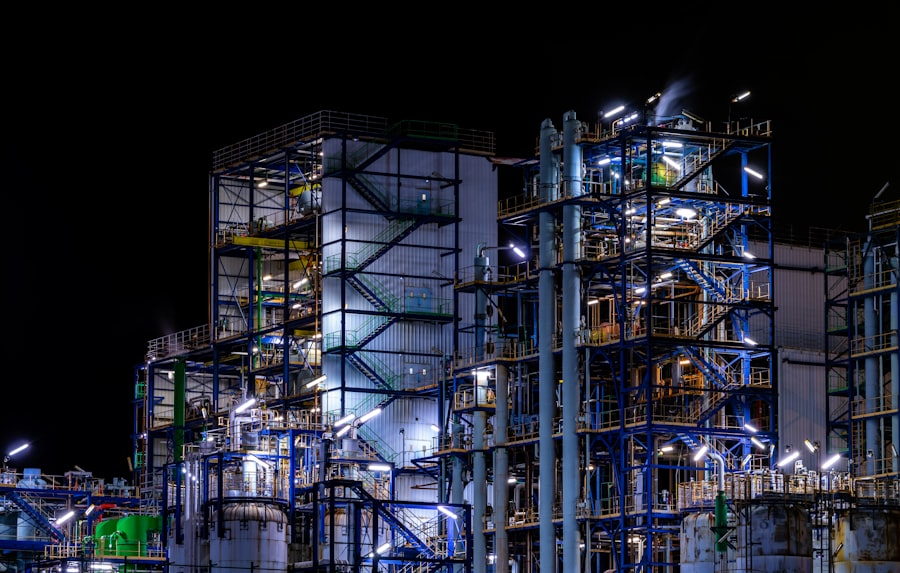
The process of enriching Lithium-7 is technically demanding and requires specialized knowledge and infrastructure. It involves separating naturally occurring isotopes, a feat that requires precise manipulation at the atomic level. While specific proprietary technologies may vary between Project Phoenix and Project Titan, the underlying scientific principles are well-established.
Isotope Separation Techniques: Centrifugation, Laser Separation, and Beyond
The core of Lithium-7 enrichment lies in the separation of isotopes. This is achieved through various advanced techniques, each with its own set of advantages and challenges.
Gas Centrifuge Enrichment
One of the most common and proven methods for isotope enrichment is gas centrifugation. In this process, lithium is converted into a gaseous compound, typically lithium fluoride. This gas is then fed into a series of high-speed centrifuges. The centrifugal force causes the heavier isotopes (in this case, primarily Lithium-6 atoms within the overall molecular structure) to concentrate towards the outer wall of the centrifuge, while the lighter isotopes (Lithium-7) remain closer to the center. By cascading thousands of these centrifuges, a gradual enrichment of the desired isotope can be achieved. This method requires incredibly precise engineering for the centrifuges to withstand immense rotational speeds and maintain their structural integrity without failure.
Atomic Vapor Laser Isotope Separation (AVLIS)
Another advanced technique is Atomic Vapor Laser Isotope Separation (AVLIS). This method uses precisely tuned lasers to selectively excite and ionize one isotope over another. In the case of lithium, lasers are used to target and ionize specific Lithium-7 atoms in a vaporized stream of lithium atoms. These ionized $^7$Li atoms can then be electromagnetically separated from the neutral $^6$Li atoms. AVLIS offers the potential for higher enrichment factors in a single stage compared to centrifugation but is also highly complex and requires significant capital investment.
Other Potential Methods and Research Pathways
Ongoing research explores other potential methods for isotope separation, including electromagnetic separation and potentially novel chemical exchange processes. While these might be in earlier stages of development for industrial-scale Lithium-7 enrichment, they represent future pathways for optimizing efficiency and reducing costs. The constant exploration of new methodologies is a hallmark of technologically driven projects.
Facility Design and Safety Protocols
Designing and operating facilities for isotope enrichment demands rigorous attention to detail, particularly concerning safety and environmental protection. These plants are not ordinary industrial sites; they operate under stringent regulations due to the materials involved and the precision required.
Shielding and Containment
The materials used in enrichment processes, while not inherently radioactive in the same way as enriched uranium, still necessitate careful handling. Facilities are designed with appropriate shielding and containment measures to prevent any potential exposure or contamination. This is a proactive approach to ensuring the well-being of personnel and the surrounding environment.
Process Control and Monitoring
The enrichment process relies on highly sophisticated process control systems to maintain precise operating conditions. Continuous monitoring of temperature, pressure, flow rates, and isotopic concentrations is essential for ensuring the efficiency and safety of the operation. Automation plays a critical role in managing these complex processes, reducing the risk of human error.
Waste Management and Decommissioning
Responsible waste management is a key consideration. Any byproducts or waste materials generated during the enrichment process must be handled and disposed of in an environmentally sound manner, adhering to all regulatory requirements. Furthermore, long-term planning for the eventual decommissioning of these facilities is an integral part of their lifecycle management.
Operational Realities: Building and Running the Plants

The successful implementation of Project Phoenix and Project Titan involves more than just selecting a technology. It necessitates a comprehensive approach to construction, workforce development, and ongoing operational management.
Site Selection and Infrastructure Development
Choosing the right location for these critical facilities is a complex decision influenced by several factors.
Geographic Considerations and Resource Proximity
Proximity to raw lithium sources, stable geological conditions, and reliable access to power and transportation infrastructure are crucial. The choice of site can significantly impact the logistics and cost-effectiveness of the entire operation. It’s like selecting the ideal plot of land where all the necessary utilities and resources are readily available to build a thriving city.
Permitting and Regulatory Compliance
Obtaining the necessary permits and ensuring strict adherence to all local, national, and international regulations is a protracted but essential process. This involves environmental impact assessments, safety reviews, and public consultations.
Workforce Training and Expertise
The operation of Lithium-7 enrichment plants requires a highly skilled and specialized workforce. This is not a sector where on-the-job training for the untrained is feasible.
Specialized Engineering and Technical Skills
Engineers with expertise in chemical engineering, mechanical engineering, nuclear engineering, and materials science are paramount. Technicians skilled in operating and maintaining complex machinery, vacuum systems, and control instrumentation are equally vital.
Safety Culture and Continuous Education
Beyond technical skills, a strong safety culture is non-negotiable. Employees must be rigorously trained in safety protocols, emergency procedures, and the handling of sensitive materials. Continuous education and professional development programs are essential to keep pace with technological advancements and maintain operational excellence.
Supply Chain Management and Logistics
The efficient flow of materials, from raw lithium imports to the distribution of enriched Lithium-7, requires meticulous supply chain management.
Sourcing of Raw Lithium
Ensuring a consistent and reliable supply of high-quality raw lithium is the first step. This may involve domestic mining operations or securing long-term supply agreements with international partners, diversifying these sources to mitigate risk.
Distribution and Handling of Enriched Product
The final enriched Lithium-7 product is a high-value material requiring specialized packaging, transportation, and handling protocols to maintain its purity and meet customer specifications. This is a critical last mile in the journey of this vital element.
The recent developments surrounding the lithium-7 enrichment plant project have sparked significant interest, particularly with the various code names associated with the initiative. These code names not only reflect the project’s strategic importance but also hint at the innovative technologies being employed. For a deeper understanding of the implications of such projects, you can explore a related article that discusses the broader context of lithium production and its impact on global energy transitions. Check out the insightful piece on this topic at In The War Room.
Strategic Significance: A Cornerstone of National Interest
| Project Code Name | Location | Capacity (tons/year) | Enrichment Level (%) | Start Date | Status |
|---|---|---|---|---|---|
| Alpha-7 | Nevada, USA | 500 | 99.9 | 2022-03 | Operational |
| Beta-Li | Western Australia | 300 | 99.7 | 2023-01 | Under Construction |
| Gamma-7X | Ontario, Canada | 450 | 99.8 | 2021-11 | Operational |
| Delta-L7 | Chile | 350 | 99.6 | 2024-05 | Planned |
| Epsilon-7 | South Korea | 400 | 99.85 | 2023-09 | Under Construction |
The impact of Project Phoenix and Project Titan extends far beyond the immediate operational output. They represent a strategic investment in the future, bolstering a nation’s capabilities across multiple domains.
Economic Benefits and Job Creation
The establishment and operation of these advanced facilities are expected to generate significant economic benefits. This includes the creation of high-skilled, well-paying jobs in engineering, manufacturing, research, and administration. The investment in such advanced technological infrastructure can also stimulate growth in ancillary industries and foster a more robust national economy.
Innovation Ecosystem and Technological Leadership
These projects serve as hubs for innovation. The challenges encountered and overcome in developing and operating Lithium-7 enrichment technologies can lead to breakthroughs in materials science, process engineering, and automation. This can position the nation as a leader in these critical technological fields, fostering a competitive advantage.
Global Geopolitical Positioning and Resource Independence
In an increasingly interconnected but also increasingly contested world, control over critical resources is a key determinant of geopolitical influence. By establishing domestic capabilities for Lithium-7 enrichment, a nation reduces its vulnerability to external pressures and enhances its ability to pursue independent foreign policy objectives. This self-sufficiency is a powerful strategic asset.
Future-Proofing National Capabilities
The foresight demonstrated by Project Phoenix and Project Titan lays the groundwork for future technological advancements. As new applications for enriched isotopes emerge, and as existing technologies evolve, the robust infrastructure and expertise developed by these projects will be crucial for adapting and maintaining a leading edge. It is a proactive investment in a future where technological prowess and resource security are paramount.
In conclusion, Project Phoenix and Project Titan represent a bold and necessary step towards securing a critical material for the 21st century. The intricate science of isotope enrichment, coupled with the strategic imperative for national control over essential resources, underscores the profound importance of these initiatives. By investing in domestic production of enriched Lithium-7, these projects are not just building plants; they are building a more resilient, innovative, and secure future.
FAQs
What is the purpose of a lithium-7 enrichment plant?
A lithium-7 enrichment plant is designed to separate and increase the concentration of the lithium-7 isotope from natural lithium. This enriched lithium-7 is used in various applications, including nuclear reactors and medical technologies.
Why are project code names used for lithium-7 enrichment plants?
Project code names are used to maintain confidentiality and security during the development and operation of lithium-7 enrichment plants. They help protect sensitive information related to the technology and its strategic importance.
What methods are commonly used for lithium-7 enrichment?
Common methods for lithium-7 enrichment include chemical exchange processes, ion exchange, and electromagnetic separation. These techniques exploit slight differences in physical or chemical properties between lithium isotopes.
Which industries benefit from lithium-7 enrichment?
Industries that benefit from lithium-7 enrichment include nuclear energy, where lithium-7 is used as a coolant and neutron absorber, and the pharmaceutical industry, which uses lithium-7 in certain medical treatments and diagnostic procedures.
Are there any international regulations governing lithium-7 enrichment plants?
Yes, lithium-7 enrichment plants are subject to international regulations and oversight, particularly because enriched lithium-7 can be used in nuclear applications. Organizations such as the International Atomic Energy Agency (IAEA) monitor and regulate these facilities to ensure peaceful use and non-proliferation.