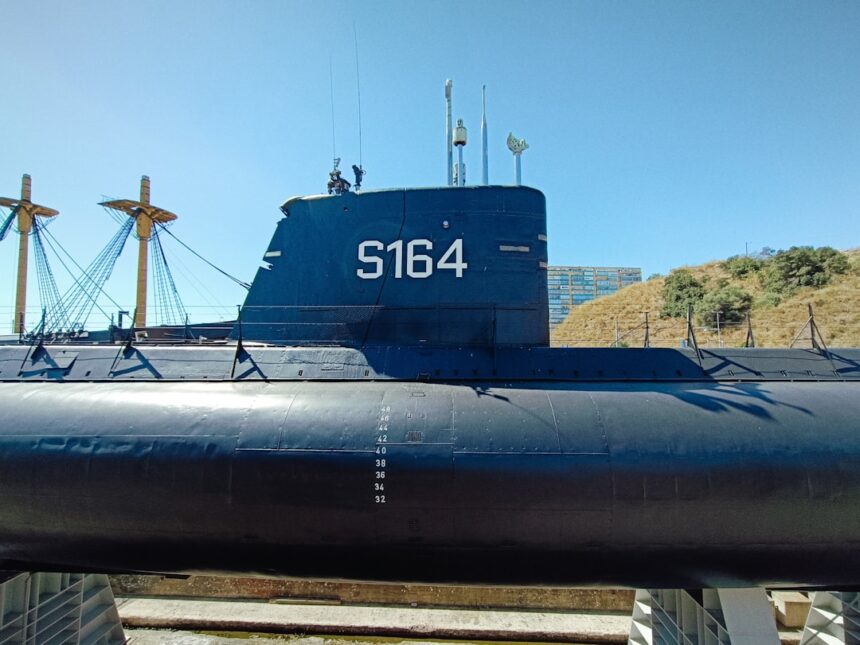
Submarine detection is a critical element of national security and maritime strategy. For decades, militaries worldwide have sought to develop and deploy more effective methods to identify and track submerged vessels. While sonar and magnetic anomaly detection (MAD) have been the cornerstones of submarine warfare, their limitations have driven the exploration of novel technologies. Among these, inertial navigation systems capable of measuring gravitational gradients – gravity gradiometers – have emerged as a promising advancement, offering the potential to revolutionize how submarines are found.
Submarines, by their very nature, are designed for stealth. Their hulls are engineered to minimize acoustic reflectivity, and their operational profiles often involve deep dives to avoid detection. This inherent secrecy presents a significant hurdle for any detection system.
Acoustic Detection and Its Limitations
Sonar, both active and passive, has long been the primary tool for submarine hunting. Active sonar emits sound pulses and analyzes the returning echoes, while passive sonar listens for the sounds generated by a submarine itself.
Active Sonar: The Active Interrogation of the Deep
Active sonar can provide detailed information about the location, size, and even type of a submerged contact. However, it has significant drawbacks. The emitted sound can be detected by the target submarine, revealing the hunter’s presence and potentially allowing evasive maneuvers. Furthermore, active sonar performance is degraded by conditions such as shallow water, complex seafloor topography, and the presence of marine life, which can create false echoes. The increasing sophistication of submarine noise reduction technologies also presents a challenge to passive sonar, making it harder to pick out the faint signatures of modern vessels.
Passive Sonar: Listening in the Whispering Dark
Passive sonar relies on the sounds a submarine emits, such as engine noise, propeller cavitation, and hull creaks. While it offers the advantage of not revealing the listener’s position, it is highly dependent on the target submarine producing detectable noise. Advanced submarines are designed to be exceptionally quiet, making them difficult to detect with passive sonar, especially at longer ranges or in acoustically noisy environments. The ocean, in itself, is a symphony of sounds, and isolating the subtle whisper of a submarine can be akin to finding a single, specific note lost within an orchestra.
Magnetic Anomaly Detection (MAD): A Different Approach to Stealth
MAD systems detect disturbances in the Earth’s magnetic field caused by the presence of a ferromagnetic object like a submarine. These systems are typically mounted on aircraft or ships.
The Principle of Magnetic Perturbation
Submarines, being large metal objects, displace and distort the ambient magnetic field. MAD sensors measure these anomalies, providing an indication of a potential submarine. However, the range of MAD is limited, as the magnetic signature weakens significantly with distance.
Environmental Factors and MAD
Environmental factors such as variations in the Earth’s magnetic field, the presence of underwater geological features, and even large metallic wrecks can create false positives for MAD systems. Furthermore, submarines operating in certain depths or maneuvers might present a less pronounced magnetic signature.
Recent advancements in gravity gradiometer technology have significantly enhanced submarine detection capabilities, allowing for more precise identification of underwater vessels. For a deeper understanding of how these innovations are shaping naval warfare and detection strategies, you can read the related article on this topic at In the War Room. This resource provides valuable insights into the implications of gravity gradiometers in modern military operations.
The Gravitational Frontier: Unveiling the Submarine’s Mass
The limitations of acoustic and magnetic detection have spurred research into technologies that exploit other physical properties of submarines. One such property is their sheer mass. Gravity gradiometers, by measuring minute variations in gravitational acceleration, offer a novel way to detect the presence of a large, dense object like a submarine, regardless of its acoustic or magnetic stealth.
The Science of Gravity Gradiometry
Gravity gradiometry measures the second derivative of the gravitational potential. In simpler terms, it quantifies how the gravitational pull changes as you move from one point to another in space. Imagine the Earth’s gravitational field as a gently sloping hill. A gravity gradiometer doesn’t just measure the steepness of the hill at one point; it measures how that steepness changes over a small distance.
Gravitational Potential and Its Derivatives
The gravitational potential at a point in space is influenced by the distribution of mass. The Earth’s surface, for instance, has minor variations in its gravitational potential due to differences in geology, topography, and even the distribution of water. A submarine, being a significant mass submerged beneath the ocean, creates its own localized gravitational anomaly.
Tensor Gradiometry: Precision Measurement
Modern gravity gradiometers, particularly tensor gradiometers, measure not just one component of the gravitational gradient but all six independent components of the gravitational gradient tensor. This high level of precision allows them to discriminate between different gravitational influences with remarkable accuracy.
How Gravity Gradiometers Detect Submarines
A submarine, with its substantial mass, subtly alters the gravitational field in its vicinity. Even a thick layer of water, which is less dense than air and a submarine’s hull, cannot completely mask this influence. A gravity gradiometer, when passed over an area where a submarine is located, will detect these minute changes.
The Submarine as a Mass Anomaly
Think of the ocean floor as a relatively uniform surface in terms of gravitational pull. A submarine underneath this surface is like a concentrated lump of clay placed beneath a sheet. Even if the sheet is large and flexible, the lump beneath will create a subtle dip or bulge that can be measured. Gravity gradiometers are sensitive enough to detect this “dip” or “bulge” caused by the submarine’s mass.
Distinguishing from Natural Anomalies
The Earth’s crust is not uniform. Underwater mountains, trenches, and variations in rock density create natural gravitational anomalies. The key challenge for gravity gradiometry in submarine detection lies in distinguishing the gravitational signature of a submarine from these natural background variations. This is where the precision of tensor gradiometry becomes crucial. By analyzing the spatial gradients of the gravitational field, it becomes possible to infer the shape and density of the mass causing the anomaly. A submarine’s characteristic shape and metallic composition offer a distinct signature that can, in principle, be differentiated from geological formations.
The Advantages of Gravity Gradiometry in Submarine Detection
The potential benefits of gravity gradiometry for submarine detection are significant, offering a new dimension to anti-submarine warfare (ASW).
Independence from Acoustic Signatures
Perhaps the most compelling advantage is that gravity gradiometry does not rely on detecting sound. This renders it immune to the increasing quietness of modern submarines and the challenges of noisy acoustic environments.
Stealth Beyond Sound
Modern submarines are like silent ghosts slipping through the ocean’s depths. They have invested heavily in reducing their acoustic footprint. Gravity gradiometry offers a way to pierce this acoustic veil, detecting the submarine not by what it does (make noise) but by what it is (a mass).
Potential for Long-Range Detection
While the gravitational anomaly itself is localized, the ability to measure these gradients with extreme precision from a moving platform (like an aircraft or a surface vessel) opens up possibilities for longer-range detection than traditional MAD.
Reaching Deeper and Further
The gravitational influence of a submarine extends outwards, albeit diminishing with distance. Advanced gravity gradiometers, mounted on platforms with wide-area surveillance capabilities, could potentially detect submarines at distances that are currently unfeasible with other passive or semi-passive systems. This extends the “eyes” of the detection system deeper into the ocean and further across the operational area.
Reduced Susceptibility to Countermeasures
Unlike acoustic systems that can be spoofed or jammed, the gravitational field is a fundamental physical property. While sophisticated adversaries might employ tactics to mask their gravitational signature (e.g., using decoys with similar density profiles), directly counteracting gravity itself is not a feasible strategy.
The Unseen Signature
Adversaries can deploy acoustic decoys or employ electronic warfare to degrade sonar systems. However, a submarine’s mass remains. Gravity gradiometers, in essence, are looking at the submarine’s undeniable physical presence.
Technological Advancements and Implementation Challenges
The theoretical promise of gravity gradiometry has been steadily translated into practical systems. However, realizing its full potential in real-world ASW scenarios involves overcoming significant technological and operational hurdles.
Evolution of Gravity Gradiometer Technology
Early gravity gradiometers were bulky, complex, and primarily laboratory instruments. Recent decades have seen remarkable miniaturization and improved performance, making them suitable for deployment on airborne and maritime platforms.
Superconducting Quantum Interference Devices (SQUIDs)
One leading technology for high-precision gravity gradiometry involves Superconducting QUantum Interference Devices (SQUIDs). These devices are incredibly sensitive to magnetic fields and can be used in combination with other sensors to measure tiny changes in gravitational acceleration. Maintaining cryogenic temperatures for SQUIDs is a key operational consideration.
Atom Interferometry: A New Frontier
Another promising area is atom interferometry. This technique uses lasers to manipulate and measure the interference patterns of atoms, which are highly sensitive to gravitational forces. Atom interferometers are showing great potential for compact, high-performance gravity gradiometers.
Platform Integration and Operational Considerations
Integrating sensitive gravity gradiometer systems onto operational platforms like aircraft and surface vessels presents engineering challenges.
Airborne Deployment: Surveillance from Above
Deploying gravity gradiometers on aircraft, such as maritime patrol aircraft, allows for broad area surveillance. The aircraft’s motion, however, introduces noise that must be carefully filtered out. High-speed flight and atmospheric turbulence can also impact data quality. The challenge is akin to measuring the wobble of a distant star while standing on a bouncing ship.
Maritime Surface Vessels: Closer to the Target
Surface vessels can also carry gravity gradiometers, offering a more stable platform than aircraft. However, their operational range and speed are more limited. The continuous motion of the waves and the vessel’s own propulsion systems add complexity to the measurements. The goal is to achieve a signal-to-noise ratio that allows the faint gravitational “whisper” of a submarine to be heard above the “roar” of the ship and the ocean.
Data Processing and Interpretation
The raw data from gravity gradiometers is complex and requires sophisticated processing algorithms to extract meaningful information.
Filtering Out the Noise
As discussed, environmental factors and platform motion introduce significant noise into gravity gradiometer readings. Advanced signal processing techniques are essential to isolate the subtle gravitational signature of a submarine from this background clutter. This involves understanding and compensating for the gravitational effects of the Earth’s crust, water, and the platform itself.
Distinguishing Submarine Signatures
The unique challenge lies in developing algorithms that can reliably distinguish the gravitational signature of a submarine from other underwater masses, such as geological formations or even large marine life. This requires detailed understanding of submarine hull materials, internal structures, and their expected mass distribution. Ultimately, the system needs to learn the “fingerprint” of a submarine in the gravitational field.
Recent advancements in gravity gradiometer technology have significantly enhanced submarine detection capabilities, making it a crucial tool for modern naval operations. These devices measure minute variations in gravitational fields, allowing for the identification of submerged vessels with remarkable precision. For those interested in exploring this topic further, a related article discusses the implications of this technology on underwater surveillance and maritime security. You can read more about it in this insightful piece here.
The Future of Submarine Detection: A Multi-Sensor Approach
| Metric | Description | Typical Value / Range | Unit | Notes |
|---|---|---|---|---|
| Gravity Gradient Sensitivity | Minimum detectable change in gravity gradient | 10-12 to 10-13 | 1E (Eötvös = 10-9 s-2) | Higher sensitivity improves detection of small mass anomalies |
| Detection Range | Maximum distance at which a submarine can be detected | 1 to 5 | km | Depends on submarine size, depth, and environmental noise |
| Spatial Resolution | Minimum spatial separation between two detectable objects | 10 to 50 | meters | Determines ability to distinguish multiple targets |
| Measurement Bandwidth | Frequency range over which measurements are effective | 0.01 to 10 | Hz | Lower frequencies help detect slow-moving or stationary targets |
| Platform Type | Typical deployment platform for gravity gradiometers | Submarine, Aircraft, UAV | N/A | Aircraft and UAVs provide wider area coverage |
| Noise Level | Instrumental and environmental noise floor | 10-12 to 10-11 | 1E | Lower noise improves detection capability |
| Data Acquisition Rate | Frequency of gravity gradient data sampling | 1 to 100 | Hz | Higher rates allow better temporal resolution |
| Power Consumption | Energy required to operate the gravity gradiometer system | 50 to 200 | Watts | Important for long-duration deployments |
Gravity gradiometry is not intended to be a standalone solution for submarine detection. Instead, its strength lies in its synergistic potential when combined with other established ASW technologies.
The Power of Fusion: Combining Senses
The most effective ASW strategies in the future will likely involve the integration of multiple sensor types. This concept, often referred to as “sensor fusion,” allows for a more comprehensive and robust understanding of the underwater environment.
Acoustic Enhancement
Gravity gradiometry can complement sonar by providing a non-acoustic cue. If a gravity gradiometer detects an anomaly consistent with a submarine, sonar systems can then be tasked to investigate that specific area with higher priority, potentially detecting the submarine even if it is being exceptionally quiet.
MAD Synergy
Similarly, MAD systems can be used in conjunction with gravity gradiometry. If a MAD system detects a magnetic anomaly, gravity gradiometry can provide an independent confirmation of a significant mass present at that location, helping to reduce false alarms and increase confidence in a detection.
Advanced Analytical Tools and Artificial Intelligence
The sheer volume and complexity of data generated by modern sensor systems necessitate the use of advanced analytical tools, including artificial intelligence (AI) and machine learning (ML).
AI-Powered Pattern Recognition
AI algorithms can be trained to recognize subtle patterns in gravity gradient data that are indicative of a submarine, even when these patterns are obscured by noise. ML can learn to differentiate between the gravitational signatures of various underwater objects with increasing accuracy. This is akin to providing the system with a vast library of gravitational “faces” and teaching it to identify the specific one belonging to a submarine.
Predictive Analytics and Threat Assessment
Beyond simple detection, AI can also be employed for predictive analytics, estimating a submarine’s potential course and capabilities based on the detected gravitational signature and other environmental factors. This shifts the paradigm from passive detection to active threat assessment.
Navigating the Evolving Landscape of Submarine Warfare
The development of gravity gradiometry technology is a testament to the enduring ingenuity applied to the challenge of submarine detection. As submarine technology continues to evolve, so too must the tools and techniques used to counter them.
The Arms Race Beneath the Waves
The pursuit of stealth by submarines and the development of ever more sophisticated detection methods create a continuous technological arms race beneath the waves. Gravity gradiometry represents a significant leap forward in this ongoing contest, offering a new, fundamental physical property to exploit.
The Importance of Continuous Innovation
The future of global maritime security relies on the sustained investment in research and development of advanced ASW capabilities. Technologies like gravity gradiometry, when fully matured and integrated into a multi-sensor network, promise to enhance situational awareness and provide a crucial advantage in maintaining peace and stability on the high seas. The ocean’s depths, once a sanctuary for stealthy adversaries, are gradually being illuminated by the persistent pursuit of knowledge and technological advancement.
FAQs
What is a gravity gradiometer?
A gravity gradiometer is a sensitive instrument that measures the spatial variations in the Earth’s gravitational field. It detects differences in gravitational acceleration over short distances, allowing for precise mapping of subsurface density variations.
How are gravity gradiometers used in submarine detection?
Gravity gradiometers detect subtle changes in the gravitational field caused by the presence of a submarine underwater. Since submarines have different densities compared to surrounding water, they create small gravitational anomalies that can be identified using this technology.
What advantages do gravity gradiometers offer over traditional submarine detection methods?
Gravity gradiometers provide passive detection without emitting signals, making them stealthy and difficult to detect. They can operate in various environmental conditions and detect submarines at longer ranges compared to sonar, especially in noisy or cluttered underwater environments.
What are the limitations of gravity gradiometer technology in submarine detection?
Gravity gradiometers require highly sensitive equipment and stable platforms to minimize noise and interference. Their effectiveness can be limited by environmental factors such as ocean currents and seabed topography, which may produce gravitational variations that complicate detection.
Are gravity gradiometers currently deployed in naval operations for submarine detection?
While gravity gradiometer technology has been researched extensively and demonstrated in experimental settings, its operational deployment in naval submarine detection is still limited. Ongoing advancements aim to improve sensitivity and integration with other detection systems for practical use.