Propeller geometry verification is a critical aspect of ensuring both the reliability and optimal performance of any aircraft, marine vessel, or industrial fan powered by a propeller. The intricate interplay of airfoil shapes, blade angles, and overall dimensions directly dictates the thrust or torque generated, influencing efficiency, vibration levels, and structural integrity. This process acts as the keen eye that scrutinizes the propeller’s blueprint, transforming theoretical design into tangible reality.
The geometry of a propeller is not an arbitrary collection of curves and angles; it is a carefully sculpted solution to complex aerodynamic and hydrodynamic problems. Each element of its design is intended to manipulate the fluid medium – be it air or water – to produce the desired propulsive force. Understanding these foundational principles is the first step in appreciating the necessity of rigorous verification.
Airfoil Characteristics and Their Propulsive Role
The cross-sectional shape of a propeller blade is analogous to an airplane wing, albeit with a rotational rather than linear motion. These airfoils are designed to generate lift, which in the context of a propeller, translates to thrust. The specific curvature, thickness, and leading/trailing edge profiles significantly impact the pressure distribution around the blade. This, in turn, dictates the magnitude and distribution of the forces acting upon the fluid. Verification ensures that these airfoil characteristics, which are the very engine of the propeller’s function, are precisely replicated as intended by the designer. Deviations here can lead to diminished thrust, increased drag, and unfavorable flow patterns.
Blade Angle (Pitch) and Its Impact on Efficiency
The angle at which each propeller blade is set relative to its plane of rotation, often referred to as the pitch, is a crucial determinant of performance. A higher pitch generally leads to greater forward speed at a given rotational speed, but can also increase the risk of the propeller “slipping” through the fluid if the load is too high. Conversely, a lower pitch provides better acceleration and maneuverability but may limit top speed. The pitch is not uniform across the entire blade length; it typically varies to optimize performance at different radial stations. Verification examines the precise pitch distribution along the blade, ensuring it aligns with the design, as even minor inconsistencies can subtly but significantly alter the propeller’s operating envelope.
Blade Twist and the Optimization of Relative Wind
As a propeller blade rotates, the velocity of the fluid passing over it is a combination of the rotational speed and the forward speed of the vehicle. This resultant velocity, known as the relative wind, varies in magnitude and angle along the blade’s length. To maintain optimal aerodynamic or hydrodynamic conditions, the blade’s angle of incidence to this relative wind must be carefully controlled. Blade twist, where the pitch changes along the radius, is the mechanism used to achieve this. Verification scrutinizes the degree and smoothness of this twist, ensuring it accurately compensates for the changing relative wind, thereby maximizing efficiency and minimizing induced drag.
Propeller Diameter and Blade Area Ratio: Governing Force and Cavitation
The overall diameter of the propeller defines the swept area, a fundamental factor in the total thrust or torque that can be produced. A larger diameter generally allows for greater force generation, but also comes with increased structural demands and potential for interference with the hull or airframe. The blade area ratio, the proportion of the swept area occupied by the blades, influences the loading on each blade. A higher area ratio distributes the load over a larger surface, potentially reducing the risk of cavitation (the formation of vapor bubbles in the fluid due to low pressure), which can be detrimental to performance and cause erosion. Verification confirms these critical external dimensions and proportions, ensuring they meet design specifications.
For those interested in the intricacies of post-processor files and the verification of propeller geometry, a related article can be found at In The War Room. This resource delves into the methodologies and best practices for ensuring accuracy in propeller design, emphasizing the importance of precise post-processing techniques to achieve optimal performance in marine applications.
The Spectrum of Verification Techniques: From Traditional to Advanced
The methods employed for propeller geometry verification have evolved significantly, reflecting advancements in metrology and computational power. The goal remains the same: to precisely quantify the physical manifestation of the design.
Coordinate Measuring Machines (CMMs): The High-Precision Probing
Coordinate Measuring Machines (CMMs) represent a cornerstone of modern geometric inspection. These highly accurate instruments use a touch probe to record points on the surface of the propeller. By systematically probing numerous points, a detailed three-dimensional model of the manufactured propeller can be generated. This digital representation can then be compared to the original Computer-Aided Design (CAD) model.
Probe Selection and Material Considerations
The type of probe utilized on a CMM is critical for capturing the nuances of the propeller’s surface. Different probe sizes and contact pressures are chosen based on the material of the propeller and the sensitivity of the features being measured. For metallic propellers, robust probes are common, while for composite or plastic propellers, softer, non-marking probes might be necessary. Verification protocols dictate the specific probes and their configurations to ensure accurate and repeatable measurements without damaging the part.
Datum Features and Alignment Strategies
Before any measurements are taken, the propeller must be accurately aligned within the CMM’s measurement volume. This involves defining key datum features – reference points or planes – on the propeller that correspond to critical design elements. Verification strategies often involve establishing a robust datum scheme that mirrors the manufacturing process, ensuring that any deviations are measured relative to the intended orientation. Misaligned datums are like a faulty compass; they lead to incorrect directional readings, regardless of the precision of the measurements themselves.
Optical Scanning Technologies: Capturing Surface Data at Speed
Optical scanning technologies offer a non-contact method for capturing propeller geometry, providing a rapid and comprehensive data acquisition solution. These systems use lasers or structured light to project patterns onto the propeller’s surface and then analyze the deformation of these patterns to create a dense point cloud representing the object’s shape.
Laser Scanning for Intricate Contours
Laser scanning systems, particularly those employing triangulation techniques, are adept at capturing the complex curves and contours of propeller blades. The laser line projected onto the surface is observed by cameras at an angle, allowing for the calculation of three-dimensional coordinates. Verification using laser scanning can quickly identify subtle variations in airfoil shape or surface finish that might be missed by discrete probing. The speed at which these systems operate makes them ideal for rapid inspection of production parts.
Structured Light Scanning for Wider Coverage
Structured light scanners project a known pattern of light onto the object and use cameras to capture how the pattern is distorted by the object’s surface. This distortion is then used to reconstruct the 3D geometry. Structured light scanning is often favored for its ability to capture large areas of the propeller’s surface in a single scan, providing a dense and highly detailed representation. This is particularly useful for verifying the overall form and ensuring there are no unexpected bulges or depressions.
Three-Dimensional Coordinate Metrology: Building the Digital Twin
The data generated by CMMs and optical scanners forms the basis of three-dimensional coordinate metrology. This discipline involves comparing the acquired geometric data with the original design specifications, typically stored in a CAD model. The accuracy of this comparison directly underpins the confidence in the propeller’s manufactured form.
CAD Model Comparison and Deviation Analysis
The heart of verification lies in comparing the scanned or probed data to the native CAD model. Specialized software overlays the collected points onto the design, highlighting areas of deviation. This analysis generates color-coded maps and reports that visually represent where the manufactured propeller is larger or smaller than intended, and by how much. This meticulous comparison is akin to a surgeon reviewing an X-ray against a treatment plan, ensuring no critical structures have been altered inadvertently.
Tolerance Stack-up Analysis to Account for Cumulative Error
In any manufacturing process, individual tolerances can accumulate, leading to a larger overall deviation than any single error might suggest. Tolerance stack-up analysis is a critical part of propeller geometry verification, especially for complex assemblies or multi-component propellers. It systematically accounts for the potential cumulative effect of individual geometric variations to ensure the final assembled propeller will still meet functional requirements. This foresight prevents designs from failing due to a cascade of minor inaccuracies.
Ensuring Structural Integrity Through Geometric Vigilance
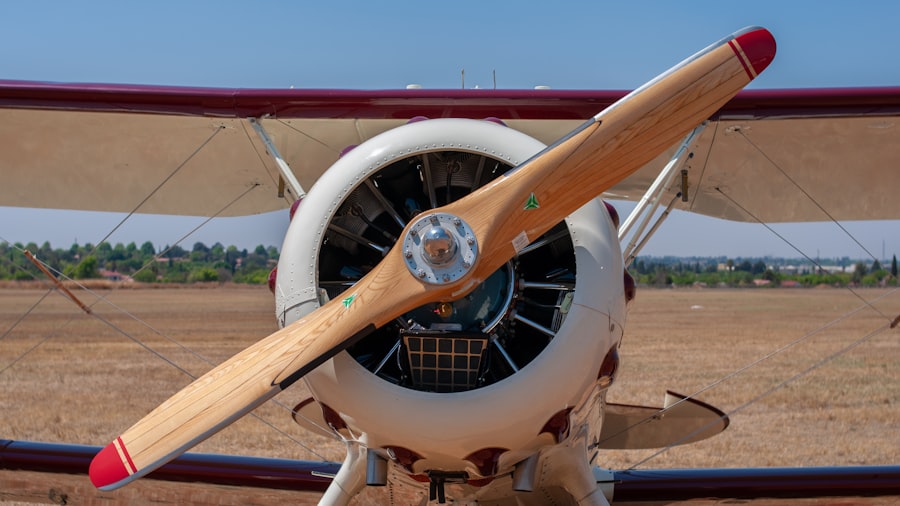
Beyond mere dimensional accuracy, propeller geometry verification plays a pivotal role in ensuring structural integrity. Subtle geometric flaws can act as stress concentrators, initiating cracks and leading to catastrophic failure.
Stress Concentration Points: Identifying Design Vulnerabilities
Certain geometric features inherently create higher stress concentrations. Sharp corners, abrupt changes in thickness, or sudden transitions in curvature are examples of such points. Verification processes are designed to meticulously inspect these areas. By precisely measuring the geometry at these critical locations, engineers can confirm that the manufactured part adheres to the design’s intent to mitigate stress.
Fillet Radii and Edge Break Verification
Fillets and edge breaks are deliberately introduced geometric features designed to smooth out sharp transitions and reduce stress concentrations. Verification ensures that these fillets have the specified radii and that the edge breaks are well-defined. A fillet that is too small or absent entirely can turn a smooth, load-distributing curve into a sharp point, a veritable Achilles’ heel for the propeller.
Material Uniformity and Its Geometric Manifestation
While not strictly a geometric measurement, the uniformity of the propeller’s material has a direct impact on its geometric stability and performance. For composite propellers, which are assembled from layers of material and resin, ensuring consistent ply layup and void-free curing is paramount.
Void Detection via Ultrasonic Testing
Ultrasonic testing is a non-destructive method that uses sound waves to detect internal flaws, such as voids or delaminations, within composite materials. These voids, while not directly geometric measurements, can lead to localized geometric deformation under load or even macroscopic geometric changes if they are extensive. Verification protocols often integrate ultrasonic testing to ensure the material integrity that supports the intended geometry.
Ply Orientation and Adherence in Composite Propellers
For composite propellers, the precise orientation of reinforcing plies is fundamental to achieving the designed stiffness and strength. Incorrect ply orientation can lead to significant deviations in the propeller’s response to applied loads, potentially manifesting as unexpected warpage or flexing. Verification examines the geometric consequences of ply layup errors.
Performance Impact: Directly Linking Geometry to Output

The ultimate objective of propeller geometry verification is to ensure that the manufactured part will perform as designed. Every measured dimension and surface characteristic has a direct or indirect impact on the propeller’s ability to efficiently generate thrust or torque.
Aerodynamic and Hydrodynamic Efficiency Calculations: The Outcome of Precision
The efficiency of a propeller is a complex function of its geometry. Precise adherence to the designed airfoil shapes, pitch distribution, and blade twist ensures that the propeller interacts with the fluid in the most effective way possible, minimizing energy losses due to drag and turbulence.
Blade Surface Finish and Its Role in Flow Separation
The surface finish of a propeller blade, although often considered a finishing touch, is an integral part of its performance. A rough surface can disrupt the intended laminar or turbulent flow over the blade, leading to increased drag and reduced efficiency. Verification often includes measurements of surface roughness to ensure it falls within acceptable parameters, preventing the creation of unwanted flow separation.
Tip Vorticity and Its Relation to Blade Shape
The tips of propeller blades are responsible for generating swirling vortices in the fluid, which represent a loss of energy. The shape and angle of the blade tip play a significant role in influencing the strength and behavior of these tip vortices. Verification ensures that the blade tips are manufactured to the exact profile designed to minimize these energy losses and improve overall efficiency.
Thrust and Torque Prediction: Validating Design Intentions
The culmination of propeller design and manufacturing is its ability to deliver the predicted thrust and torque. Geometric verification provides the necessary assurance that the physical propeller, when tested, will indeed meet these performance targets. Without this rigorous check, the predictions remain theoretical.
Computational Fluid Dynamics (CFD) Model Validation
The data obtained from propeller geometry verification is invaluable for validating Computational Fluid Dynamics (CFD) models. By comparing the geometry of a manufactured propeller to its CFD simulation, engineers can refine their models and gain greater confidence in their predictive capabilities for future designs. This forms a feedback loop for continuous improvement.
Noise and Vibration Characteristics: The Unintended Consequences of Deviation
Deviations in propeller geometry can have significant implications for noise and vibration generation. Imbalances in mass distribution or slight asymmetries in blade shape can lead to uneven loading and excitation of structural resonances.
Blade Unbalance Detection and Correction
Mass imbalance within a propeller is a primary cause of vibration. While not strictly a geometric verification, it is often addressed in conjunction with it. Geometric inaccuracies can contribute to mass imbalance. Verification processes help identify if manufacturing anomalies have created such an imbalance, necessitating correction measures like the addition of weights.
Flow-Induced Noise Mitigation
The way a propeller interacts with the fluid generates noise. Precise geometric features, particularly on the leading and trailing edges of the blades and at the blade tips, are designed to minimize flow-induced noise. Verification ensures these features are faithfully reproduced. Even subtle imperfections can disrupt the intended smooth flow, leading to increased acoustic signatures.
In the realm of aerospace engineering, the verification of propeller geometry through post-processor files is crucial for ensuring optimal performance and safety. A related article that delves deeper into this topic can be found at this link, where you can explore various methodologies and best practices for conducting thorough assessments of propeller designs. Understanding these verification processes is essential for engineers who aim to enhance the efficiency and reliability of their aircraft systems.
The Calibration and Maintenance of Verification Equipment: A Foundation of Trust
| Metric | Description | Unit | Typical Value | Verification Method |
|---|---|---|---|---|
| Blade Length | Length of each propeller blade from hub to tip | mm | 500 – 1500 | Dimensional comparison with CAD model |
| Blade Pitch Angle | Angle of blade relative to the hub axis | Degrees | 15 – 35 | Geometric angle extraction from post-processor file |
| Number of Blades | Total blades on the propeller | Count | 3 – 5 | File metadata and geometry verification |
| Blade Thickness | Maximum thickness of the blade cross-section | mm | 20 – 50 | Cross-sectional profile analysis |
| Hub Diameter | Diameter of the central hub of the propeller | mm | 200 – 600 | Measurement from post-processor geometry data |
| Chord Length | Distance between leading and trailing edge of blade | mm | 100 – 300 | Profile extraction and comparison |
| Surface Area | Total surface area of the propeller blades | cm² | 1500 – 4500 | Computed from mesh data in post-processor file |
| File Format | Type of post-processor file used | String | STL, IGES, STEP | File extension and header inspection |
| Mesh Quality | Quality metric of mesh (e.g., aspect ratio) | Ratio | 1 – 5 | Mesh analysis tools |
| Verification Status | Pass/Fail status of geometry verification | Boolean | Pass / Fail | Automated comparison with design specs |
The accuracy of any verification process is ultimately dependent on the reliability of the equipment used. Ensuring that the tools of measurement are themselves precisely calibrated is paramount.
Traceability to National Standards: The Chain of Accuracy
All measuring equipment used in propeller geometry verification must be traceable to national or international metrological standards. This means that the calibration of the equipment can be systematically linked back to fundamental physical constants through a documented chain. This traceability provides a guarantee of the measurements’ accuracy and validity for regulatory and quality assurance purposes.
Regular Calibration Cycles for CMMs and Scanners
CMMs and optical scanners, due to their complexity and regular use, require frequent calibration. These calibration cycles are determined by the manufacturer’s recommendations, usage patterns, and the criticality of the measurements being performed. A CMM that has drifted out of calibration is like a ruler that has shrunk; its readings are no longer reliable.
Software Validation and Updates: Ensuring Algorithmic Integrity
Geometric verification software plays a crucial role in processing and analyzing the collected data. Ensuring the integrity and accuracy of these algorithms is as important as the hardware they run on.
Verification of Measurement Software Algorithms
The algorithms used to compare point clouds to CAD models, calculate deviations, and perform tolerance analysis must be rigorously verified to ensure they are functioning correctly. Any inaccuracies in these algorithms can lead to misinterpretation of the geometric data.
Regular Software Updates and Patch Management
Manufacturers regularly release software updates to address bugs, improve performance, and introduce new features. Maintaining an up-to-date software suite is essential for ensuring that the verification process is leveraging the most reliable and accurate analytical tools available.
The Human Element: Skill and Interpretation in Verification
While technology provides the tools, the human element remains indispensable in propeller geometry verification. The skill of the operator and the expertise of the engineer interpreting the results are critical for making informed decisions.
Operator Proficiency and Training: The Hands-On Expertise
Operating CMMs, optical scanners, and associated software requires specialized training and a high degree of proficiency. An experienced operator will understand the nuances of setting up the equipment, selecting appropriate measurement strategies, and identifying potential sources of error.
Understanding Measurement Uncertainty and its Impact
Every measurement carries a degree of uncertainty. Skilled operators and engineers understand how to quantify this uncertainty and how it can impact the interpretation of the verification results. This awareness is crucial for avoiding overconfidence in measurements or for identifying situations where further investigation is warranted.
Engineer’s Interpretation and Decision-Making: Translating Data into Action
Ultimately, the geometric data must be interpreted by experienced engineers. They understand the functional implications of the measured deviations and can make informed decisions regarding acceptance, rejection, or the need for corrective action. This is where raw data is transformed into actionable engineering insights.
Root Cause Analysis of Geometric Deviations
When significant deviations are detected, it is the engineer’s responsibility to perform a root cause analysis. This involves investigating the manufacturing process, material properties, and equipment performance to understand why the deviation occurred. This knowledge is vital for preventing future similar issues.
Collaboration with Manufacturing Teams for Process Improvement
Effective propeller geometry verification is not a standalone activity; it requires close collaboration with the manufacturing teams. By sharing verification results and insights, engineers can work with production staff to identify and implement process improvements, thereby enhancing the overall quality and consistency of manufactured propellers. This synergy is the engine that drives continuous improvement in propeller production.
FAQs
What is a post-processor file in the context of propeller geometry verification?
A post-processor file is a data output generated by computer-aided design (CAD) or computer-aided manufacturing (CAM) software that contains detailed information about the propeller’s geometry. It is used to verify that the designed propeller matches the intended specifications before manufacturing.
Why is propeller geometry verification important?
Propeller geometry verification ensures that the dimensions and shape of the propeller conform to design requirements. This is critical for optimal performance, efficiency, and safety of the propeller in its operational environment.
How does a post-processor file assist in verifying propeller geometry?
The post-processor file provides precise geometric data that can be compared against design parameters. Engineers use this data to check for deviations, errors, or inconsistencies in the propeller’s shape, pitch, diameter, and blade angles.
What software tools are commonly used to generate post-processor files for propeller verification?
Common software tools include CAD/CAM programs such as CATIA, SolidWorks, Siemens NX, and specialized marine design software. These tools generate post-processor files compatible with CNC machines and verification systems.
Can post-processor files be used to simulate propeller performance?
While post-processor files primarily contain geometric data, they can be imported into simulation software to analyze hydrodynamic performance, stress distribution, and vibration characteristics, aiding in comprehensive propeller design validation.