
Submarine stealth technology has long been a cornerstone of naval power, enabling submarines to operate undetected in complex and adversarial environments. The reduction of acoustic signatures, radar cross-section, and other detectable emissions is paramount. Historically, this has involved the meticulous application of anechoic coatings, the optimization of hull shapes, and the precise balancing of internal machinery. However, the advent of advanced manufacturing techniques, specifically the computerized milling machine (CMM), offers a paradigm shift in the precision and complexity with which submarine stealth can be engineered. This article will explore the multifaceted capabilities of CMMs in advancing submarine stealth, from the initial design phase to the final fabrication of critical components.
The Silent Enigma
For a submarine, silence is not merely an advantage; it is often the difference between successful mission completion and catastrophic failure. The deep ocean, a realm of immense pressure and limited visibility, becomes an ally to stealthy submarines. However, it is also a medium teeming with potential detection platforms – sonars of various forms, magnetic anomaly detectors, and even highly sensitive optical sensors operating at the surface. The goal of submarine stealth is to become a ghost in this environment, an unseen and unheard presence that can project power or gather intelligence without revealing its position.
Acoustic Signatures: The Submarine’s Fingerprint
The primary method of submarine detection in the underwater domain is acoustic. Every mechanical component, every flow of water over the hull, generates sound waves that can be detected by hydrophones and sonar systems. Reducing these vibrations and the noise they create is a monumental engineering challenge. This involves minimizing cavitation – the formation of bubbles around propellers and control surfaces – reducing machinery noise through sophisticated insulation and vibration damping, and shaping the hull to disrupt the propagation of sound.
Non-Acoustic Stealth Considerations
While acoustics dominate underwater detection, other signatures cannot be ignored, particularly when a submarine operates near the surface or during transit through shallower waters. These include:
Radar Cross-Section (RCS)
When a submarine is close to the surface, its sail and mast structures are vulnerable to radar detection. Stealthier designs aim to minimize RCS by incorporating angled surfaces that deflect radar waves away from the emitter, much like an optical illusion for radio waves.
Magnetic Signatures
The immense electrical currents and steel hull of a submarine generate a magnetic field. While efforts are made to degauss the hull and minimize electrical emissions, this remains a potential detection vector, especially for specialized magnetic anomaly detectors.
Thermal Signatures
Modern submarines generate heat from their propulsion systems, electronics, and personnel. While thermal detection is more effective in air, it can still be a factor in shallow water or when the submarine operates at significantly different temperatures than the surrounding water.
In recent discussions about advancements in military technology, the integration of computerized milling machines into submarine design has emerged as a significant topic, particularly concerning stealth capabilities. A related article that delves deeper into this subject can be found at In The War Room, where experts analyze how precision engineering and advanced manufacturing techniques are enhancing the stealth features of modern submarines, ultimately impacting naval warfare strategies.
The Computerized Milling Machine: Precision Embodied
From Digital Blueprint to Tangible Form
A computerized milling machine is an automated subtractive manufacturing tool. It operates by digitally controlled cutting tools that remove material from a workpiece to create a desired shape. Unlike traditional machining methods that rely on manual operation and often less precise tooling, CMMs are guided by precise computer-aided design (CAD) and computer-aided manufacturing (CAM) software. This digital thread ensures that the resulting component is an almost perfect replica of its digital blueprint, down to fractions of a millimeter.
The Power of Multi-Axis Machining
Modern CMMs often employ multiple axes of movement (e.g., 3-axis, 5-axis). This allows the cutting tool to approach the workpiece from virtually any angle, enabling the creation of highly complex geometries that would be impossible or prohibitively expensive to achieve with conventional machines. Imagine sculpting clay with a tool that can reach every nook and cranny, rather than being limited to straight lines and simple curves.
Material Versatility
CMMs can work with a wide range of materials essential for submarine construction, including high-strength steels, titanium alloys, advanced composites, and specialized polymers. The precision with which these materials can be shaped is crucial for achieving optimal stealth characteristics.
Advancing Hull Design and Fabrication
Hydrodynamic Optimization through Sculpting
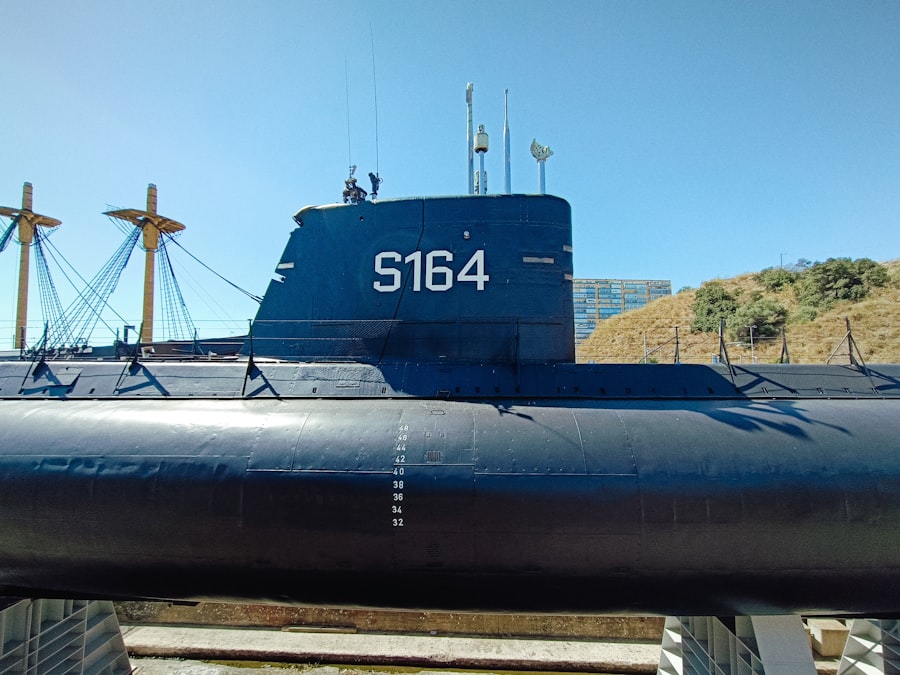
The shape of a submarine’s hull is a critical determinant of its hydrodynamic efficiency and, consequently, its acoustic signature. Cavitation, a primary source of underwater noise, is heavily influenced by the flow of water over the hull. CMMs allow for the creation of incredibly complex and precisely sculpted hull forms that minimize flow separation and turbulence.
Micro-Tolerances for Silent Flow
A hull sculpted by a CMM can incorporate subtle curves and contours that guide water flow with unparalleled smoothness. This reduces the formation of cavitation bubbles, making the submarine significantly quieter. These are not just broad strokes of design but meticulous adjustments at a microscopic level, like refining the ripples on a pond to be barely perceptible.
Anechoic Coating Integration
Modern submarines utilize anechoic coatings – rubber-like tiles that absorb or scatter sonar waves. The precise application and shaping of these coatings are vital. CMMs can be used to create hull surfaces with optimal profiles for the adhesion and effectiveness of these coatings, ensuring they function as intended without creating their own acoustic disturbances.
Precision Propeller and Rudder Fabrication
The propeller is arguably the noisiest component of a traditional submarine. Its blades generate cavitation as they rotate and push water. CMMs play a crucial role in manufacturing propellers with exceptionally precise blade geometries.
Cavitation Reduction through Blade Shaping
By enabling the machining of complex blade profiles, CMMs can optimize the pitch and shape of propeller blades to minimize cavitation. This involves creating intricate curves and twists that ensure smoother water entry and exit, akin to a surgeon’s delicate touch rather than a blacksmith’s hammer, reducing disruptive bubble formation.
Balanced and Optimized Control Surfaces
Rudders and hydroplanes are essential for maneuverability but can also generate significant noise. CMMs allow for the fabrication of these surfaces with extreme precision, ensuring they are perfectly balanced and shaped to minimize drag and turbulence, contributing to a quieter profile.
Stealthy Machinery and Internal Component Manufacturing
Vibration Isolation: The Silent Heart
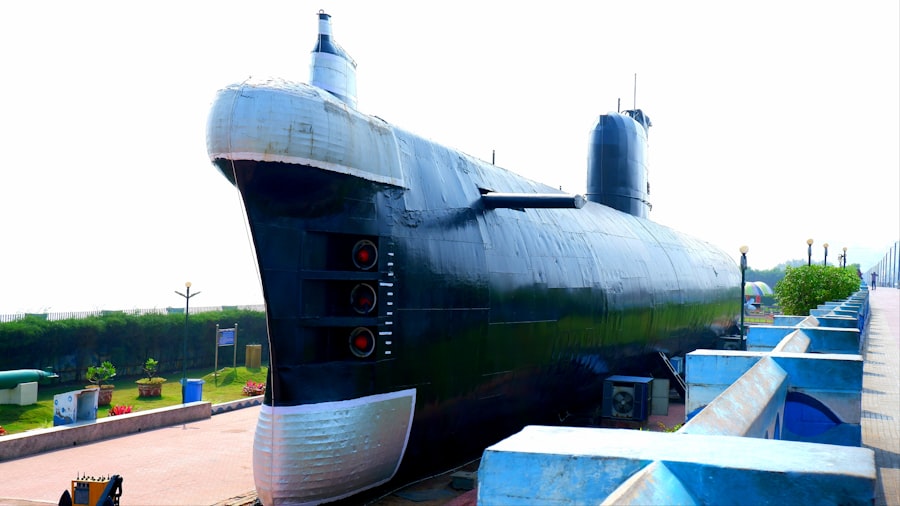
The machinery within a submarine – engines, pumps, generators, and auxiliary systems – are inherently noisy. Isolating these vibrations from the hull is a paramount concern. CMMs enable the precise fabrication of components that facilitate this isolation.
Custom-Engineered Mounting Systems
CMMs can create complex, multi-axis mounts for machinery that are specifically designed to absorb and dampen vibrations. These mounts can be sculpted with internal geometries that dissipate energy, preventing it from transferring to the submarine’s structure and radiating into the water.
Precisely Machined Damping Structures
Materials like viscoelastic polymers are used for damping. CMMs can fabricate structural components that integrate these damping materials with unparalleled accuracy. This ensures the damping material is optimally placed and integrated, acting like a shock absorber for sound.
Internal Loudness Reduction
Even with external stealth measures, internal noise management is critical. CMMs contribute by manufacturing components that inherently produce less noise.
Optimized Gearboxes and Bearings
The meshing of gears and the rotation of bearings are significant noise sources. CMMs can machine these components with extremely tight tolerances, resulting in smoother operation and reduced noise. This is akin to fitting two perfect puzzle pieces together compared to two roughly hewn blocks.
Sound-Absorbing Internal Structures
CMMs can fabricate internal bulkheads and structural elements with integrated sound-absorbing properties. This might involve creating porous internal structures within metal components or precisely machining surfaces to accept acoustic insulation materials effectively.
Recent advancements in technology have significantly enhanced the capabilities of military submarines, particularly through the integration of computerized milling machines that improve stealth features. These machines allow for precise modifications in the submarine’s hull design, reducing noise and radar visibility. For a deeper understanding of how these innovations are shaping modern naval warfare, you can read more in this insightful article on submarine technology advancements at In The War Room.
Applications Beyond the Hull
| Metric | Value | Unit | Description |
|---|---|---|---|
| Surface Roughness | 0.8 | µm Ra | Average surface finish achieved by computerized milling on submarine hull components |
| Dimensional Accuracy | ±0.02 | mm | Tolerance level maintained during milling of stealth submarine parts |
| Material Removal Rate | 150 | cm³/min | Volume of material removed per minute during milling of submarine stealth components |
| Noise Reduction Coefficient | 0.75 | Ratio | Effectiveness of milled surface textures in reducing sonar detection |
| Cycle Time | 45 | minutes | Average time to complete milling of a single stealth panel |
| Tool Wear Rate | 0.03 | mm/hr | Rate of cutting tool degradation during milling operations |
| Thermal Distortion | 0.01 | mm | Maximum deformation due to heat during milling process |
Advanced Sonar Component Fabrication
Ironically, while submarines aim to avoid detection by sonar, they also employ sophisticated sonar systems for their own navigation and threat detection. CMMs are vital in manufacturing these components with the required precision.
Hydrophone Arrays with Unmatched Accuracy
The effectiveness of a sonar array depends on the precise placement and alignment of its hydrophones. CMMs can create housing and mounting structures for these arrays with tolerances that ensure optimal acoustic performance. Imagine an orchestra where every musician is in their exact, pre-determined position for the most harmonious sound.
Transducer Manufacturing
Sonar transducers convert electrical signals into sound waves and vice versa. The precision required for these components to operate efficiently is immense. CMMs can machine the complex internal geometries of these transducers, ensuring optimal signal transmission and reception.
Electronic Warfare and Sensor Integration
Modern submarines are equipped with sophisticated electronic warfare (EW) suites and various sensors. The accurate positioning and integration of these systems are critical for their functionality and stealth.
Precision Antenna Mounts and Housings
EW antennas and other sensors need to be mounted in specific locations and orientations. CMMs can fabricate mounts and housings that ensure these systems are perfectly aligned, minimizing any potential for self-generated interference or unwanted radar/acoustic reflections.
Shielding and Interference Reduction
Complex electronic systems can generate electromagnetic interference. CMMs can be used to create precisely fitted electromagnetic shielding enclosures that minimize interference between systems and reduce outward emissions.
The Future of Submarine Stealth and CMMs
The integration of CMMs into submarine manufacturing represents a significant leap forward in achieving unparalleled levels of stealth. As computational power and material science continue to advance, so too will the capabilities of CMMs.
Additive Manufacturing Synergy
While CMMs are subtractive, they can work in concert with additive manufacturing (3D printing) technologies to create even more complex and integrated components. For instance, a complex internal structure might be 3D printed and then precisely machined by a CMM to achieve the final, highly accurate surface finish and tolerances.
Adaptive Stealth Systems
The ultimate goal is not just a stealthy platform but an actively adaptive one. Future submarines could incorporate systems that, in real-time, adjust their acoustic or radar profiles based on the detected environment. CMMs will be essential in fabricating the highly precise and responsive components needed for such adaptive stealth.
Unseen, Unheard, Unrivaled
The continued evolution of CMM technology promises to make submarines even more elusive. The ability to engineer components with unprecedented precision and complexity fundamentally augments the submarine’s ability to disappear into the ocean’s embrace. As the complexity of the underwater battlespace increases, the role of advanced manufacturing techniques like computerized milling will only become more pronounced in ensuring naval dominance through silent superiority. The CMM, in essence, is turning the very concept of a submarine’s presence into a finely tuned work of art, sculpted from metal and governed by digital precision.
FAQs
What is a computerized milling machine?
A computerized milling machine is a manufacturing tool controlled by a computer numerical control (CNC) system. It precisely cuts, shapes, and drills materials like metal or plastic to create complex parts with high accuracy.
How does computerized milling contribute to submarine stealth?
Computerized milling allows for the precise fabrication of submarine components with complex geometries and smooth surfaces. This precision helps reduce noise and radar signatures, enhancing the submarine’s stealth capabilities.
What materials are typically used in milling submarine parts for stealth?
Materials such as specialized steel alloys, composites, and sound-absorbing coatings are commonly milled to create submarine parts. These materials help minimize acoustic and electromagnetic detection.
Why is precision important in milling submarine components?
Precision ensures that parts fit perfectly and function as intended, reducing mechanical noise and vibrations. This is critical for maintaining the submarine’s stealth by minimizing detectable signatures.
Are computerized milling machines used in other military applications besides submarines?
Yes, computerized milling machines are widely used in various military applications, including aircraft, armored vehicles, and weapon systems, where precision manufacturing is essential for performance and stealth.