The vast, blue expanse of Earth’s oceans, covering over 70% of its surface, remains a frontier largely unexplored and underutilized, particularly in the realm of communication. For centuries, humanity’s reach into the deep has been tethered by the limitations of existing technologies. Sound, while a viable medium for underwater transmission, suffers from bandwidth constraints and susceptibility to environmental interference. Radio waves, the workhorses of terrestrial communication, are rapidly attenuated by saltwater, rendering them ineffective beyond shallow depths. This fundamental communication barrier has been like an invisible wall, separating us from a wealth of scientific discovery, resource management, and potential for human endeavor within the underwater world. However, recent advancements are beginning to dismantle this wall, ushering in an era of revolutionary underwater communication systems that promise to unlock the secrets of the abyss and expand our dominion beneath the waves.
The Physics of Underwater Transmission
Water, unlike air, presents a formidable challenge for electromagnetic wave propagation. Its ionic composition causes rapid absorption and scattering of radio frequencies, dramatically reducing their range and signal strength. This is akin to trying to shine a flashlight through thick fog; the light quickly dissipates. Acoustic waves, on the other hand, travel much further in water than in air, making them the primary method for sonar and long-range underwater communication. However, their speed of propagation is significantly slower than electromagnetic waves, and their bandwidth, the capacity to transmit data, is much more limited. Think of acoustic communication as whispering across a crowded room; the message gets through, but slowly and with potential for misunderstanding. Furthermore, the underwater environment is a dynamic tapestry of currents, temperature gradients, and marine life, all of which can introduce noise and distortion into communication signals.
Existing Technologies and Their Limitations
Historically, underwater communication has relied on a few key technologies, each with its inherent drawbacks. Acoustic modems are widely used for transmitting data between submerged vehicles and surface vessels. These systems are analogous to underwater telephones, sending modulated sound pulses. While effective for basic data transfer, their speeds are measured in kilobits per second, a snail’s pace compared to modern terrestrial networks that operate in gigabits. Physical tethering, using fiber optic cables, provides high bandwidth and reliability but severely restricts mobility. This is like connecting a robot explorer to a ship with a very long extension cord; it can go where the cord allows, but its true freedom is curtailed. Mine-laying operations and the deployment of remote sensing equipment have also utilized specialized signaling methods, but these are often bespoke and lack interoperability.
Underwater communication systems have become increasingly vital for various applications, including military operations, environmental monitoring, and underwater exploration. For a deeper understanding of the challenges and advancements in this field, you can explore a related article that discusses the latest technologies and innovations in underwater communication. Check it out here: Underwater Communication Systems.
Emerging Technologies for Underwater Connectivity
The limitations of conventional methods have spurred intense research and development into novel approaches. These new technologies are not merely incremental improvements but represent paradigm shifts in how we conceive of and achieve underwater communication.
Optical Communication Systems
One of the most promising avenues is the development of optical communication systems. Instead of radio waves or sound, these systems utilize lasers or light-emitting diodes (LEDs) to transmit data encoded in pulses of light. Water is relatively transparent to certain wavelengths of light, particularly blue and green, which are also the wavelengths that penetrate deepest into the ocean.
Blue-Green Lasers
Researchers are focusing on blue-green lasers because they experience less scattering and absorption in water. These lasers can achieve significantly higher data rates than acoustic systems, potentially reaching megabits per second. This is like upgrading from a whisper to a clear spoken word across the room. The development of robust laser systems that can withstand the harsh underwater environment, including pressure and salinity, is crucial.
Free-Space Optical Communication
Free-space optical communication, where light beams travel directly between transceivers without the need for fiber optic cables, is being adapted for underwater applications. This allows for mobile communication between submerged platforms, such as autonomous underwater vehicles (AUVs) or sensor arrays.
Radio Frequency (RF) Communication in Saltwater
While traditional RF communication is hampered by saltwater, researchers are exploring specialized RF techniques that can perform better at limited ranges.
Extremely Low Frequency (ELF) and Very Low Frequency (VLF) Waves
ELF and VLF waves, with their extremely long wavelengths, can penetrate saltwater to a certain extent, albeit with very low data rates. These have been historically used for submarine communication, but their bandwidth is extremely restricted, akin to sending Morse code with very long pauses.
Millimeter-Wave (mmWave) Communication
Advancements in millimeter-wave technology, which operates at higher frequencies than traditional RF, are showing potential for short-range, high-bandwidth underwater communication. Challenges remain in overcoming atmospheric attenuation and the need for line-of-sight transmission, but research into specialized antenna designs and signal processing is ongoing.
Acoustic Communication Advancements
While optical and RF methods are pushing boundaries, there is also ongoing innovation within acoustic communication.
Higher Frequency Acoustics and Advanced Modulation
Employing higher acoustic frequencies can increase bandwidth, but this comes at the cost of reduced range due to increased absorption. Significant progress is being made in developing advanced modulation and coding techniques to extract more data from acoustic signals and to mitigate the effects of noise and multipath propagation. This is like developing sophisticated translation software to better understand faint or distorted sounds.
Underwater MIMO (Multiple-Input Multiple-Output)
Inspired by terrestrial wireless systems, underwater MIMO techniques are being explored to improve the reliability and data rates of acoustic communication by using multiple transmitters and receivers.
Hybrid Systems: The Best of Both Worlds
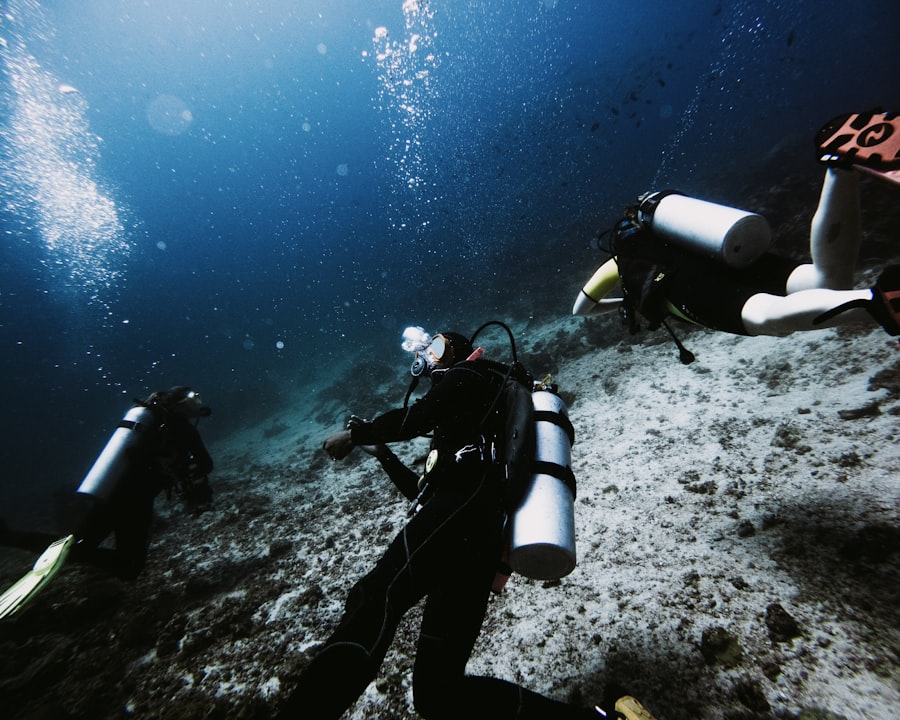
Recognizing that no single technology is a panacea, researchers are increasingly focusing on hybrid communication systems. These systems aim to leverage the strengths of different approaches to overcome individual limitations and create more robust and versatile underwater networks.
Integrating Optical and Acoustic Modems
One common hybrid approach involves combining optical and acoustic communication modules. An acoustic modem can be used for initial connection establishment and long-range, low-bandwidth communication, while an optical modem can be engaged for high-bandwidth data transfer once a close proximity or line-of-sight connection is established. This is like using a walkie-talkie to find someone in a large building and then switching to a direct phone call once you’re in the same room.
Leveraging RF for Short-Range, High-Speed Links
In certain underwater scenarios, such as within a cluster of synchronized AUVs or between a deployed sensor and a nearby submersible, specialized short-range RF systems might be employed. This could allow for rapid data offloading or command execution.
The Role of Underwater Relays and Networks
The development of underwater communication networks necessitates the deployment of strategically placed relay nodes. These nodes can act as intermediaries, receiving data from one source and retransmitting it to another, effectively extending the range and coverage of communication.
Autonomous Underwater Vehicle (AUV) Swarms
AUVs can be programmed to form dynamic communication networks, relaying data between themselves and to surface vessels, creating a mobile communication infrastructure.
Fixed Underwater Sensor Networks
Deployed sensor arrays equipped with communication capabilities can form static networks, collecting and transmitting environmental data.
Applications and Implications of Revolutionary Underwater Communication

The ability to communicate effectively beneath the waves opens a floodgate of opportunities across numerous sectors.
Scientific Research and Exploration
The deep sea is Earth’s last great frontier, holding immense scientific potential. Revolutionary underwater communication systems will be instrumental in facilitating deeper and more extensive oceanographic research.
Real-Time Data Acquisition
Scientists will be able to receive real-time data from deep-sea probes, remotely operated vehicles (ROVs), and autonomous underwater vehicles (AUVs) equipped with advanced sensors. This allows for immediate analysis and adaptive mission planning, much like a surgeon receiving immediate feedback during an operation.
Enhanced Submersible Operations
Improved communication will enable more sophisticated control and coordination of submersibles, allowing for complex exploration missions and the deployment of delicate scientific instruments with greater precision.
Resource Management and Exploration
The oceans are a vital source of resources, from hydrocarbons to minerals and marine life. Efficient and widespread underwater communication is crucial for sustainable management and exploration.
Offshore Oil and Gas Operations
Communication systems are vital for monitoring underwater infrastructure, controlling drilling operations, and ensuring the safety of personnel in offshore environments. Enhanced systems will allow for greater automation and remote oversight, reducing risks.
Subsea Mining
As subsea mining technologies develop, reliable communication will be essential for guiding mining equipment, monitoring resource extraction, and transmitting data about seabed conditions.
Maritime Security and Defense
The underwater domain is also an area of significant strategic interest. Advanced communication systems are critical for a range of military and security applications.
Submarine and Surface Vessel Coordination
Real-time communication between submarines and surface fleets allows for enhanced tactical coordination and situational awareness.
Undersea Surveillance and Monitoring
The ability to deploy and monitor networks of underwater sensors for detecting unauthorized activity or tracking vessels is greatly enhanced by robust communication capabilities.
Aquaculture and Marine Biotechnology
The growing field of aquaculture, the farming of aquatic organisms, will also benefit significantly from improved underwater communication.
Environmental Monitoring in Fish Farms
Sensor networks can continuously monitor water quality, temperature, and the health of farmed species, allowing for proactive management and optimization of yields.
ROV-Assisted Aquaculture Operations
ROVs equipped with advanced communication can perform tasks such as inspecting nets, delivering feed, and collecting samples without direct human intervention in the water.
Underwater communication systems have become increasingly important for various applications, including military operations, environmental monitoring, and underwater exploration. A related article that delves deeper into the advancements and challenges of these systems can be found at In the War Room. This resource provides valuable insights into the technologies being developed to enhance communication capabilities beneath the surface, highlighting both innovative solutions and ongoing research efforts.
Future Outlook and Challenges Ahead
| Parameter | Description | Typical Range/Value | Unit | Notes |
|---|---|---|---|---|
| Communication Medium | Type of medium used for signal transmission | Acoustic, Optical, Radio Frequency | – | Acoustic is most common underwater |
| Frequency Range | Operating frequency of the communication system | 10 Hz – 1 MHz (Acoustic), 400–800 THz (Optical) | Hz / THz | Lower frequencies travel farther underwater |
| Data Rate | Maximum achievable data transmission rate | Up to 100 kbps (Acoustic), up to Gbps (Optical) | bps | Optical systems offer higher data rates but shorter range |
| Range | Maximum communication distance | Up to 10 km (Acoustic), up to 100 m (Optical) | meters / kilometers | Range depends on water conditions and system design |
| Latency | Time delay in signal transmission | ~1.5 s per km (Acoustic) | seconds | Speed of sound in water ~1500 m/s |
| Power Consumption | Energy used by communication devices | 0.5 – 5 W | Watts | Varies with transmission power and system type |
| Modulation Techniques | Methods used to encode data onto carrier signals | FSK, PSK, OFDM | – | OFDM improves data rate and robustness |
| Bit Error Rate (BER) | Rate of errors in received data | 10^-3 to 10^-6 | – | Depends on channel conditions and error correction |
While the trajectory of underwater communication is undeniably upward, several significant hurdles must be overcome to fully realize its potential. The ocean remains a harsh and unforgiving environment, and the technologies we deploy must be robust, reliable, and energy-efficient.
Environmental Resilience and Durability
Designing communication hardware that can withstand extreme pressures, corrosive saltwater, and prolonged immersion is a fundamental challenge. This requires the development of advanced materials and sealing techniques.
Power Efficiency and Longevity
Many underwater applications rely on battery-powered devices. Developing communication systems that are highly power-efficient is paramount to extending operational lifetimes and reducing the need for frequent battery replacements or recharging, a complex logistical operation underwater.
Standardization and Interoperability
As various communication technologies emerge, establishing industry standards for a common communication protocol will be crucial for seamless integration and the establishment of truly interconnected underwater networks. This will prevent the proliferation of proprietary systems that cannot communicate with each other, much like the early days of different computer operating systems.
Cost-Effectiveness and Scalability
The widespread adoption of advanced underwater communication systems will depend on their cost-effectiveness and scalability. Developing solutions that are affordable for a broad range of applications, from scientific research to commercial ventures, will be key to unlocking the full potential of the underwater realm. The cost of developing and deploying these systems can be significant, akin to building a new city in an inaccessible location.
Addressing the “Last Mile” Problem Underwater
Just as the “last mile” problem refers to the final link in terrestrial communication networks, a similar challenge exists underwater. Effectively connecting a multitude of isolated underwater devices to a larger network, and ultimately to the internet, remains a complex engineering feat. This may involve a tiered approach, with data being aggregated at various points before reaching a surface or satellite connection.
The Need for Continued Investment and Research
The ongoing revolution in underwater communication is not an endpoint but a continuous journey. Sustained investment in research and development, coupled with collaboration between academia, industry, and government agencies, will be essential to overcome the remaining challenges and to fully harness the transformative power of connected oceans. The potential rewards – scientific discovery, sustainable resource utilization, and enhanced human endeavors – are immense, making this a frontier truly worth exploring and connecting.
FAQs
What are underwater communication systems?
Underwater communication systems are technologies designed to transmit information between devices or people located underwater. These systems use various methods such as acoustic signals, radio waves, or optical signals to enable communication in underwater environments.
What types of signals are commonly used in underwater communication?
The most common signals used in underwater communication are acoustic signals, due to their ability to travel long distances underwater. Radio waves and optical signals are also used but typically for shorter ranges because water attenuates these signals more quickly.
What are the main challenges of underwater communication?
Challenges include signal attenuation, multipath propagation, limited bandwidth, and high latency. Water properties such as salinity, temperature, and pressure also affect signal transmission, making reliable communication underwater more complex than in air.
Where are underwater communication systems typically used?
They are used in various applications including submarine communication, underwater robotics, environmental monitoring, oil and gas exploration, and scientific research to transmit data and coordinate activities beneath the water surface.
How do underwater acoustic modems work?
Underwater acoustic modems convert digital data into sound waves that travel through water. These modems transmit and receive acoustic signals, which are then decoded back into data, enabling communication between underwater devices over distances ranging from a few meters to several kilometers.