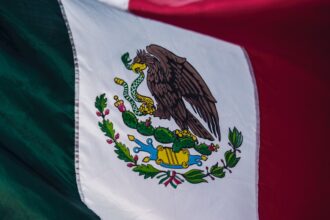
The Mexican American War, a conflict often painted in broad strokes of manifest destiny and territorial acquisition, harbors a more intricate narrative, particularly when examined through the lens of popular sovereignty. This doctrine, the idea that settlers in a territory should decide for themselves whether to permit slavery, became a central, and ultimately incendiary, element of the Mexican Cession. Its implementation, or the very prospect of its implementation, acted like a fault line, widening fissures within the American union and foreshadowing the cataclysm of the Civil War. For the reader navigating this tumultuous period, understanding popular sovereignty’s role is akin to deciphering a complex legal code, where seemingly straightforward principles masked deeply divisive intentions.
Before the first shots were fired, the United States harbored a burgeoning appetite for expansion. Texas, having declared independence from Mexico in 1836, sought annexation by its powerful northern neighbor. This desire was met with considerable enthusiasm in the U.S., fueled by the idea of westward expansion. Mexico, however, viewed Texas as a rebellious province and its potential annexation as a direct affront.
The Lone Star Republic’s Embrace of the United States
Mexico’s inability to reclaim Texas after its independence proved to be a significant point of contention. The newly formed Republic of Texas quickly looked to the United States, not just for recognition, but for eventual incorporation into the Union. This aspiration was nurtured by a shared cultural and economic proximity, and for many Texans, annexation was the natural next step.
Mexican Displeasure and the Border Dispute
The Mexican government, however, never formally recognized Texas’s independence. From their perspective, Texas remained a part of Mexico, and any movement towards U.S. annexation was an act of aggression. This fundamental disagreement over Texas’s status was exacerbated by disputes over the southern border of Texas, with the U.S. claiming the Rio Grande and Mexico asserting the Nueces River. This not only created a tangible point of friction but also served as a symbolic representation of the clashing claims over territory and legitimacy.
Manifest Destiny and the Ideological Fuel
The concept of “Manifest Destiny,” popular in the mid-19th century, provided an ideological justification for American territorial expansion. This belief posited that the United States was divinely ordained to expand its dominion and spread democracy across the North American continent. While not universally accepted, it resonated powerfully with many Americans, creating a fertile ground for aggressive foreign policy and territorial acquisition. The Mexican American War, viewed through this lens, was seen by proponents as a righteous endeavor, a necessary step in fulfilling America’s perceived destiny.
The Mexican-American War, a pivotal conflict in the mid-19th century, significantly influenced the concept of popular sovereignty in the United States, particularly regarding the expansion of slavery into new territories. For a deeper understanding of how these events intertwined and shaped the political landscape of the era, you can explore a related article that delves into the implications of popular sovereignty during this tumultuous period. To read more, visit this article.
The War and its Aftermath: Acquiring Vast Territories
The Mexican American War, commencing in 1846, was a relatively swift conflict. American military superiority quickly led to decisive victories, culminating in the capture of Mexico City. The Treaty ofAxisAlignment of Guadalupe Hidalgo in 1848 brought the war to a close, ceding over 525,000 square miles of territory to the United States. This vast acquisition, stretching from the present-day Southwest to California, presented a new and formidable challenge for the young nation.
The Treaty of Guadalupe Hidalgo: A Defining Moment
The treaty itself was a landmark agreement, formally ending hostilities and redefining the geopolitical landscape of North America. Mexico, under duress and facing overwhelming military defeat, was compelled to cede a substantial portion of its northern territories. For the United States, it was a moment of immense territorial triumph, a significant expansion of its landmass and economic potential.
The Spoils of War: California, New Mexico, and Beyond
The newly acquired territories encompassed rich mineral resources, fertile agricultural lands, and strategic ports. California, with its promise of gold, quickly became a focal point of national attention. The vast expanse of New Mexico, encompassing present-day Arizona, Nevada, Utah, and parts of Colorado and Wyoming, also represented a significant territorial addition. This massive influx of land was not merely a geographic expansion; it was an expansion of possibilities, promising new frontiers for settlement and economic development.
The Lingering Mexican Presence
It is crucial to remember that this land was not uninhabited wilderness. It was home to indigenous populations and long-established Mexican communities. The Treaty of Guadalupe Hidalgo included provisions for the protection of these inhabitants and their property rights. However, the reality of westward expansion and the subsequent influx of American settlers often marginalized and dispossessed these original inhabitants, creating a legacy of enduring tension and injustice.
The Emergence of Popular Sovereignty: A Compromise in Name Only
As the question of organizing the newly acquired territories became paramount, so too did the issue of slavery. The Missouri Compromise of 1820 and the Compromise of 1850 had attempted to maintain a delicate balance between free and slave states. However, the vast new territories created by the Mexican American War threatened to shatter this fragile equilibrium. It was in this crucible of tension that the doctrine of popular sovereignty emerged as a purported solution, but one that would ultimately prove to be a deeply divisive wedge.
The Calhoun Doctrine and States’ Rights
The debate over slavery in the territories was not new. Senator John C. Calhoun, a staunch defender of slavery and states’ rights, had long argued that the federal government had no authority to prohibit slavery in the territories. He contended that territories were the common property of all states, and their residents, upon settlement, should have the right to determine their own domestic institutions, including slavery. This idea of federal non-intervention formed a crucial intellectual foundation for popular sovereignty.
Lewis Cass and the “Wise and Salutory Neglect”
Senator Lewis Cass of Michigan is often credited with popularizing the term “popular sovereignty” in the context of the Mexican Cession. He proposed that the settlers in the newly acquired territories should decide the question of slavery for themselves, rather than having it imposed by the federal government. This approach was framed as a democratic and pragmatic solution, allowing local populations to govern their own affairs.
The Appeal of the Middle Ground
For many in both the North and the South, popular sovereignty held an initial appeal. Northern anti-slavery proponents saw it as a way to prevent the expansion of slavery into new territories without directly confronting the issue of slavery in the existing slave states. Southern proponents, while wary, also saw an opportunity. They believed that in new, undeveloped territories, slaveholding interests might well prevail, thus expanding the institution rather than confining it. It offered, at least on the surface, a compromise that could avoid the explosive confrontation over federal power.
Popular Sovereignty in Action: The Kansas-Nebraska Act and its Fallout
The doctrine of popular sovereignty received its most significant and, ultimately, destructive legislative embodiment in the Kansas-Nebraska Act of 1854. This act, championed by Senator Stephen Douglas, repealed the Missouri Compromise, which had prohibited slavery in territories north of the 36°30′ parallel. The Kansas-Nebraska Act declared that the question of slavery in the Kansas and Nebraska territories would be decided by the settlers themselves.
Stephen Douglas and the “Little Giant’s” Gamble
Stephen Douglas, a powerful orator and a master of legislative maneuvering, believed that popular sovereignty was the key to resolving the escalating sectional crisis. He saw it as a way to appease both North and South and facilitate the organization and settlement of these western lands. His gamble, however, was to underestimate the deep moral and political chasm that the issue of slavery had created.
Repealing the Missouri Compromise: A Catalyst for Violence
The repeal of the Missouri Compromise was a seismic event in American politics. For decades, it had served as a foundational agreement, a fragile dam holding back the flood of sectional animosity. Its dismantling was seen by many in the North as a betrayal and a capitulation to Southern slaveholding interests. This act directly paved the way for the violent confrontations that would soon erupt.
“Bleeding Kansas”: The Grim Reality of Popular Sovereignty
The implementation of popular sovereignty in Kansas proved to be a disastrous experiment. Pro-slavery and anti-slavery settlers flooded into the territory, each determined to shape its future according to their own vision. This led to a period of intense violence and political turmoil, known as “Bleeding Kansas.” Border ruffians from Missouri, many of whom were armed and organized, crossed into Kansas to cast fraudulent votes and intimidate anti-slavery settlers.
Fraudulent Elections and Dual Governments
The electoral process in Kansas was plagued by widespread fraud. Pro-slavery forces, bolstered by external support, managed to install a pro-slavery legislature, even though the majority of actual residents were opposed to slavery. This resulted in the establishment of two competing governments in Kansas: one pro-slavery and one anti-slavery, each claiming legitimacy.
The Sack of Lawrence and John Brown’s Revenge
The escalating tensions culminated in events like the Sack of Lawrence in 1856, where a pro-slavery posse destroyed much of the town, the center of anti-slavery activity. In response, radical abolitionist John Brown and his followers engaged in acts of retaliatory violence, most notably the Pottawatomie Massacre, further inflaming the conflict and solidifying the image of Kansas as a bloody battleground.
The Dred Scott Decision: A Judicial Blow to Popular Sovereignty
While “Bleeding Kansas” raged, the Supreme Court issued a landmark decision in Dred Scott v. Sandford in 1857. The Court ruled that African Americans, whether enslaved or free, were not citizens and therefore had no standing to sue in federal court. Crucially, the Court also declared that Congress had no power to prohibit slavery in the territories, effectively rendering the Missouri Compromise unconstitutional and undermining the very foundation of popular sovereignty.
Chief Justice Taney’s Majority Opinion
Chief Justice Roger B. Taney’s majority opinion was a profound pronouncement that struck at the heart of the sectional debate. By declaring that territories were essentially open to slavery for any citizen, it fundamentally changed the legal landscape. The idea that settlers could choose to exclude slavery was now legally untenable in the eyes of the highest court.
The Impact on the Political Landscape
The Dred Scott decision was a devastating blow to the anti-slavery movement and a victory for pro-slavery forces. It further polarized the nation, eroding any remaining faith in the judiciary as a neutral arbiter of the slavery question. For proponents of popular sovereignty, it represented a crushing legal defeat, demonstrating the limitations of their approach when confronted with the fundamental constitutional arguments of the South.
The Mexican-American War significantly influenced the concept of popular sovereignty in the United States, as it raised critical questions about the expansion of slavery into newly acquired territories. This conflict not only reshaped borders but also ignited debates over whether the residents of these territories should have the right to decide their own laws regarding slavery. For a deeper understanding of how these events intertwined, you can explore a related article that discusses the implications of the war on American politics and society at this link.
The Legacy of Popular Sovereignty: A Prelude to Secession
| Topic | Details | Significance |
|---|---|---|
| Mexican-American War | 1846-1848 conflict between the United States and Mexico | Resulted in U.S. acquisition of vast territories in the Southwest |
| Territorial Gains | Included California, Nevada, Utah, Arizona, New Mexico, and parts of Colorado and Wyoming | Expanded U.S. territory by about 525,000 square miles |
| Popular Sovereignty | Political doctrine allowing settlers of a territory to decide on the legality of slavery | Attempted to ease sectional tensions over slavery in new territories |
| Compromise of 1850 | Legislation that applied popular sovereignty to Utah and New Mexico territories | Delayed the outbreak of the Civil War by addressing slavery in new territories |
| Impact on Slavery Debate | Mexican Cession intensified debates over slavery expansion | Popular sovereignty was a key mechanism to manage sectional conflict |
The experiment with popular sovereignty, born out of a desire for compromise and peaceful territorial organization, ultimately proved to be a tragic miscalculation. Instead of bridging the divide between North and South, it acted as a powerful accelerant, pushing the nation closer to the brink of secession. The violence in Kansas and the Supreme Court’s ruling revealed the deep-seated irreconcilability of the slavery question.
The Erosion of Trust and Increased Polarization
The events of “Bleeding Kansas” and the Dred Scott decision irrevocably damaged any trust that remained between the different sections of the country. The North viewed the South as increasingly aggressive in its demands for the expansion of slavery, while the South saw the North as unwilling to respect their constitutional rights. Popular sovereignty, meant to be a unifying force, had instead become a symbol of sectional division and mistrust.
The Republican Party’s Rise and the Election of 1860
The failures of popular sovereignty and the perceived expansion of slavery provided fertile ground for the emergence of the Republican Party. Founded on an anti-slavery platform, the Republicans championed a vision of national unity and free labor, directly challenging the dominance of pro-slavery forces. The election of Abraham Lincoln in 1860, the first Republican president, was a direct consequence of this coalescing opposition to the expansion of slavery. The South viewed his election as an existential threat to their way of life.
The Unraveling of the Union
The election of Lincoln, without a single electoral vote from the Deep South, signaled the final unraveling of the Union. Southern states, believing their interests and institutions were no longer safe within the United States, began to secede. The doctrine of popular sovereignty, intended to offer a democratic solution, had, in its implementation and interpretation, contributed significantly to the climate of fear and division that ultimately led to the outbreak of the Civil War. It stands as a stark reminder that political doctrines, when divorced from a genuine commitment to justice and equality, can become potent instruments of discord.
Conclusion: A Complex Legacy of Territorial Expansion and Division
The Mexican American War, a pivotal moment in American history, bestowed upon the nation vast new territories, but also bequeathed a complex and fraught legacy regarding the issue of slavery. The doctrine of popular sovereignty, introduced as a seemingly pragmatic and democratic solution to this burgeoning crisis, proved to be a double-edged sword. While it aimed to empower settlers, it ultimately amplified sectional animosities, leading to violence and legal crises.
The narrative of popular sovereignty is not a simple tale of good versus evil, or even of straightforward political maneuvering. It is a story of compromise gone awry, of well-intentioned but ultimately flawed attempts to navigate an irreconcilable moral and political chasm. The ghosts of “Bleeding Kansas” and the pronouncements of the Dred Scott decision serve as enduring testaments to the profound impact of this doctrine, a doctrine that, in its quest for a peaceful resolution, inadvertently charted a direct course toward the most devastating conflict in American history. For the reader, this history offers a crucial lesson: that the most seemingly neutral of principles can carry within them the seeds of immense conflict when they engage with deeply entrenched moral and economic interests, acting like cracks in a foundation that, when stressed, can lead to a catastrophic collapse. The Mexican American War and its attendant struggle over popular sovereignty laid bare the deep fissures within the American union, cracks that would ultimately widen into the chasm of civil war.
FAQs
What was the Mexican-American War?
The Mexican-American War was a conflict between the United States and Mexico that took place from 1846 to 1848. It was primarily caused by the U.S. annexation of Texas and disputes over the Texas-Mexico border. The war ended with the Treaty of Guadalupe Hidalgo, which resulted in the U.S. acquiring a large portion of Mexico’s northern territories.
What is popular sovereignty in the context of U.S. history?
Popular sovereignty was a political doctrine in the mid-19th century United States that allowed the settlers of a federal territory to decide for themselves whether to allow slavery. It was intended as a compromise to ease tensions between pro-slavery and anti-slavery factions.
How did popular sovereignty relate to the Mexican-American War?
The Mexican-American War led to the acquisition of new territories, raising the question of whether slavery would be permitted in these areas. Popular sovereignty was proposed as a way to let the residents of these new territories decide the issue of slavery, which became a significant factor in the debates over the expansion of slavery in the U.S.
What was the impact of the Mexican-American War on the issue of slavery?
The war intensified the national debate over slavery because the new territories acquired raised the question of whether they would be free or slave states. This debate contributed to sectional tensions that eventually led to the American Civil War.
What was the Treaty of Guadalupe Hidalgo?
The Treaty of Guadalupe Hidalgo was the peace agreement signed in 1848 that ended the Mexican-American War. Under the treaty, Mexico ceded a large portion of its northern territory to the United States, including present-day California, Arizona, New Mexico, and other states, significantly expanding U.S. territory.