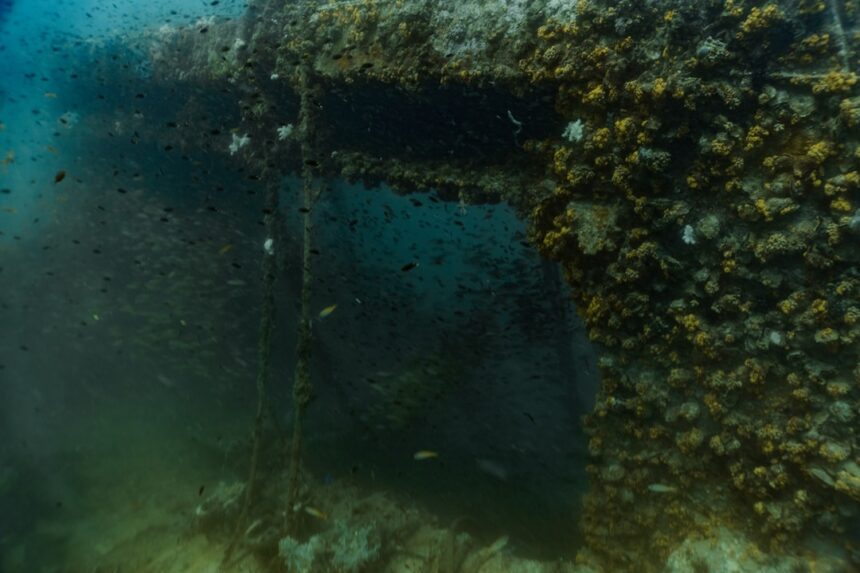
The ocean’s depths hold countless secrets, and among them lies the enigmatic demise of the Soviet submarine K-129. Launched in 1960, this diesel-electric powered ballistic missile submarine was the pride of the Soviet Pacific Fleet, a silent hunter lurking in the vast expanse of the Pacific Ocean. Its mission, shrouded in the Cold War’s characteristic cloak of secrecy, was to patrol the waters off the coast of Hawaii, a spectral sentinel in the ongoing arms race. Yet, on March 8, 1968, K-129 vanished without a trace, leaving behind a chilling void in the operational records of the Soviet Navy. The exact circumstances of its sinking remain a subject of intense speculation, a riddle that has captivated historians, naval enthusiasts, and intelligence agencies for decades.
The Soviet Navy’s submarine force was a crucial element of its military might during the Cold War. These underwater behemoths were designed to project power and pose a significant threat to Western naval capabilities. K-129, a Project 629A class submarine, was part of this formidable force, a weapon system configured to carry nuclear-tipped ballistic missiles. Its operational patrols were characterized by stealth and strategic positioning, its existence a constant, unseen pressure on the geopolitical landscape. The disappearance of such a vessel was not merely a loss of hardware; it was a profound blow to the Soviet’s perceived unassailability at sea and a tantalizing puzzle for the intelligence apparatus of the United States.
The Cold War Context: A Global Chessboard
The 1960s were a period of heightened tension between the United States and the Soviet Union. The world was divided into two ideological camps, locked in a struggle for global influence. The nuclear arms race was in full swing, with both superpowers developing increasingly sophisticated weaponry. Submarines, particularly those capable of launching ballistic missiles, were seen as the ultimate deterrent, capable of delivering a devastating retaliatory strike from the ocean’s depths, unseen and largely invulnerable. K-129’s mission, therefore, was not an isolated patrol; it was a strategic maneuver in this grand, perilous game of global chess.
K-129: A Profile of a Cold War Predator
The K-129 (NATO reporting name: Golf-Class) was a diesel-electric submarine, a common design for the Soviet Navy at the time. These vessels offered a balance of endurance and stealth, capable of extended submerged operations. K-129 was armed with three R-21 (SS-N-5 Serb) Submarine-Launched Ballistic Missiles, each capable of carrying a nuclear warhead. Its hull was designed for deep submergence, allowing it to evade detection and operate in challenging oceanic environments. Its crew comprised approximately 90 officers and enlisted men, all trained professionals dedicated to the silent service. The operational tempo for submarines like K-129 was demanding, involving long patrols far from home ports, often in treacherous weather and in close proximity to hostile forces.
The sinking of the K-129 submarine in 1968 remains a topic of intrigue and speculation, with various theories surrounding the incident. For a deeper understanding of the events leading up to the submarine’s tragic fate, you can read a related article that explores the geopolitical context and technical challenges faced by the Soviet Navy during that era. This article provides valuable insights into the possible reasons behind the K-129’s sinking and its implications for Cold War naval strategy. To learn more, visit this article.
The Last Transmission and the Vanishing Act
The final known communication from K-129 occurred on March 8, 1968. The submarine was on patrol in the North Pacific, approximately 1,500 miles northwest of Hawaii. Its last radio transmission was routine, indicating no immediate distress. Following this, the submarine simply ceased to exist on the radar screens and communication logs of the Soviet Navy. The absence was not gradual; it was abrupt, like a candle suddenly snuffed out in the darkness. This sudden silence sent ripples of concern through the Soviet command structure, triggering a search that stretched for weeks but ultimately yielded nothing concrete.
A Routine Patrol or Something More?
The exact nature of K-129’s mission on that fateful patrol remains a subject of debate. Some analyses suggest it was conducting a routine intelligence-gathering mission, probing U.S. defenses or monitoring naval activity. Others propose that it might have been engaged in a more provocative act, perhaps a simulated attack or testing the operational limits of its missile systems. The Soviet Navy, steeped in secrecy, offered no definitive explanation for the disappearance, fueling the mystery. The lack of any distress signal is particularly perplexing, as it implies that the catastrophe was swift and all-encompassing, leaving no opportunity for the crew to broadcast a call for help.
The Echo of Silence: The Soviet Search Effort
The Soviet Union initiated a search operation for the missing submarine. However, the vastness of the Pacific Ocean presented a formidable challenge. Without a precise location, the search became akin to finding a needle in an ocean-sized haystack. The limited search capabilities of the era, coupled with the unwillingness of the Soviet Union to openly acknowledge the extent of their concerns or involve international assistance, meant that their efforts, while undoubtedly extensive, were likely to be insufficient. The ocean guards its secrets jealously, and K-129 had seemingly been swallowed whole.
The American Discovery: Operation Ivy Bells and the Shadow of Intelligence

While the Soviet Union grappled with the loss of its submarine, the United States, through its sophisticated intelligence network, was also aware of K-129’s patrol. The U.S. Navy’s Sound Surveillance System (SOSUS), a network of underwater hydrophones, had detected the submarine’s activity. The subsequent disappearance triggered heightened interest from American intelligence agencies. In a remarkable feat of espionage and engineering, the U.S. launched a top-secret operation, codenamed Operation Ivy Bells, to locate and recover the wreck of K-129. This operation, conceived in the shadows of the Cold War, was a testament to the lengths nations would go to gain an advantage over their adversaries.
The Art of Listening: SOSUS and the Hydrophone Network
The Sound Surveillance System was a critical component of U.S. anti-submarine warfare capabilities. Deployed across the ocean floor, these sensitive hydrophones could detect the acoustic signatures of submarines from great distances. SOSUS acted as the ocean’s nervous system, relaying vital auditory information to intelligence analysts. It was through this system that the U.S. Navy was able to track K-129’s movements and, crucially, note its abrupt silence. The loss of K-129, therefore, became not just a concern for the Soviets but a prime intelligence opportunity for the United States, a chance to examine Soviet technology firsthand.
The Daring Dive: Project Azorian
The culmination of U.S. intelligence efforts was Project Azorian, a covert operation aimed at recovering K-129 from the ocean floor. The U.S. built a massive specialized ship, the Glomar Explorer, designed to lift the submarine from a depth of approximately 16,000 feet. The operation was masked by a cover story of deep-sea manganese nodule mining, a plausible explanation for the unusual vessel and its extensive equipment. The sheer audacity and technical complexity of Project Azorian underscore the perceived strategic importance of K-129 to the United States. The potential to gain insights into Soviet missile technology, nuclear capabilities, and submarine design was an irresistible prize.
The Wreckage Unearthed: Clues and Conundrums
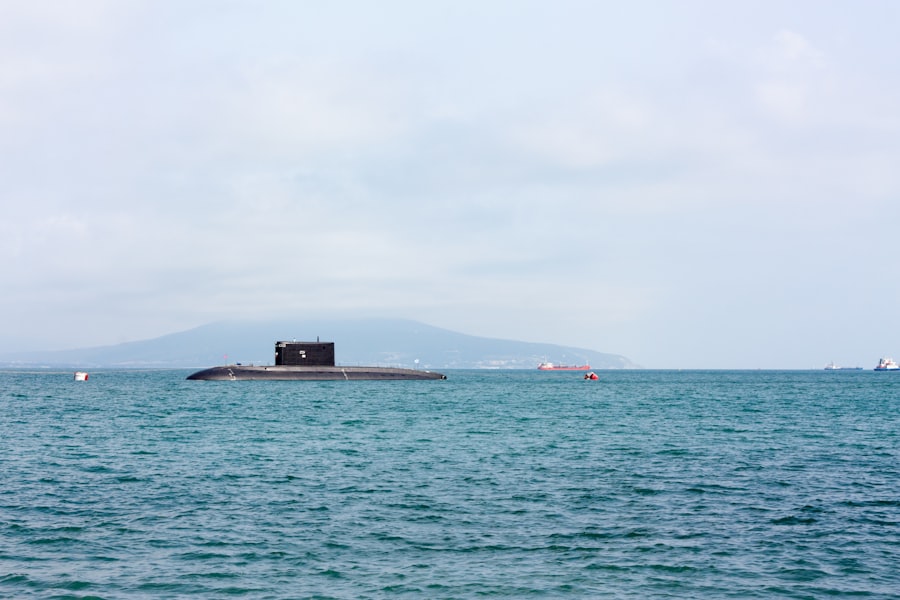
In 1974, after years of meticulous planning and execution, Operation Azorian achieved a partial success. The Glomar Explorer managed to raise a significant portion of the K-129 wreck. However, the recovery was not entirely complete. A critical section of the submarine, believed to contain the missile compartment and possibly the nuclear warheads, broke off during the ascent and sank back to the ocean floor. Despite this setback, the recovered wreckage provided invaluable data, though the precise findings have remained largely classified, feeding the ongoing speculation.
The Partial Victory: What Was Recovered?
The recovered sections of K-129 offered a tantalizing glimpse into the submarine’s final moments. Forensic analysis of the hull indicated structural failures consistent with a catastrophic event. The presence of collapsed sections and bent metal suggested immense external pressure and a sudden, violent incident. Crew remains were also recovered, providing a somber testament to the human cost of the disaster. However, the lack of the missile section left a crucial piece of the puzzle missing, preventing a definitive analysis of what might have triggered the sinking.
The Silent Witness: The Unanswered Questions
Despite the recovery effort, the fundamental question of why K-129 sank remained elusive. Several theories emerged, each with its proponents and detractors. The secrecy surrounding Project Azorian further fueled these hypotheses, as the U.S. government was reticent to divulge details that could compromise their intelligence-gathering methods. The very act of recovering the wreck, while providing some answers, also generated more questions, creating a rich tapestry of speculation that continues to this day.
The sinking of the K-129 submarine in 1968 remains a topic of intrigue and speculation, with various theories attempting to explain the tragic event. Some experts suggest that mechanical failure or human error could have played significant roles in the incident. For a deeper understanding of the factors that may have contributed to this maritime disaster, you can explore a related article that discusses the complexities surrounding the K-129’s mission and its eventual fate. To read more about this fascinating subject, visit this article.
Theories of the Deep: Accidents, Attacks, and the Unseen Hand
| Metric | Details |
|---|---|
| Submarine Name | K-129 |
| Year of Sinking | 1968 |
| Location | North Pacific Ocean |
| Cause of Sinking | Unknown; suspected internal explosion or collision |
| Possible Explosion Type | Ballast tank or missile compartment explosion |
| Collision Theory | Possible collision with US submarine USS Swordfish (unconfirmed) |
| Depth at Sinking | Approximately 5,000 meters (16,400 feet) |
| Recovery Efforts | Project Azorian by CIA to recover parts of the submarine |
| Significance | Cold War espionage and nuclear submarine technology |
The absence of a clear cause of sinking has allowed a multitude of theories to blossom in the fertile ground of conjecture. These range from catastrophic internal failures to external intervention, each attempting to fill the void left by the ocean’s silence. Understanding these theories requires an appreciation of the inherent risks of submarine operations and the volatile geopolitical climate of the Cold War.
The Internal Meltdown: Catastrophic Accident Theories
One of the most prevalent theories points to an internal accident as the cause of K-129’s demise. This could have involved a missile system malfunction, a battery explosion, or a hull breach due to structural failure.
The Missile Malfunction Hypothesis
- A Fateful Launch Test: It is theorized that K-129 was conducting a missile test or a simulated launch when something went horribly wrong. A faulty igniter, an unstable propellant, or a miscalculation in the launch sequence could have led to a catastrophic explosion within the missile tubes or the hull itself. The immense explosive force would have been more than sufficient to break the submarine apart and send it to the depths in moments. The R-21 missiles were powerful weapons, and their mishmi handling would have been an ever-present risk.
- The Battery Catastrophe: Diesel-electric submarines rely on large battery banks to power their submerged operations. A hydrogen leak from these batteries, combined with an ignition source, could trigger a devastating explosion. Such an event is known to have caused other submarine disasters, and its speed and ferocity are well-documented. This would explain the lack of distress calls, as the explosion would have been almost instantaneous, incapacitating the crew and compromising the hull.
The Hull Integrity Concern
- Material Fatigue and Pressure: Submarines operate under immense pressure at depth. Material fatigue, a flaw in the hull’s construction, or damage sustained during a previous operation could have led to a sudden, catastrophic implosion under the crushing weight of the ocean. The deep operating depths of K-129 would have put its hull integrity to the ultimate test.
The External Intervention: Was K-129 Attacked?
The tense atmosphere of the Cold War raises the possibility of external intervention, with the United States being the most likely candidate. While the U.S. Navy officially denies any involvement in sinking K-129, some theories suggest otherwise.
The Accidental Collision
- The Unseen Enemy: It is plausible that K-129, operating in a sensitive theater of operations, might have accidentally collided with another vessel. The crowded waters of the Pacific, particularly with naval forces from both sides actively patrolling, meant that such a possibility, however remote, could not be entirely dismissed. A collision, especially with a larger or more heavily armed vessel, could have inflicted fatal damage.
The Deliberate Attack
- A Preemptive Strike? Some theories propose that the U.S. Navy might have deliberately attacked K-129, perhaps to prevent it from launching its nuclear missiles or to secure intelligence. However, there is no direct evidence to support such a claim, and a deliberate attack would have been an extremely risky undertaking, with the potential for escalation. The discovery of the wreck by the U.S., however, does lend a certain weight to the idea that they might have had a vested interest in its disappearance.
The Espionage Angle: A Spy Gone Wrong?
While less discussed, the possibility of espionage activities gone awry cannot be entirely discounted.
The Unforeseen Consequence of Intelligence Operations
- A Covert Mission Interrupted: K-129 might have been involved in a covert operation that encountered unforeseen dangers. This could have ranged from encountering enemy reconnaissance assets to an operational entanglement that led to its destruction. The intricate web of intelligence operations during the Cold War often involved a high degree of risk.
The Legacy of Mystery: A Cautionary Tale from the Abyss
The story of K-129 remains an enduring enigma, a stark reminder of the inherent dangers of naval warfare and the secrets that lie buried beneath the waves. The lost submarine, a silent tomb for its crew, continues to serve as a potent symbol of the Cold War’s hidden conflicts and the profound sacrifices made by those who served in the silent service. The questions surrounding its demise echo from the abyss, a testament to the enduring power of the unknown.
The Human Cost: A Crew Lost to the Deep
At the heart of the K-129 mystery is the tragic loss of its 90-man crew. These individuals, like many who serve in submarines, volunteered for a life of extreme isolation and inherent risk. Their ultimate fate, shrouded in the ocean’s embrace, remains a poignant aspect of the K-129 story. The recovered remains, though few, offer a tangible connection to the human element of this maritime disaster. Their families were left with unanswered questions, a void where loved ones once were, a wound that never truly healed.
The Unfinished Puzzle: What Remains Unexplored?
While Project Azorian provided fragments of the truth, the complete picture of K-129’s sinking remains elusive. The missing section of the submarine, holding what were likely the keys to its final moments, rests in the crushing darkness of the ocean floor. The classified nature of intelligence operations means that further revelations are unlikely to emerge soon, if ever. The mystery of K-129 is a testament to the ocean’s capacity to hold its secrets, a vast, dark canvas where speculation and fact often blur. It serves as a poignant parable of ambition, risk, and the ultimate power of nature.
FAQs
What was the K-129 submarine?
The K-129 was a Soviet Golf II-class ballistic missile submarine that sank in 1968 in the Pacific Ocean.
When did the K-129 submarine sink?
The K-129 submarine sank in March 1968.
What caused the sinking of the K-129 submarine?
The exact cause of the sinking remains uncertain, but theories include a possible internal explosion, collision, or mechanical failure.
Where did the K-129 submarine sink?
The K-129 sank in the North Pacific Ocean, approximately 1,560 nautical miles northwest of Hawaii.
What efforts were made to recover the K-129 submarine?
The United States launched a secretive recovery operation called Project Azorian in the early 1970s to retrieve parts of the submarine from the ocean floor.