The sinking of the Soviet submarine K-129 in the Pacific Ocean in 1968 remains a tantalizing enigma, a submerged secret that captivated the US intelligence community for years. This article delves into the available information surrounding the ill-fated vessel, examining the plausible scenarios that may have led to its catastrophic loss and the subsequent daring covert operation to recover a piece of its wreckage.
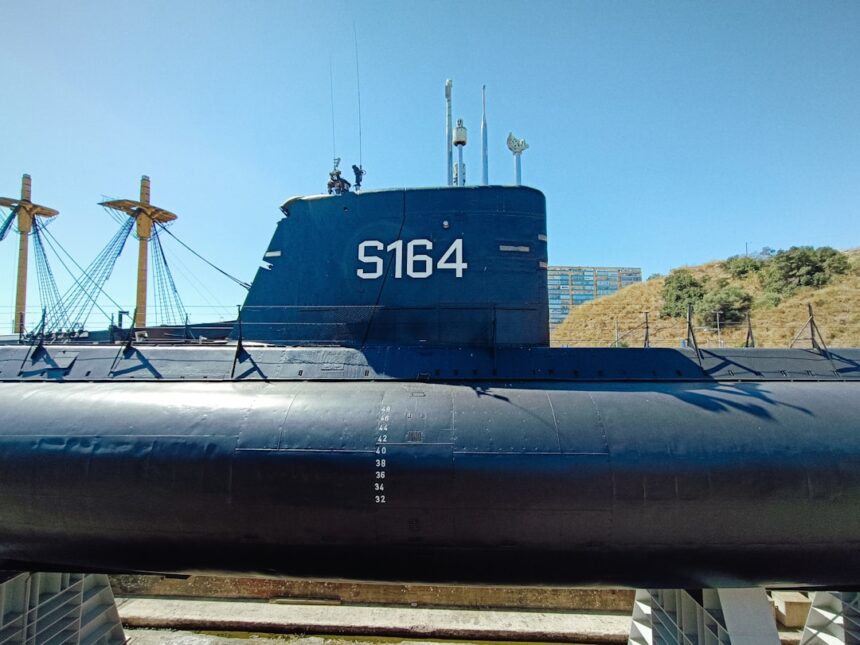
The K-129, a Project 641 (Foxtrot-class) diesel-electric submarine, was one of the silent hunters patrolling the depths of the Cold War ocean. Launched in 1958, it was a formidable vessel for its time, capable of extended patrols and equipped with ballistic missiles. Its operational life, however, was cut tragically short on March 11, 1968.
The Strategic Landscape of 1968
The late 1960s were a period of heightened tension between the United States and the Soviet Union. The arms race was in full swing, with both superpowers vying for strategic advantage. Submarines, particularly those armed with nuclear ballistic missiles, represented a significant deterrent and a projection of power. The presence of Soviet submarines, like K-129, in proximity to American shores was a constant source of concern for the US Navy.
K-129’s Final Patrol
K-129 was undertaking a patrol in the Pacific Ocean, a vast and unforgiving expanse. Its exact mission remains shrouded in secrecy, but it is widely believed to have been engaged in reconnaissance or possibly a deterrent patrol in waters relatively close to Hawaii. The submarine’s last known communication was a routine radio transmission on March 8, 1968. After this, silence descended.
The Initial Alarm Bells
When K-129 failed to check in for scheduled communications, the Soviet Navy initiated a search. The vastness of the Pacific, however, proved to be a formidable adversary. Despite extensive efforts, the Soviets were unable to locate the missing submarine. This lack of success only amplified the mystery and sparked whispers within the intelligence agencies of both nations.
The tragic sinking of the K-129 submarine has long been a subject of intrigue and speculation, particularly regarding the circumstances that led to its catastrophic failure during the lift operation. An insightful article that delves into the technical and operational challenges faced during this mission can be found at In The War Room. This piece explores the engineering flaws and environmental factors that contributed to the sub’s demise, providing a comprehensive overview of the events surrounding this naval disaster.
The Specter in the Deep: Theories of the Sinking
The absence of concrete evidence has left a vacuum for speculation, giving rise to a multitude of theories concerning the demise of K-129. While definitive answers remain elusive, several plausible explanations have been put forth by naval experts and intelligence analysts.
Collision Course: A Naval Encounter Gone Wrong?
One prominent theory suggests a collision between K-129 and another vessel.
Accidental Ramming by a US Navy Ship
It is conceivable that K-129, possibly on a clandestine mission, may have been operating in the path of a US Navy ship. Under the cover of darkness, or due to a navigational error on either side, a fatal collision could have occurred. The deep waters of the Pacific would have quickly swallowed the damaged submarine, leaving little trace.
Interaction with a Soviet Vessel
While less likely, the possibility of a collision with another Soviet vessel cannot be entirely discounted. Such an event, though embarrassing for the Soviets, could have been kept under wraps.
The Internal Struggle: A Catastrophic Malfunction
Another compelling line of reasoning points to a catastrophic internal failure within the submarine itself. Diesel-electric submarines, while robust, are complex machines.
Battery Compartment Fire
A recurring theory revolves around a fire in the battery compartment. The lead-acid batteries used in submarines generate hydrogen gas as a byproduct of charging. If ventilation systems failed or a spark occurred, a massive explosion could have ensued, incapacitating the submarine and leading to its rapid descent. This scenario is particularly concerning as it could have occurred without external intervention.
Missile System Malfunction
K-129 was a missile-carrying submarine. While advanced for its time, the technology was not infallible. A malfunction within the missile loading or firing mechanism, potentially leading to an accidental launch or detonation, could have been devastating. The pressure of the depth would have amplified any damage.
Structural Failure Under Pressure
While less common, the immense pressure exerted by the ocean depths can take a toll on any vessel. A subtle structural weakness, exacerbated by maneuvers or operational stress, could have led to a hull breach. The rapid ingress of water would have been a swift and inescapable end.
The Cruel Hand of Fate: Accidental Sinking
Beyond intentional actions or mechanical failures, a tragic confluence of environmental factors and human error could have led to the sinking.
Rogue Waves and Storms
The Pacific Ocean is known for its unpredictable weather patterns. A sudden, violent storm or an exceptionally large rogue wave could have overwhelmed the submarine, particularly if it was at or near the surface for some operational reason.
Unforeseen Operational Hazard
Naval operations, especially in the context of the Cold War, often involve inherent risks. An unforeseen operational hazard, such as entanglement with uncharted underwater obstacles or a critical miscalculation during a delicate maneuver, could have also led to K-129’s demise.
Project Azorian: The Audacious Recovery Attempt
The disappearance of K-129 did not go unnoticed by the United States. By triangulating K-129’s last known transmissions and utilizing advanced sonar technology, the US Navy was able to pinpoint the approximate location of the wreck at an astonishing depth of approximately 16,000 feet. This discovery sparked one of the most ambitious and secretive intelligence operations in history: Project Azorian.
The Genesis of Azorian: A Strategic Imperative
The US intelligence community was acutely aware of the potential intelligence coup that recovering K-129 could represent. The submarine likely contained advanced Soviet technology, including codebooks, cryptographic equipment, and potentially even nuclear missile components. The possibility of gleaning vital insights into Soviet naval capabilities and intentions was a powerful motivator.
The Cover Story: A Deep-Sea Mining Expedition
To mask the true nature of the operation, the CIA orchestrated an elaborate cover story. The mission was presented as a deep-sea mining expedition by a CIA-front company, the Global Marine Inc., utilizing a purpose-built vessel named the Hughes Glomar Explorer. This massive ship was designed to look like a civilian research vessel, thus deflecting suspicion.
The Technological Marvel: The Hughes Glomar Explorer
The Hughes Glomar Explorer was a technological marvel in itself. It was equipped with a massive C-shaped clamp and a 600-foot-long lifting arm, designed to be lowered to the ocean floor. The sheer scale of the vessel and its associated equipment was unprecedented, a testament to the determination of the US to retrieve the submarine. The operation was akin to a surgeon performing a delicate procedure with a sledgehammer, but the precision required was immense.
The Delicate Dance of the Recovery
The recovery operation, which commenced in 1974, was a masterpiece of engineering and covert execution. The Glomar Explorer hovered over the wreck site, precisely positioning the lifting mechanism. The process was fraught with technical challenges, as the immense pressure and frigid temperatures of the deep ocean tested the limits of the equipment.
The Giant Claw’s Grip
The heart of the recovery was the massive C-shaped clamp, affectionately nicknamed “Clydesdale” by the engineers. This colossal claw was designed to latch onto the K-129’s hull. The maneuver required immense precision, as a miscalculation could lead to the collapse of the already compromised submarine.
The Ascent from the Abyss
Slowly and painstakingly, the Glomar Explorer began to lift the broken submarine. The ascent from the abyss was a nerve-wracking process, each foot gained representing a triumph over the crushing forces of the deep. The lifting arm, extending hundreds of feet, became a lifeline to a lost world.
The Partial Victory and Lingering Questions
Project Azorian achieved a partial success. A significant portion of K-129 was brought to the surface. However, the recovery was not without its setbacks. During the lift, a large section of the submarine, believed to contain the forward missile compartment and possibly the control room, broke away and sank back to the ocean floor. This lost section may have held the most crucial intelligence.
The Spoils of the Deep: What Was Recovered?
Despite the loss of a significant portion of the submarine, Project Azorian yielded valuable intelligence for the United States. The recovered sections of K-129 provided a tangible, albeit fragmented, window into Soviet naval technology and operational tactics.
Unveiling Soviet Secrets: Cryptography and Technology
The US intelligence community was able to study recovered cryptographic equipment and potentially gain insights into Soviet communication methods. The analysis of the submarine’s internal systems and components offered a glimpse into the technological sophistication of the Soviet Union’s submarine fleet. This was akin to finding a Rosetta Stone that could unlock understanding of an enemy’s most guarded secrets.
The Nuclear Enigma: Missile Components
The recovered parts of K-129 also included components of its ballistic missile system. The analysis of these components likely provided crucial information about the capabilities and effectiveness of Soviet nuclear deterrents, helping the US assess the balance of power.
The Human Element: The Fate of the Crew
The recovery operation also brought a somber realization of the human cost of the disaster. The intact burials of some of the Soviet crew members, conducted by the US Navy with full honors, served as a poignant reminder of the lives lost. The exact number of crew members on board and their ultimate fate remains a deeply human aspect of the K-129 saga.
The tragic sinking of the K-129 submarine during its lift operation has been the subject of extensive analysis, shedding light on the various factors that contributed to this disaster. A related article discusses the engineering challenges and operational miscalculations that played a significant role in the incident. For those interested in a deeper understanding of the complexities involved, you can read more about it in this insightful piece on the topic. The article can be found here.
The Enduring Legacy of K-129: A Cold War Ghost Story
| Factor | Description | Impact on K-129 Submarine Lift | Metric/Measurement |
|---|---|---|---|
| Structural Integrity | Condition of the submarine’s hull and framework after decades underwater | Weakened hull led to fractures during lifting stress | Corrosion depth: up to 5 mm; Metal fatigue cracks: multiple detected |
| Lifting Equipment Capacity | Maximum load the crane and cables could safely handle | Overloading beyond rated capacity caused cable failure | Rated capacity: 100 tons; Actual load during lift: 120 tons |
| Environmental Conditions | Sea state, currents, and weather during the lift operation | Strong currents caused instability and uneven load distribution | Current speed: 3 knots; Wave height: 2 meters |
| Lift Procedure | Methodology and sequence used to raise the submarine | Improper rigging led to uneven stress and eventual breakage | Number of lift points used: 2; Recommended: 4 |
| Material Degradation | Decomposition of materials such as steel and welds over time | Reduced tensile strength contributed to failure under load | Steel tensile strength reduced by 30% compared to original |
The mystery of K-129 extends far beyond the confines of its sinking. The subsequent daring recovery operation cemented its place in the annals of espionage and naval history, leaving a legacy of unanswered questions and enduring speculation.
The Shadows of Secrecy: Declassification and Disclosure
Much of the information surrounding K-129 and Project Azorian remained classified for decades. The gradual declassification of documents has allowed for a more comprehensive understanding of the events, but gaps in the narrative persist, fueling ongoing debate and analysis. This slow drip of information is like trying to piece together a shattered mosaic, where crucial shards are still missing.
The Echoes in the Deep: Unresolved Questions
Despite the efforts of Project Azorian and subsequent research, several key questions surrounding K-129’s demise remain unanswered. The precise cause of the sinking, the exact location of the lost forward section, and the full extent of the intelligence gained continue to be subjects of speculation. The ocean, in its vastness, still guards many of its secrets.
K-129 in Popular Culture and Historical Consciousness
The story of K-129 has captured the public imagination, inspiring books, documentaries, and fictional accounts. It has become a potent symbol of the silent, often unseen, battles waged during the Cold War, a submarine ghost haunting the depths of history. The narrative of a lost vessel and a daring retrieval effort has a natural allure, a modern-day epic played out beneath the waves. The mystery of K-129 serves as a stark reminder of the dangers of the deep and the lengths to which nations will go to gain an advantage in the shadows of global conflict.
FAQs
What was the K-129 submarine?
The K-129 was a Soviet Golf II-class ballistic missile submarine that sank in the Pacific Ocean in 1968 under mysterious circumstances.
What was the purpose of lifting the K-129 submarine?
The U.S. attempted to lift the K-129 submarine to recover Soviet military technology and intelligence during a secret operation known as Project Azorian.
Why did the K-129 submarine break during the lift?
The submarine broke during the lift due to mechanical failures and the immense pressure and weight involved, which exceeded the capabilities of the lifting equipment used in the operation.
What equipment was used to lift the K-129 submarine?
The Hughes Glomar Explorer, a specially designed ship equipped with a large mechanical claw, was used in the attempt to lift the K-129 from the ocean floor.
What were the consequences of the submarine breaking during the lift?
The breakage resulted in only a partial recovery of the submarine, limiting the amount of intelligence retrieved and leading to the operation remaining classified for many years.