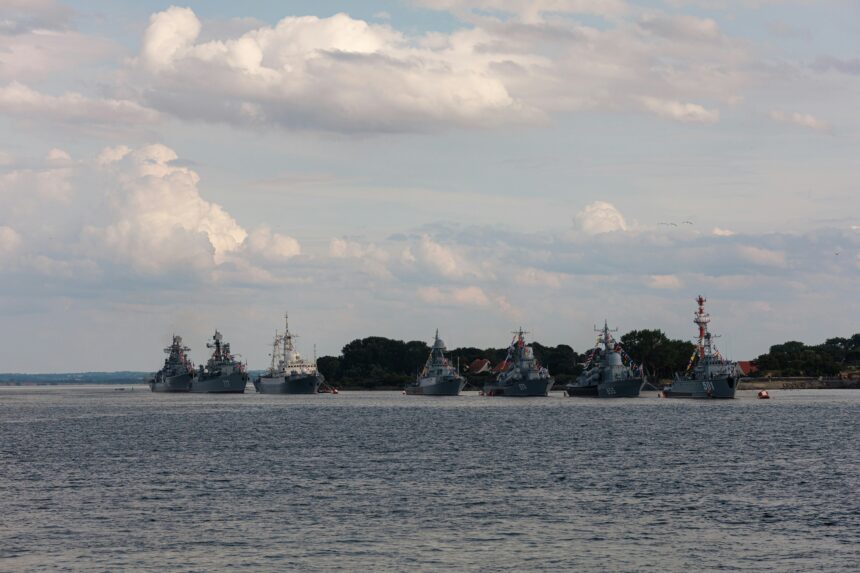
The frigid, often ice-bound waters of the White Sea served as a crucial crucible for Soviet naval research and development for decades. Far from the prying eyes of the West, this vast inland sea, with its challenging environmental conditions, provided a natural laboratory for testing and refining a formidable array of naval technologies. The trials conducted here were not mere exercises; they were intricate operations, designed to push the boundaries of what was possible in a world poised on the brink of nuclear confrontation. Imagine a blacksmith meticulously hammering red-hot iron, shaping it with focused intent under immense pressure. The White Sea trials were the Soviet Union’s equivalent, forging its naval power in the crucible of its unforgiving northern frontier.
Geographic Significance of the White Sea
The White Sea, a gulf of the Arctic Ocean, occupies a strategic position in the northwestern corner of Russia. Its relatively sheltered waters, despite the harsh climate, offered a protected testing ground. For the Soviet Union, this region was more than just a geographical location; it was a vital artery. Its ports, such as Severodvinsk and Arkhangelsk, were home to significant shipbuilding facilities and naval bases. The sea itself served as a crucial transit route, connecting inland industrial centers to the wider Arctic and, eventually, the Atlantic. Its isolation from major Western naval theaters also provided a degree of operational security, a precious commodity in the Cold War. The sheer vastness of the White Sea and its often impenetrable ice cover presented unique challenges that necessitated dedicated and often arduous research efforts.
The Cold War Context: A Shadow Play of Naval Power
The period of the Cold War cast a long shadow over all military research, and Soviet naval endeavors were no exception. The primary objective was to counter the perceived threat of the United States Navy, particularly its growing fleet of nuclear-powered submarines armed with ballistic missiles. The White Sea trials were intrinsically linked to this overarching strategic goal. They were a silent, yet potent, manifestation of the arms race, a constant striving to outmaneuver and out-innovate a formidable adversary. The Soviet Union understood that naval power, especially submarine warfare, was an asymmetric advantage if properly developed. The White Sea was the forge where this potential was hammered into reality, often with the silent hum of submarines and the rhythmic churn of testing equipment as the soundtrack.
Developing Counter-Submarine Capabilities
A significant driver for White Sea trials was the development of systems to detect, track, and neutralize enemy submarines. The deep, cold waters, far from being a hindrance, became an asset in this regard. Sonar technology, crucial for underwater detection, was rigorously tested in these challenging acoustic environments. The varying salinity, temperature gradients, and the presence of ice could all affect sonar performance, and the White Sea provided a realistic, if unforgiving, proving ground. Soviet researchers worked to develop active and passive sonar systems, towed arrays, and even experimental airborne and surface-based detection methods, all honed against the backdrop of the White Sea’s unique characteristics. It was a constant battle of wits and technology, like a game of underwater chess played beneath the icy surface.
The Soviet naval research conducted during the White Sea trials has been a significant area of study for historians and military analysts alike. These trials not only tested the capabilities of Soviet naval technology but also provided insights into the strategic maritime operations of the era. For a deeper understanding of the implications of these trials on naval warfare, you can read a related article at In The War Room.
Submarine Technology: The Silent Service Under Scrutiny
Hull Integrity and Deep Dive Testing
The very essence of submarine warfare lies in its ability to operate undetected beneath the waves. For Soviet submarines, particularly the larger and more ambitious designs, the White Sea provided an ideal location for testing the limits of their hull integrity. Deep dive tests were conducted to determine the maximum operational depths and the structural resilience of the pressure hull. These were not casual dives; they were calculated risks, pushing the metal and rivets to their breaking point to understand the safety margins and identify areas for improvement. The crushing pressure of hundreds of meters of water is a formidable foe, and the White Sea’s considerable depths offered the perfect arena to understand how these steel leviathans would fare under such extreme duress.
Acoustic Signature Reduction
Reducing a submarine’s acoustic signature—the noise it makes—is paramount for stealth. The White Sea’s relatively quiet waters, compared to busy shipping lanes, allowed for the precise measurement and analysis of different noise reduction techniques. This included the testing of anechoic tiles designed to absorb sonar pings, the refinement of propeller designs to minimize cavitation noise, and the development of engine silencing technologies. Soviet engineers meticulously analyzed the soundscapes generated by their submarines, striving to make them as invisible to enemy ears as a whisper in a silent cathedral.
Weapon System Integration and Launch Trials
The White Sea was also a vital venue for testing the complex integrated weapon systems of Soviet submarines. This included the launch of various torpedo types, ranging from conventional to wire-guided and even torpedoes designed to carry nuclear warheads. Crucially, submerged ballistic missile launch trials were a recurring and immensely significant part of White Sea operations, particularly for the R-29 and later R-39 families of SLBMs. The White Sea, with its deep waters and proximity to launch control facilities, offered a secure and controlled environment for these high-stakes tests. Each successful launch was a testament to the complex choreography of systems, from the targeting and firing mechanisms to the propulsion and guidance of the missile itself, all orchestrated beneath the icy surface.
Surface Fleet Innovations: Projecting Power in the North

Seaworthiness and Ice Navigation
While submarines often drew the spotlight, the Soviet surface fleet also benefited immensely from White Sea trials. Testing the seaworthiness of warships in the often-turbulent northern waters was crucial. This included evaluating their stability in heavy seas, their performance in high winds, and their ability to operate in adverse weather conditions. A significant challenge unique to the White Sea was ice navigation. Soviet engineers and naval architects developed and tested specialized hull designs, ice-breaking technologies, and operational procedures for operating warships and auxiliaries in partially or fully iced-over conditions. This was not merely about moving ships; it was about maintaining operational capability in an environment that could easily turn a vessel into a prisoner of the ice.
Advanced Radar and Electronic Warfare Systems
The vast expanse of the White Sea provided an ideal environment for testing the effectiveness of advanced radar and electronic warfare (EW) systems. Surface ships engaged in exercises designed to simulate various threat scenarios, allowing for the evaluation of radar detection ranges, jamming capabilities, and counter-jamming measures. The relative lack of clutter from commercial shipping in some areas of the White Sea allowed for a more focused assessment of these critical combat systems. This was akin to a pilot testing the precision of their instruments in a clear, wide-open sky, allowing for the identification of even the smallest anomalies.
Amphibious Assault Doctrine and Capabilities
The White Sea, with its numerous coastline variations and inlets, was also used to develop and test Soviet amphibious assault doctrine and capabilities. Exercises involving the landing of troops and equipment from landing craft and other amphibious vessels were conducted to refine tactics, coordination, and the effectiveness of specialized landing ships. The ability to project power ashore, even in a challenging sub-Arctic environment, was a critical component of Soviet military strategy, and the White Sea served as a vital training ground for these operations.
Environmental Challenges and Naval Adaptations

The Impact of Ice: A Constant Adversary
The omnipresent threat of ice was arguably the most defining environmental characteristic of White Sea trials. Ice floes, pack ice, and the annual freeze-up presented formidable obstacles to naval operations. Soviet naval engineers and shipbuilders were forced to develop unique solutions. This included the design of reinforced hulls, specialized propulsion systems capable of breaking through ice, and advanced meteorological forecasting to predict ice movement and formation. The development of icebreaker technology was also a significant area of research, ensuring that even when the sea froze over, Soviet naval presence and research could continue. It was a persistent battle against an element that sought to immobilize and isolate.
Extreme Cold and Operational Readiness
The extreme cold of the White Sea presented a host of operational challenges. Machinery could freeze, personnel could suffer from frostbite, and the very materials used in shipbuilding could become brittle. Rigorous testing was conducted to ensure that all naval equipment, from complex electronics to simple mechanical linkages, could function reliably in sub-zero temperatures. This involved developing specialized lubricants, heating systems, and personal protective equipment for sailors. Maintaining operational readiness in such an unforgiving climate required a deep understanding of material science and human physiology under duress.
Acoustic Propagation in Cold Water
The acoustic properties of water change with temperature and salinity. The Cold War-era emphasis on sonar meant that understanding how sound propagated through the frigid waters of the White Sea was critical. Researchers meticulously studied the effects of these environmental factors on sonar performance, developing models and algorithms to compensate for temperature gradients and other anomalies. This meticulous attention to detail was like a cartographer carefully charting the unseen currents and depths of a complex waterway, ensuring that every echo and ping could be accurately interpreted.
The Soviet naval research conducted during the White Sea trials has been a subject of considerable interest among historians and military analysts. These trials provided valuable insights into the capabilities and limitations of Soviet naval technology during the Cold War era. For a deeper understanding of the implications of these trials on naval strategy, you can explore a related article that discusses the broader context of Soviet naval operations. This article can be found here, offering a comprehensive overview of the strategic importance of the White Sea in Soviet maritime history.
The Legacy of White Sea Trials: Shaping the Modern Soviet Navy
| Trial Date | Vessel Name | Trial Type | Location | Duration (days) | Key Metrics | Outcome |
|---|---|---|---|---|---|---|
| 1967-08-15 | K-3 Leninsky Komsomol | Submarine Endurance Test | White Sea | 30 | Max Depth: 300m, Silent Running Duration: 72 hrs | Successful |
| 1972-05-10 | Project 670 Skat | Acoustic Signature Measurement | White Sea | 15 | Noise Level: 85 dB, Speed: 20 knots | Data Collected |
| 1978-09-22 | Project 971 Shchuka-B | Sonar System Calibration | White Sea | 20 | Sonar Range: 15 km, Detection Accuracy: ±5% | Calibration Completed |
| 1985-07-05 | Project 949 Granit | Missile Launch Trials | White Sea | 10 | Missile Range: 600 km, Launch Success Rate: 100% | Successful |
| 1990-11-12 | Project 945 Barrakuda | Stealth Capability Assessment | White Sea | 25 | Radar Cross Section: Reduced by 30%, Acoustic Signature: Reduced by 20% | Positive Results |
Technological Advancements and Their Impact
The relentless research and testing conducted in the White Sea yielded significant technological advancements that shaped the Soviet Navy for decades. The development of increasingly quiet and deep-diving submarines, capable of carrying advanced ballistic missiles, was directly influenced by these trials. Innovations in sonar, radar, and electronic warfare were also refined in this demanding environment, contributing to the Soviet Union’s ability to project power and maintain a credible deterrent. The knowledge gained here was a seed that bloomed into the formidable naval capabilities that the Soviet Union eventually possessed.
The Birth of Submarine-Launched Ballistic Missile Deterrence
Perhaps the most profound impact of White Sea trials was in the realm of Strategic Nuclear Deterrence. The ability to reliably launch ballistic missiles from submerged submarines transformed the nature of warfare and international relations. The White Sea provided the essential proving ground for the complex and dangerous process of testing these weapons systems. Each successful missile launch from a silent, submerged platform was a calculated statement of power, a critical element in the balance of terror that defined the Cold War. These trials were the unseen architects of this crucial strategic paradigm.
Influence on Naval Doctrine and Training
Beyond specific technologies, the White Sea trials also had a lasting impact on Soviet naval doctrine and training. The unique challenges presented by the Arctic environment forced a re-evaluation of operational procedures, logistical support, and the training of naval personnel. This experience fostered a culture of resilience, innovation, and meticulous planning within the Soviet Navy, equipping its sailors with the skills and knowledge necessary to operate effectively in some of the world’s most hostile waters. The lessons learned in the White Sea were internalized, becoming a part of the fabric of Soviet naval thought and practice.
In conclusion, the White Sea, with its stark beauty and unforgiving climate, was far more than just a body of water for the Soviet Union. It was a crucible of innovation, a silent proving ground where the seaworthiness of submarines was tested to the limits, the stealth of warships was meticulously refined, and the very foundations of nuclear deterrence were laid. The efforts undertaken in these frigid waters, often unheralded and cloaked in secrecy, played a pivotal role in shaping the Soviet Navy into a global force and profoundly influencing the strategic landscape of the 20th century. The echoes of those trials, the quiet hum of engines, the thunder of missile launches, still resonate in the history of naval warfare.

WATCH NOW ▶️ WARNING: The $17M Deal That Blinded The US Navy
FAQs
What were the Soviet naval research White Sea trials?
The Soviet naval research White Sea trials were a series of tests and evaluations conducted by the Soviet Navy in the White Sea to assess the performance and capabilities of new naval technologies, vessels, and equipment.
When did the Soviet naval research White Sea trials take place?
These trials primarily occurred during the Cold War era, particularly from the 1950s through the 1980s, as the Soviet Union sought to advance its naval capabilities.
What types of vessels were tested during the White Sea trials?
The trials included a variety of vessels such as submarines, surface ships, and experimental craft designed to improve stealth, weapon systems, sonar, and propulsion technologies.
Why was the White Sea chosen for these naval research trials?
The White Sea was chosen due to its strategic location in the northwest of Russia, its relatively isolated and controlled environment, and its suitability for conducting secretive and secure naval testing away from international observation.
What impact did the White Sea trials have on Soviet naval development?
The trials contributed significantly to the advancement of Soviet naval technology, leading to improvements in submarine design, sonar systems, and missile capabilities, which enhanced the Soviet Navy’s operational effectiveness during the Cold War.