The shadow of the Cold War loomed large over the 20th century, a period defined by ideological struggle and a relentless arms race. This era, though fraught with peril, also acted as a crucible for technological innovation, particularly within the realm of manufacturing. Among these advancements, the evolution of Computer Numerical Control (CNC) stands as a critical pillar, a silent workhorse that underpinned military might and simultaneously laid the foundation for modern industrial prowess.
Before the advent of sophisticated automation, the manufacturing landscape was a testament to human skill and mechanical ingenuity. Machining operations, the bedrock of creating precise metal components, relied heavily on the dexterity of skilled craftspeople operating manually controlled lathes, milling machines, and drill presses.
The Legacy of Lathes and Mills
The lathe, with its rotating workpiece and stationary cutting tool, had been a fundamental manufacturing tool for centuries. Similarly, the milling machine, employing rotating cutters to remove material from a stationary workpiece, was essential for shaping more complex geometries. These machines, while capable of remarkable precision in the hands of experts, were inherently limited by human capacity.
The Human Element: Skill, Fatigue, and Inconsistency
The accuracy and repeatability of parts produced on manual machines were directly tied to the operator’s skill level. Years of training and practice were required to develop the muscle memory and nuanced control necessary for tight tolerances. This reliance on individual expertise introduced a significant variable. Fatigue, inherent in any manual labor, could lead to subtle deviations, impacting the uniformity of mass-produced components. Furthermore, even the most experienced machinist could not achieve the absolute consistency that mass production demanded, especially when dealing with intricate designs or extremely small tolerances. Imagine trying to paint a masterpiece with a brush that jitters slightly with every breath; this was the kind of challenge manual machining often faced when tasked with mass-producing identical, highly precise components.
Scripting the Machine: Early Automation Attempts
Recognizing these limitations, engineers began exploring early forms of automation. Punch cards and rudimentary programming systems emerged, allowing for somewhat automated sequences of operations. These systems, however, were often clunky, inflexible, and still required a significant degree of manual intervention and oversight. They were like early, hesitant steps toward a future where machines could truly think for themselves, rather than merely follow a pre-ordained, albeit complex, path.
During the Cold War, advancements in CNC precision technology played a crucial role in manufacturing processes, significantly enhancing the production capabilities of military equipment and machinery. A related article that delves into the impact of these innovations on Cold War manufacturing can be found at In the War Room, where it explores how CNC machining revolutionized the defense industry and contributed to the arms race between superpowers.
The Cold War Imperative: Driving Demand for Sophisticated Manufacturing
The geopolitical climate of the Cold War fueled a relentless demand for advanced weaponry and sophisticated technological superiority. This demand acted as a powerful catalyst, pushing industry to develop manufacturing processes that could meet the stringent requirements of this arms race. Precision, speed, and reliability were no longer desirable qualities; they were existential necessities.
The Arms Race and the Need for Complexity
The development of jet engines, guided missiles, submarines, and advanced aircraft required components with unprecedented levels of accuracy and complexity. The tolerances required for these cutting-edge systems were often measured in fractions of an inch, far beyond what could be reliably achieved with purely manual methods, especially in rapid production cycles. The intricate workings of a jet engine, for instance, comprised thousands of precisely machined parts that had to fit together flawlessly to operate at extreme speeds and temperatures. Any deviation could lead to catastrophic failure.
Miniaturization and the Quest for Smaller, Lighter Components
Alongside the drive for larger, more powerful systems, there was also a parallel push towards miniaturization. Advancements in electronics and guidance systems demanded smaller, lighter, and more precise components. This miniaturization placed immense pressure on machining capabilities, requiring tools capable of working with incredible finesse and accuracy on a microscopic scale. Think of it as trying to sculpt a grain of sand with the same detail as a marble statue; the tools and techniques had to evolve dramatically.
The Production of Strategic Materials and Components
The Cold War also necessitated the rapid and consistent production of strategic materials and components for nuclear weapons, radar systems, and other critical defense infrastructure. The sheer scale and urgency of these requirements outstripped the capacity of traditional manufacturing methods. The ability to produce vast quantities of identical, high-specification parts quickly became a strategic imperative, a race against time and a rival power.
The Dawn of CNC: From Mechanical Cams to Electronic Minds
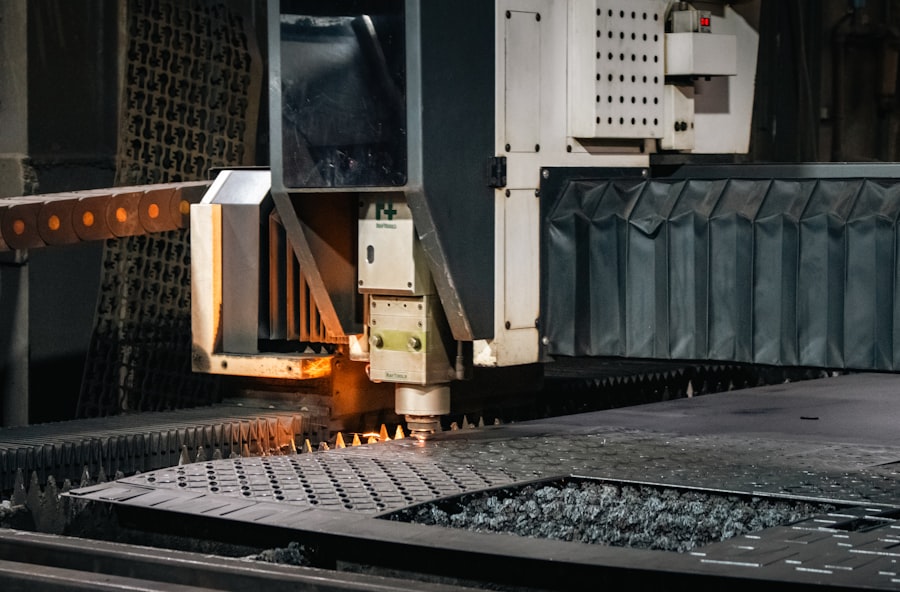
The limitations of existing technologies became increasingly apparent as the demands of the Cold War escalated. This pressure cooker environment spurred the development of a revolutionary manufacturing paradigm: Computer Numerical Control (CNC).
Early Seeds: The Numerical Control Revolution
The concept of numerical control (NC) began to germinate in the mid-20th century. Early NC systems, while a significant leap forward, still relied on relatively cumbersome methods of programming, often involving punched tapes. These tapes contained numerical instructions that guided the movement of machine tools.
The APT Language and its Significance
A key development in this period was the creation of the Automatically Programmed Tool (APT) language. APT allowed engineers to describe the geometry of a part and the desired machining operations in a more abstract, human-readable format. This language was then translated by a computer into the specific NC codes that the machine tool could understand. APT represented a crucial step in abstracting the manufacturing process away from direct, physical manipulation, allowing for greater flexibility and complexity in part design.
The Rise of the Microprocessor: The True Enabler of CNC
The true revolution in CNC, however, arrived with the advent and widespread adoption of microprocessors and integrated circuits. These miniature electronic brains provided the processing power and memory needed for sophisticated real-time control. NC systems evolved into CNC systems, capable of much more complex calculations, interpolation, and adaptive control.
The Digital Brain: Processing Power and Flexibility
Microprocessors allowed CNC machines to process intricate toolpaths, execute complex mathematical functions, and adapt to changing conditions in real-time. This digital brain, capable of processing vast amounts of data, could direct the machine tool with unparalleled precision, moving it along multiple axes simultaneously with exceptional accuracy. This was the moment the machine truly began to “think” for itself, interpreting complex instructions and executing them with an unwavering, tireless precision.
The Shift from Punched Tapes to Digital Storage
The transition from physical punched tapes to digital storage methods, such as magnetic tape and later floppy disks, further enhanced the efficiency and flexibility of CNC. This allowed for easier storage, recall, and modification of part programs, streamlining the manufacturing process and reducing the potential for errors introduced by damaged or misinterpreted tapes.
The Impact of CNC on Cold War Industries
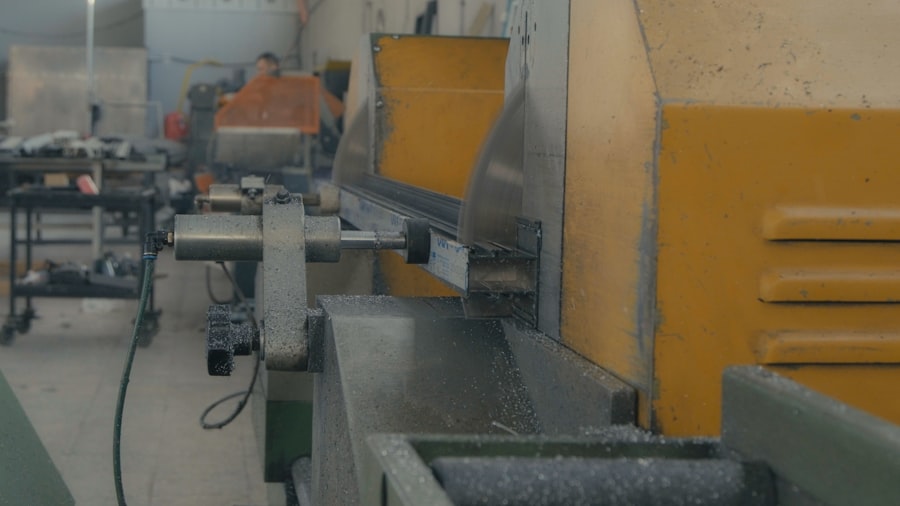
The widespread adoption of CNC technology had a profound and transformative impact on industries critical to the Cold War effort. Aerospace, defense, and the burgeoning electronics sector all experienced a seismic shift in their manufacturing capabilities.
Aerospace: Crafting the Wings of Innovation
The aerospace industry, at the forefront of technological advancement, was an early and enthusiastic adopter of CNC. The intricate and high-strength components required for aircraft, from airframes to engine parts, demanded a level of precision and repeatability that was previously unattainable.
Manufacturing Jet Engine Blades with Unprecedented Accuracy
Jet engine blades, with their complex airfoil shapes and tight tolerances, are a prime example. CNC milling machines enabled the mass production of these critical components with consistent aerodynamic profiles, directly contributing to the performance and efficiency of military and commercial aircraft. Imagine each blade being a perfectly sculpted feather, essential for lift and propulsion, and CNC made it possible to create millions of these identical “feathers.”
The Precision of Airframes and Structural Components
The structural integrity of aircraft relies on meticulously machined components. CNC allowed for the precise fabrication of fuselage sections, wing spars, and other critical elements, ensuring the safety and performance of advanced aircraft, including fighter jets and bombers that were the cutting edge of military power.
Defense Sector: Arming the Frontlines with Precision
The defense sector, naturally, became a primary beneficiary and driver of CNC advancements. The ability to produce complex weaponry and associated equipment with speed and accuracy was paramount.
Guided Missile Systems and Their Intricate Components
Guided missile systems, with their sophisticated guidance electronics, propulsion systems, and warheads, required an array of precisely machined parts. CNC was instrumental in the production of these intricate components, ensuring the reliability and accuracy of these pivotal weapons. The complex internal mechanisms of a missile, likened to the finely tuned gears of a cosmic clock, needed to operate flawlessly, and CNC delivered that unwavering precision.
Submarine Technology and Advanced Fire Control Systems
The development of advanced submarines, with their advanced sonar, navigation, and weapon systems, also heavily relied on CNC. The precise machining of hull components, propeller shafts, and sensitive electronic housings was crucial for stealth and operational effectiveness.
Electronics Manufacturing: The Tiny Titans of the Digital Age
While often associated with heavy machinery, CNC also played a significant role in the burgeoning electronics industry, particularly in the precision required for creating components for computers and communication systems.
Printed Circuit Board (PCB) Drilling and Routing
The production of printed circuit boards (PCBs), the backbone of modern electronics, benefited immensely from CNC. High-speed CNC drilling machines precisely created holes for component placement, and CNC routing machines accurately cut the boards to size and shape, ensuring the accurate interconnection of electronic components. The intricate pathways on a PCB, like delicate highways for electrical signals, demanded the accuracy that only CNC could provide.
Precision Components for Radar and Communication Systems
The development of advanced radar systems and secure communication networks necessitated the production of highly precise electronic components. CNC machining was employed to create specialized enclosures, connectors, and internal structures for these critical systems, ensuring their performance and reliability in demanding operational environments.
During the Cold War, advancements in manufacturing techniques played a crucial role in the production of military equipment, particularly with the rise of CNC precision machining. This technology allowed for greater accuracy and efficiency in creating complex components essential for various defense systems. For a deeper understanding of how these innovations influenced manufacturing during this era, you can explore a related article that discusses the impact of CNC technology on military production. Check it out here.
Beyond the Cold War: The Enduring Legacy of CNC
| Metric | Value | Unit | Notes |
|---|---|---|---|
| Typical CNC Machine Tolerance | ±0.005 | mm | Precision achievable in Cold War era CNC machines |
| Spindle Speed | 3000-6000 | RPM | Range of spindle speeds for CNC milling machines |
| Repeatability | ±0.002 | mm | Ability to reproduce the same cut or shape |
| Typical CNC Program Length | 500-2000 | Lines of Code | Average program size for complex parts |
| Machine Uptime | 85-90 | % | Operational availability during production runs |
| Material Removal Rate | 50-150 | cm³/min | Typical rate for metal cutting in Cold War CNC machines |
| Axis Control | 3-5 | Axes | Number of controlled axes in CNC machines |
While the Cold War may have been the crucible for its rapid development, the legacy of CNC extends far beyond this era of geopolitical tension. The advancements forged in this intense period have become the bedrock of modern manufacturing, shaping industries and influencing our daily lives in countless ways.
The Democratization of Precision: From Military to Industry
The technologies and manufacturing methodologies pioneered for military applications did not remain confined to defense contractors. As CNC technology matured and became more accessible, it was adopted by a wide range of industries, from automotive and medical devices to consumer goods and scientific equipment. This widespread adoption has effectively democratized precision manufacturing, making sophisticated components more affordable and accessible.
The Foundation for Automation and Industry 4.0
CNC was a crucial stepping stone towards the fully automated factories of today and the concept of Industry 4.0. Its ability to translate digital designs into precise physical outputs paved the way for further integration of robotics, artificial intelligence, and advanced data analytics in manufacturing. CNC machines are the intelligent arms that carry out the intricate instructions in the grand symphony of modern industrial production.
Continuous Innovation and Future Horizons
The evolution of CNC technology continues unabated. Advancements in areas like additive manufacturing (3D printing), advanced materials, and machine learning are further expanding the capabilities of computer-controlled fabrication. The quest for even greater precision, speed, and efficiency, a spirit ignited by the Cold War, continues to drive innovation in the field. The journey from the mechanical cams of early machines to the intelligent, connected systems of today is a testament to ingenuity, where the shadows of past conflicts ultimately illuminated the path to future progress.

WATCH NOW ▶️ WARNING: The $17M Deal That Blinded The US Navy
FAQs
What role did CNC precision play in Cold War manufacturing?
CNC (Computer Numerical Control) precision significantly enhanced manufacturing during the Cold War by enabling the production of highly accurate and complex components for military and aerospace applications. This technology improved efficiency, consistency, and quality in manufacturing processes critical to defense systems.
How did CNC technology evolve during the Cold War period?
During the Cold War, CNC technology evolved from basic numerical control systems to more advanced computer-controlled machines. This evolution allowed for greater automation, precision, and the ability to produce intricate parts that were essential for weapons, aircraft, and missile systems.
Why was precision manufacturing important in the Cold War?
Precision manufacturing was crucial in the Cold War because it ensured the reliability and performance of military equipment. Accurate components were necessary for the effectiveness of nuclear weapons, guidance systems, and aerospace technology, which were central to national security and strategic deterrence.
Which industries benefited most from CNC precision in the Cold War?
The aerospace, defense, and automotive industries benefited most from CNC precision during the Cold War. These sectors required high-precision parts for aircraft, missiles, and military vehicles, making CNC technology vital for meeting stringent specifications and production demands.
What impact did CNC precision have on Cold War manufacturing competitiveness?
CNC precision gave manufacturers a competitive edge by reducing production time, minimizing errors, and enabling the creation of complex designs. This technological advantage was critical for maintaining military superiority and advancing industrial capabilities during the Cold War era.