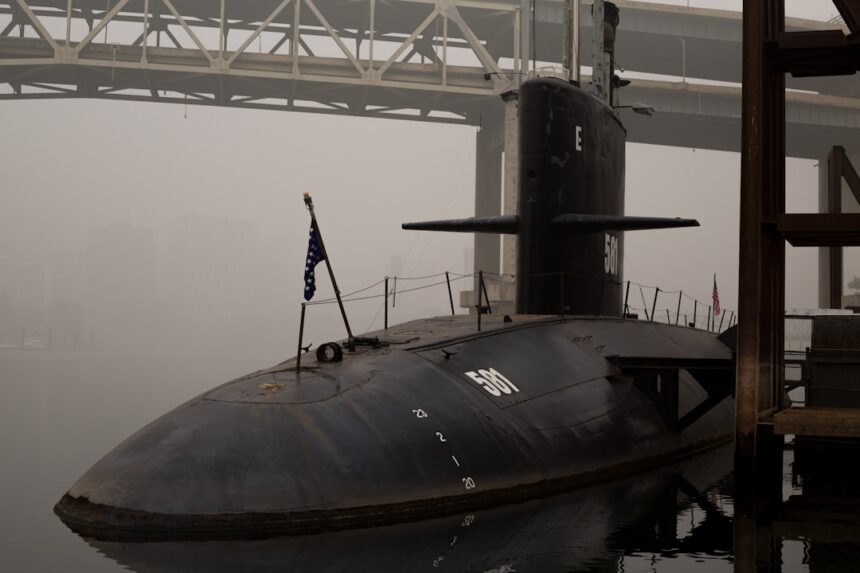
The pursuit of stealth in submarine warfare, like a phantom’s whisper in a crowded room, has long been the holy grail for naval powers. Among the vessels that have strived for this elusive mastery, the Silent Victor III submarine stands as a significant, albeit often understated, example of engineering innovation focused on near-undetectable operation. This article delves into the technical and operational aspects that contribute to its reputation for quiet running, exploring the design philosophies and technological advancements that allow it to slip through the watery depths like a wraith.
The external form of a submarine is its first line of defense against detection. The Silent Victor III, like many modern submarines, employs a hullform optimized to minimize hydrodynamic noise. This involves not just the overall shape, but also the subtle nuances of its contours.
Hydrodynamic Shaping for Reduced Flow Noise
The hull’s exterior, often referred to as the pressure hull, is not merely a generic cylinder. It is meticulously sculpted to ensure smooth water flow across its surface. Think of a perfectly thrown dart versus a crumpled paper airplane; the difference in how smoothly they cut through the air is analogous to how a well-designed hull interacts with water. Sharp angles and abrupt changes in curvature can create turbulence, which in turn generates noise. The Silent Victor III’s designers likely focused on:
- Streamlined Appendages: Protruding elements like the sail (or conning tower), hydroplanes, and sonar arrays are integrated as seamlessly as possible. This means minimizing their surface area where feasible and ensuring their shapes flow with the water, rather than against it.
- Reduced Flow Separation: This refers to the tendency of water to detach from the hull’s surface, creating eddies and noise. Advanced computational fluid dynamics (CFD) simulations are crucial in identifying and mitigating these areas.
- Smooth Outer Surface: The outer skin of the submarine should be as smooth as possible, free from unnecessary protrusions or rough textures that can contribute to acoustic scattering and friction noise.
Anechoic Coatings: The Submarine’s Cloak of Silence
Beyond the shape, the material and surface treatment of the hull play a critical role in reducing acoustic signatures. The Silent Victor III likely incorporates advanced anechoic coatings.
- Absorption of Sound Waves: These coatings are not painted on; they are complex, multi-layered materials designed to absorb incoming sonar pings rather than reflecting them back. Imagine a dark, velvet curtain absorbing sound in a noisy theater. The coatings act in a similar fashion, dampening the acoustic energy that might otherwise betray the submarine’s presence to active sonar.
- Reduction of Reverberation: Even when not actively pinging, sonar systems rely on listening for echoes. Anechoic coatings help to minimize the echoes generated by the submarine’s own hull, making it harder for passive sonar to distinguish these faint reverberations from background noise.
- Material Science and Application: The effectiveness of these coatings depends heavily on the specific composition of the materials, their thickness, and how uniformly they are applied to the hull. This is a field that demands cutting-edge material science and precision engineering.
The Victor III class submarines, known for their advanced quieting technologies, have been a significant focus in naval warfare discussions. For a deeper understanding of the innovations in submarine acoustics and their implications for modern naval strategy, you can refer to a related article that explores these advancements in detail. Check it out here: Victor III Class Submarine Quieting.
The Heart of Quiet: Machinery and Vibration Control
The machinery onboard a submarine is a cacophony of potential noise sources. Diesel engines, generators, pumps, ventilation systems, and propulsion motors all generate vibrations and audible sounds. Mastering quiet operation, therefore, necessitates a comprehensive approach to isolating and mitigating these mechanical noises. The Silent Victor III’s strength lies in its ability to transform this inherent mechanical din into a near-imperceptible hum, or even silence.
Advanced Propulsion Systems: The Drive for Subtlety
The propulsion system is arguably the most significant contributor to a submarine’s acoustic signature. The Silent Victor III likely employs a highly sophisticated propulsion system designed for minimal noise.
- Electric Drive Systems: Modern submarines, especially those designed for stealth, increasingly rely on electric propulsion. This often involves a diesel-electric or air-independent propulsion (AIP) system powering electric motors that drive the propeller. Electric motors are inherently quieter than direct diesel drive and offer greater flexibility in decoupling the noise source from the hull.
- Propeller Design and Cavitation Control: The propeller is the primary means of moving through the water, but it is also a significant noise generator, especially when it cavitates. Cavitation occurs when the water pressure drops sufficiently for vapor bubbles to form and then collapse, creating sharp implosive sounds.
- Optimized Blade Geometry: The Silent Victor III’s propeller likely features a highly optimized blade design, with careful attention paid to the shape, number of blades, and their pitch. This is a delicate balancing act to maximize thrust while minimizing cavitation.
- Variable Speed Control: The ability to precisely control the propeller’s speed allows the submarine to operate at speeds where cavitation is minimized, even if it means sacrificing some maximum speed.
- Ducted Propellers (Potentially): While not universally applied, some submarine designs utilize ducted propellers, where the propeller is surrounded by a nozzle. This can improve propulsive efficiency and potentially reduce cavitation noise.
- Pump-Jet Propulsors (A Possibility): Some advanced submarines, and likely the Silent Victor III’s developmental successors, may employ pump-jet propulsors. These systems use a series of stator vanes to straighten the flow before it enters a shrouded impeller, offering excellent efficiency and very low noise signatures.
Vibration Isolation and Damping: The Art of Containment
Even the quietest machinery generates vibrations. The key to stealth is to ensure these vibrations do not transmit to the hull and radiate into the water.
- Mounting Systems: All noise-producing machinery is mounted on resilient systems, such as heavy-duty rubber mounts or more sophisticated active isolation systems. This decouples the machinery from the submarine’s structure, acting like a shock absorber for vibrations.
- Elastomeric Mounts: These are common and effective, using specialized rubber compounds to absorb vibrational energy.
- Air Mounts and Hydraulic Mounts: For more critical or larger machinery, these systems can offer even greater isolation.
- Internal Damping: Internal surfaces within the submarine, such as bulkheads and decks, may be treated with damping materials to absorb sound and vibrations that do manage to escape the initial isolation.
- Piping and Conduit Management: The complex network of pipes and conduits carrying fluids and power can also transmit noise. These are often run with special flexible connectors and routed to avoid direct contact with the hull structure.
Above the Waves, Below the Radar: Air and Water Systems
The internal life support systems of a submarine, while essential for its crew, can also be significant sources of acoustic leakage. The Silent Victor III’s engineers have undoubtedly focused on minimizing noise from these usually overlooked areas.
Ventilation and Air Conditioning Systems: The Subtle Symphony of Airflow
The circulation of air for breathing and cooling generates noise.
- Low-Noise Fans and Motors: The fans used in ventilation systems are specifically chosen for their quiet operation. Their motors are also often mounted with vibration isolation.
- Acoustically Lined Ducts: The air ducts themselves are likely lined with sound-absorbing materials to further dampen any noise generated by airflow.
- Variable Speed Blowers: Similar to propeller control, the ability to adjust fan speeds allows for operation at lower, quieter settings when full airflow is not required.
- Strategic Air Intakes and Exhausts: When operating at periscope depth or surfaced, the design of air intakes and exhausts is critical to minimize noise that could be detected by enemy sensors or even by sound traveling through the air.
Water Systems: Pumps and Plumbing in Harmony
The numerous pumps required for ballast control, fire suppression, cooling, and sanitation are constant potential noise sources.
- Quiet Pump Designs: Similar to propulsion, the choice of pump technology is important. Magnetic drive pumps, for instance, eliminate mechanical seals which can be a source of noise.
- Variable Speed Pumping: Allowing pump speeds to be adjusted based on demand reduces unnecessary noise.
- Acoustically Isolated Pump Rooms: Locating pumps in dedicated, acoustically treated compartments further contains their noise.
- Minimized Plumbing Noise: Careful routing of plumbing and the use of flexible hoses can prevent vibrations from being transmitted through the hull.
Electronic Systems and Internal Activity: The Unseen Noises
While mechanical noise is often the primary concern, the operation of electronic equipment and even the movement of the crew generate their own subtle acoustic signatures.
Electronic Equipment Noise: A Quieter Generation
Modern electronic systems are generally quieter than their predecessors, but they still require cooling and can emit electromagnetic noise that can sometimes be indirectly detected.
- Designed for Low-Noise Operation: High-performance computing and sonar processing equipment are increasingly designed with acoustic stealth in mind.
- Efficient Cooling Systems: While cooling is necessary, the methods employed for cooling electronics are optimized to be as quiet as possible, using ducted airflow and low-noise fans.
- Electromagnetic Shielding: While not directly acoustic, robust electromagnetic shielding can prevent leakage that could be detected by specialized sensors.
Crew Activity and Internal Movement: The Human Factor
The most advanced submarine in the world can be betrayed by the actions of its crew.
- Procedural Discipline: Rigorous training and strict adherence to noise discipline protocols are paramount. This includes minimizing unnecessary movement, careful handling of equipment, and controlled communication.
- Sound-Dampening Materials: Interior surfaces, passageways, and living spaces may be outfitted with sound-absorbing materials to reduce reverberation and the impact of everyday activities.
- Noise-Attenuating Hatchways and Doors: These are designed to seal tightly and minimize the transmission of sound between compartments.
- Careful Equipment Stowage: Tools and equipment are secured to prevent rattling or shifting during maneuvers.
The Victor III class submarines are renowned for their advanced quieting technologies, which significantly enhance their stealth capabilities in naval operations. A related article that delves deeper into the innovations in submarine acoustics and stealth is available on In The War Room. For those interested in exploring this topic further, you can read the article here. Understanding these advancements is crucial for comprehending the strategic advantages they provide in modern warfare.
Operational Tactics: The Maestro’s Touch
| Metric | Victor III Class Submarine | Notes |
|---|---|---|
| Displacement (surfaced) | 3,950 tons | Standard surfaced displacement |
| Displacement (submerged) | 4,800 tons | Standard submerged displacement |
| Length | 104 meters | Overall length of the submarine |
| Quieting Measures | Advanced anechoic tiles, improved machinery isolation, redesigned propeller | Significant noise reduction compared to Victor II class |
| Acoustic Signature Reduction | Estimated 10-15 dB reduction | Compared to previous Victor II class |
| Speed (submerged) | 35 knots | Maximum submerged speed |
| Operational Depth | 400 meters | Maximum safe operating depth |
| Propulsion | One pressurized water reactor, steam turbine | Reduced noise from improved machinery design |
| Noise Level | Estimated 110 dB re 1 μPa at 1 meter | Lower than previous generation Soviet subs |
Even with the most sophisticated quieting technology, the true mastery of silent operation lies in how the submarine is employed. The Silent Victor III’s effectiveness is not solely defined by its hardware, but by the tactical acumen of its commanders and crew.
Stealthy Maneuvering and Depth Management
The environment itself can be an ally or an enemy to a submarine’s stealth.
- Operating in Acoustic Shadow Zones: Certain oceanographic conditions, such as thermoclines, can create acoustic shadow zones where sound does not propagate effectively, offering a natural shield.
- Utilizing Bottom Topography: Understanding and using the contours of the seabed can help mask a submarine’s presence, allowing it to disappear into the acoustic clutter of the ocean floor.
- Depth as a Strategic Asset: Different depths offer different acoustic properties. Operating at depths where ambient noise is high or where sound propagation is unfavorable to sonar can enhance stealth.
- Speed Selection: As discussed previously, speed is a critical factor. Operating at the slowest possible speed that achieves the mission objective dramatically reduces acoustic signatures.
Sonar Employment and Passive Listening
The submarine’s ability to “see” without being seen is a cornerstone of its operational strategy.
- Emphasis on Passive Sonar: The Silent Victor III, by definition, prioritizes passive sonar employment. This involves listening to the acoustic environment for the sounds of other vessels without emitting any active sonar signals itself. This is akin to a hunter listening for the faintest rustle of leaves in the forest.
- Advanced Signal Processing: Sophisticated algorithms are employed to filter out ambient noise and identify faint acoustic signatures of potential threats or targets.
- Strategic Sonar Panning: The direction and frequency of sonar sweeps are carefully managed to avoid detection while gathering intelligence.
- Limited Active Sonar Use: Active sonar, while excellent for precise targeting, is a beacon for detection. Its use is reserved for only the most critical situations and is typically employed with extreme caution.
Endurance and Refit Protocols: Maintaining the Silence
Sustaining quiet operation is a continuous challenge.
- Regular Maintenance and Inspection: Even minor wear and tear on machinery or hull coatings can increase noise levels. Regular, thorough maintenance is essential.
- Specialized Refit Procedures: During extensive overhauls, submarines undergo rigorous acoustic testing and recalibration to ensure they meet their design specifications for quiet running.
- Crew Training and Awareness: Continuous training reinforces the importance of noise discipline and the techniques required for silent operation.
In conclusion, the Silent Victor III submarine represents more than just a collection of advanced technologies; it embodies a philosophy of stealth that permeates every aspect of its design and operation. From the subtle curves of its hull and the specialized materials that clad it, to the meticulously isolated machinery and the disciplined actions of its crew, the pursuit of near-undetectable operation is a symphony of engineering and tactical precision. While specific details of its most cutting-edge features remain classified, the principles outlined here provide a comprehensive understanding of how such a vessel achieves its reputation as a master of quiet operation, a phantom of the deep that hunts and operates unseen, a testament to humanity’s relentless drive to conquer the silent frontiers of warfare.

WATCH NOW ▶️ WARNING: The $17M Deal That Blinded The US Navy
FAQs
What is the Victor III class submarine?
The Victor III class submarine is a series of nuclear-powered attack submarines developed by the Soviet Union during the Cold War. They were designed to be faster, quieter, and more capable than their predecessors, primarily for anti-submarine and anti-surface warfare.
What does “quieting” mean in the context of submarines?
“Quieting” refers to the various technologies and design features implemented to reduce the noise produced by a submarine. This is crucial for stealth, as quieter submarines are harder to detect by sonar and other tracking methods.
How was quieting achieved in the Victor III class submarines?
The Victor III class incorporated several quieting measures, including improved hull design to reduce hydrodynamic noise, advanced sound-isolating mounts for machinery, and the use of anechoic tiles on the hull to absorb sonar pulses. These enhancements made the Victor III significantly quieter than earlier models.
Why was quieting important for the Victor III class submarines?
Quieting was essential for the Victor III class to enhance their survivability and effectiveness in stealth operations. Reduced noise levels allowed these submarines to approach targets undetected and evade enemy sonar, giving them a tactical advantage in naval warfare.
How does the Victor III class compare to other submarines in terms of quieting?
At the time of their introduction, Victor III class submarines were among the quietest Soviet submarines, narrowing the acoustic gap with Western counterparts like the U.S. Los Angeles class. While not the quietest submarines globally, their quieting advancements represented a significant step forward for Soviet submarine technology.