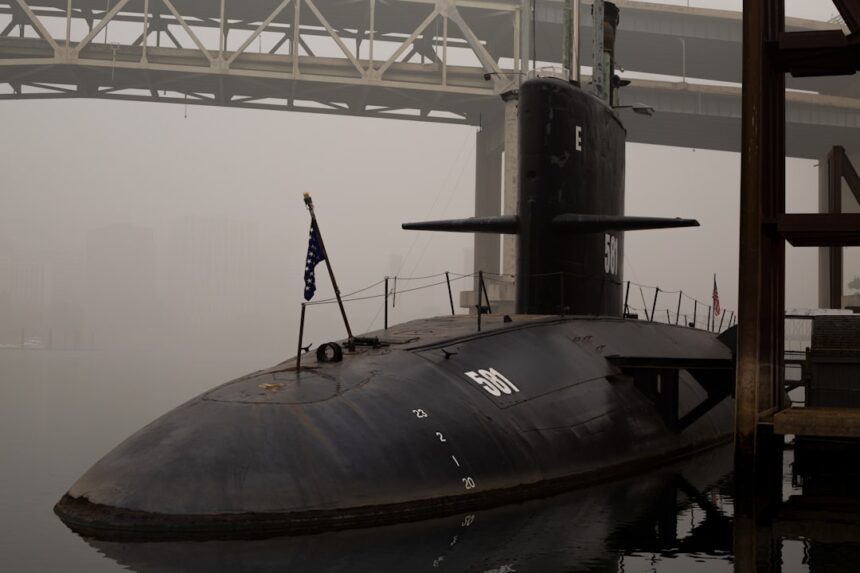
The Cold War was a silent war, fought in shadows and beneath the waves. While the ideological battles raged on land and the skies buzzed with reconnaissance aircraft, the true chess match of nuclear deterrence often played out in the ocean’s crushing depths. Here, the Soviet Union, initially playing catch-up in submarine technology, embarked on a remarkable journey to transform its noisy, lumbering underwater behemoths into something far more insidious: stealthy predators. The story of how Soviet submarines became stealthy is a testament to dedicated engineering, relentless innovation, and a deep understanding of the acoustic battlefield.
The fundamental challenge in underwater warfare lies in the very nature of sound propagation. Sound travels much further and faster in water than in air, making the ocean an incredibly efficient medium for both detection and evasion. This acoustic environment is the primary battleground for submarines.
The Physics of Sound in Water
Water’s density and salinity mean that sound waves encounter less resistance and dissipate more slowly than in air. This allows a submarine’s engine noise, propeller cavitation, and even the sounds of its internal machinery to travel for hundreds, and potentially thousands, of miles. For a submarine commander, this means that their vessel is constantly broadcasting its presence into the surrounding water, like a ship’s foghorn in a dense mist.
The Limitations of Early Submarine Technology
Early submarines, both Soviet and Western, were often characterized by their mechanical noisiness. Diesel-electric submarines, reliant on internal combustion engines for propulsion and battery charging, were particularly loud when running on their diesel engines in snorkel mode. Nuclear submarines, while offering greater endurance and speed, still produced significant noise from their reactors, turbines, and cooling systems. These acoustic signatures made them vulnerable to detection by increasingly sophisticated sonar systems.
The Importance of Stealth in Submarine Warfare
In the context of nuclear deterrence, stealth is not merely an advantage; it is a strategic imperative. A submarine commander’s primary objective is to avoid detection by enemy anti-submarine warfare (ASW) forces. This allows a second-strike capability, ensuring that a nation’s nuclear arsenal can survive a first strike and retaliate, thus deterring such an attack in the first place. For the Soviets, achieving stealth was crucial to leveling the playing field against the technologically advanced U.S. Navy.
The evolution of Soviet submarines into silent predators of the deep is a fascinating topic that highlights advancements in naval technology and tactics during the Cold War. For a deeper understanding of this transformation, you can read the related article on the subject at In the War Room, which explores the innovations that allowed these submarines to operate stealthily and effectively, changing the dynamics of underwater warfare.
Engineering a Quieter Hull: The Quest for Acoustic Camouflage
The most direct path to stealth is to reduce the noise emitted by the submarine itself. This involved a multi-pronged approach to hull design and its acoustic properties. The Soviets poured significant resources into understanding and mitigating the sounds that escaped their vessels.
Material Science and Acoustic Absorption
One of the most significant breakthroughs came with the development and application of anechoic tiles. Imagine a submarine’s hull as a drum; these tiles acted like a specialized skin that absorbed sound waves instead of reflecting them, much like a concert hall employs acoustic dampening materials to improve sound quality.
The Development of Anechoic Tiles
The Soviets, inspired by and eventually surpassing Western developments in this area, began extensively coating the outer hulls of their submarines with these rubber-like tiles. These tiles were meticulously designed with specific geometric patterns and thicknesses to resonate with and absorb different frequencies of sound. The goal was to transform the hull from a reflective surface into a sound sink, effectively swallowing the noise that would otherwise propagate outwards.
The Impact of Tile Quality and Application
The effectiveness of anechoic tiles is highly dependent on their quality, composition, and precise application. Imperfectly applied tiles, or those made with inferior materials, could actually create new acoustic anomalies or fail to absorb sound effectively. The Soviets invested heavily in research and development, experimenting with various rubber compounds and fastening methods to ensure maximum acoustic dampening. This was not a simple cosmetic upgrade; it was a fundamental redesign of the submarine’s acoustic interface with the ocean.
Hull Shape and Hydrodynamic Efficiency
Beyond materials, the very shape of a submarine’s hull plays a crucial role in its acoustic signature. A smoother, more streamlined hull reduces turbulence and flow noise as the submarine moves through the water.
Minimizing Flow Noise
As a submarine displaces water, friction and turbulence inevitably generate noise. The Soviets focused on optimizing hull shapes to minimize these effects, often opting for rounded, bulbous bows and tail sections that facilitated smoother water flow. This attention to hydrodynamic detail was another layer in their stealth strategy, reducing the “whisper” of the water itself.
The Suppression of Cavitation
Cavitation, the formation of vapor bubbles within the water due to low pressure around propeller blades or other moving parts, is a significant source of underwater noise. The Soviets worked to design propellers that rotated at lower speeds, had specific blade geometries, and employed novel coatings to reduce cavitation. This was akin to ensuring a chef’s knife moved through ingredients with minimal friction, producing a clean cut rather than a ragged tear.
Quieting the Machinery Within: A Symphony of Silence

While the hull is the submarine’s first line of acoustic defense, the internal machinery poses a significant challenge. The Soviets recognized that true stealth required a comprehensive approach, addressing every noisy component.
Advanced Vibration Damping Mounts
Engines, pumps, generators, and other vital machinery produce vibrations that can travel through the submarine’s structure and radiate into the water. The Soviets pioneered the use of highly sophisticated vibration damping mounts.
Isolating the “Heartbeat” of the Submarine
These mounts, often made of specialized rubber or sprung metal, acted as shock absorbers between the machinery and the submarine’s hull. They effectively isolated the vibrations, preventing them from resonating with the hull and becoming amplified underwater sound. Imagine a sensitive microphone placed on a vibrating table; the damping mounts were like placing that microphone on a specially designed, floating platform.
The Complexity of Mount Design
Designing effective damping mounts is a complex engineering feat. Engineers had to account for the weight of the machinery, the frequencies of vibration it produced, and the environmental conditions the submarine would operate in. The optimal solution often involved multiple layers of damping materials and carefully calculated spring rates.
Streamlined Water Pumping and Cooling Systems
Water is essential for many submarine systems, including cooling the reactor and circulating air. However, the pumps and pipes that move this water can be significant noise sources.
Reducing Pump Noise
The Soviets invested in designing quieter, more efficient pumps. This included optimizing impeller design, using specialized bearings, and enclosing pumps in acoustic insulation. The goal was to ensure that the “blood” coursing through the submarine’s veins did so as silently as possible.
Acoustic Insulation of Pipes and Ducts
Similarly, pipes and ventilation ducts were often surrounded by acoustic insulation to prevent the noise of water flow and air movement from escaping. This was like wrapping noisy pipes in sound-absorbing blankets, muffling their clamor.
The Revolution of Magnetohydrodynamic (MHD) Drives
While not universally adopted in all Soviet submarine classes due to technological hurdles, the exploration and limited implementation of Magnetohydrodynamic (MHD) drives represented a significant conceptual leap toward silent propulsion.
The Mermaid’s Song of MHD
MHD drives, in theory, would have eliminated the need for traditional rotating propellers. Instead, they would have used electromagnetic fields to propel water through a duct, offering a potentially revolutionary reduction in cavitation noise. This was like replacing a noisy propeller with the silent push of magnetic forces, a dream of silent sailing.
Challenges and Limited Implementation
However, MHD technology proved challenging to implement effectively. The power requirements were immense, and the efficiency was often lower than conventional systems. While R&D in this area continued, it did not become the primary propulsion method for the vast majority of Soviet submarines, though it hinted at future possibilities for extreme stealth.
Propellers: From Whirring Blades to Subtle Swirls
The propeller is arguably the most distinctive acoustic signature of any submarine. For the Soviets, taming this noisy herald was paramount.
Designing Low-Noise Propeller Blades
The shape, material, and number of propeller blades all influence the noise they produce. The Soviets dedicated considerable effort to designing propellers that minimized cavitation and generated less turbulent wake.
Hydrofoil Design and Reduced Cavitation
They moved away from simple, flat blades towards more complex hydrofoil designs, which are aerodynamically optimized to reduce the pressure differences that lead to cavitation. Experimentation with different numbers of blades and their spacing also contributed to reducing harmonic noise.
Advanced Materials and Coatings
Beyond shape, the materials used for propellers and any coatings applied could also influence their acoustic properties. Using materials that absorbed or dissipated sound, or designing blades with specific surface textures, further contributed to reducing their acoustic footprint.
The “Pompon” Propeller and its Legacy
The Soviet innovation known as the “Pompon” propeller, found on some later-generation submarines, was a testament to this effort. This propeller design featured a distinctive series of small, interconnected blades rather than a few large ones.
The Subtle Hum of the Pompon
This design aimed to spread the thrust over a larger area and at lower rotational speeds, drastically reducing cavitation and associated noise. The result was a much quieter propeller, often described as producing a subtle hum rather than a discernible whine. It was like replacing a grinding gear with the gentle swish of a well-oiled mechanism.
Evolutionary Improvements
The Pompon propeller was an evolutionary step, building on years of research and development. It demonstrated the Soviet Union’s commitment to refining even the most fundamental components of submarine design in their pursuit of acoustic superiority.
The evolution of Soviet submarines into silent predators of the deep is a fascinating topic that highlights advancements in naval technology and strategy. As these submarines became increasingly adept at evading detection, they played a crucial role in the Cold War dynamics. For a deeper understanding of this transformation, you can explore a related article that delves into the engineering innovations and tactical shifts that contributed to their stealth capabilities. This insightful piece can be found here.
Beyond the Hull: Operational Tactics for Ultimate Stealth
| Metric | Description | Impact on Silence |
|---|---|---|
| Hull Design | Streamlined hull shapes to reduce hydrodynamic noise | Significantly reduced flow noise and cavitation |
| Propeller Technology | Introduction of skewed and seven-blade propellers | Minimized cavitation and propeller noise |
| Sound-Absorbing Coatings | Application of anechoic tiles on hull surfaces | Absorbed sonar pulses, reducing sonar detection |
| Machinery Isolation | Mounting engines and pumps on vibration-damping platforms | Reduced transmission of mechanical noise to hull |
| Quieting of Pumps and Fans | Use of low-noise pumps and fans with improved bearings | Lowered internal noise levels |
| Speed Regulation | Operating at lower speeds to reduce noise | Decreased flow noise and cavitation |
| Acoustic Signature Reduction | Use of advanced sound dampening materials inside the submarine | Minimized internal noise leakage |
Even the quietest submarine can be detected if not operated with careful consideration for its acoustic environment. The Soviets understood that stealth was as much about what they didn’t do as what they did.
The Art of Silent Running
“Silent running” is a fundamental doctrine in submarine warfare, but the Soviets elevated it to an art form. This involved conscious efforts to minimize movement and noise.
Minimizing Engine Operation
Whenever possible, submarines would rely on battery power for propulsion and shut down their main engines. This significantly reduced acoustic output but also limited speed and endurance. Patrol routes were carefully planned to balance stealth with operational requirements.
Avoiding Sonar Pinging
The Soviets rigorously trained their crews to avoid using active sonar whenever possible. Active sonar emits a “ping” that is easily detected by enemy submarines, effectively revealing their presence. Passive sonar, which listens to ambient sounds, was preferred.
Navigational Precision and Route Planning
Even subtle changes in course or speed can create acoustic anomalies. Careful navigation was crucial.
Minimizing Maneuvers
Avoiding unnecessary turns or sudden dives helped to maintain a consistent acoustic profile. Detailed planning of routes through known quiet zones or areas with masking sounds was also a key tactic.
Understanding the Ocean’s Acoustic Landscape
Soviet submariners were trained to understand the acoustic properties of different ocean regions. They knew where sound would travel further and where it would be masked by natural ocean sounds like whale calls or seismic activity. This knowledge was as critical as any piece of engineering.
The “Deep Dive” Strategy
While not always the fastest or most efficient, diving to deeper levels could offer acoustic advantages.
Descending into the “Shadow”
The deeper a submarine goes, the less likely it is to be detected by surface-based sonar, which relies on the reflection of sound off the ocean surface. Furthermore, the pressure at extreme depths can sometimes dampen sound transmission. This was like a stealth bomber flying low to the ground – using the terrain as cover.
Strategic Depth Utilization
Soviet commanders would strategically use depth to their advantage, sometimes diving to depths where they were effectively “shadowed” from detection, making them ghosts in the abyss.
The Unseen Threat: Legacy and Continued Evolution
The Soviet pursuit of stealth was not a static endeavor. It was a continuous process of innovation and adaptation, driven by the ever-present threat of detection and the desire to maintain a credible deterrent.
The “Whispering Giants” of the Cold War
The submarines developed during the latter half of the Cold War, such as the Akula-class and later Anya-class submarines, were demonstrably quieter than their predecessors. These vessels became the “whispering giants” of the deep, a constant, unseen threat that kept naval strategists in the West on edge.
The Transfer of Knowledge and Technology
The technical and operational advancements made by the Soviet Union in submarine acoustics did not vanish with the collapse of the Soviet Union. Much of this knowledge and expertise has, directly or indirectly, influenced submarine design and operational doctrines globally, including in post-Soviet Russia.
The Evolving Nature of Submarine Warfare
The quest for stealth is an ongoing arms race. As detection technologies improve, so too must the methods of evasion. The lessons learned from the Soviet Union’s journey into acoustic silence continue to inform the development of the next generation of submarines, ensuring that the silent war beneath the waves remains a perpetual dance between predator and protector. The echoes of their innovations continue to resonate in the quiet depths, a testament to the enduring importance of stealth in the strategic calculus of naval power.

WATCH NOW ▶️ WARNING: The $17M Deal That Blinded The US Navy
FAQs
1. What technological advancements helped Soviet submarines become silent?
Soviet submarines became silent through advancements such as improved hull designs, the use of anechoic tiles to absorb sonar waves, quieter propulsion systems including pump-jet propulsors, and enhanced sound isolation for onboard machinery.
2. Why was silence important for Soviet submarines during the Cold War?
Silence was crucial for Soviet submarines to avoid detection by NATO forces, maintain stealth during reconnaissance and patrol missions, and enhance their effectiveness in strategic deterrence and potential combat scenarios.
3. How did the Soviet Union’s approach to submarine noise reduction differ from that of the United States?
While both the Soviet Union and the United States focused on noise reduction, the Soviets initially lagged behind but later adopted innovative technologies such as anechoic coatings and advanced propeller designs. They also emphasized robust hull construction to reduce noise transmission.
4. What role did anechoic tiles play in making Soviet submarines quieter?
Anechoic tiles are rubber-like coatings applied to the submarine’s hull that absorb and scatter sonar pulses, reducing the submarine’s acoustic signature and making it harder to detect by active sonar systems.
5. Did Soviet submarines achieve complete silence, and how effective were their noise reduction measures?
While Soviet submarines never achieved complete silence, their noise reduction measures significantly decreased their acoustic signatures, making them much harder to detect and track compared to earlier models, thus enhancing their operational capabilities.