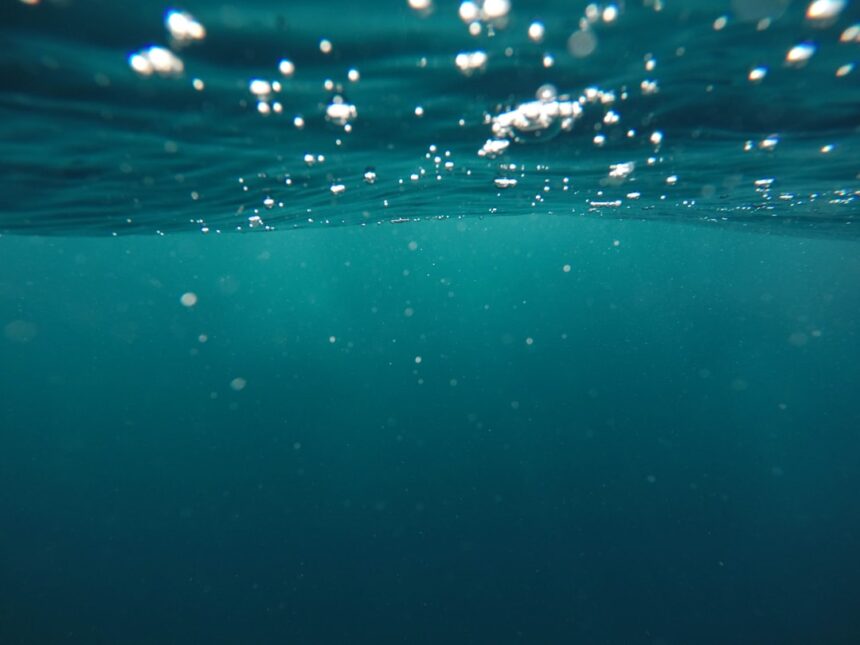
The ocean, a vast and largely unexplored realm, holds secrets that continue to baffle humanity. Among its most profound enigmas is the pervasive darkness that blankets its deepest regions, a darkness that is not merely the absence of light but a tangible, ever-present force. This article will delve into the fascinating and ongoing scientific endeavor to unravel the causes and implications of this profound oceanic obscurity.
The sun, the celestial furnace that bathes our terrestrial world in light and warmth, exerts a surprisingly limited influence on the ocean’s vertical expanse. While its rays penetrate the surface waters, this penetration is not uniform nor ultimately capable of dispelling the deep-sea gloom.
The Photic Zone: A Sunlit Surface Layer
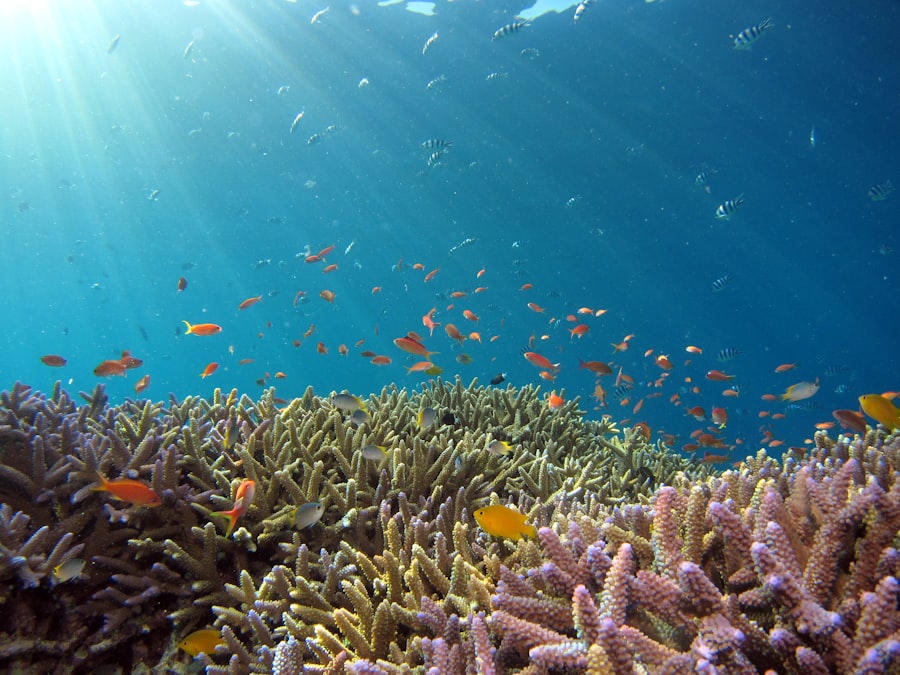
The uppermost layer of the ocean, known as the photic zone, is where sunlight can penetrate sufficiently to support photosynthesis. This zone is typically no deeper than 200 meters, though its depth can vary depending on factors such as water clarity and the angle of solar incidence. Within this sun-drenched surface, life flourishes. Phytoplankton, the microscopic plants of the sea, form the base of the marine food web, relying on sunlight to convert carbon dioxide and water into energy. Zooplankton, small animals that graze on phytoplankton, also thrive here, and they, in turn, provide sustenance for larger organisms. The vibrant ecosystems that most people associate with the ocean – coral reefs teeming with colorful fish, schools of tuna migrating across vast expanses – are almost exclusively confined to this relatively thin layer of light.
Penetration and Absorption: A Gradual Fading
As sunlight descends into the water column, it undergoes a process of attenuation, meaning its intensity gradually diminishes. This attenuation is a result of two primary mechanisms: scattering and absorption. Water molecules themselves, as well as suspended particles like sediment and organic matter, scatter light in all directions. This scattering redirects photons away from their original path, effectively reducing the amount of direct sunlight reaching deeper levels. Furthermore, water molecules and dissolved substances absorb specific wavelengths of light. Red light is absorbed most readily, followed by orange and yellow. Blue and green wavelengths penetrate the deepest, which is why the ocean often appears blue. However, even these colors are significantly weakened with increasing depth.
The Twilight Zone: A Realm of Fading Hope
Below the photic zone lies the mesopelagic zone, commonly referred to as the “twilight zone.” This region extends from approximately 200 to 1,000 meters. Here, sunlight is so diffused and diminished that it can no longer support photosynthesis. The light that does reach this depth is primarily blue-green, casting an eerie, perpetual twilight. Organisms living in the twilight zone have adapted to these low-light conditions. Many have developed bioluminescence, the ability to produce their own light, for communication, attracting prey, or evading predators. Others have enlarged eyes to capture every available photon, or they have evolved to be entirely blind, relying on other senses.
The Midnight Zone and Beyond: Eternal Night
Beyond the twilight zone lie the bathyal (1,000 to 4,000 meters), abyssal (4,000 to 6,000 meters), and hadal (below 6,000 meters) zones, collectively known as the deep sea. In these extreme depths, sunlight is entirely absent. The darkness is absolute and unyielding, a boundless expanse that has been described as a cosmic void within our own planet. The pressure here is immense, capable of crushing most surface organisms. Temperatures are near freezing, and food is scarce, primarily consisting of detritus that drifts down from the upper layers – a slow, constant rain of organic matter. Life in these zones, though sparse and uniquely adapted, is a testament to the resilience and ingenuity of evolution.
In exploring the intriguing phenomenon of why the ocean went dark, it is essential to consider related factors that contribute to this mysterious occurrence. For a deeper understanding of the environmental impacts and historical context surrounding this event, you can read the article titled “The Secrets of the Deep: Unraveling Ocean Mysteries” available at this link. This article delves into various aspects of oceanic changes and their implications for marine life and ecosystems.
The Role of Absorption and Scattering: Light’s Demise
The very nature of water, while appearing transparent in small quantities, becomes an efficient absorber and scatterer of light when encountered in vast quantities. This fundamental property of water is a primary architect of the deep ocean’s darkness.
Wavelength-Specific Absorption: Blue’s Persistence
As previously mentioned, the absorption of light by water is not uniform across the spectrum. Red light, with its longer wavelength, is rapidly absorbed within the first few meters of the ocean. Orange and yellow wavelengths follow, disappearing at greater depths. This selective absorption is why the ocean appears blue; blue and green light, with their shorter wavelengths, are less absorbed and thus penetrate deeper. However, even these wavelengths are ultimately absorbed. By the time light reaches 100 meters, most colors have been filtered out, leaving only a faint, blueish glow. At 200 meters, the sun’s rays are effectively gone, marking the boundary of the photic zone.
Scattering: Light’s Dispersal
Beyond absorption, scattering plays a crucial role in dimming sunlight. Water molecules, along with suspended particles like phytoplankton, zooplankton, and sediment, act as surfaces that reflect and refract light rays. Imagine shining a flashlight into a misty room; the beam doesn’t travel in a straight line but is broken up and diffused by the numerous water droplets. Similarly, in the ocean, light photons are deflected from their original trajectory, bouncing off particles and water molecules. This scattering effect disperses light energy, making it less likely to reach deeper layers in a coherent beam. The more particles present in the water, the greater the scattering and thus the quicker the light is extinguished.
The Cumulative Effect: Darkness as a Layered Phenomenon
The interplay of absorption and scattering creates a layered effect of increasing darkness with depth. Each meter of water acts as an additional filter. While a shallow coastal area might allow a good amount of light penetration, the open ocean, with its vast depths and often clearer, yet denser, water, experiences a more rapid decline in light intensity. This cumulative effect transforms the sunlit surface into a dim twilight, and eventually, into the perpetual blackness of the abyss. The ocean, in this regard, acts as a colossal light trap, with the surface layers acting as a porous sieve and the deeper layers as an impassable barrier.
Sediments and Particulates: Adding to the Gloom
While water itself is a significant factor in light attenuation, the presence of suspended sediments and organic matter acts as an additional veil, further obscuring the ocean’s depths. These particulates, like microscopic veils, catch and scatter light, contributing to the pervasive darkness.
Phytoplankton Blooms: A Surface Phenomenon with Deep Effects
Phytoplankton blooms, while primarily a surface phenomenon, can have indirect effects on light penetration in deeper waters. During exceptionally large blooms, the sheer density of these microscopic organisms can cause significant light scattering and absorption at the surface. This can reduce the amount of light reaching even the upper layers of the mesopelagic zone. Furthermore, when these phytoplankton die, they sink, forming a significant component of the “marine snow” that drifts down to the deep sea. This organic debris, as it descends, also contributes to light absorption and scattering.
Sediment Suspension: Stirred Up Waters
In shallower areas, especially near coastlines or where seafloor disturbances occur (such as during storms or seismic activity), sediments can become suspended in the water column. These fine particles of sand, silt, and clay are highly effective at scattering and absorbing light. Even a relatively small increase in turbidity – the cloudiness of the water – due to suspended sediment can drastically reduce visibility and light penetration. This effect is particularly noticeable in estuaries and near river mouths, where sediment loads are often high. In some cases, such as in areas prone to underwater landslides or volcanic activity, a plume of suspended sediment can create a temporary but profound zone of darkness extending for kilometers.
Marine Snow: The Continuous Descent
The constant biological activity in the upper ocean leads to the continuous formation of “marine snow.” This is a shower of organic detritus, including dead phytoplankton and zooplankton, fecal pellets, and fragments of larger organisms, which slowly sinks to the ocean floor. As marine snow descends through the water column, its particles intercept and scatter light. While a single particle is insignificant, the cumulative effect of billions of these particles drifting downwards creates a diffuse dimming effect. It’s akin to walking through a gentle snowfall; while individual snowflakes are small, a dense snowfall can obscure visibility. In the deep ocean, this marine snow is a primary source of food, but it also acts as a perpetual, albeit thin, curtain, contributing to the overall absence of sunlight.
Bioluminescence: Nature’s Underground Lamps
In the absence of sunlight, life in the deep ocean has evolved an extraordinary adaptation: bioluminescence. This internal production of light allows organisms to create their own illumination, transforming the perpetual darkness into a canvas of flickering, glowing signals.
The Chemical Symphony: Luciferin and Luciferase
Bioluminescence is a chemical process, a “cold light” produced through a reaction involving a light-emitting molecule called luciferin and an enzyme called luciferase. The specific types of luciferin and luciferase vary among different organisms, leading to variations in the color and intensity of the light produced. When oxygen is present, luciferase catalyzes the oxidation of luciferin, releasing energy in the form of light. This process is remarkably efficient, with a very low rate of heat production, hence the term “cold light.” It is a chemically orchestrated spectacle played out in the abyssal depths.
Functions of Bioluminescence: A Language of Light
The remarkable diversity of bioluminescent displays suggests a wide range of functions. Many deep-sea creatures use bioluminescence for communication, attracting mates or maintaining shoaling behavior in the featureless dark. The anglerfish, for instance, uses a bioluminescent lure to attract unsuspecting prey, a deadly beacon in the blackness. Other organisms employ bioluminescence for camouflage, using counter-illumination to match the faint light filtering from above, making them invisible from below. Some species flash brightly to startle or disorient predators, like a sudden burst of fireworks in the deep. Others employ it as a defensive mechanism, releasing a cloud of bioluminescent material to distract attackers while they escape. The deep sea, therefore, is not a silent, inert void but a realm alive with a silent, luminous discourse.
A Spotlight on Biodiversity: Unveiling New Forms
The study of bioluminescence has also been instrumental in uncovering the vast and often bizarre biodiversity of the deep sea. Many bioluminescent species were first discovered because of the light they emitted, attracting the attention of researchers. The unique patterns and colors of bioluminescence can often serve as identifying markers for different species, facilitating their classification and study. As our understanding of these luminous displays grows, so too does our appreciation for the intricate adaptations that life has forged in the face of absolute darkness. Bioluminescence is not just a phenomenon; it is a testament to life’s persistent drive to create and communicate, even in the deepest, darkest corners of our planet.
In exploring the intriguing phenomenon of why the ocean went dark, it’s essential to consider the broader implications of environmental changes on marine life and ecosystems. A related article that delves into the impact of climate change on oceanic conditions can provide valuable insights. You can read more about this topic in the article available at In the War Room, which discusses how shifts in temperature and pollution levels contribute to the health of our oceans. Understanding these connections is crucial for addressing the challenges facing marine environments today.
The Pressure Factor: A Crushing Reality
| Metric | Value | Description |
|---|---|---|
| Light Penetration Depth | Reduced by 40% | Decrease in sunlight reaching ocean depths due to increased turbidity |
| Phytoplankton Concentration | Down by 60% | Significant drop in photosynthetic organisms causing reduced ocean brightness |
| Water Turbidity | Increased by 75% | Higher levels of suspended particles blocking sunlight |
| Algal Bloom Frequency | Increased 3x | More frequent harmful algal blooms contributing to darkening |
| Ocean Surface Temperature | +2°C | Warming waters affecting marine ecosystems and light absorption |
| Carbon Dioxide Levels in Ocean | Increased by 30% | Higher CO2 causing acidification and impacting marine life visibility |
Beyond the absence of light, the crushing pressure of the deep ocean is another fundamental environmental factor that contributes to the profound differences between surface and abyssal ecosystems. While not directly causing darkness, it shapes the very life that inhabits these lightless realms and influences the physical processes occurring there.
Hydrostatic Pressure: The Weight of the Ocean
The immense pressure in the deep ocean is due to the sheer weight of the water column above. For every 10 meters of depth, the pressure increases by approximately one atmosphere. At the bottom of the Mariana Trench, the deepest known part of the ocean, the pressure is over 1,000 times that at sea level. This is equivalent to the weight of about 50 jumbo jets stacked on top of one another. Imagine the immense force exerted on anything submerged at these depths; it is a constant, unyielding embrace.
Adaptations to High Pressure: A Molecular Resilience
Life in the deep sea has evolved remarkable adaptations to survive these extreme pressures. Organisms living at these depths often have bodies composed largely of water, with few air-filled spaces that would collapse under pressure. Their cellular membranes are more fluid at high pressures, and their proteins are structured to resist denaturation. Many deep-sea fish, for example, lack swim bladders, which are filled with gas and would be compressed to near nothingness. Instead, they achieve neutral buoyancy through lipid-rich tissues and reduced skeletal density. These adaptations are not merely superficial; they represent a fundamental re-engineering of biological systems at a molecular level, a testament to life’s uncanny ability to find a foothold even in the most inhospitable environments.
Indirect Influences on Light: Sediment Stability and Circulation
While pressure itself does not absorb or scatter light, it influences oceanographic processes that can indirectly affect light penetration. For instance, high pressures can play a role in the geological stability of the seafloor, influencing the likelihood of sediment resuspension. In areas with high pressure gradients or geological activity, landslides or underwater volcanic eruptions can release clouds of sediment, temporarily darkening the water column. Furthermore, deep-ocean circulation patterns, driven by density differences influenced by temperature and salinity (and thus indirectly by pressure), can transport particulate matter and affect water clarity over vast distances. Therefore, the omnipresent force of pressure is an underlying factor in the complex interplay of forces shaping the deep ocean’s dark environment.
FAQs
What causes the ocean to go dark?
The ocean can go dark due to a variety of natural phenomena such as algal blooms, underwater volcanic eruptions, or large-scale plankton die-offs. These events can reduce sunlight penetration or change water color, making the ocean appear darker.
How do algal blooms affect ocean light levels?
Algal blooms, which are rapid increases in algae populations, can block sunlight from penetrating the water. This reduces the amount of light available for photosynthesis and can cause the ocean to look darker or discolored.
Can underwater volcanic eruptions cause the ocean to darken?
Yes, underwater volcanic eruptions release ash, gases, and particulate matter into the water, which can absorb and scatter sunlight. This can lead to localized darkening of the ocean surface.
What impact does reduced sunlight have on marine life?
Reduced sunlight can affect photosynthetic organisms like phytoplankton, which form the base of the marine food web. A decrease in light can disrupt their growth, impacting the entire ecosystem, including fish and other marine animals.
Is ocean darkening a permanent or temporary phenomenon?
Ocean darkening is typically a temporary event caused by specific environmental conditions. Once the cause, such as an algal bloom or volcanic activity, subsides, sunlight penetration usually returns to normal levels.