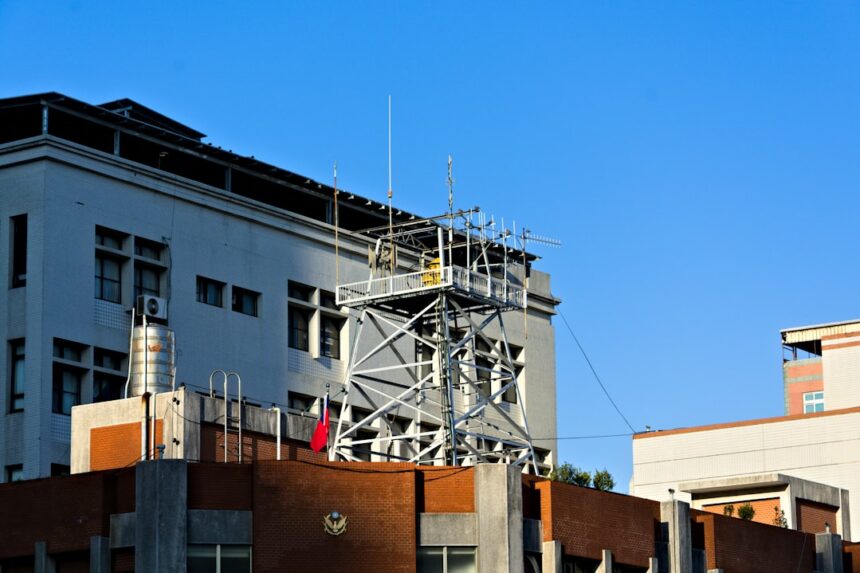
The US Navy’s Special Projects Office: Innovations at Sea
The United States Navy’s Special Projects Office (SPO) stands as a testament to the institution’s enduring commitment to technological advancement and strategic foresight. This clandestine entity, operating largely outside the glare of public scrutiny, has been instrumental in birthing and nurturing some of the most transformative innovations in naval history. While the term “special projects” might evoke images of cutting-edge espionage or fantastical weaponry, the reality is rooted in rigorous scientific endeavor, intricate engineering, and a profound understanding of the strategic landscape. The SPO, in essence, has served as a crucible where bold ideas are forged into tangible assets, shaping the very contours of maritime power for decades. Understanding its contributions requires delving into the “why” and “how” behind its operations, revealing a pattern of foresight and a dedication to maintaining an edge in an ever-changing world.
The establishment of the SPO was not a sudden impulse but a calculated response to evolving geopolitical realities. The post-World War II era presented a world rife with new challenges and potential threats. The advent of the atomic age and the rise of the Soviet Union as a rival superpower demanded a strategic rethink. The Navy, with its global reach and its pivotal role in projecting power, recognized the need for a dedicated entity to explore and develop capabilities that lay beyond the conventional.
The Cold War Imperative
The Cold War was the primary catalyst for the SPO’s creation. The existential threat posed by nuclear weapons and the escalating arms race between the United States and the Soviet Union necessitated a paradigm shift in military thinking. Traditional naval strategies, while still relevant, needed to be augmented by capabilities that could deter aggression, respond decisively to provocations, and ensure survivability in a high-intensity conflict. The SPO was tasked with identifying and developing these next-generation capabilities, often in areas that were nascent or even theoretical at the time. Its mission was not merely to keep pace with adversaries but to actively define the future of naval warfare, often forcing rivals into a reactive stance.
A Mandate for Secrecy and Agility
A fundamental characteristic of the SPO has been its operational secrecy. This was not born out of a desire for mystique but out of strategic necessity. By shielding its research and development from prying eyes, both domestic and foreign, the SPO could pursue high-risk, high-reward projects without tipping its hand to potential adversaries. This secrecy fostered an environment of intellectual freedom, allowing engineers and scientists to explore unconventional paths without the bureaucratic constraints that often plague larger, more public organizations. The SPO’s agile structure, often comprising small, dedicated teams, enabled it to move with a speed that was crucial in the rapidly evolving technological landscape of the Cold War. Think of it as a finely tuned racing yacht, able to pivot and accelerate where larger battleships might be ponderous.
Defining “Special Projects”
The term “special projects” itself is deliberately broad, encompassing a wide spectrum of technological endeavors. It has historically included, but not been limited to, the development of new propulsion systems, advanced weapon platforms, innovative sensor technologies, and, most famously, the strategic missile submarine program. The common thread linking these disparate efforts is their potential to fundamentally alter the balance of power at sea and provide the United States with a decisive strategic advantage. These projects were not incremental improvements; they were often revolutionary leaps forward.
The US Navy’s Special Projects Office has been at the forefront of innovative military technology, pushing the boundaries of what is possible in naval operations. For a deeper understanding of the implications of these advancements, you can read a related article that explores the intersection of military strategy and technological innovation at this link: In the War Room. This resource provides valuable insights into the challenges and opportunities faced by the Navy as it navigates the complexities of modern warfare.
The Polaris Program: A Paradigm Shift at Sea
Without a doubt, the most significant and widely recognized achievement of the Special Projects Office is the development and deployment of the Polaris missile system, which gave birth to the Fleet Ballistic Missile (FBM) submarine. This program was a monumental undertaking that redefined naval strategy and became a cornerstone of American nuclear deterrence.
The Need for a Survivable Deterrent
Prior to Polaris, the United States relied on intercontinental bombers and land-based intercontinental ballistic missiles (ICBMs) as its primary nuclear deterrent. However, both of these systems were vulnerable to a pre-emptive strike. Bombers could be destroyed on the ground, and ICBMs, housed in relatively fixed silos, were considered prime targets. The SPO recognized the urgent need for a retaliatory nuclear capability that was virtually immune to a first strike. The ocean, with its vastness and depth, offered the perfect sanctuary.
Conceived in Secrecy, Born of Innovation
The Polaris program was conceived and executed with a remarkable sense of urgency and innovation. The SPO brought together brilliant minds from across government, industry, and academia to tackle the immense technical challenges. These included miniaturizing a nuclear warhead small and light enough to be delivered by a missile, developing a reliable solid-fuel rocket motor capable of launching from underwater, and creating sophisticated guidance systems that could ensure accuracy over vast distances. The development of the solid-fuel rocket motor, in particular, was a significant departure from the liquid-fuel engines then in vogue, offering greater safety and readiness.
The Submarine as a Launch Platform
The true genius of the Polaris program lay in its integration of the missile with a submarine. The USS George Washington (SSBN-598), commissioned in 1959, was the first nuclear-powered submarine designed to carry and launch ballistic missiles. This marked the dawn of the modern ballistic missile submarine, a platform that offered unparalleled survivability due to its stealth, speed, and ability to remain submerged for extended periods. The submarine, once primarily an anti-shipping weapon, was transformed into a mobile, undetectable launchpad, a seemingly ordinary leviathan that held the power of nuclear annihilation.
The Strategic Triad and Deterrence
The Polaris program completed the American nuclear triad – bombers, ICBMs, and submarine-launched ballistic missiles (SLBMs). This diversification of nuclear delivery systems created a more robust and resilient deterrent. The SLBM component, in particular, ensured that even if a first strike destroyed land-based assets and bomber fleets, a retaliatory strike could still be launched from beneath the waves. This assured second-strike capability was crucial in deterring nuclear aggression and maintaining a delicate strategic balance during the Cold War. The Polaris submarine became a silent guardian, a hidden fist raised in perpetual readiness.
Beyond Polaris: Expanding the Envelope of Naval Capabilities
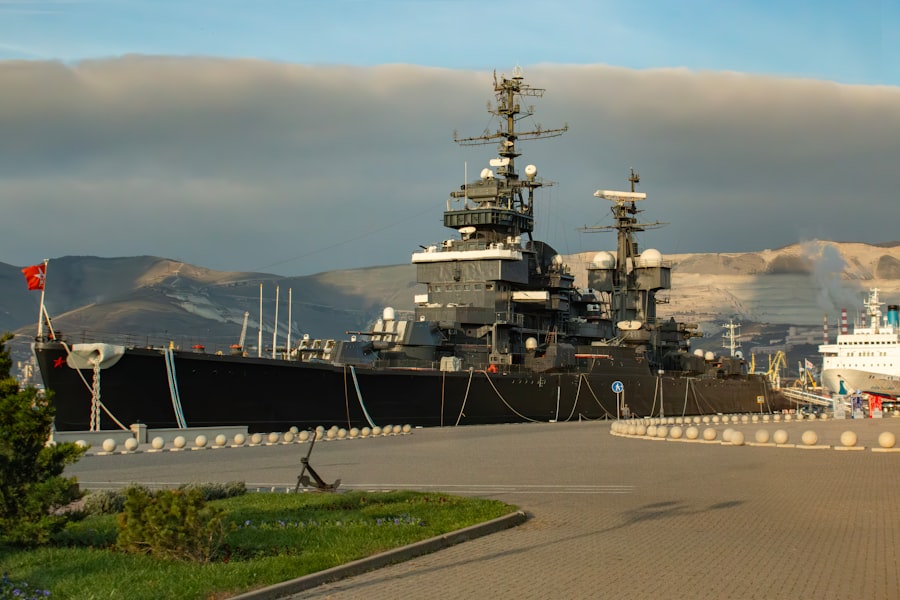
While the Polaris program remains the SPO’s Magnum Opus, its influence extended far beyond this singular achievement. The office continued to push the boundaries of naval technology, exploring and developing a diverse array of innovations that enhanced the Navy’s operational effectiveness and strategic reach.
Advancements in Submarine Technology
Following the success of Polaris, the SPO continued to refine and advance submarine technology. This included the development of larger and more capable submarines designed to carry a greater number of missiles, as well as improved sonar, quieter propulsion systems, and more sophisticated fire control systems. The evolution from Polaris to Poseidon and then to Trident demonstrated a consistent progression in strategic deterrence capabilities, each iteration building on the lessons learned and incorporating new technological breakthroughs. The submarine, much like a deep-sea predator, became ever more elusive and deadly.
Exploration of New Weapon Systems
The SPO’s mandate was not solely focused on strategic nuclear weapons. It also explored and developed other advanced weapon systems that could provide a tactical advantage. This included early research into guided missiles, advancements in torpedo technology, and the exploration of novel concepts for offensive and defensive naval warfare. The office acted as an incubator for ideas that might seem outlandish at first but could, with rigorous development, become game-changers on the battlefield.
The Role of Early Jet Propulsion and Missiles
While not entirely the domain of the SPO, its influence can be seen in the Navy’s embrace of early jet propulsion and missile technology. Recognizing the limitations of propeller-driven aircraft and traditional naval guns in a rapidly modernizing world, the SPO, through its broader understanding of emerging technologies, likely played a role in advocating for and facilitating the integration of these transformative advancements within the fleet. This proactive approach ensured the Navy was not left behind as aerospace and missile technology rapidly advanced.
The Legacy of Innovation: Impact and Enduring Influence
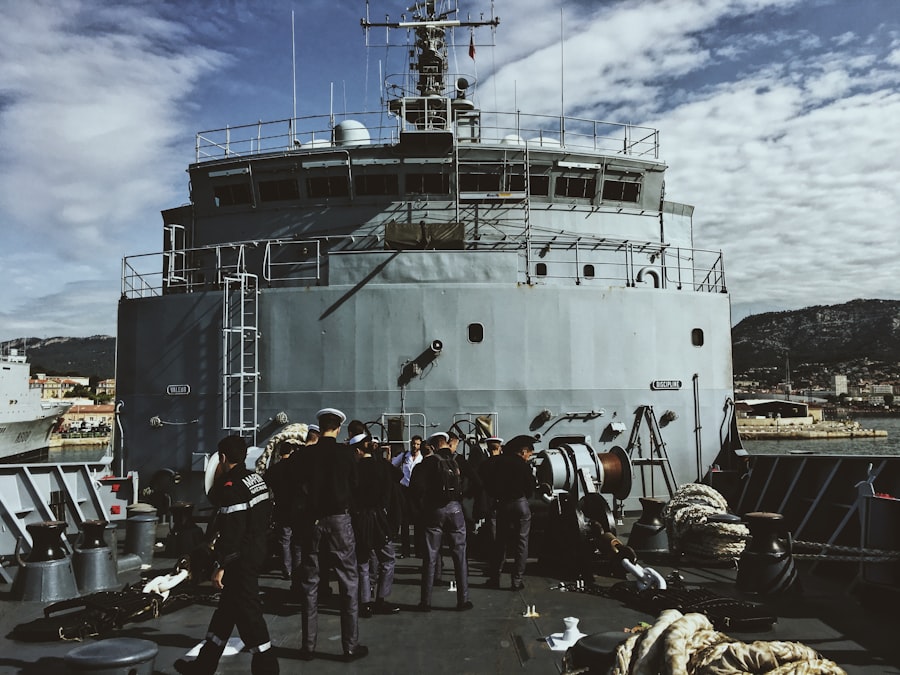
The innovations nurtured and brought to fruition by the Special Projects Office have had a profound and enduring impact on the United States Navy and global maritime strategy. Its successes underscore the importance of dedicated research and development in maintaining a strategic edge.
Shaping Modern Naval Doctrine
The strategic missile submarine, a direct product of the SPO’s work, remains a critical component of global nuclear deterrence. Its survivability and retaliatory capability have shaped naval doctrine for decades, influencing force structure, deployment strategies, and diplomatic considerations. The SPO’s work did not just build hardware; it fundamentally reshaped how navies conceived of their role in the global security architecture.
A Model for Future Development
The SPO’s success provides a valuable blueprint for future innovation within the military. Its emphasis on secrecy, agility, and the integration of cutting-edge science and engineering into practical applications offers a compelling model for tackling complex challenges. It demonstrates that by creating focused environments where brilliant minds can collaborate and iterate, revolutionary breakthroughs can be achieved. It’s a reminder that sometimes, the best way to build the future is to quietly and diligently lay its foundations.
The Unseen Architects of Security
While the names of the engineers and scientists who worked within the SPO may not be household names, their contributions are woven into the fabric of modern naval power and global security. They were the unseen architects who designed and built the silent guardians of peace and the ultimate arbiters of deterrence. Their legacy is found not in grand pronouncements but in the quiet hum of submarines beneath the waves and in the enduring stability that their innovations helped to secure.
The US Navy’s Special Projects Office has been at the forefront of innovative military technology, pushing the boundaries of what is possible in naval operations. Recent developments have sparked interest in how these advancements are shaping the future of maritime defense. For a deeper understanding of these initiatives, you can explore a related article that delves into the implications of these projects on national security. Check it out here to gain insights into the strategic importance of the Navy’s cutting-edge research and development efforts.
The Culture of Foresight: Lessons from the SPO
| Project Name | Objective | Start Year | Status | Key Technologies |
|---|---|---|---|---|
| Sea Shadow (IX-529) | Stealth ship technology development | 1984 | Completed | Stealth design, radar-absorbent materials |
| Advanced SEAL Delivery System (ASDS) | Submersible for special operations forces | 1983 | Cancelled | Submarine technology, stealth propulsion |
| Sea Dragon | Unmanned underwater vehicle (UUV) development | 2010 | Ongoing | Autonomous navigation, sonar systems |
| Project Azorian | Deep-sea recovery of sunken Soviet submarine | 1974 | Completed | Deep-sea engineering, covert operations |
| Sea Hunter | Autonomous surface vehicle for anti-submarine warfare | 2016 | Ongoing | Autonomous control, long-endurance navigation |
The Special Projects Office’s sustained success can be attributed to a deeply ingrained culture of foresight, a willingness to embrace challenging concepts, and the ability to attract and retain exceptional talent. Understanding this culture offers valuable lessons for any organization seeking to innovate.
Embracing Uncertainty and Risk
A hallmark of the SPO was its willingness to venture into uncharted territories. This meant embracing a degree of uncertainty and accepting a higher level of risk than might be palatable in more conventional organizations. The belief was that the potential strategic gains justified the inherent challenges. This is akin to a seasoned explorer charting unknown seas; the rewards of discovery can be immense, but the journey is fraught with peril.
The Power of Interdisciplinary Collaboration
The SPO thrived on bringing together individuals from diverse scientific and engineering disciplines. Physicists, mathematicians, oceanographers, naval architects, and propulsion experts worked in close concert, their varied perspectives sparking novel solutions to complex problems. This interdisciplinary approach was a formidable engine for innovation, preventing silos from forming and encouraging a holistic view of the challenges at hand.
A Long-Term Perspective
The projects undertaken by the SPO were rarely short-term endeavors. They often spanned years, even decades, from initial concept to full operational capability. This required a sustained commitment from leadership and a recognition that true transformative innovation takes time and persistent effort. The SPO understood that building the future was not a sprint but a marathon.
Attracting and Retaining Top Talent
Crucially, the SPO was successful in attracting and retaining some of the nation’s brightest minds. The challenging nature of the work, the opportunity to contribute to national security, and a degree of autonomy likely appealed to ambitious and intellectually curious individuals. The office fostered an environment where talent could flourish and where groundbreaking ideas were not just welcomed but actively sought out.
Conclusion: The Enduring Relevance of Innovation at Sea
The US Navy’s Special Projects Office stands as a powerful illustration of how focused, secretive, and strategically driven innovation can shape the course of history. From the revolutionary Polaris program to its ongoing contributions, the SPO has consistently demonstrated the critical role of foresight and technological advancement in maintaining national security and global stability. Its legacy is not just in the hardware it developed, but in the culture of innovation it fostered – a culture that continues to inspire and guide the Navy’s pursuit of excellence at sea. In an era where technological disruption is constant, the lessons learned from the Special Projects Office remain as relevant and vital as ever, reminding us that the future of maritime power is forged not in the spotlight, but in the quiet dedication of those who dare to imagine and build what comes next.
FAQs
What is the US Navy Special Projects Office?
The US Navy Special Projects Office (SPO) is a specialized division within the Navy responsible for managing and overseeing classified and advanced technology programs, often related to naval aviation and weapons systems.
When was the US Navy Special Projects Office established?
The US Navy Special Projects Office was established in the early 1960s to coordinate the development of cutting-edge naval technologies, including the A-7 Corsair II and other advanced aircraft programs.
What types of projects does the US Navy Special Projects Office handle?
The office handles highly classified projects involving advanced aircraft, weapons systems, and other naval technologies that require specialized management due to their sensitive nature and strategic importance.
How does the US Navy Special Projects Office contribute to naval capabilities?
By managing the development and deployment of advanced technologies, the Special Projects Office enhances the Navy’s operational effectiveness, ensuring that naval forces have access to state-of-the-art equipment and systems.
Is the work of the US Navy Special Projects Office publicly disclosed?
Much of the work conducted by the Special Projects Office is classified to protect national security interests, so detailed information about specific projects is typically not publicly available.