Exploring the Depths with Sun Shipbuilding’s Glomar Explorer
The ocean, a vast and enigmatic frontier, has long captivated the human imagination. For centuries, its surface has been a highway for exploration and trade, yet its abyssal depths remain largely uncharted, a realm of pressure, darkness, and peculiar life. Unlocking these secrets has required ingenuity and technological prowess, and in this arena, Sun Shipbuilding and Dry Dock Company, through its construction of the legendary Glomar Explorer, played a pivotal, albeit complex, role. The story of the Glomar Explorer is not merely one of a ship; it is a tapestry woven with innovation, ambition, and a healthy dose of Cold War intrigue.
Glomar Explorer was conceived not in the quiet contemplation of scientific discovery alone, but as a tool for a clandestine operation of immense strategic importance. Its genesis lies in the United States’ desire to recover a sunken Soviet submarine during the Cold War. This goal, audacious and fraught with technical challenges, demanded a vessel unlike any that had sailed before.
The Genesis of Project Azorian
The impetus for Glomar Explorer‘s creation was Project Azorian, a highly classified operation by the Central Intelligence Agency (CIA) to recover the K-129, a Soviet Golf-class ballistic missile submarine that sank in the Pacific Ocean in 1968. The potential intelligence gains from salvaging the submarine, particularly its nuclear missile components and cryptographic equipment, were considered immense. The challenge was not simply finding the wreck, which lay at a staggering depth of approximately 16,000 feet (4,900 meters), but devising a method to lift it without it disintegrating under the immense pressure.
The Role of Global Marine Development, Inc.
While Sun Shipbuilding was the builder, the operational entity behind Glomar Explorer was Global Marine Development, Inc. (GMDI), a subsidiary of Global Marine Inc., a company already possessing significant expertise in offshore drilling and specialized vessel construction. GMDI was tasked with designing and overseeing the construction of the bespoke vessel capable of executing Project Azorian. This partnership allowed for the consolidation of engineering know-how and shipbuilding capacity, crucial for such an unprecedented undertaking.
The Sun Shipbuilding Glomar Explorer, a remarkable vessel known for its role in deep-sea exploration and its connection to the CIA’s Project Azorian, has been the subject of much intrigue and analysis. For those interested in learning more about the broader implications of such covert operations and their impact on maritime technology, a related article can be found at this link. This article delves into the historical context and technological advancements that emerged from such secretive endeavors, providing a comprehensive overview of the era’s maritime innovations.
Sun Shipbuilding’s Engineering Marvel
The construction of Glomar Explorer was a testament to Sun Shipbuilding’s capabilities and the innovative spirit of its engineers. The vessel was to be more than just a ship; it was a mobile deep-sea platform, equipped with cutting-edge technology to perform a task that had previously been confined to the realm of science fiction.
A Unique Hull Design and Purpose-Built Structure
Glomar Explorer was not built from off-the-shelf designs. Its hull was custom-engineered to provide a stable platform in the often-turbulent waters of the Pacific. A defining feature was its exceptionally large, reinforced central well, a gaping maw designed to accommodate the colossal lifting equipment. This well, often referred to as the “moon pool,” was a critical element in Gemini’s unique approach, allowing for the deployment and retrieval of the massive claw mechanism. The sheer scale of the vessel, measuring 619 feet (189 meters) in length and with a beam of 105 feet (32 meters), underscored the magnitude of the operation it was designed to support.
The Heart of the Operation: The Lifting Mechanism
The true innovation lay not just in the ship itself, but in the sophisticated system designed to lift the submarine wreckage. This consisted of a massive, segmented steel claw, dubbed “Clementine,” suspended from a towering derrick. The claw was engineered to grip the central section of the K-129, estimated to weigh thousands of tons. The lifting process was to be controlled with extreme precision, a delicate dance between immense power and fine-tuned maneuverability. The derrick, a colossal structure rising from the ship’s deck, housed the winches and machinery necessary to operate Clementine. The sheer engineering required to design and build such a system, capable of operating at extreme depths and under immense strain, was groundbreaking.
Advanced Positioning and Stability Systems
To maintain its position over the precise location of the wreck at such depths, Glomar Explorer was equipped with an array of advanced dynamic positioning systems. These systems utilized sophisticated thrusters and sensors to counteract the effects of wind, waves, and currents, ensuring the vessel remained stationary over the target area with remarkable accuracy. This level of precision was paramount for the successful deployment and operation of the lifting gear. Furthermore, the ship’s double hull and ballast systems were designed to provide exceptional stability, a crucial factor when one considers the immense forces at play during the lifting of such a massive object.
The Ambitious Mission: Project Azorian Unveiled
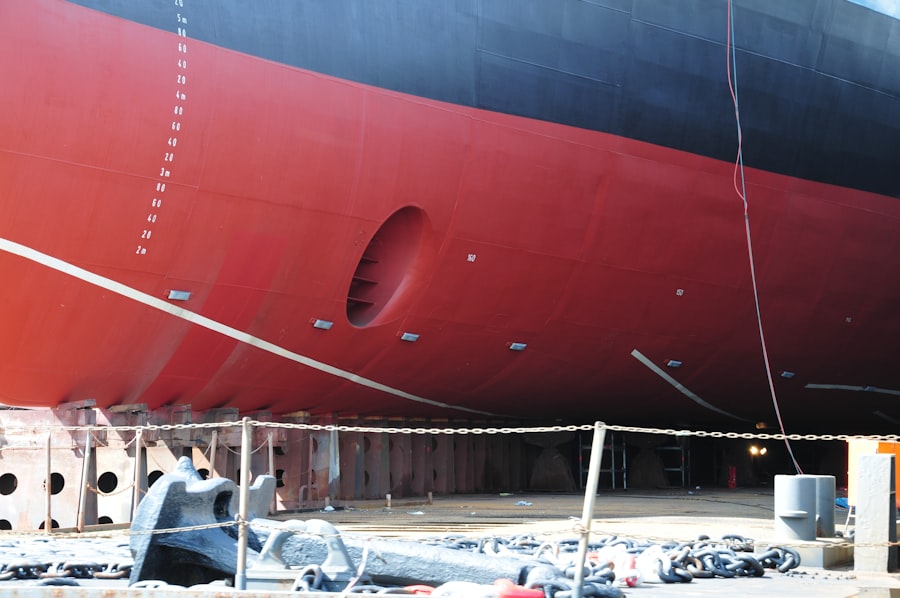
The execution of Project Azorian in 1974 was a high-stakes drama played out beneath the waves. The world remained largely unaware of the true purpose of the Glomar Explorer, with the official narrative painting it as a vessel engaged in deep-sea mining research.
The Cover Story: Deep-Sea Mining
To mask the true nature of its operation, Glomar Explorer was presented to the public as a vessel involved in the pioneering exploration of deep-sea manganese nodules, a promising potential source of valuable minerals. This provided a plausible justification for its specialized equipment and its extensive time at sea in remote oceanic locations. The narrative was carefully cultivated, involving scientific publications and public relations efforts designed to legitimize its activities as a research and development endeavor.
The Lifting Attempt: A Tale of Partial Success and Setbacks
The actual lifting attempt was a monumental undertaking. The Glomar Explorer maneuvered into position, and the massive claw was lowered into the abyss. The initial stages of the operation were met with a degree of success as the claw successfully grasped the K-129. However, the immense pressure and the fragile nature of the wreckage, along with some mechanical issues encountered with the lifting equipment, led to a partial success. While a portion of the submarine was brought to the surface, the bulk of the wreckage, and with it many of the hoped-for intelligence assets, was lost during the recovery process.
The Aftermath and the Truth Revealed
The true nature of Project Azorian and the Glomar Explorer‘s role in it remained a closely guarded secret for years. The partial recovery of the Soviet submarine, however, did yield some valuable intelligence. It was not until the mid-1990s that the full story of Project Azorian began to emerge through declassified documents and investigative journalism. The revelation of the Glomar Explorer‘s secret mission captivated the public, transforming it from a functional vessel into a legend of covert engineering and daring ambition.
Legacy of Innovation and the Shadow of Secrecy
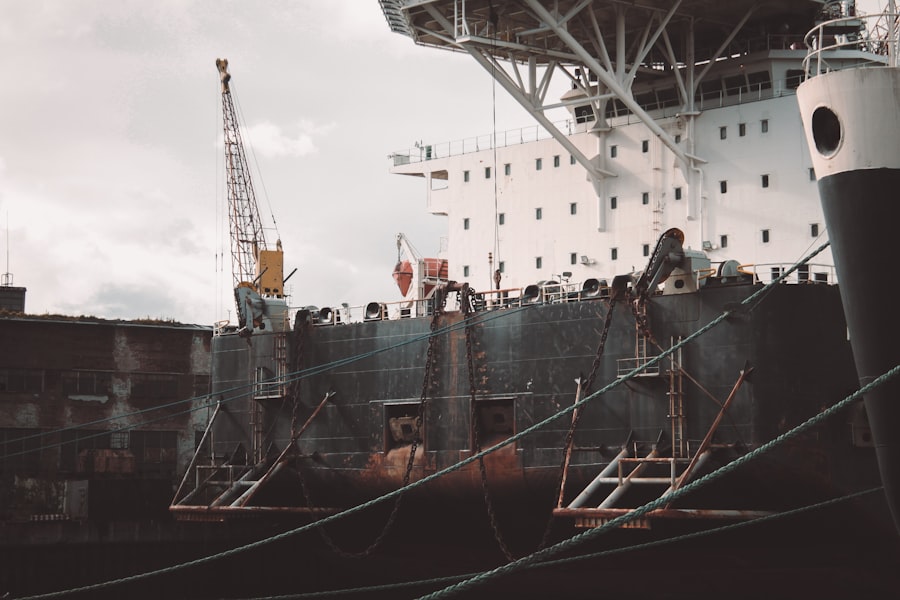
The Glomar Explorer left an indelible mark on maritime engineering and the annals of clandestine operations. Its construction and operational history highlight the lengths to which nations would go during the Cold War to gain strategic advantages.
Advancements in Deep-Sea Technology
Despite the partial success of its primary mission, Glomar Explorer‘s development spurred significant advancements in deep-sea technology. The innovations in vessel stability, dynamic positioning, and the engineering of massive lifting systems were transferable to other offshore industries, including oil and gas exploration. The very act of attempting such a complex salvage operation pushed the boundaries of what was thought possible in extreme environments.
A Symbol of Cold War Espionage and Ingenuity
The Glomar Explorer became an iconic symbol of the Cold War, embodying the intense technological race and the elaborate deceptions employed by both sides. Its existence and its secret mission served as a stark reminder of the complex geopolitical landscape of the era, where immense resources and ingenuity were channeled into operations that unfolded far from public view. The ship’s story is a potent illustration of how national security imperatives can drive extraordinary feats of engineering.
The Morality of the Mission
The story of Glomar Explorer also raises questions about the ethics of such covert operations. While the pursuit of intelligence is a recognized aspect of national security, the planning and execution of Project Azorian involved significant risks and a considerable expenditure of resources. The success of such endeavors, even partial, can be seen as a double-edged sword, offering strategic advantages while also residing in a moral grey area.
The Sun Shipbuilding Glomar Explorer is a fascinating vessel known for its unique role in deep-sea exploration and its connection to covert operations during the Cold War. For those interested in learning more about the intriguing history of this ship and its impact on maritime technology, a related article can be found at In the War Room, which delves into the broader implications of such innovations in naval engineering. This exploration not only highlights the Glomar Explorer’s significance but also sheds light on the strategic importance of underwater exploration during a pivotal era in history.
The Glomar Explorer‘s Subsequent Life and Enduring Significance
| Metric | Details |
|---|---|
| Ship Name | Glomar Explorer |
| Builder | Sun Shipbuilding & Drydock Company |
| Year Built | 1968 |
| Purpose | Deep-sea mining and CIA’s Project Azorian (secret recovery of Soviet submarine) |
| Length | 619 feet (189 meters) |
| Beam (Width) | 89 feet (27 meters) |
| Displacement | 21,000 tons |
| Special Features | Large moon pool for underwater recovery operations |
| Owner | Hughes Glomar Explorer, a subsidiary of Howard Hughes’ company |
| Fate | Sold for scrap in 2016 |
Following its momentous, albeit clandestine, mission, the Glomar Explorer continued to serve in various roles, its unique capabilities still in demand. Its story, however, remains firmly linked to the daring feat for which it was primarily conceived.
Continued Service and Adaptation
After Project Azorian, the Glomar Explorer was modified and utilized for other specialized purposes. It was later acquired by the U.S. Navy and subsequently by the Minerals Management Service for research related to offshore mineral resources. These later roles, while less dramatic than its initial assignment, still leveraged its robust construction and specialized equipment. The vessel demonstrated a capacity for adaptation, reflecting its fundamentally sound design.
The Loss of a Legend
Tragically, the Glomar Explorer met its end not through heroic sacrifice or a dramatic mission, but through the mundane process of demolition. After years of service and eventual retirement, the iconic vessel was scrapped in Brownsville, Texas, in 2012. Its passing marked the end of a physical chapter, but its legacy as a marvel of engineering and a silent witness to a pivotal moment in history endures.
Remembering a Unique Vessel
The story of the Glomar Explorer serves as a compelling case study in engineering, innovation, and the complex interplay of technology and geopolitics. It reminds us that beneath the placid surface of the ocean, and often hidden in the shadows of secrecy, human ingenuity can achieve the seemingly impossible. The knowledge gained, both in terms of technological advancement and strategic insight, underscores the profound impact this singular vessel, born from the shipyards of Sun Shipbuilding, had on the world. It stands as a testament to the ambition that drives exploration, whether that exploration is into the scientific unknown or the equally mysterious realm of national security.

WATCH NOW ▶️ SHOCKING: How The CIA Stole A Nuclear Submarine
FAQs
What was the Sun Shipbuilding Glomar Explorer?
The Sun Shipbuilding Glomar Explorer was a specialized deep-sea drilling ship built in the early 1970s. It was designed for a secret CIA mission called Project Azorian, aimed at recovering a sunken Soviet submarine from the Pacific Ocean.
Who built the Glomar Explorer and when?
The Glomar Explorer was constructed by Sun Shipbuilding & Drydock Company in Chester, Pennsylvania. The ship was launched in 1971 and was one of the largest and most advanced vessels of its time.
What was the primary mission of the Glomar Explorer?
The primary mission of the Glomar Explorer was to recover the Soviet submarine K-129, which had sunk in 1968. The CIA used the ship to covertly raise parts of the submarine from the ocean floor during Project Azorian.
What made the Glomar Explorer unique compared to other ships?
The Glomar Explorer was unique because it combined deep-sea drilling technology with a large mechanical claw capable of lifting heavy objects from the ocean floor. It was also equipped with a cover story as a commercial manganese nodule mining vessel to conceal its true purpose.
What happened to the Glomar Explorer after the mission?
After the completion of Project Azorian, the Glomar Explorer was sold and repurposed for commercial deep-sea mining operations. Over time, it changed ownership several times and was eventually retired from service.