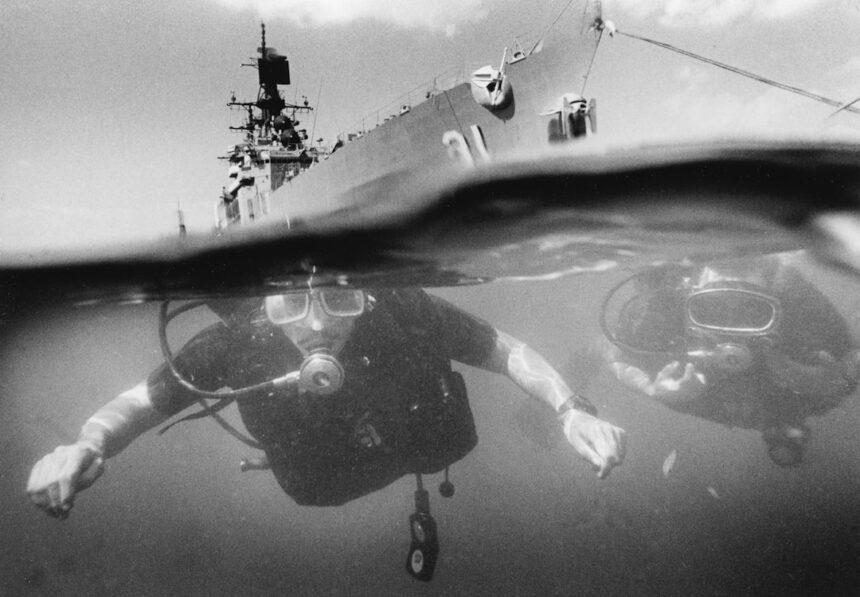
The vast, deep blue, often perceived as a silent and serene frontier, harbors a hidden world of strategic maneuvering and technological innovation. A recent documentary, “Undersea Shadow War,” offers a compelling and largely factual look into this clandestine realm, peeling back the layers of secrecy to expose the intricate dance of espionage and defense conducted beneath the ocean’s surface. The film, through a combination of expert interviews, historical footage, and detailed analysis, aims to demystify a domain that has, for decades, been a critical, yet often overlooked, theater of global power struggles.
The Unseen Battlefield: Why the Ocean Matters
The documentary begins by establishing a fundamental premise: the ocean is not merely a vast body of water but a strategic high ground, a silent guardian, and a potential highway for military activities. It is a terrain where conventional notions of warfare are profoundly altered, demanding specialized technologies and a deep understanding of hydrodynamics and acoustics.
A New Dimension of Warfare
Prior to the advent of advanced naval capabilities, the ocean was primarily viewed as a barrier or a conduit for surface-level trade and conflict. However, the development of submarines capable of extended underwater operation fundamentally changed this perception. The ability to operate undetected beneath the waves granted a significant advantage, allowing for reconnaissance, the deployment of weapons systems, and the projection of power without immediate visual or radar detection. “Undersea Shadow War” meticulously illustrates how this shifted the paradigm, creating a three-dimensional battlefield where depth and stealth are as crucial as speed and firepower.
The Silent Sentinels: Submarines and Their Role
The film dedicates substantial time to exploring the evolution and operational significance of submarines. From the early diesel-electric vessels to the nuclear-powered behemoths of today, the documentary traces the technological leaps that have enabled these boats to remain submerged for months, traverse vast distances, and carry formidable payloads. It highlights how submarines act as the “eyes and ears” of naval forces in many instances, capable of gathering intelligence on adversary movements and potential threats without revealing their own presence. Their ability to evade detection is a testament to the ingenuity of naval engineering and the constant arms race in anti-submarine warfare.
Strategic Importance in a Connected World
Even in an age dominated by cyber warfare and advanced aerospace capabilities, the ocean’s strategic importance remains undiminished. The documentary emphasizes that a significant portion of global communication relies on undersea cables, making them critical infrastructure vulnerable to disruption or surveillance. Furthermore, the control of maritime chokepoints, vital sea lanes for trade and military deployment, is intrinsically linked to naval dominance, and submarines play a pivotal role in securing or contesting these areas. The film argues that neglecting the undersea domain is akin to ignoring a vital artery in the body politic of global security.
The documentary “Undersea Shadow War” delves into the intricate and often covert operations taking place beneath the ocean’s surface, highlighting the strategic importance of underwater warfare. For those interested in exploring this topic further, a related article can be found at In The War Room, which provides in-depth analysis and insights into contemporary military strategies and the evolving nature of naval conflicts.
The Cold War Echoes: A Legacy of Sub-Surface Tension
“Undersea Shadow War” delves into the Cold War era, a period that arguably saw the most intense development and competition in undersea warfare. The documentary illustrates how the ideological struggle between the United States and the Soviet Union spilled into the depths, shaping naval doctrines and driving technological advancements that continue to influence present-day capabilities.
The Nuclear Deterrent: Submarines as Ballistic Missile Platforms
A significant portion of the film focuses on the role of ballistic missile submarines (SSBNs) as a cornerstone of nuclear deterrence. The documentary explains how these submarines, armed with intercontinental ballistic missiles (ICBMs), represent a “second-strike” capability, meaning they can survive a first nuclear strike and retaliate, thus discouraging any potential aggressor from initiating such an attack. The concept of maintaining a continuously deployed, undetectable nuclear deterrent beneath the waves is presented as a profound psychological and strategic tool, a Sword of Damocles hanging over potential adversaries.
The Silent Hunt: ASW and the Escalation of Cat and Mouse
The Cold War also witnessed a fierce an arms race in anti-submarine warfare (ASW). The film showcases the relentless pursuit of submarines by their adversaries, a constant game of cat and mouse played out in the acoustic shadows. The development of increasingly sophisticated sonar systems, both passive and active, alongside advanced torpedoes and aircraft, were all aimed at detecting and neutralizing the underwater threat. The documentary highlights the inherent challenges of ASW, where the target is actively trying to remain hidden in a vast, acoustically complex environment where sound travels differently and vast expanses can mask even large vessels. It presents these Cold War developments not just as military exercises but as a testament to human ingenuity pushed to its limits under immense pressure.
Espionage Beneath the Waves: Spy Submarines and Cable Taps
Beyond direct military confrontation, the Cold War era also saw the clandestine use of submarines for intelligence gathering. The documentary reveals how specialized submarines were developed and deployed for espionage missions, including the covert tapping of undersea communication cables. This aspect of the “shadow war” underscores the multifaceted nature of undersea conflict, where direct engagement is not the only objective. The film illustrates how the ability to intercept enemy communications, gather signals intelligence, and even physically access underwater infrastructure provided invaluable strategic insights, shaping diplomatic and military responses in real-time. These operations, often shrouded in extreme secrecy, demonstrate the lengths to which nations would go to gain an informational edge.
The Modern Landscape: Evolving Threats and Technologies
“Undersea Shadow War” argues that the end of the Cold War did not spell an end to the undersea shadow war; rather, it has evolved, adapting to new geopolitical realities and technological advancements. The documentary explores the current state of undersea capabilities and the emerging challenges that define this contemporary domain.
The Rise of New Navies and Global Ambitions
The film points to the growing naval power of nations beyond the traditional superpowers. The documentary highlights how emerging maritime powers are investing heavily in modern submarine fleets, signaling a shift in the global balance of naval power. This expansion is not merely about increasing vessel numbers but also about acquiring advanced technologies, including stealthier submarines, improved sensor capabilities, and more potent weapon systems. “Undersea Shadow War” suggests that this proliferation introduces new complexities to undersea warfare, requiring a re-evaluation of existing strategies and intelligence-gathering methods. The ocean depths are no longer the exclusive domain of a few, and this democratization of capability presents new strategic puzzles.
The Stealthy Predators: Advanced Submarine Technologies
The documentary elaborates on the cutting-edge technologies that are shaping modern submarines. It discusses innovations in hull design, acoustic silencing techniques that make submarines virtually invisible to sonar, and advanced propulsion systems that allow for extended submerged operations without the need for frequent surfacing. The film also touches upon the development of unmanned underwater vehicles (UUVs) and autonomous underwater vehicles (AUVs), which are increasingly being used for reconnaissance, mine countermeasures, and even offensive operations, acting as extensions of manned submersibles or as independent actors in the undersea environment. These technological advancements are akin to creating a new generation of stealthier, more agile predators in the deep.
The Information War Under the Waves: Cyber and Acoustic Warfare
The documentary emphasizes that the undersea shadow war is no longer solely about physical presence and acoustic detection. The film explores the growing importance of cyber warfare and acoustic warfare in this domain. It explains how adversaries can attempt to disrupt or compromise the navigation and communication systems of submarines through cyberattacks, or how sophisticated acoustic counter-measures can be employed to confuse sonar systems or mask the presence of friendly vessels. This aspect highlights the interconnectedness of modern warfare, where the battle extends beyond the physical realm into the digital and auditory spaces, creating an even more intricate and challenging battlefield.
Challenges of Detection and Counter-Detection
A significant portion of “Undersea Shadow War” is dedicated to the inherent difficulties and the continuous technological race in detecting and counter-detecting submarines. The documentary offers a detailed look at the science and engineering behind these efforts.
The Sonar Arms Race: Passive vs. Active Detection
The film provides an in-depth explanation of sonar technology, the primary tool for detecting submarines. It differentiates between passive sonar, which listens for the sounds emitted by a submarine, and active sonar, which emits sound pulses and listens for their echoes. The documentary illustrates how submarines are designed to minimize their acoustic signatures to evade passive sonar, while active sonar, though more effective in certain situations, can betray the presence of the detecting platform. This constant back-and-forth between improving detection capabilities and enhancing stealth is a central theme. It is a perpetual chess match played in the dark, where every move is countered by an ingenious defense.
Environmental Factors: The Ocean’s Deceptive Nature
“Undersea Shadow War” highlights how the complex and ever-changing environment of the ocean itself presents significant challenges to detection. Factors such as temperature gradients, salinity levels, and seabed topography can refract and distort sonar signals, creating “dead zones” or false positives. The documentary explains how these natural phenomena can be exploited by submarines to mask their presence, or conversely, can complicate the efforts of ASW forces. The ocean, in essence, becomes an active participant in the shadow war, a capricious ally or adversary.
The Human Element: Training and Intelligence
Beyond technology, the documentary acknowledges the crucial role of human expertise. It discusses the rigorous training required for submarine crews to operate their vessels effectively and the critical skills of sonar operators and ASW specialists. Furthermore, the film emphasizes the importance of intelligence gathering, both from signals intercepted from submarines and from clandestine sources, in shaping operational strategies and anticipating adversary movements. The human mind, with its ability to process complex data and make split-second decisions, remains an indispensable component of the undersea shadow war.
The Undersea Shadow War documentary sheds light on the covert operations and strategic maneuvers taking place beneath the ocean’s surface, revealing the complexities of modern naval warfare. For those interested in exploring this topic further, a related article provides an in-depth analysis of the geopolitical implications of underwater conflicts and the technologies involved. You can read more about it in this insightful piece found here.
The Future of Undersea Warfare
Looking ahead, “Undersea Shadow War” offers insights into the potential trajectory of undersea warfare. The documentary speculates on future technological developments and the strategic implications of an increasingly contested undersea domain.
The Proliferation of Unmanned Systems
The film discusses the growing integration of unmanned underwater vehicles (UUVs) and autonomous underwater vehicles (AUVs) into naval operations. These systems, ranging from small reconnaissance drones to larger mine-clearing platforms, are seen as a force multiplier, capable of extending the reach and presence of naval forces without the inherent risks associated with manned missions. The documentary suggests that in the future, these autonomous systems may operate in swarms, conducting complex missions in coordination, further blurring the lines between manned and unmanned operations and creating new challenges for detection and countermeasures.
The Importance of Undersea Infrastructure Security
As the world becomes increasingly reliant on undersea cables for communication and data transfer, the security of this vital infrastructure will become a paramount concern. The documentary touches upon the potential for hostile actors to target these cables for surveillance, disruption, or even sabotage. This aspect of the undersea shadow war is perhaps the most underappreciated by the public, yet it holds the potential for significant economic and societal disruption. Protecting these veins of global connectivity will become an increasingly important aspect of national security.
International Cooperation and Competition
The documentary concludes by reflecting on the dual nature of the undersea domain: a realm of intense competition but also one where cooperation is sometimes necessary. The film suggests that while nations will continue to develop advanced undersea capabilities, there may also be areas where international agreements and collaborative efforts are needed to ensure maritime safety and prevent unintended escalation. The vastness and complexity of the ocean demand a nuanced approach, one that balances national interests with the collective need for stability in this critical, unseen theater. The undersea shadow war, therefore, is not a static conflict but a dynamic and evolving struggle, intricately woven into the fabric of global security, with its true depths and implications still being explored.

WATCH NOW ▶️ SHOCKING: How The CIA Stole A Nuclear Submarine
FAQs
What is the “Undersea Shadow War” documentary about?
The “Undersea Shadow War” documentary explores the covert underwater conflict between global naval powers, focusing on submarine espionage, surveillance, and underwater warfare tactics.
Which countries are primarily featured in the documentary?
The documentary primarily features the United States, Russia, and China, highlighting their strategic underwater operations and technological advancements in submarine warfare.
What technologies are discussed in the documentary?
The film discusses various underwater technologies such as advanced submarines, underwater drones, sonar systems, and underwater communication networks used for surveillance and combat.
Who produced the “Undersea Shadow War” documentary?
The documentary was produced by a reputable media company specializing in military and geopolitical content, often collaborating with experts and former military personnel for accurate insights.
Where can viewers watch the “Undersea Shadow War” documentary?
The documentary is available on major streaming platforms, select television networks, and sometimes through official documentary film festivals or the producer’s website.