The saga of the Glomar Explorer, a purpose-built vessel of significant engineering prowess, extends far beyond its clandestine origins. Initially shrouded in Cold War intrigue, its legacy has evolved to encompass the burgeoning frontier of deep-sea mining. This article delves into the technological advancements and strategic implications associated with this vessel and the industry it now represents, offering readers a comprehensive overview of a field poised to reshape the global resource landscape.
Conceived under the auspices of the Central Intelligence Agency (CIA) during the height of the Cold War, the Glomar Explorer was a marvel of covert engineering. Its overt purpose, as presented to the public, was deep-sea manganese nodule mining. This elaborate cover story, known as Project Azorian, served to mask its true objective: the recovery of a sunken Soviet submarine, the K-129, from the Pacific Ocean floor.
Project Azorian: Engineering a Covert Retrieval
Project Azorian, initiated in 1968, was an audacious undertaking. The K-129, a Golf-II class ballistic missile submarine, had sunk in 1968 approximately 1,560 miles northwest of Oahu, Hawaii, at a depth of over 16,000 feet (4,900 meters). Retrieval of the entire submarine was deemed impractical; instead, the CIA focused on recovering a section containing its nuclear missiles, codebooks, and cryptographic equipment.
Howard Hughes’s Role and the Public Deception
The involvement of eccentric billionaire Howard Hughes and his company, Summa Corporation, provided a plausible civilian facade for the Glomar Explorer‘s construction and operations. Hughes’s purported interest in deep-sea mining, coupled with his reputation for grand and unconventional projects, lent credibility to the deep-sea mining cover. This strategic misdirection played a crucial role in maintaining secrecy for several years.
The “Grapple” and the “Moon Pool”
Central to the Glomar Explorer‘s design was a massive “moon pool” – a large, rectangular opening in the center of the ship’s hull, allowing for the deployment and retrieval of large objects from the ocean floor. A colossal mechanical claw, nicknamed the “Clementine” or simply the “grapple,” was designed to be lowered through this moon pool to grasp and lift the submarine section. This mechanism, powered by a sophisticated hydraulic system, represented a significant leap in deep-ocean heavy lift capabilities, truly pushing the boundaries of what was thought possible at such depths. The precision and power required for this operation, in such a challenging environment, were unprecedented.
The Glomar Explorer, originally designed for deep-sea mining operations, has been the subject of much intrigue and speculation regarding its true purpose. For those interested in exploring the complexities of this vessel and its connection to covert operations, a related article can be found at In the War Room. This article delves into the historical context and implications of the Glomar Explorer’s missions, shedding light on the intersection of maritime technology and national security.
From Covert Ops to Commercial Ventures: The Glomar Explorer‘s Second Act
After its covert mission and subsequent disclosure in 1975, the Glomar Explorer‘s original purpose evaporated. For years, the vessel idled, a testament to its singular design and the lack of an immediate commercial application for such specialized capabilities. However, as global demand for critical minerals escalated and terrestrial reserves dwindled, the spotlight slowly shifted back to the deep sea, offering the Glomar Explorer a second, more overt, act.
Redeployment in Deep-Sea Drilling
In the late 1990s, the Glomar Explorer found a new lease on life, undergoing extensive modifications for commercial deep-sea drilling operations. Its inherent stability, massive moon pool, and robust lifting capabilities made it an ideal platform for ultra-deepwater exploration for oil and gas. This transition showcased its adaptability and the enduring value of its original, over-engineered design.
Subsea Interventions and Recovery Missions
Beyond drilling, the vessel’s unique characteristics proved invaluable for various subsea intervention and recovery missions. Its ability to handle large, heavy equipment at extreme depths made it suitable for tasks such as retrieving fallen risers or other subsea infrastructure, highlighting its versatility as a heavy-lift platform in the deep ocean.
The Foundation for Future Deep-Sea Mining Technologies
While the Glomar Explorer itself did not directly engage in large-scale commercial deep-sea mining as originally conceived, its existence and the technologies developed for its initial mission laid crucial groundwork. The engineering challenges overcome in its construction and operation provided a blueprint for subsequent generations of deep-sea exploration and extraction equipment. It served as a proof of concept, demonstrating that large-scale operations in extreme deep-ocean environments were indeed feasible.
The Allure of the Abyssal Plains: The Promise of Deep-Sea Mining
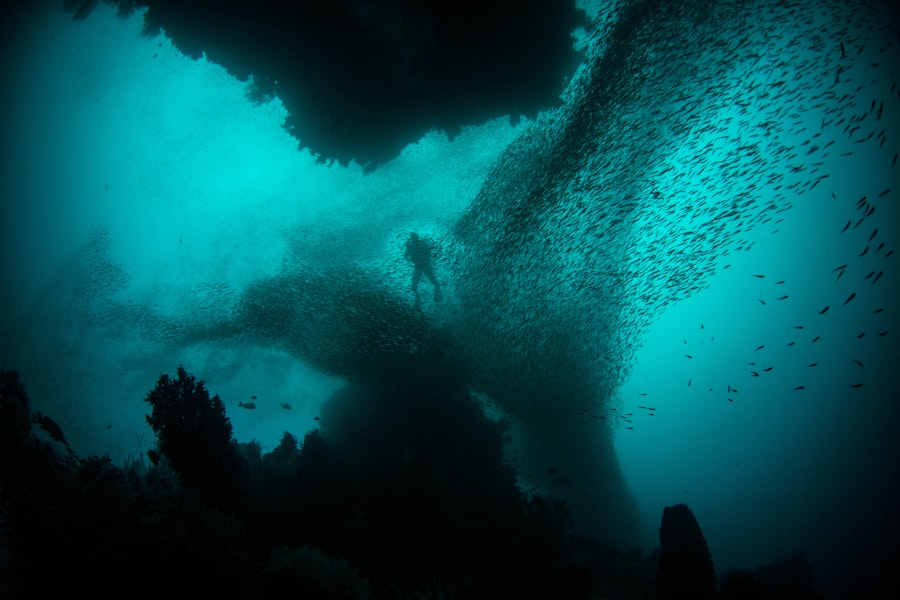
The deep ocean, a vast and enigmatic frontier, holds immense concentrations of minerals vital to modern technology. As the world transitions to a green economy, the demand for metals like copper, nickel, cobalt, and rare earth elements, crucial for electric vehicles, renewable energy systems, and electronic devices, is projected to skyrocket. Terrestrial mining faces increasing environmental and social pressures, making the deep seabed an increasingly attractive, albeit controversial, alternative.
Polymetallic Nodules: A Treasure Trove on the Seafloor
One of the primary targets for deep-sea mining are polymetallic nodules. These potato-sized concretions, rich in manganese, nickel, copper, and cobalt, litter vast expanses of the abyssal plains, particularly in the Clarion-Clipperton Zone (CCZ) in the Pacific Ocean. They essentially represent millions of years of deposition, readily accessible on the surface of the seabed, unlike buried ore bodies on land.
Seafloor Massive Sulfides: Venting Riches
Another significant resource are seafloor massive sulfides (SMS) deposits, formed around hydrothermal vents. These active and inactive vents discharge superheated, mineral-rich fluids, which, upon contact with cold seawater, precipitate into vast chimney-like structures and mounds teeming with copper, zinc, gold, and silver. Mining these, however, presents unique challenges due to their association with fragile chemosynthetic ecosystems.
Cobalt-Rich Ferromanganese Crusts: Seamount Jewels
Cobalt-rich ferromanganese crusts form on the flanks and summits of seamounts and other hard-rock substrates. These crusts, typically a few centimeters thick, are rich in cobalt, manganese, nickel, platinum, and rare earth elements. Their location on elevated seafloor features means they are often found in areas of significant biodiversity and ocean currents, adding another layer of complexity to their potential extraction.
Technological Advancements in Deep-Sea Mining Equipment
The transition from conceptual deep-sea mining to practical application necessitates sophisticated technological solutions. Drawing lessons from the Glomar Explorer‘s pioneering spirit, modern deep-sea mining equipment is designed to operate autonomously or remotely, withstand extreme pressures, and efficiently collect and transport minerals from the abyssal depths to the surface.
Remotely Operated Vehicles (ROVs) and Autonomous Underwater Vehicles (AUVs)
The eyes and hands of deep-sea mining operations are increasingly ROVs and AUVs. These robotic systems are deployed for surveying potential mining sites, assessing environmental conditions, and monitoring extraction processes. ROVs, tethered to surface vessels, provide real-time data and allow for direct human control, while AUVs, operating independently, can cover vast areas with pre-programmed missions, serving as scouts and cartographers of the deep.
Collector Vehicles: The Harvesters of the Deep
Collector vehicles, essentially specialized robotic seafloor crawlers, are designed to pick up polymetallic nodules from the seabed or process SMS deposits. These machines employ various collection mechanisms, such as suction hoses, mechanical dredges, or cutting tools, depending on the mineral type and substrate. Their interaction with the seafloor and the potential for sediment plume generation are critical environmental concerns.
Riser and Lifting Systems: The Umbilical to the Surface
Once collected, the minerals need to be transported to the surface. This is achieved through sophisticated riser and lifting systems. These typically involve a series of pipes – the riser – which transports a slurry of nodules and seawater or crushed ore to a support vessel at the surface. Powerful pumps, often located along the riser or on the collector vehicle itself, provide the necessary pressure to lift thousands of tons of material from several kilometers depth. This is a formidable engineering challenge, akin to creating a dynamic skyscraper that can withstand immense forces.
The Glomar Explorer, a vessel shrouded in mystery, is often associated with deep sea mining and covert operations during the Cold War. Its intriguing history has led to numerous discussions about the implications of underwater resource extraction. For those interested in exploring this topic further, a related article can be found at this link, which delves into the complexities and controversies surrounding deep sea mining and its environmental impact.
Environmental Considerations and Regulatory Frameworks
| Metric | Value | Unit | Description |
|---|---|---|---|
| Vessel Name | Glomar Explorer | – | Name of the deep sea mining cover vessel |
| Length Overall | 185 | meters | Total length of the vessel |
| Beam | 25 | meters | Width of the vessel at its widest point |
| Draft | 8.5 | meters | Vertical distance between waterline and bottom of hull |
| Displacement | 21,000 | tons | Weight of water displaced by the vessel |
| Mining Cover Depth Capability | 3,000 | meters | Maximum depth for deep sea mining cover operations |
| Operational Speed | 12 | knots | Maximum speed during mining cover operations |
| Year Built | 1974 | – | Year the vessel was constructed |
| Mining Cover System Type | Submersible Cover | – | Type of cover system used for deep sea mining |
| Power Source | Diesel-Electric | – | Type of power system used on the vessel |
The prospect of deep-sea mining, while offering potential economic benefits, raises significant environmental concerns. The deep ocean, long considered pristine, harbors unique ecosystems and species that are highly vulnerable to disturbance. Consequently, establishing robust and effective regulatory frameworks is paramount to ensure responsible and sustainable resource extraction.
Impact on Benthic Ecosystems
Deep-sea mining operations have the potential to profoundly impact benthic (seafloor) ecosystems. Collector vehicles can destroy habitats, creating sediment plumes that smolder and spread, smothering organisms over wide areas. The noise and light pollution generated by operations can also disrupt deep-sea fauna, many of which are highly sensitive to such changes. Recovery from these disturbances can take centuries, if not millennia, due to the slow growth rates and unique adaptations of deep-sea life.
Sediment Plumes and Water Column Impacts
The creation of sediment plumes, both at the seabed during collection and within the water column during dewatering and discharge of processing waste, is a major concern. These plumes can reduce water clarity, alter ocean chemistry, and impact filter-feeding organisms over large distances, potentially affecting commercial fisheries and other marine life far beyond the immediate mining site.
The Role of the International Seabed Authority (ISA)
The International Seabed Authority (ISA), established under the United Nations Convention on the Law of the Sea (UNCLOS), is responsible for regulating mineral-related activities in the international seabed area, beyond national jurisdiction. The ISA is tasked with developing and enforcing environmental regulations, issuing exploration and exploitation contracts, and ensuring that mining activities are carried out for the benefit of humankind as a whole, with “due regard for the protection of the marine environment.” This responsibility represents a delicate balancing act, a tightrope walk between resource needs and environmental stewardship.
Developing Environmental Baselines and Impact Assessments
A critical step in responsible deep-sea mining involves establishing comprehensive environmental baselines before any mining activity commences. These baselines provide a reference point against which potential impacts can be measured. Rigorous environmental impact assessments (EIAs) are then necessary to predict, mitigate, and monitor these impacts throughout the life cycle of a mining project. The very vastness and inaccessibility of the deep ocean, however, make these assessments inherently challenging, a puzzle with many missing pieces.
The Glomar Explorer, born of Cold War necessity, serves as a poignant reminder of humanity’s capacity for extraordinary engineering feats in the deep sea. Its legacy, now intertwined with the complex narrative of deep-sea mining, underscores the continuing drive to explore and exploit the ocean’s hidden riches. As the world grapples with the imperative of securing critical raw materials, the technological advancements inspired by and built upon the foundations laid by this remarkable vessel continue to push the boundaries of what is possible, while simultaneously challenging us to confront the profound environmental responsibilities that accompany such power. The deep seabed, once a realm of pure mystery, is now on the cusp of becoming a critical frontier, demanding a cautious and well-regulated approach as we unveil its secrets and consider its resources. The future of deep-sea mining is not merely a question of technology, but fundamentally a question of balance: between global resource demands and the preservation of an ecosystem whose intricacy we are only just beginning to comprehend, a high-stakes gamble on the health of our planet.

WATCH NOW ▶️ SHOCKING: How The CIA Stole A Nuclear Submarine
FAQs
What was the Glomar Explorer originally built for?
The Glomar Explorer was originally built in the early 1970s by the CIA for a secret mission to recover a sunken Soviet submarine from the ocean floor.
How is the Glomar Explorer connected to deep sea mining?
After its initial covert mission, the Glomar Explorer was repurposed in the 1980s for deep sea mining exploration, particularly for extracting manganese nodules from the ocean floor.
What are manganese nodules, and why are they important?
Manganese nodules are rock concretions found on the deep ocean floor that contain valuable metals such as manganese, nickel, copper, and cobalt, which are important for various industrial applications.
Did the Glomar Explorer successfully mine the ocean floor?
While the Glomar Explorer conducted extensive exploration and testing, it did not achieve commercial deep sea mining success and was eventually retired from mining operations.
What impact did the Glomar Explorer have on deep sea mining technology?
The Glomar Explorer contributed to the development of deep sea mining technology and increased interest in the potential of seabed mineral resources, influencing future research and exploration efforts.