The deep ocean, a vast and largely unexplored frontier, holds countless secrets. One such mystery, shrouded in the Cold War’s icy grip, is the fate of Soviet submarine K-129. Its story is a testament to the high stakes of espionage, the technological prowess of a bygone era, and the enduring quest for knowledge in the face of profound loss. This article aims to peel back the layers of this enigma, exploring the known facts, the theories, and the daring attempts to bring a piece of this underwater tragedy to light.
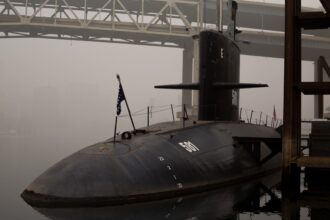
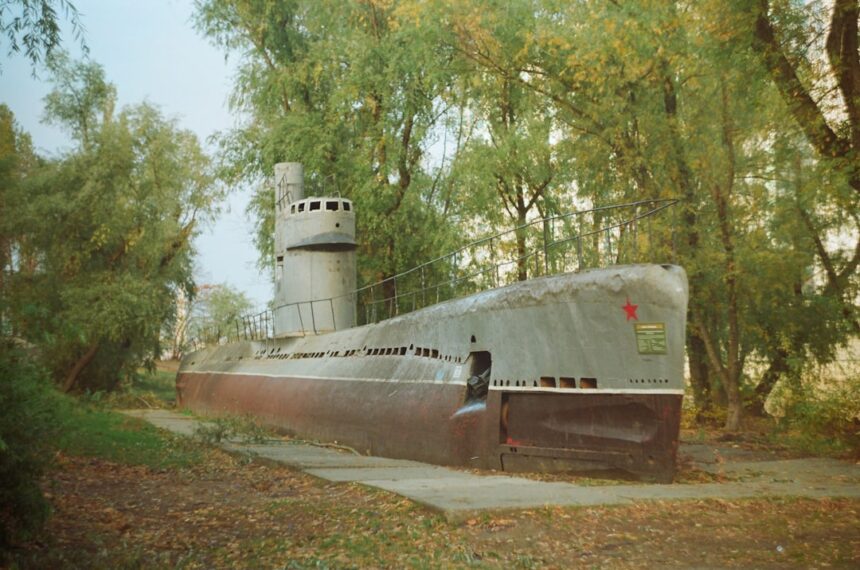
The Soviet submarine K-129 was a diesel-electric powered ballistic missile submarine of the Project 629 class, also known as the Golf class in NATO reporting. Commissioned in 1960, K-129 was a potent symbol of Soviet naval strength during the Cold War, designed for strategic deterrence. Its disappearance in March 1968 remains one of the most significant naval mysteries of the era.
A Routine Patrol Gone Awrry
K-129 departed from its base in Rybachiy, on the Kamchatka Peninsula, on a routine patrol. Its mission was to operate in the Pacific Ocean, likely a part of the Soviet Union’s naval presence in the region during a period of heightened tension with the United States. The submarine carried Polaris missiles, a formidable strategic weapon, adding a layer of urgency and sensitivity to its operations.
The Last Signals and an Unanswered Call
The submarine’s last known communication was a routine radio check. Following this, K-129 fell silent. As days turned into weeks with no further contact, Soviet naval authorities became increasingly concerned. The lack of any distress signals or debris reported by other vessels operating in the area deepened the mystery. The absence of any communication was like a key turning in a lock, sealing K-129 in an impenetrable silence.
The Soviet Golf II class submarine K-129, which tragically sank in 1968, has been the subject of numerous investigations and analyses over the years. For those interested in exploring more about the mysterious circumstances surrounding its sinking and the subsequent recovery efforts, a related article can be found at this link: Soviet Golf II Class Submarine K-129. This article delves into the historical context, technological aspects, and the geopolitical implications of the incident, offering a comprehensive overview for enthusiasts and historians alike.
The Search and the Initial Assessment: A Ghost Ship in the Abyss
The Soviet Union initiated a considerable search effort for K-129. However, the sheer immensity of the Pacific Ocean presented a formidable challenge. The vastness of the underwater world is akin to looking for a single grain of sand on an endless beach. Without the precise location of its disappearance, the search was akin to navigating a labyrinth blindfolded.
Soviet Naval Efforts: A Race Against Time and Ignorance
The Soviet Navy deployed numerous vessels and aircraft to scour the suspected patrol routes of K-129. However, their search was hampered by a lack of concrete information regarding the submarine’s fate. The prevailing theory among the Soviets was that the submarine had suffered a catastrophic accident, possibly an internal explosion or a collision with another vessel.
The American Shadow: Unseen Eyes in the Deep
Unbeknownst to the Soviets at the time, the United States Navy was also keenly aware of K-129’s disappearance. U.S. signals intelligence had been monitoring Soviet submarine activity. The sudden silence of K-129 did not go unnoticed by American intelligence agencies. American submarines and reconnaissance aircraft were also dispatched to the region, though their primary objective was not recovery but intelligence gathering – to potentially discover the fate of the Soviet vessel and any implications for their own naval operations.
The Discovery: A Monumental Leap of Faith and Technology
Years after its disappearance, the United States made a remarkable discovery that would shed light on the fate of K-129. This discovery was not accidental; it was the result of a highly classified and ambitious project that pushed the boundaries of underwater exploration.
Project Azorian: A Cold War Gambit
Project Azorian was a top-secret operation initiated by the Central Intelligence Agency (CIA) in the late 1960s. The objective was to locate, explore, and potentially salvage the wreck of K-129. The American intelligence community suspected that the submarine’s hull might have been compromised, and the extreme pressures at oceanic depths would have caused it to break apart. The challenge was not only to find it but also to retrieve a significant portion of it.
The Glomar Explorer: A Ship Designed for Secrets
The centerpiece of Project Azorian was the specialized ship Glomar Explorer. Built in extreme secrecy, this vessel was designed for deep-sea salvage operations. Its most distinctive feature was a massive moon pool—an opening in the center of the ship’s hull through which heavy equipment could be lowered to the ocean floor. The Glomar Explorer was essentially a floating fortress built to conquer the abyss. Its purpose was to be a fishing trawler of the most sensitive kind, casting its nets into the deepest parts of the ocean for secrets.
Locating the Wreck: A Needle in an Ocean of Hay
After years of painstaking analysis of signals intelligence and oceanographic data, American intelligence pinpointed an area in the Pacific Ocean where they believed K-129 had sunk. The exact location was approximately 2,600 nautical miles (4,800 km) northwest of Hawaii, at a depth of around 16,000 feet (4,900 meters). The arduous task of surveying this vast underwater expanse began, a testament to the perseverance required in such endeavors.
The Salvage Operation: A Catfish and a Clever Disguise
The proposed salvage operation was audacious, bordering on the fantastical. The American plan was to lift a significant section of the submarine from the seabed and bring it aboard the Glomar Explorer. This was a feat never before attempted at such extreme depths.
The “Catfish”: A Mechanical Marvel
The key piece of equipment developed for Project Azorian was a massive mechanical claw, nicknamed the “catfish.” This sophisticated device was designed to grapple the submarine’s hull and lift it to the surface. The technical challenges were immense, from the extreme pressure at depth to the precise maneuvering required to secure the immense weight of a submarine. The Glomar Explorer and its “catfish” were a symphony of engineering designed to perform a ballet of retrieval in the crushing darkness.
The Cover Story: A Commercial Endeavor
To conceal the true nature of Project Azorian from the Soviet Union and the wider world, a plausible cover story was concocted. The operation was publicly presented as a commercial deep-sea mining venture, prospecting for manganese nodules. This fabricated narrative allowed the Glomar Explorer to operate discreetly, its true purpose hidden beneath layers of corporate pretenses.
The First Attempt: Partial Success and a Lingering Enigma
In 1974, the Glomar Explorer was deployed to the wreck site. The operation was a partial success. The “catfish” managed to lift a significant portion of K-129, estimated to be about 50 feet of its hull, including its missile compartment. However, the salvage proved to be more complex than anticipated. During the ascent, the retrieved section broke apart, and a portion of it fell back to the seabed. Nevertheless, enough was recovered to provide crucial insights.
The Soviet Golf II class submarine K-129 has been a subject of intrigue and speculation, particularly due to its mysterious sinking in 1968. This incident not only highlighted the vulnerabilities of Cold War naval operations but also sparked various conspiracy theories regarding its mission and the cargo it was carrying. For those interested in exploring more about the complexities surrounding this submarine, a related article can be found here, which delves into the broader implications of the K-129 incident on naval strategy and intelligence during that era.
The Aftermath and the Lingering Questions: Unraveling the Threads of Truth
| Metric | Details |
|---|---|
| Class | Golf II class (Project 629A) |
| Submarine Name | K-129 |
| Type | Diesel-electric ballistic missile submarine |
| Displacement | Approximately 5,000 tons surfaced, 6,000 tons submerged |
| Length | 98 meters (approx.) |
| Beam | 8.2 meters (approx.) |
| Propulsion | Diesel-electric engines, 2 shafts |
| Speed | 16 knots surfaced, 15 knots submerged |
| Test Depth | Approximately 300 meters |
| Armament | 3 x R-21 (SS-N-5 Serb) ballistic missiles, torpedo tubes |
| Commissioned | 1962 |
| Fate | Sank in 1968 under mysterious circumstances |
| Notable Event | Project Azorian recovery attempt by the United States in 1974 |
The recovery of wreckage from K-129, however incomplete, provided valuable intelligence for the United States. The extent of this intelligence and its implications are still subjects of speculation and historical debate. The mystery of K-129, while partly unveiled, continues to hold its secrets.
Intelligence Gains: A Peek Behind the Iron Curtain
The recovered sections of K-129 yielded a wealth of information about Soviet submarine technology, missile systems, and operational procedures. This intelligence was invaluable to the U.S. during the Cold War, providing a clearer understanding of Soviet military capabilities and intentions. It was like finding a key to a locked diary, offering intimate details of the adversary’s thoughts and plans.
The Fate of the Crew: A Silent Memorial
Sadly, the salvage operation did not recover the bodies of the 98 crew members of K-129. Most of the submarine had been destroyed by the implosion, and the recovered sections were insufficient to identify all personnel. The U.S. Navy conducted a memorial service for the Soviet sailors lost with the submarine, acknowledging the human tragedy at the heart of the incident. The silence of the deep sea became the eternal resting place for these men, a poignant reminder of the human cost of geopolitical conflict.
Theories of the Sinking: A Spectrum of Possibilities
While the exact cause of K-129’s sinking remains officially unconfirmed by the Soviet Union, several theories have emerged.
Catastrophic Accident
The most widely accepted theory, likely the one the Soviets themselves concluded, is a catastrophic accident. This could have involved a hydrogen leak from the batteries, leading to an explosion in the forward torpedo room, the submarine’s Achilles’ heel in many of its contemporaries. Another possibility is a collision with another vessel, either Soviet or foreign, though evidence for this is scarce.
Missile Malfunction
A less likely but still considered possibility is a missile malfunction. During its patrol, K-129 might have been conducting a test or preparing for one, and a system failure during this process could have led to a catastrophic event. This theory is not as widely supported due to the lack of any indication of a missile launch or related incident.
External Factors
While less probable, some speculation has arisen about external factors, such as entanglement with underwater obstacles or even interference from seismic activity. However, the depth and nature of the wreck site make these theories less plausible explanations for the complete loss of the submarine.
The story of Soviet submarine K-129 serves as a compelling narrative of the Cold War, a period characterized by intense technological competition and clandestine operations. It is a reminder that beneath the surface of global politics, human lives are at stake, and the pursuit of knowledge, even through daring and controversial means, can uncover fragments of truth from the deepest abysses. The wreck of K-129, though partially recovered, continues to lie on the ocean floor, a silent monument to a lost era and a persistent reminder of the enduring mysteries that the ocean still holds.

WATCH NOW ▶️ SHOCKING: How The CIA Stole A Nuclear Submarine
FAQs
What was the Soviet Golf II class submarine K-129?
The Soviet Golf II class submarine K-129 was a diesel-electric ballistic missile submarine operated by the Soviet Navy during the Cold War. It was part of the Project 629 class, known by NATO as the Golf class, and was designed to carry and launch ballistic missiles.
When was the K-129 submarine in service?
The K-129 submarine was commissioned in the early 1960s and was active during the Cold War period. It was lost in 1968 under mysterious circumstances while on a patrol mission in the Pacific Ocean.
What happened to the K-129 submarine?
The K-129 submarine sank in March 1968 in the Pacific Ocean. The exact cause of the sinking remains uncertain, but it is believed to have been an accident or mechanical failure. The Soviet Union lost contact with the submarine, and it was declared lost with all hands.
Was there any recovery effort for the K-129 submarine?
Yes, the United States conducted a secret recovery operation known as Project Azorian in the early 1970s. Using the specially designed ship Hughes Glomar Explorer, the U.S. attempted to recover parts of the sunken K-129 submarine from the ocean floor to gather intelligence.
What was the significance of the K-129 submarine during the Cold War?
The K-129 was significant as it represented the Soviet Union’s strategic nuclear deterrent capability with its ballistic missile armament. Its loss and the subsequent U.S. recovery efforts highlighted the intense espionage and intelligence-gathering activities between the superpowers during the Cold War.