The deep sea is a realm of immense pressure, crushing darkness, and secrets buried for decades. It is a graveyard of ambition, a canvas for the relentless sculpting hand of time and water. Yet, for a select few, it is also a frontier, a place where the impossible can be wrestled from the abyss. Project Azorian, a clandestine operation conducted in the mid-1970s, stands as a testament to this audacious pursuit, an epic undertaking that aimed to retrieve a lost Soviet submarine and its revolutionary technology from the very bottom of the Pacific Ocean. This mission, cloaked in layers of secrecy and military maneuvering, was as much a geopolitical chess match as it was a triumph of engineering and human endeavor.
A Cold War Casualty
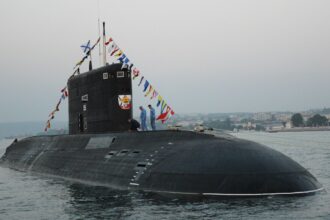
In the early hours of March 11, 1968, the Soviet submarine K-129, a Golf II-class diesel-electric ballistic missile submarine, vanished from sonar screens. Its mission, a routine patrol in the Pacific Ocean, ended in a catastrophic event that has never been definitively explained. The precise cause of the K-129’s demise remains a subject of speculation. Theories range from an internal explosion, possibly ignited by a hydrogen leak from its batteries, to a mid-ocean collision with an American submarine. Whatever the catalyst, the result was a devastating implosion, sending the K-129 and its 98 crew members to a watery grave at a depth of approximately 4,877 meters (16,000 feet). The K-129 was more than just a lost vessel; it was a cradle of Soviet nuclear might. Within its hull lay three nuclear-tipped ballistic missiles, a prize of immeasurable strategic value to any nation possessing the capability to recover them.
The Strategic Imperative
The loss of the K-129 presented the United States with a unique and tantalizing opportunity, a strategic windfall born from an enemy’s misfortune. The intelligence community immediately recognized the potential implications of the submarine falling into American hands. Access to the K-129’s advanced sonar systems, its communication technology, and most critically, its nuclear missiles, would provide an unprecedented glimpse into Soviet naval capabilities. This was the height of the Cold War, a period of intense ideological rivalry and technological arms race. Information was as potent a weapon as any missile, and the K-129 held a treasure trove of it. The U.S. Navy, in particular, was eager to dissect the Soviet submarine, hoping to understand its strengths and weaknesses, and to potentially gain an edge in naval warfare.
The Discovery of the Wreck
The U.S. Navy’s intelligence apparatus, with its vast array of surveillance assets, had been actively monitoring Soviet naval movements. Through a combination of sophisticated signal intelligence gathering and the analysis of oceanographic data, they were eventually able to pinpoint the approximate location of the K-129’s final resting place. Specialized oceanographic research vessels, equipped with advanced sonar and deep-sea surveying equipment, were dispatched to the area. After months of painstaking searching, the broken hull of the K-129 was finally identified, a ghostly silhouette against the abyssal plain. The discovery was a monumental achievement in itself, a testament to the technological prowess of the time. However, locating the wreck was merely the first hurdle; the true challenge lay in lifting it from the crushing embrace of the ocean floor.
Project Azorian, the covert operation by the CIA to recover a sunken Soviet submarine from the depths of the Pacific Ocean, has been a subject of intrigue and speculation for decades. For those interested in exploring the complexities and challenges faced during this ambitious mission, a related article can be found at this link. The article delves into the technological innovations and geopolitical implications surrounding the recovery efforts, providing a comprehensive overview of one of the most secretive operations in Cold War history.
The Genesis of Project Azorian: A Shadow Operation
The CIA Takes the Reins
While the U.S. Navy had located the K-129, it was the Central Intelligence Agency (CIA) that ultimately spearheaded the ambitious recovery mission. The operation, codenamed Project Azorian, was conceived as a high-stakes, multi-faceted endeavor that would require unprecedented resources and ingenuity. The CIA, with its mandate for covert foreign intelligence activities, was uniquely positioned to orchestrate such a clandestine undertaking. The mission’s objectives were clear: recover the K-129, or at least a significant portion of it, and extract any sensitive technology or intelligence contained within. This was not a mission for the faint of heart; it was a gamble of colossal proportions, played out on the world’s deepest stage.
The Cover Story: A Scientific Facade
To mask its true intentions and avoid triggering international alarm, Project Azorian was camouflaged under a plausible, albeit elaborate, cover story. The operation was publicly presented as a deep-sea mining venture undertaken by a seemingly legitimate American corporation, Global Marine Inc. This entity, in reality, was a front for the CIA’s clandestine activities. A specially constructed vessel, the Glomar Explorer, was built for this purpose. Its ostentatious design and vast deck space were intended to support the extensive equipment necessary for the recovery mission, while its supposed mission of mining valuable minerals from the ocean floor provided a convenient smokescreen. The Glomar Explorer, a leviathan of the sea, was the stage upon which this silent drama would unfold.
Securing the Resources: A Monumental Undertaking
Executing Project Azorian required an immense mobilization of resources, both financial and technological. The sheer scale of the operation meant that it was one of the most expensive covert missions ever undertaken by the United States. Millions of dollars were poured into the design and construction of the Glomar Explorer, the development of specialized recovery equipment, and the recruitment and training of a vast, specialized crew. The project drew upon the expertise of engineers, scientists, naval officers, and clandestine operatives, all working in unison under the veil of secrecy. The complexity of the task meant that every bolt, every cable, and every decision was critical; the fate of the mission, and potentially a significant shift in the Cold War balance, rested on the flawless execution of every element.
The Glomar Explorer: A Mechanical Marvel
A Ship Reimagined
The Glomar Explorer was not merely a ship; it was a colossal engineering marvel, purpose-built for the audacious task of lifting a sunken submarine from the ocean depths. Its design was revolutionary, featuring a massive moon pool, a large opening in the center of the ship through which the recovery equipment would be lowered. This internal well provided a stable platform, protected from the harsh surface conditions of the open ocean, allowing for the precise manipulation of incredibly heavy and sensitive machinery. The sheer size of the Glomar Explorer, its towering superstructure and its expansive deck, was designed to house the intricate machinery and vast lengths of pipe required for the recovery. It was a floating fortress of innovation, a testament to human ingenuity pushed to its limits.
The Capture Arm: A Mechanical Grasp
The centerpiece of the Glomar Explorer’s recovery system was the “capture arm,” a colossal, multi-jointed mechanical device designed to securely grip the K-129. This intricate piece of machinery was a symphony of hydraulics and steel, capable of descending thousands of meters into the crushing darkness and engaging with the submarine’s hull. The capture arm was equipped with a specialized claw mechanism, articulated to maneuver with surprising delicacy and precision, despite its immense size and the formidable pressures it had to withstand. The challenge was to secure the submarine without further damaging its fragile structure, or more importantly, without triggering the detonation of its nuclear warheads. It was a digital scalpel, albeit one larger than a building, attempting to perform delicate surgery on a fallen titan.
The Pipe System: The Lifeline to the Abyss
Connecting the Glomar Explorer to the capture arm, and thus to the K-129, was a complex string of interlocking pipes, each section meticulously designed to withstand the immense hydrostatic pressure of the deep ocean. This “pipe-in-pipe” system, a marvel of engineering in itself, served as the lifeline that would hoist the submarine to the surface. Each pipe segment was lowered and connected sequentially, a painstaking process that required the utmost precision. The sheer weight and length of this pipe string, stretching for miles, represented a significant engineering challenge. Any failure in this critical system could spell disaster, sending the capture arm and its precious cargo tumbling back into the abyss.
The Mission in Action: A Dance with the Deep
The Descent and the Grip
The Glomar Explorer arrived at the K-129’s coordinates in 1974, an imposing presence against the vast expanse of the Pacific. The operation commenced with the careful deployment of the capture arm. The Glomar Explorer’s crew, a highly skilled and coordinated unit, meticulously lowered the massive device through the moon pool. The descent was a nerve-wracking affair, with the capture arm navigating the treacherous terrain of the ocean floor. Once in position, the pilot of the capture arm, working remotely from the Glomar Explorer, maneuvered the mechanical claws to engage with the K-129’s hull. The objective was to grasp the submarine in such a way as to lift it as intact as possible, minimizing fragmentation under the immense stresses of the recovery.
The Ascent: A Slow and Perilous Journey
With the capture arm secured, the arduous process of lifting the K-129 began. The Glomar Explorer’s powerful winches engaged, slowly and deliberately drawing the pipe string, and its captive payload, upwards. This ascent was not a swift maneuver; it was a measured, painstaking climb from the crushing depths. The immense pressure at such depths meant that any sudden movement could cause the submarine to break apart. The crew monitored every meter of the ascent with bated breath, acutely aware of the stakes. The journey from the abyss to the surface was a prolonged dance with disaster, a test of both human endurance and mechanical resilience.
The Partial Success and the Soviet Interference
Project Azorian achieved a significant, albeit incomplete, success. The Glomar Explorer managed to lift the forward section of the K-129, containing its missile compartment, to the surface. However, the immense stresses of the recovery, combined with the submarine’s already compromised structural integrity, caused the aft section to break away and sink back to the ocean floor. This partial recovery was still considered a major intelligence coup. However, the operation did not go entirely unnoticed. Soviet surveillance vessels, though unable to directly intervene, were present in the area, observing the unusual activity. While they could not physically prevent the recovery, their presence served as a constant reminder of the geopolitical chessboard upon which this operation was being played. The Soviets were aware that something significant was taking place, even if the full extent of American intentions remained shrouded in mystery.
The ambitious Project Azorian, which aimed to recover a sunken Soviet submarine from the depths of the Pacific Ocean, has been the subject of much intrigue and analysis over the years. A related article that delves into the complexities and challenges faced during this covert operation can be found at In the War Room. This piece provides valuable insights into the technological innovations and strategic decisions that defined the mission, shedding light on a fascinating chapter in Cold War history.
The Aftermath and Legacy: Secrets of the Deep
| Metric | Details |
|---|---|
| Project Name | Project Azorian |
| Objective | Recovery of Soviet submarine K-129 |
| Submarine Type | Golf II-class ballistic missile submarine |
| Depth of Recovery | Approximately 16,500 feet (5,000 meters) |
| Recovery Vessel | Hughes Glomar Explorer |
| Operation Duration | 1974 (main recovery operation) |
| Estimated Cost | Over 800 million (in 1970s USD) |
| Recovered Submarine Sections | Partial recovery of the submarine’s forward section |
| Secrecy Level | Highly classified, cover story involved deep-sea mining |
| Significance | One of the deepest and most complex salvage operations in history |
The Recovered Secrets
The forward section of the K-129, brought to the surface, was transported to a secure U.S. facility for intense examination. The submarine’s missile compartment yielded valuable intelligence regarding Soviet ballistic missile technology and operational procedures. While the nuclear missiles themselves were largely intact, their guidance systems and warheads were subjected to extensive analysis. The information gleaned from this recovery provided the U.S. with an invaluable understanding of Soviet strategic capabilities, allowing for more informed defense planning and disarmament negotiations. The recovered materials served as a significant data point in the complex calculus of the Cold War.
The Lingering Questions and Obscured Truths
Despite the partial success of Project Azorian, many questions surrounding the K-129’s sinking and the recovery mission itself remain. The full extent of the recovered intelligence has never been publicly disclosed, fueling speculation and conspiracy theories. The CIA’s deliberately opaque nature, designed to protect its operations, has left a void that has been filled with conjecture. The true motives, the complete scope of the recovery, and the ultimate fate of the K-129’s aft section continue to be subjects of debate. The mission, a tapestry woven with threads of scientific achievement and clandestine maneuvering, remains partially obscured, a testament to the enduring allure of secrets held by the deep.
A Monument to Audacity
Project Azorian stands as a remarkable chapter in the history of intelligence gathering and deep-sea exploration. It was a mission defined by its audacious ambition, its technological prowess, and its profound secrecy. The recovery of a Soviet submarine from the ocean floor, an act that defied conventional wisdom and engineering limitations, demonstrated the United States’ willingness to undertake extraordinary measures to secure its strategic advantage. While the full story may never be entirely known, the legacy of Project Azorian endures as a compelling example of human ingenuity and the relentless pursuit of knowledge, even in the most unforgiving environments. It is a reminder that even in the deepest, darkest corners of our planet, secrets can be unearthed, and the seemingly impossible can, with enough determination and resources, be brought to light. The ocean, a vast and enigmatic entity, continues to hold its breath, guarding the remaining truths of this extraordinary endeavor.

WATCH NOW ▶️ SHOCKING: How The CIA Stole A Nuclear Submarine
FAQs
What was Project Azorian?
Project Azorian was a secret CIA operation in the early 1970s aimed at recovering a sunken Soviet submarine, K-129, from the Pacific Ocean floor.
Why was the recovery of the submarine important?
The recovery was important because the submarine contained valuable Soviet military technology and cryptographic materials that the United States wanted to study during the Cold War.
How was the submarine recovered?
The submarine was recovered using a specially designed ship called the Hughes Glomar Explorer, which was equipped with a large mechanical claw to lift the submarine from the ocean floor.
Was the entire submarine successfully recovered?
No, the operation was only partially successful. The recovery attempt retrieved a portion of the submarine, but much of it broke apart during the lift and was lost back to the ocean.
When and where did Project Azorian take place?
Project Azorian took place in 1974 in the Pacific Ocean, approximately 1,560 nautical miles northwest of Hawaii, where the Soviet submarine K-129 had sunk in 1968.