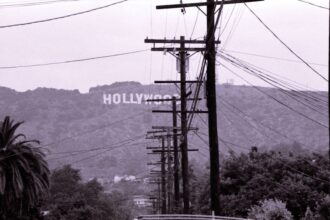
The Central Intelligence Agency’s (CIA) covert involvement in Hollywood productions has been a subject of considerable speculation and occasional verifiable fact for decades. From the Cold War and through the War on Terror, the Agency has, at various points, engaged with filmmakers, screenwriters, and studio executives, seeking to shape narratives and influence public perception. This interaction, often shrouded in secrecy, raises questions about artistic integrity, propaganda, and the boundaries of government influence in cultural industries.
During the Cold War, the battle of ideologies extended far beyond geopolitical borders. The United States and the Soviet Union vied for hearts and minds, and popular culture became an important front in this psychological warfare. Hollywood, with its global reach and powerful storytelling capabilities, was seen by some within the CIA as a strategic asset.
Early Engagements and Operational Security
Initially, the CIA’s involvement was less about direct script rewrites and more about general guidance and informational exchange. The Agency sought to ensure that American films projected a positive image of the country and countered Soviet propaganda. This often involved subtle pressure and the provision of “background information” to interested filmmakers.
One of the earliest documented instances involves the adaptation of George Orwell’s Animal Farm (1954). The animated film, produced by Louis de Rochemont, received covert funding from the CIA’s International Organizations Division. The Agency’s primary interest was in subtly altering the ending to portray a more overtly anti-Soviet message, deviating from Orwell’s original ambiguous conclusion. This early foray established a precedent for a more hands-on approach to narrative manipulation.
The Office of Policy Coordination (OPC) and Cultural Warfare
The Office of Policy Coordination (OPC), a highly secretive Cold War division of the CIA, played a significant role in these early cultural operations. The OPC, often described as a “covert action machine,” recognized the power of culture in shaping public opinion abroad. Its activities included funding magazines, sponsoring art exhibitions, and, crucially, engaging with Hollywood. These efforts were designed to counter Soviet cultural influence and promote American democratic ideals. The reach was global, and the impact, while difficult to quantify precisely, was significant in certain regions.
The “Good Americans” List and Informal Influence
Beyond direct funding, the CIA also cultivated informal relationships with Hollywood figures. This often involved dinners, briefings, and the exchange of ideas. Some producers and screenwriters were seen as “good Americans” who, perhaps out of patriotism or shared ideological convictions, were willing to cooperate with the Agency’s broader objectives. This informal network allowed the CIA to subtly steer narratives without leaving a traceable paper trail. It was a soft power approach, relying on persuasion and shared values rather than overt dictate.
The influence of the CIA on Hollywood has long been a topic of intrigue, particularly regarding how the agency shapes movie scripts to align with its interests. A related article that delves into this phenomenon can be found on In The War Room, which explores various instances where the CIA has collaborated with filmmakers to promote specific narratives. For more insights, you can read the article here: In The War Room.
From Espionage Thrillers to Counter-Terrorism: A Shifting Focus
As the geopolitical landscape evolved, so too did the CIA’s interests in Hollywood. The focus shifted from the broad ideological battles of the Cold War to more specific concerns, such as the portrayal of espionage and, later, counter-terrorism efforts.
The Entertainment Liaison Office (ELO)
In the 1990s, the CIA formalized its relationship with Hollywood through the establishment of the Entertainment Liaison Office (ELO). This office acts as a bridge between the intelligence community and the entertainment industry, providing technical advice, historical context, and access to CIA facilities and personnel for film and television productions. While the ELO asserts its role is purely advisory, critics argue that such close cooperation inevitably leads to self-censorship or favorable portrayals of the Agency. The ELO serves as a central clearinghouse for requests, a gatekeeper for information, and, some suggest, a subtle influencer of narratives. The stated purpose is accuracy; the potential byproduct is narrative control.
“Zero Dark Thirty” and the Enhanced Interrogation Debate
One of the most prominent examples of the CIA’s engagement with a major Hollywood production is Kathryn Bigelow’s “Zero Dark Thirty” (2012). The film, which depicts the hunt for Osama bin Laden, generated considerable controversy for its portrayal of “enhanced interrogation techniques” (EITs), widely considered torture. The filmmakers, notably Mark Boal, were granted unprecedented access to CIA operatives and information.
Critics argued that the film presented a sanitized or even justified view of EITs, potentially due to the CIA’s influence during its production. The debate centered on whether the Agency actively steered the narrative to present EITs as effective in obtaining intelligence. While Bigelow and Boal defended their artistic independence, the level of cooperation and the sensitive nature of the subject matter fueled concerns about propaganda. Some viewed the film as a PR coup for the CIA, a way to reframe a controversial chapter of its history.
The Patriotism Gambit and Recruitment
Beyond specific narratives, the CIA has also been interested in fostering a positive image of the Agency itself, both for public relations and recruitment purposes. Films and television shows that portray CIA operatives as heroic, dedicated, and essential to national security can serve as powerful recruitment tools. The Agency seeks to attract top talent, and a glamorous or noble portrayal in popular culture can significantly aid in this endeavor, much like military recruitment campaigns often leverage patriotic imagery.
Methodologies of Influence: Subtlety and Synergy
The CIA’s methods of influence are rarely crude or overt. Instead, they rely on a combination of subtle strategies and synergistic relationships with compliant or sympathetic individuals within the entertainment industry.
The “Hollywood Handbook” and Narrative Guidance
While no official “Hollywood Handbook” detailing CIA influence exists for public consumption, the Agency’s interactions often involve providing detailed briefings and background materials that can subtly shape a narrative. These materials, presented as factual or historical context, can naturally lead screenwriters down a particular narrative path that aligns with the CIA’s desired messaging. It’s akin to providing a detailed historical brief, knowing full well that certain details will be emphasized or omitted based on the brief’s framing.
The Allure of Authenticity and Exclusive Access
Filmmakers are often drawn to the CIA by the promise of exclusive access and the allure of “authenticity.” The opportunity to consult with real intelligence operatives, visit CIA facilities, and receive insider information is a powerful incentive. However, this access often comes with unspoken, or sometimes explicit, conditions. The Agency can leverage this desire for authenticity to guide the narrative in a direction it deems favorable. It’s a trade-off: unparalleled access in exchange for a degree of narrative conformity.
The Peer Review and Informal Network
Beyond formal channels, a significant amount of influence can occur through informal networks and peer review. Screenwriters and producers often share scripts with trusted contacts, and if those contacts have ties to the intelligence community, subtle suggestions or critiques can be offered. This informal feedback loop can be just as effective as direct intervention, as it appears to come from within the industry itself. This is an ecosystem where ideas are exchanged, tested, and sometimes subtly nudged towards a certain direction by various actors, some of whom may have ties to intelligence.
Ethical Dilemmas and Public Perception
The CIA’s involvement in Hollywood raises significant ethical questions regarding artistic freedom, government propaganda, and informed public consumption of media.
The Perils of Propaganda and Blurred Lines
When a government agency actively seeks to shape fictional narratives, the line between entertainment and propaganda becomes dangerously blurred. The public consumes films and television shows as entertainment, often without being aware of potential external influence. This raises concerns about the manipulation of public opinion and the erosion of journalistic and artistic independence. If entertainment becomes a conduit for state messaging, the very concept of a free and open media is compromised.
The “Hollywood Effect” and Misinformation
The “Hollywood Effect” refers to the tendency for fictional portrayals to shape public understanding of real-world events and institutions. If the CIA is actively influencing these portrayals, it has the potential to create a distorted or sanitized public image of its activities, potentially leading to misinformation and a lack of critical scrutiny. This can be particularly problematic when the Agency’s actions are controversial or morally ambiguous. The silver screen, once a mirror, can become a lens through which an institution projects a carefully curated image.
The Responsibility of Creators and Consumers
Ultimately, the responsibility for navigating this complex terrain rests with both creators and consumers. Filmmakers and screenwriters face an ethical imperative to maintain artistic integrity and resist undue influence. Consumers, in turn, have a responsibility to approach media critically, to question sources, and to be aware of the potential for external influence – a vital form of media literacy in a world saturated with information. The audience, as much as the artist, must be vigilant in discerning fact from fiction, and in understanding the subtle currents that can shape even the most seemingly innocuous entertainment.
The influence of the CIA on Hollywood has long been a topic of intrigue, as many filmmakers have unwittingly incorporated elements shaped by the agency into their scripts. A fascinating exploration of this phenomenon can be found in a related article that delves into how the CIA has worked behind the scenes to ensure that its portrayal in films aligns with its interests. For more insights, you can read the full article here. This connection between national security and entertainment raises important questions about the extent to which creative expression is shaped by external forces.
Conclusion: A Continuous Dialogue
| Metric | Description | Example | Impact on Movie Scripts |
|---|---|---|---|
| Number of Scripts Reviewed | Estimated count of movie scripts reviewed or influenced by the CIA | Over 800 scripts from 1947 to 1992 | Ensured portrayal aligned with agency interests and national security concerns |
| Genres Most Affected | Types of movies where CIA influence was most prevalent | Spy thrillers, political dramas, action films | Shaped narratives to promote positive image of intelligence work |
| Script Changes Requested | Number of suggested or mandated changes to scripts | Varied per project; some scripts heavily altered | Removed sensitive information, altered character portrayals |
| Time Period of Influence | Years during which CIA actively engaged with Hollywood scripts | 1947 – early 1990s | Cold War era heightened collaboration and oversight |
| Notable Films Affected | Famous movies known to have CIA input | “Argo”, “Zero Dark Thirty”, “The Recruit” | Enhanced realism, sometimes controversial portrayal of agency tactics |
The CIA’s secret influence on Hollywood scripts is not a phenomenon confined to a specific historical period; it is an ongoing dynamic. While the methods may evolve, the fundamental motivation – to shape narratives and influence public perception – remains constant. This intricate dance between intelligence agencies and the entertainment industry necessitates continuous scrutiny and open dialogue. As you, the reader, engage with films and television shows depicting the intelligence community, consider the unseen hands that might have, subtly or overtly, shaped the story you are consuming. The narratives presented on screen are not always solely the product of artistic vision; they can often be the result of a complex interplay of creative ambition, commercial pressures, and, at times, strategic governmental objectives.
FAQs
What role does the CIA play in influencing movie scripts?
The CIA often reviews and provides input on movie scripts that involve intelligence operations or portray the agency. This collaboration aims to ensure accuracy, protect classified information, and sometimes shape the portrayal of the agency in a positive light.
How does the CIA collaborate with filmmakers?
The CIA typically works with filmmakers by offering access to agency experts, reviewing scripts, and advising on technical details. In some cases, the agency may request changes to scripts to avoid revealing sensitive information or to influence the narrative.
Are filmmakers required to get CIA approval for movies about intelligence?
No, filmmakers are not legally required to obtain CIA approval. However, many choose to collaborate with the agency to gain access to resources, enhance authenticity, and avoid potential legal or security issues.
Can the CIA reject or alter a movie script?
While the CIA cannot legally force changes, it can request modifications and may withhold cooperation if the script contains content the agency deems harmful to national security or inaccurate. Filmmakers sometimes comply to maintain a working relationship with the agency.
Has the CIA influenced any well-known movies?
Yes, the CIA has influenced several notable films, including “Argo,” “Zero Dark Thirty,” and the James Bond series. In these cases, the agency provided consultation to ensure realistic portrayals and sometimes influenced the narrative to align with its interests.