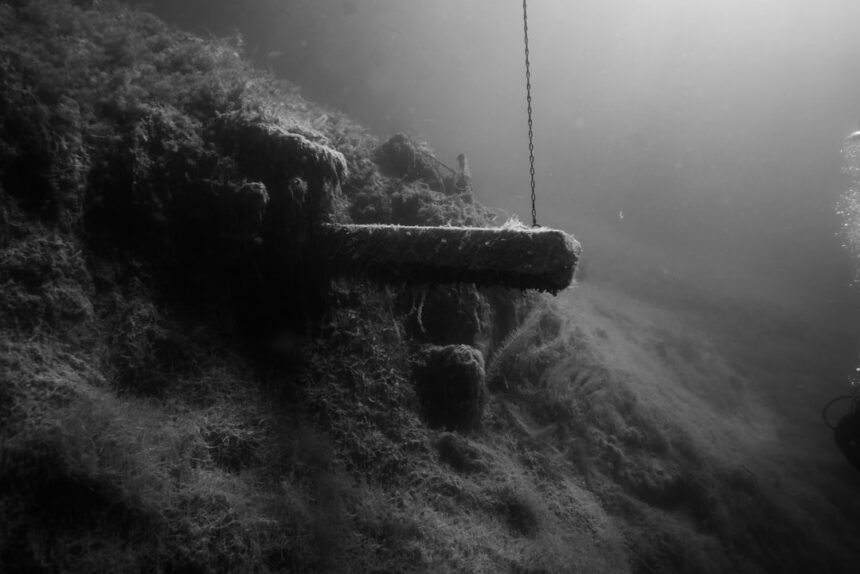
Beneath the waves, a silent and invisible contest unfolds. Vital arteries of the modern world, the vast network of underwater cables, pulse with data, carrying everything from financial transactions to personal communications. These telecommunication highways are the bedrock of global connectivity, yet they are not immune to intrusion. One particularly insidious method employed for unauthorized access is the underwater cable tap using inductive coupling technology. This article delves into the mechanics, implications, and countermeasures associated with this sophisticated form of eavesdropping.
The Ocean’s Veins: Significance of Underwater Cables
Underwater cables are the unsung heroes of our interconnected planet, much like the intricate river systems that support life on land. These submerged conduits, ranging from thin fiber optic strands to thicker power lines, form an indispensable network.
A World Connected: The Scale of the Network
The Backbone of the Internet
The internet, as you know it, would cease to function without these subaquatic arteries. Data packets, the digital equivalent of water droplets, traverse continents and oceans with astonishing speed, courtesy of these cables. A significant portion of global internet traffic, estimated to be over 99%, travels through these physical links.
Global Commerce and Finance
Financial markets, too, rely heavily on the uninterrupted flow of data through underwater cables. High-frequency trading, international banking operations, and the secure transfer of sensitive financial information all depend on these reliable connections. A disruption can have ripple effects reaching far beyond the immediate parties involved, impacting economies on a global scale.
National Security and Intelligence
Beyond civilian use, underwater cables are critical for national defense, military communication, and intelligence gathering. Secure and robust communication channels are paramount for maintaining geopolitical stability and responding to international events. Any compromise of these links can have profound national security ramifications.
Technological Advancements in Cable Systems
The development of underwater cable technology has been a testament to human ingenuity. From early telegraph cables to modern fiber optic systems capable of transmitting terabits per second, the evolution has been remarkable. These cables are often laid at extreme depths, requiring sophisticated engineering and specialized vessels for installation and maintenance.
The Art of the Eavesdrop: Principles of Inductive Coupling
Inductive coupling, at its core, is about harnessing the invisible forces of electromagnetism. It’s akin to listening to a distant radio signal; you don’t need to physically touch the transmitter to receive its broadcast.
Basic Electromagnetism: Faraday’s Discovery
The Principle of Electromagnetic Induction
Inductive coupling relies on a fundamental principle of physics discovered by Michael Faraday: electromagnetic induction. When an electric current flows through a conductor, it generates a magnetic field around it. Conversely, a changing magnetic field can induce an electric current in a nearby conductor.
Current Flow and Magnetic Fields
In an underwater cable, the flow of electrical current, whether carrying data signals or electrical power, creates a magnetic field that emanates outwards. This magnetic field, though often weak, is detectable.
Induced Currents in Nearby Conductors
If another conductor, or a specialized sensing coil, is brought into close proximity with this magnetic field, a small electrical current will be induced within it. This induced current mirrors, albeit in a weakened form, the original current flowing in the cable.
The Underwater Tap: Deploying Inductive Coupling Technology
The application of inductive coupling for underwater cable tapping involves creating a clandestine sensor that can “listen” to the magnetic field of a passing cable without establishing a direct physical connection, thus minimizing the risk of detection.
The Stealthy Approach: Non-Contact Measurement
The Necessity of Non-Intrusiveness
Traditional cable taps often involve physically piercing the cable’s shielding to access the conductors. This is a high-risk operation, prone to detection by cable monitoring systems and potentially causing physical damage. Inductive coupling offers a significant advantage by enabling non-contact data interception.
Magnetic Field Sensing Coils
The core of an inductive tap is a coil of wire designed to maximize its sensitivity to external magnetic fields. When this coil is positioned close to the cable’s magnetic field, it picks up the subtle variations that correspond to the data or power being transmitted.
Signal Amplification and Processing
The induced current in the sensing coil is typically very weak. Therefore, sophisticated amplification and signal processing electronics are required to isolate the desired signal from background noise and to reconstruct the original data. This might involve filtering out common-mode noises and amplifying the faint signals related to data transmission.
Data Decoding and Reconstruction
Once amplified, the signal needs to be decoded. For data cables (like fiber optics, which carry electrical signals for conversion), the focus would be on the encoded binary data. For power cables, while not typically used for sensitive data, the induced signals might reveal load patterns or operational status.
Deployment Strategies: The Submersible Approach
Autonomous Underwater Vehicles (AUVs)
AUVs are increasingly sophisticated robotic submarines capable of independent missions. They can be programmed to patrol target routes, loiter near suspected cable paths, and deploy inductive tap sensors with precision. Their stealth capabilities, with quiet propulsion systems and low visual profiles, make them ideal for clandestine operations.
Remotely Operated Vehicles (ROVs)
ROVs, tethered to a surface vessel, offer another deployment method. While less autonomous than AUVs, they provide direct human control for precise placement and operation, especially in challenging environments. The tether, however, is a potential vulnerability for detection.
Submarine-Based Deployment
Submarines, with their inherent stealth, can also be used to deploy inductive taps. This allows for covert placement in sensitive maritime zones or in close proximity to strategic cables. The submarine can then depart, leaving the passive sensor to collect data over an extended period.
Fixed or Movable Sensors
The sensors can be designed as either temporarily placed devices that are retrieved later, or as semi-permanent installations anchored near the cable path. The choice depends on the operational objectives, duration of surveillance, and risk tolerance.
The Harvested Whispers: Types of Data Intercepted
The nature of the data intercepted by an inductive tap depends heavily on the type of cable being targeted.
Fiber Optic Cables: The Goldmine of Information
Optical vs. Electrical Signals
It is crucial to understand that fiber optic cables primarily transmit data using light pulses. Inductive coupling, as a principle, works by sensing electrical currents and their associated magnetic fields. Therefore, directly tapping the light signals within a fiber optic cable using inductive coupling is not feasible.
The Intercept Point: Network Equipment
However, the story doesn’t end there. Before data enters or after it exits a fiber optic cable, it is converted into electrical signals by transceivers and network equipment. These electrical signals are then processed and transmitted. An inductive tap can be placed near this electrical interface, effectively intercepting these converted electrical signals, not the light within the fiber itself. This means the tap targets the signal at the endpoint equipment or intermediate junctions, rather than the cable itself.
Data Packet Interception
By tapping the electrical signals at these points, adversaries can gain access to the data packets before they are encoded into light or after they are decoded. This can include a wide range of information, from internet traffic and email communications to financial data and voice calls.
Power Cables: Revealing Operational Insights
Monitoring Power Flow
While less directly related to sensitive data interception, inductive coupling is highly effective at monitoring the electrical current flowing through power cables. This can reveal valuable information about energy consumption patterns, industrial activity, and even the operational status of critical infrastructure.
Identifying Usage Patterns
An adversary could, for instance, monitor the power draw of a specific facility or region. Significant spikes or drops in power usage could indicate specific events or activities, providing intelligence without directly accessing communication data.
Coercion and Blackmail Potential
Knowledge of energy usage patterns could potentially be used for economic disruption, blackmail, or to identify exploitable vulnerabilities in energy grids.
The Shadow of Intrusion: Implications and Vulnerabilities
The ability to secretly intercept data flowing through the world’s communication arteries has profound implications, painting a stark picture of potential vulnerabilities.
Espionage and Intelligence Gathering
State-Sponsored Surveillance
The most significant threat comes from state-sponsored actors seeking to gain strategic intelligence. The ability to monitor the communications of rival nations, corporations, or individuals offers a powerful advantage in espionage.
Economic and Industrial Espionage
Beyond national security, inductive coupling taps can be used for economic espionage, allowing competitors to steal trade secrets, proprietary information, and confidential business strategies. This can level the playing field unfairly, leading to significant financial losses for legitimate businesses.
Political and Diplomatic Intrusion
The interception of political communications can undermine diplomatic efforts, influence political outcomes, and expose sensitive governmental processes.
Disruption and Sabotage
Denial of Service
While inductive coupling is primarily for data interception, a sophisticated attacker might explore ways to induce interfering currents or magnetic fields that could disrupt or corrupt the signals in the cable, leading to localized or widespread denial of service.
Information Warfare
In an era of information warfare, the ability to selectively intercept and manipulate information flowing through cables could be used to spread disinformation, sow discord, or undermine public trust.
The Detection Challenge: A Game of Cat and Mouse
The Need for Constant Vigilance
Detecting passive inductive taps is a significant challenge. Unlike active taps that might introduce detectable anomalies in signal strength or introduce extraneous noise, passive inductive coupling aims to be as invisible as possible.
Monitoring for Magnetic Anomalies
Sophisticated monitoring systems are employed by cable operators and national security agencies to detect unusual magnetic field variations around undersea cables. This can involve deploying magnetic anomaly detectors (MADs) from vessels or even using seabed-based sensors.
Analyzing Network Traffic Patterns
While inductive coupling aims to be silent, the act of deploying and operating the eavesdropping equipment – whether AUVs or ROVs – can leave traces. Analyzing the operational patterns of maritime traffic, unusual deployments of underwater vehicles, or unexpected cable access requests can all be indicators.
The Arms Race of Detection and Evasion
This scenario represents a continuous arms race between those seeking to intercept data and those seeking to protect it. As detection methods improve, so too do the techniques for evading them, making it a perpetual challenge to maintain the security of underwater cable networks.
Fortifying the Depths: Countermeasures and Future Directions
Protecting these vital subaquatic arteries requires a multi-layered approach, combining technological innovation with stringent security protocols.
Enhancing Cable Security and Monitoring
Improved Shielding and Armoring
Modern underwater cables are designed with increasingly robust shielding to minimize electromagnetic leakage. However, perfection is an elusive goal, and even residual magnetic fields can be exploited.
Advanced Surveillance Systems
Investment in advanced seabed-based sensor networks, capable of real-time monitoring of electromagnetic activity, is crucial. These systems need to be highly sensitive and capable of distinguishing between natural phenomena and deliberate intrusions.
Regular Cable Inspections and Audits
Periodic physical inspections of cable routes and access points, even if difficult and expensive, can help identify any unauthorized tampering or the presence of suspicious objects.
Cryptography: The Digital Shield
End-to-End Encryption
The most robust defense against data interception, regardless of the method, is strong end-to-end encryption. When data is encrypted from its source to its destination, even if intercepted, it remains unintelligible to unauthorized parties. This is the digital equivalent of burying a message in an uncrackable code.
Key Management and Secure Protocols
The effectiveness of encryption hinges on secure key management practices and the use of robust cryptographic protocols. Compromised keys or flawed protocols can render even the strongest encryption useless.
International Cooperation and Policy
Information Sharing and Threat Intelligence
Effective countermeasures necessitate a high degree of international cooperation. Sharing threat intelligence, best practices, and technological advancements among nations is vital to address a global threat.
Legal Frameworks and Deterrence
Establishing clear legal frameworks for prosecuting underwater cable tapping and ensuring swift and severe penalties for offenders can act as a deterrent.
Technological Innovation: The Next Frontier
Passive Homomorphic Encryption
Future advancements in cryptography, such as fully homomorphic encryption, could allow computations to be performed on encrypted data without decrypting it, offering unprecedented levels of privacy.
Quantum-Resistant Cryptography
With the advent of quantum computing, existing encryption methods may become vulnerable. The development and deployment of quantum-resistant cryptographic algorithms are essential for long-term security.
The Unseen Watchers: The Ever-Present Threat
Underwater cable tapping via inductive coupling represents a persistent and evolving threat to global connectivity and security. The ability to harvest whispers from the ocean’s depths necessitates a continuous commitment to technological advancement, robust security protocols, and vigilant monitoring. Understanding the principles behind this silent intrusion is the first step in fortifying the arteries that connect our world, ensuring the continued flow of information and the stability of our digital age.

WATCH NOW ▶️ SHOCKING: Why the Seafloor Went Silent
FAQs

What is an inductive coupling underwater cable tap?
An inductive coupling underwater cable tap is a device used to access signals from underwater cables without physically cutting or splicing the cable. It works by inductively coupling to the cable’s electromagnetic field, allowing data or power to be extracted or injected safely and efficiently.
How does inductive coupling work in underwater cable taps?
Inductive coupling in underwater cable taps involves placing a coil or sensor near the cable, which detects the magnetic field generated by the current flowing through the cable. This magnetic field induces a voltage in the coil, enabling signal tapping without direct electrical contact or damage to the cable.
What are the advantages of using inductive coupling for underwater cable taps?
The main advantages include non-intrusive access to cable signals, reduced risk of cable damage, ease of installation and removal, and the ability to monitor or inject signals without interrupting cable operation. This method is also beneficial in harsh underwater environments where physical cable access is challenging.
In what applications are inductive coupling underwater cable taps commonly used?
They are commonly used in subsea telecommunications, power transmission monitoring, underwater sensor networks, and marine research. These taps enable data collection, signal monitoring, and maintenance activities without disrupting the underwater cable systems.
Are there any limitations to using inductive coupling underwater cable taps?
Yes, limitations include reduced signal strength compared to direct electrical connections, potential interference from surrounding electromagnetic sources, and the need for precise alignment and proximity to the cable. Additionally, inductive coupling may not be suitable for all cable types or signal frequencies.