The path toward a world free of nuclear weapons is a long and winding one, paved with decades of international negotiation, scientific advancement, and persistent, albeit sometimes faltering, political will. This journey, one that aims to dismantle the most destructive tools ever conceived by humanity, has seen periods of significant progress interspersed with moments of deep concern and renewed tension. Examining global efforts at nuclear disarmament reveals a complex tapestry woven from treaties, diplomatic initiatives, and the ongoing struggle to balance national security with global safety.
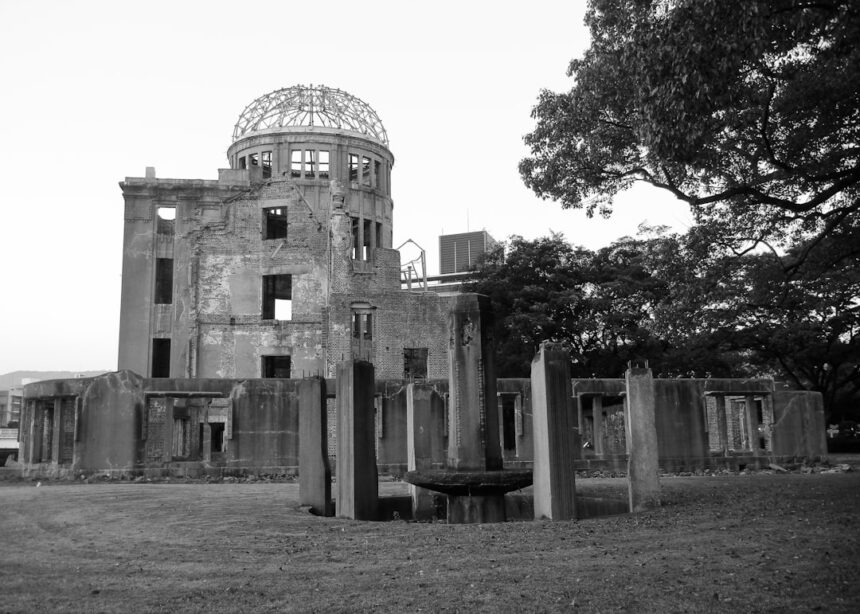
The advent of nuclear weapons in the mid-20th century, a thunderclap that echoed across the globe after the bombings of Hiroshima and Nagasaki, immediately cast a long shadow over international relations. The sheer destructive power unleashed signaled a new era, one where the potential for total annihilation became a tangible, terrifying reality. It was in this crucible of fear that the seeds of disarmament were sown.
The Immediate Post-War Scarcity and Early Concerns
In the immediate aftermath of World War II, the world was still grappling with the devastation of physical conflict. However, the existence of this new, unprecedented weapon quickly superseded conventional worries. The initial discussions around nuclear weapons were largely framed by the burgeoning Cold War. The United States, possessing a monopoly in the early years, wrestled with the implications of its power, while the Soviet Union, driven by its own strategic ambitions and a deep-seated sense of insecurity, pursued its own nuclear program with vigorous determination. This nascent rivalry would come to define the early landscape of nuclear proliferation and, by extension, the initial forays into disarmament.
Early Proposals and the United Nations’ Role
The United Nations, established in the wake of the war with the express purpose of preventing future global catastrophes, became an early forum for discussing nuclear disarmament. The very first General Assembly resolution in 1946 called for the elimination of atomic weapons and the general reduction of armaments. This foundational step, though symbolic at first, laid the groundwork for future multilateral efforts. Various proposals emerged, ranging from the Baruch Plan, which sought international control over atomic energy, to the Soviet Union’s counter-proposals. These early exchanges, while not immediately yielding concrete results, established the principle that nuclear weapons were a matter of global concern, not solely the prerogative of the states that possessed them.
Nuclear disarmament efforts remain a critical topic in global security discussions, and a related article that delves into the complexities of these initiatives can be found at this link: Nuclear Disarmament: Challenges and Opportunities. This article explores the historical context of nuclear weapons, the current state of disarmament treaties, and the various political and social factors that influence progress in reducing nuclear arsenals worldwide.
The Cold War Crucible: Arms Control as a Fragile Peacekeeper
The Cold War era, characterized by intense ideological rivalry and a constant standoff between the United States and the Soviet Union, became the primary theater for nuclear arms control negotiations. While outright disarmament remained a distant ideal, the immediate threat of nuclear war necessitated measures to manage and, to a limited extent, limit the proliferation and deployment of these weapons. Arms control, in this context, served as a pragmatic, albeit precarious, bridge between mutual suspicion and potential obliteration.
Détente and the Dawn of Strategic Arms Limitation Talks (SALT)
As the Cold War evolved, periods of relative thawing, known as détente, offered fleeting opportunities for progress. The Strategic Arms Limitation Talks (SALT I and SALT II) between the US and the USSR were landmark achievements in this phase.
SALT I: A First Step in Limiting the Unlimited
SALT I, signed in 1972, was a pivotal moment. It comprised two main agreements: the Anti-Ballistic Missile (ABM) Treaty and the Interim Agreement on the Limitation of Strategic Offensive Arms. The ABM Treaty, in particular, was a groundbreaking concept. It recognized that an unbounded competition in defensive missile systems could actually increase the risk of war by creating a false sense of security and potentially encouraging a first strike. By limiting defensive capabilities, the treaty aimed to preserve the concept of Mutually Assured Destruction (MAD), a grim but effective deterrent. The Interim Agreement, while less comprehensive, placed limits on the number of strategic offensive nuclear missile launchers.
SALT II: A Deeper Dive, Though Unevenly Ratified
SALT II, signed in 1979, aimed to build upon the foundations of SALT I. It sought to place further limits on various types of strategic nuclear weapons, including intercontinental ballistic missiles (ICBMs), submarine-launched ballistic missiles (SLBMs), and heavy bombers. However, SALT II faced significant political hurdles and was never formally ratified by the United States Senate, largely due to the Soviet invasion of Afghanistan. Despite its lack of ratification, both sides generally adhered to its provisions for a period, demonstrating the lingering influence of arms control agreements even in the absence of formal ratification.
The Intermediate-Range Nuclear Forces (INF) Treaty: A Bold Breakthrough
Perhaps the most significant concrete achievement in nuclear disarmament during the Cold War was the Intermediate-Range Nuclear Forces (INF) Treaty, signed in 1987 between the United States and the Soviet Union. This treaty stands out because it did not merely limit the number of weapons but mandated the elimination of an entire class of nuclear-armed missiles – those with ranges between 500 and 5,500 kilometers.
Negotiating Away Intermediate Threats
The INF Treaty addressed a destabilizing deployment of Soviet SS-20 missiles and then-emerging US Pershing II missiles in Europe. Its success was a testament to sustained diplomatic pressure, a shift in the geopolitical climate, and the personal commitment of leaders like Ronald Reagan and Mikhail Gorbachev. The treaty involved unprecedented verification measures, including on-site inspections, which helped build trust and ensure compliance. Its effectiveness in removing a significant category of nuclear weapons made it a celebrated milestone in the disarmament journey.
The Post-Cold War Landscape: New Challenges and Renewed Aspirations

The dissolution of the Soviet Union in 1991 marked a seismic shift in the global order, and with it, a reevaluation of nuclear disarmament strategies. The bipolar world order that had dominated for decades gave way to a more complex, multipolar environment, presenting both new opportunities and novel challenges for the pursuit of a denuclearized world.
The Nuclear Non-Proliferation Treaty (NPT): The Cornerstone of Global Norms
The Nuclear Non-Proliferation Treaty (NPT), signed in 1968 and entering into force in 1970, remains the bedrock of the global non-proliferation regime. It is a multilateral treaty designed to prevent the spread of nuclear weapons and weapons technology, to promote cooperation in the peaceful uses of nuclear energy, and to further the goal of nuclear disarmament. The NPT operates on a three-pillar system: non-proliferation, peaceful uses of nuclear energy, and disarmament.
Balancing Rights and Responsibilities Within the NPT Framework
The NPT has been remarkably successful in its core objective of limiting the number of states possessing nuclear weapons. Only a handful of states have developed nuclear weapons outside of the treaty’s framework. However, the treaty also contains a bargain: non-nuclear weapon states agree not to acquire nuclear weapons, while nuclear weapon states commit to pursuing disarmament. This disarmament commitment, enshrined in Article VI, has become a persistent point of contention and a driving force behind ongoing diplomatic efforts. The periodic NPT Review Conferences serve as crucial platforms for assessing progress, identifying shortcomings, and charting a path forward.
The Chemical Weapons Convention (CWC) and Biological Weapons Convention (BWC): Expanding the Scope of WMD Disarmament
While the focus has often been on nuclear weapons, the broader international community has also pursued the elimination of other Weapons of Mass Destruction (WMDs). The Chemical Weapons Convention (CWC), which entered into force in 1997, and the Biological Weapons Convention (BWC), which entered into force in 1975, are significant achievements in this regard.
Eradicating Chemical and Biological Threats
The CWC prohibits the development, production, stockpiling, and use of chemical weapons, and mandates their destruction. It is overseen by the Organisation for the Prohibition of Chemical Weapons (OPCW). The BWC prohibits the development, production, and stockpiling of biological and toxin weapons. While the BWC lacks a formal verification mechanism, it has nonetheless established a strong international norm against these weapons. The success of these conventions, though not without their challenges, demonstrates a global consensus on the inherent dangers of WMDs and the imperative of their elimination.
Navigating the Complexities of Verification and Compliance
A central pillar of any disarmament endeavor, particularly concerning weapons of mass destruction, is the ability to verify that states are adhering to their commitments. This is a technically demanding and politically sensitive aspect of arms control, akin to ensuring that a complex machinery is truly dismantled, piece by piece, without any hidden components remaining to be reassembled.
The Challenge of Proliferation and the Role of International Atomic Energy Agency (IAEA)
The proliferation of nuclear technology and materials beyond the declared nuclear weapon states presents a persistent challenge. The International Atomic Energy Agency (IAEA) plays a critical role in this landscape, serving as the world’s center for cooperation in nuclear science and technology and, crucially, implementing safeguards under NPT.
IAEA Safeguards: The Watchful Eye and the Reporting Mechanism
IAEA safeguards are a system of inspection and monitoring designed to detect, deter, and report any diversion of nuclear material from peaceful uses to nuclear explosive devices. The Agency conducts on-site inspections, analyzes accounting data, and uses advanced monitoring equipment to ensure that nuclear activities in non-nuclear weapon states remain strictly for peaceful purposes. The effectiveness of IAEA safeguards is paramount to maintaining the integrity of the non-proliferation regime.
On-Site Inspections and Advanced Monitoring Techniques
Effective verification relies on a combination of on-site inspections and sophisticated remote monitoring. For treaties like the INF Treaty, on-site inspections were crucial for physically verifying the destruction of missiles. In the nuclear realm, advanced techniques such as seismic monitoring, satellite imagery, and environmental sampling are employed to detect undeclared nuclear activities. The continuous development of these verification technologies is essential to build confidence and ensure compliance.
Nuclear disarmament efforts have gained renewed attention in recent years, as global leaders recognize the urgent need to reduce the threat of nuclear conflict. A recent article discusses the challenges and progress made in this critical area, highlighting the importance of international cooperation and dialogue. For more insights on this topic, you can read the article on nuclear disarmament efforts and their implications for global security.
Emerging Challenges and Future Directions
| Year | Event/Agreement | Participating Countries | Key Metrics | Impact on Nuclear Arsenal |
|---|---|---|---|---|
| 1968 | Nuclear Non-Proliferation Treaty (NPT) | 191 (current parties) | Prevent spread of nuclear weapons; promote peaceful use of nuclear energy | Limited new nuclear states; promoted disarmament dialogue |
| 1991 | START I (Strategic Arms Reduction Treaty) | USA, USSR (later Russia) | Reduction of deployed strategic nuclear warheads by ~35% | Reduced deployed warheads from ~10,000 to ~6,000 per side |
| 2010 | New START Treaty | USA, Russia | Limits deployed strategic warheads to 1,550 each | Further reduction and verification measures |
| 2017 | Treaty on the Prohibition of Nuclear Weapons (TPNW) | 122 signatories (as of 2024) | Complete ban on nuclear weapons | Symbolic impact; no nuclear-armed states signed |
| 2023 | Global Nuclear Disarmament Index | 195 countries assessed | Measures commitment to disarmament policies and treaties | Varied progress; some reductions, ongoing modernization |
The landscape of nuclear disarmament is not static. New geopolitical realities, technological advancements, and evolving security concerns continually shape the path forward. The international community faces the daunting task of adapting its strategies to address these emerging challenges.
The Threat of New Nuclear Powers and Regional Conflicts
The emergence of new nuclear-armed states, or the potential for existing states to develop nuclear weapons, significantly complicates disarmament efforts. Furthermore, regional conflicts involving states with nuclear arsenals, or those aspiring to acquire them, create flashpoints that can imperil global security. These situations demand delicate diplomatic interventions and robust non-proliferation strategies.
The Impact of Technological Advancements and Cyber Threats
Technological advancements, including the development of precision-guided conventional weapons, artificial intelligence in warfare, and the growing threat of cyberattacks on nuclear command and control systems, introduce new dimensions to nuclear deterrence and disarmament. The potential for miscalculation or accidental escalation in a cyber-warfare scenario involving nuclear-armed states is a grave concern.
The Push for a Nuclear Weapons Convention: A Gradual Ascent
While the NPT remains the cornerstone of the non-proliferation regime, there is a growing momentum behind the call for a comprehensive Nuclear Weapons Convention (NWC). This ambitious proposal advocates for a legally binding international treaty that would prohibit the development, production, stockpiling, transfer, use, and threat of use of nuclear weapons, and mandate their elimination.
The Treaty on the Prohibition of Nuclear Weapons (TPNW): A Moral Imperative and a Diplomatic Lever
The Treaty on the Prohibition of Nuclear Weapons (TPNW), adopted in 2017 and entering into force in 2021, represents a significant, albeit controversial, development in this regard. Drafted and championed by a coalition of non-nuclear weapon states and civil society organizations, the TPNW aims to stigmatize and eventually eliminate nuclear weapons, building on the humanitarian consequences of their use. While none of the nuclear-weapon states have so far joined the TPNW, its existence serves as a powerful moral imperative and a diplomatic lever, pushing the disarmament agenda forward and highlighting the growing international consensus against nuclear weapons. The TPNW’s success will depend on its ability to catalyze further political action and to eventually bridge the divide between nuclear-armed and non-nuclear-armed states.
The journey toward nuclear disarmament is not a sprint, but a marathon. It is a continuous process of negotiation, verification, and political will, fraught with setbacks and triumphs. The global efforts, though varied and often challenging, underscore a fundamental aspiration: to consign the shadow of the bomb to history, and to build a future where the specter of nuclear annihilation no longer looms over humanity.
FAQs
What is nuclear disarmament?
Nuclear disarmament refers to the process of reducing or eliminating a country’s nuclear weapons arsenal with the goal of achieving a world free of nuclear weapons. It involves negotiations, treaties, and agreements aimed at controlling and eventually abolishing nuclear arms.
Which international treaties focus on nuclear disarmament?
Key international treaties include the Treaty on the Non-Proliferation of Nuclear Weapons (NPT), the Comprehensive Nuclear-Test-Ban Treaty (CTBT), and various bilateral agreements such as the Strategic Arms Reduction Treaty (START) between the United States and Russia.
What are the main challenges to nuclear disarmament?
Challenges include geopolitical tensions, concerns over national security, verification and compliance issues, and the reluctance of some nuclear-armed states to fully commit to disarmament due to strategic and political considerations.
Which countries currently possess nuclear weapons?
As of now, nine countries are known to possess nuclear weapons: the United States, Russia, China, France, the United Kingdom, India, Pakistan, North Korea, and Israel (though Israel has not officially confirmed its arsenal).
How do verification and monitoring work in nuclear disarmament efforts?
Verification involves monitoring compliance with disarmament agreements through inspections, satellite surveillance, and data exchanges. Organizations like the International Atomic Energy Agency (IAEA) play a key role in ensuring that countries adhere to treaty obligations and do not develop or retain prohibited nuclear weapons.