The uncanny whisper of the mole, a creature driven by subterranean instincts and armed with a relentless digging capacity, might seem a world away from the earth-shattering power of nuclear arsenals. Yet, delve into the strategic underpinnings of nuclear deterrence, and one begins to perceive a surprising, albeit metaphorical, role that the “mole” plays, not as a literal creature, but as an archetype representing certain key strategic considerations and actors within the complex edifice of nuclear security. This article will explore how the concept of the mole, in its varied interpretations of stealth, buried capabilities, and persistent agents of influence, illuminates critical aspects of nuclear deterrence, from the genesis of weapons programs to the subtle manipulations of international relations.
The development of nuclear weapons is a monumental undertaking, requiring vast resources, specialized knowledge, and, crucially, secrecy. During the formative years of nuclear proliferation, and even in contemporary efforts to acquire or retain such capabilities, the notion of the “mole” as a hidden, burrowing entity becomes paramount. Nations seeking to develop nuclear weapons often operate under intense international scrutiny. The imperative to operate in the shadows, to deny any observable evidence of progress, mirrors the mole’s existence beneath the surface, unseen and undetected.
The Vault of Secrecy: Securing Nuclear Materials and Knowledge
The acquisition and processing of fissile materials, such as enriched uranium and plutonium, are the bedrock of any nuclear weapons program. This process is inherently resource-intensive and leaves a tangible footprint. Therefore, for nations aiming to circumvent international safeguards and inspections, the concept of the “mole” takes on a physical dimension. It represents the clandestine facilities, the hidden laboratories, and the discreet mining operations that enable the production of these materials. These are the subterranean arteries of a nascent nuclear capability, pumping lifeblood into proliferation efforts.
The challenge for international monitoring bodies lies in detecting these hidden ventures. Unlike above-ground facilities that require significant infrastructure and energy, underground complexes offer a degree of natural camouflage. The mole’s ability to excavate vast networks of tunnels and chambers provides a conceptual blueprint for how such sensitive operations can be concealed, making early detection and intervention exceedingly difficult. The sheer effort to dig, to create a hidden sanctuary for scientific and technical endeavors, reflects a profound commitment to the nuclear goal, often driven by existential security concerns or regional power aspirations.
The Unseen Hand: Espionage and Information Warfare
Beyond the physical infrastructure, the “mole” also represents the indispensable human element in the clandestine pursuit of nuclear technology. This refers to individuals, often highly skilled scientists, engineers, or technicians, who act as agents of proliferation, either intentionally or unknowingly, by providing critical information or assistance. These are the intellectual moles, burrowing into the scientific establishments of other nations or leveraging existing networks to acquire blueprints, design specifications, or even raw scientific data.
The flow of sensitive information is the invisible currency of nuclear development. A single, well-placed individual can unlock decades of research for a program that would otherwise take exponentially longer to achieve. This makes intelligence gathering and counter-intelligence efforts a crucial battleground in the broader struggle against nuclear proliferation. The “mole” in this context is not just a physical entity but a strategic concept representing the infiltration of knowledge, the subtle transfer of expertise, and the exploitation of informational asymmetries. The success of a “mole” can be the difference between a nation remaining nuclear-free or joining the exclusive, and often ominous, club of nuclear powers.
In the context of nuclear deterrence, the concept of “Moles” can be explored further in the article titled “The Role of Espionage in Nuclear Strategy,” which discusses how intelligence operations can influence nuclear policy and deterrence strategies. For a deeper understanding of this topic, you can read the article here: The Role of Espionage in Nuclear Strategy. This piece delves into the intricate relationship between intelligence gathering and the effectiveness of nuclear deterrence, highlighting the importance of understanding adversaries’ capabilities and intentions.
The Buried Arsenal: Second-Strike Capabilities and Survivability
Once nuclear weapons have been developed, their deterrent value hinges on their survivability. The concept of the “mole” as a metaphor for a deeply buried, resilient arsenal speaks directly to the principle of second-strike capability, a cornerstone of stable nuclear deterrence. A nation’s nuclear forces must be able to withstand a first strike from an adversary and still possess enough retaliatory power to inflict unacceptable damage.
The Silo as the Molehill: Hardened Launchers
The most direct physical manifestation of the “mole” in this context is the hardened missile silo. These subterranean structures are designed to protect Intercontinental Ballistic Missiles (ICBMs) from the direct effects of a nuclear explosion. The immense concrete and steel fortifications, buried deep within the earth, are akin to the mole’s extensive burrowing system, designed to withstand external pressures and shocks. The silo serves as a protective shell, a fortified molehill from which the retaliatory strike can be launched.
The effectiveness of these hardened silos lies in their ability to absorb immense destructive energy. Survivability is paramount; a first strike must not be able to eliminate a nation’s entire nuclear retaliatory force. By burying their most potent weapons deep underground, nations create a credible threat of retaliation, thus increasing the perceived cost of aggression for any potential adversary. The silent, unseen presence of these buried missiles acts as a constant deterrent, a hidden threat lurking beneath the peace.
The Mobile Menace: Submarine-Launched Ballistic Missiles (SLBMs)
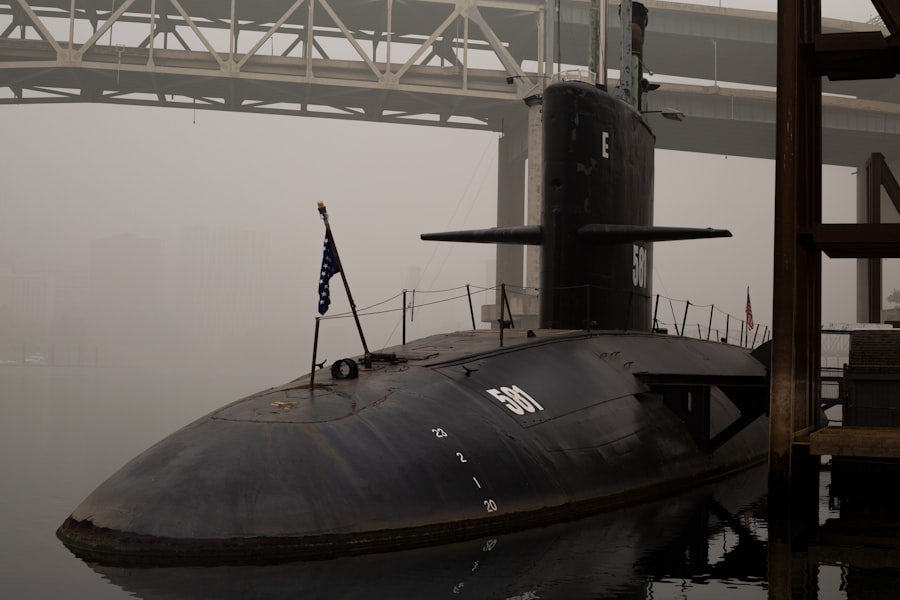
Beyond fixed silos, the “mole” concept also extends to mobile and elusive nuclear platforms, most notably Submarine-Launched Ballistic Missiles (SLBMs). Submarines, operating in the vast, three-dimensional expanse of the oceans, are inherently difficult to track and target. They represent a form of “liquid stealth,” a mobile burrowing capability that can evade detection for extended periods.
The strategic advantage of SLBMs lies in their survivability and their ability to conduct a retaliatory strike from a dispersed and unpredictable location. Unlike fixed silos that are vulnerable to pre-emptive attacks, a submerged submarine can move and hide, ensuring its operational readiness even in the face of a massive nuclear assault. The silent patrol of these nuclear submarines, like unseen moles navigating the ocean depths, represents a critical element in maintaining a credible second-strike capability, thus reinforcing the balance of mutual assured destruction. The sheer scale of the ocean provides an immense “molehill” for these underwater predators, making their location a constant uncertainty for potential aggressors.
The Shadowy Agents: Covert Operations and Information Manipulation
The “mole” also embodies a more insidious aspect of nuclear strategy: the realm of covert operations and information warfare designed to influence perceptions, sow discord, or disrupt adversaries’ strategic calculations. These are not always direct military actions but subtle, often clandestine, efforts to achieve strategic objectives.
The Whispers of Disinformation: Psychological Operations
In the nuclear age, perceptions and beliefs can be as potent as any weapon system. The “mole” can be interpreted as an actor engaged in psychological operations, disseminating disinformation and propaganda to shape public opinion or governmental decision-making in adversarial nations. This can involve spreading rumors, fabricating evidence, or amplifying existing societal divisions to weaken an adversary’s resolve or create internal instability.
The goal of these “moles” of influence is to erode confidence in existing nuclear postures, to sow doubt about the efficacy of deterrence, or to create a political climate that is less conducive to strategic stability. This is a form of intellectual burrowing, seeking to undermine the foundations of an adversary’s strategic thinking and thereby weaken their deterrent posture without the use of overt force. The subtlety of these operations makes them incredibly difficult to attribute and counter, much like a mole’s unseen tunneling.
The Sabotage of Systems: Cyber Warfare and Technical Intrusion
In the modern era, the “mole” has found a new and potent form of expression in the domain of cyber warfare. Covert actors can infiltrate computer networks, disrupt command and control systems, or even tamper with the operational integrity of nuclear weapons systems. These are the digital moles, burrowing into the electronic infrastructure that underpins a nation’s security.
The aim of such cyber intrusions is to create uncertainty and to degrade an adversary’s ability to respond effectively in a crisis. By subtly altering data, delaying communications, or even disabling critical systems, these “digital moles” can create confusion and paralysis, potentially forcing an adversary to miscalculate or hesitate in a high-stakes scenario. The interconnectedness of modern military systems makes them vulnerable to this type of insidious attack, where the damage can be inflicted remotely and without a physical footprint, much like a mole’s unseen disturbance of the soil.
The Long Game: Maintaining Deterrence Through Evolutionary Adaptation
The role of the “mole” in nuclear deterrence is not static; it evolves alongside technological advancements and geopolitical shifts. The enduring nature of nuclear deterrence, its ability to persist across decades, is partly due to the continuous adaptation of “mole-like” strategies and capabilities.
The Arms Race as a Continuous Digging Process
The history of nuclear deterrence is intrinsically linked to an ongoing arms race, a perpetual cycle of innovation and counter-innovation. Both offensive and defensive capabilities are constantly being developed and refined. This relentless pursuit of strategic advantage can be likened to a continuous digging process, where each side attempts to outmaneuver the other by creating deeper, more secure, or more elusive capabilities.
The “mole” in this context represents the ongoing effort to stay ahead of the curve. It is the drive to develop new methods of concealment, new ways to project power, and new strategies to ensure survivability. This is a game of inches, where marginal improvements in a particular technology or strategy can have significant implications for the overall balance of deterrence. The arms race is a subterranean conflict, hidden from casual view, where the most impactful advancements often occur beneath the surface.
The Unseen Watchers: Intelligence and Verification
Conversely, the “mole” also plays a crucial role in the efforts to prevent the proliferation and misuse of nuclear weapons. Intelligence agencies, often operating in the shadows, are the “moles” that seek to uncover clandestine nuclear activities by other states. Their work in gathering information, monitoring missile tests, and verifying arms control agreements is essential for maintaining a degree of stability and transparency in a dangerous world.
These intelligence-gathering “moles” are the counterforce to the proliferation-driven “moles.” They are the unseen eyes and ears that try to penetrate the secrecy surrounding nuclear programs. Their success or failure can have profound implications for international security. The delicate dance between those seeking to hide and those seeking to uncover is a perpetual feature of the nuclear landscape, analogous to a complex ecosystem of burrowing creatures, each with its own survival imperative.
In the context of nuclear deterrence, the concept of Moles plays a crucial role in understanding the dynamics of espionage and intelligence within military frameworks. A related article that delves deeper into this topic can be found at this link, where it explores the implications of insider threats on national security and the strategies employed to mitigate such risks. By examining these elements, we can gain a clearer insight into how Moles can influence the stability of nuclear deterrence strategies.
Conclusion: The Enduring Metaphor of the Mole in Nuclear Strategy
| Metric | Description | Relevance to Nuclear Deterrence | Example/Value |
|---|---|---|---|
| Moles (Unit of Substance) | Amount of substance containing Avogadro’s number of particles (6.022 x 10^23) | Used to quantify nuclear material in weapons and reactors | 1 mole of Uranium-235 ≈ 235 grams |
| Critical Mass | Minimum amount of fissile material needed to sustain a nuclear chain reaction | Determines the quantity of moles required for weapon design | ~52 kg of U-235 (~0.22 moles) |
| Fission Energy per Mole | Energy released by fission of one mole of fissile atoms | Calculates total yield of nuclear weapons | ~8.2 x 10^10 Joules per mole of U-235 |
| Neutrons Released per Fission | Average number of neutrons emitted per fission event | Influences chain reaction sustainability and weapon efficiency | ~2.5 neutrons per fission |
| Half-life of Fissile Material | Time taken for half the atoms in a sample to decay | Affects long-term stability and stockpile management | U-235: 7.04 x 10^8 years |
In conclusion, the seemingly humble mole, with its subterranean existence and relentless digging prowess, offers a surprisingly potent and enduring metaphor for understanding the intricate and often hidden dimensions of nuclear deterrence. From the clandestine development of weapons programs and the secure concealment of arsenals to the subtle art of information warfare and the continuous adaptation of strategic capabilities, the “mole” embodies the essential elements of secrecy, survivability, and persistent influence that define the nuclear age.
The reader must recognize that this is not a literal discussion of the animal kingdom influencing geopolitical strategy. Instead, the “mole” serves as a conceptual lens through which we can examine the profound importance of what lies beneath the surface in the realm of nuclear security. It highlights how the ability to conceal, to endure, and to exert influence from unseen positions is not merely a secondary concern but a fundamental determinant of a nation’s strategic posture and the delicate equilibrium of global peace. The unseen actions of these metaphorical “moles” continue to shape the very foundations of international relations, reminding us that in the shadow of nuclear weapons, the most critical battles are often fought in the dark, far from public view.
FAQs
What is the role of moles in nuclear deterrence?
Moles, or covert agents, can play a critical role in nuclear deterrence by infiltrating adversary organizations to gather intelligence on nuclear capabilities, plans, and intentions. This information helps a country assess threats accurately and maintain credible deterrence.
How do moles contribute to the effectiveness of nuclear deterrence strategies?
Moles provide valuable inside information that can reveal an opponent’s nuclear arsenal size, deployment status, and technological advancements. This intelligence allows for informed decision-making, ensuring that deterrence postures are credible and responsive to actual threats.
Are moles commonly used in nuclear intelligence operations?
Yes, intelligence agencies have historically used moles as part of their efforts to monitor nuclear programs of rival states. While risky, human intelligence from moles complements technical surveillance methods and can uncover details that are otherwise inaccessible.
What risks are associated with using moles in nuclear deterrence contexts?
The use of moles carries significant risks, including exposure, betrayal, and diplomatic fallout. If a mole is discovered, it can lead to loss of trust, compromised intelligence, and escalation of tensions between nuclear-armed states.
Can moles influence nuclear arms control and non-proliferation efforts?
Yes, intelligence gathered by moles can inform arms control negotiations and non-proliferation initiatives by verifying compliance or detecting violations. Accurate intelligence supports verification mechanisms and helps maintain strategic stability.