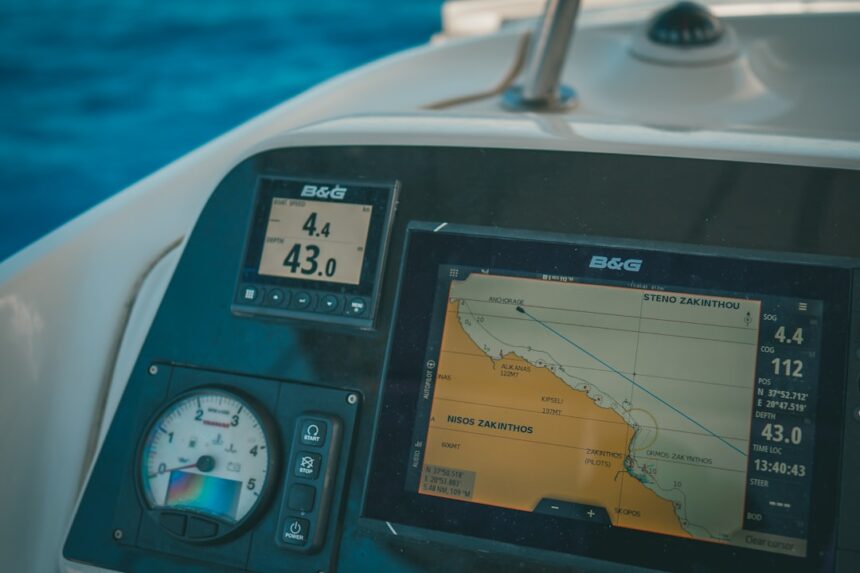
The boundless expanse of the world’s oceans and the intricate geological formations beneath the Earth’s surface have long presented formidable challenges to exploration. Historically, understanding these submerged and subterranean environments relied heavily on rudimentary techniques, offering limited insights into their composition and structure. However, the advent and continuous refinement of sonar technology have revolutionized this landscape, providing researchers, engineers, and explorers with unprecedented capabilities to “see” through natural barriers. This article delves into the principles, applications, and advancements of sonar technology, highlighting its pivotal role in uncovering the depths.
Sonar, an acronym for Sound Navigation and Ranging, operates on the principle of echolocation, mirroring the sensory capabilities of certain animals like bats and dolphins. At its core, sonar involves the emission of sound waves and the subsequent detection and analysis of their echoes.
Sound Wave Generation and Propagation
The process begins with a transducer, a device capable of converting electrical energy into acoustic energy and vice-versa. This transducer emits a pulse of sound waves, often at ultrasonic frequencies, which then travel through a medium, typically water or rock. The speed at which these sound waves propagate is dependent on the properties of the medium, such as its density, temperature, and salinity. In water, for instance, sound travels significantly faster than in air, typically around 1,500 meters per second.
Echo Detection and Analysis
When these sound waves encounter an object or a change in the medium’s density, a portion of the sound energy is reflected back towards the source as an echo. The transducer then receives these echoes, converting them back into electrical signals. Sophisticated electronic circuits and software analyze these signals, measuring the time elapsed between the emission of the original pulse and the reception of its echo. This time delay, coupled with the known speed of sound in the propagation medium, allows for the precise calculation of the distance to the reflecting object. The strength and frequency of the returning echoes also provide crucial information about the size, shape, and material composition of the encountered object. For example, a hard, smooth surface will produce a stronger, more distinct echo than a soft, irregular one.
Types of Sonar Systems
Sonar systems are broadly categorized into active and passive types. Active sonar actively transmits sound waves, while passive sonar solely listens for naturally occurring or artificially generated sounds. Both types have distinct applications and limitations. Active sonar is akin to shining a flashlight into the darkness, revealing what is illuminated, whereas passive sonar is more like listening for faint whispers in a silent room.
Sonar technology has revolutionized underwater exploration and naval operations, providing critical data for various applications. For those interested in learning more about the advancements and applications of sonar technology, a related article can be found at In the War Room, which discusses the strategic implications of sonar in modern warfare and maritime security.
Sonar in Marine Exploration
The maritime domain has been the primary beneficiary of sonar technology, transforming how humans interact with and understand the underwater world. From mapping the ocean floor to locating submerged objects, sonar has become an indispensable tool.
Bathymetric Mapping and Seafloor Characterization
One of the most significant applications of sonar in marine exploration is bathymetric mapping, the detailed charting of the ocean floor. Multibeam echosounders, a sophisticated form of active sonar, emit multiple sound beams simultaneously in a fan-shaped pattern, covering a wide swath of the seafloor with each sweep. This technology allows for the creation of incredibly detailed topographical maps, revealing submerged mountain ranges, deep-sea trenches, and vast abyssal plains with unprecedented accuracy. These maps are invaluable for navigation, understanding oceanographic processes, and identifying potential geological hazards.
Underwater Object Detection and Recovery
Sonar plays a critical role in locating and identifying man-made objects beneath the waves, ranging from sunken vessels and aircraft to lost cargo and unexploded ordnance. Side-scan sonar, in particular, is highly effective for this purpose. It emits sound waves to the sides of the survey vessel, creating an acoustic “image” of the seafloor that reveals variations in texture and relief, highlighting objects protruding from or embedded within the seabed. The recovery of historical artifacts, such as ancient shipwrecks, often begins with a side-scan sonar survey.
Fisheries Management and Marine Biology
In the realm of marine biology and fisheries management, sonar is an essential tool for assessing fish stocks and understanding marine ecosystems. Fisheries sonar, frequently operating at higher frequencies, can detect schools of fish, differentiate between species based on their acoustic signatures, and estimate their biomass. This data is crucial for sustainable fishing practices, helping to prevent overfishing and ensuring the long-term health of marine populations. Furthermore, sonar can track the migratory patterns of marine animals and monitor changes in their habitat.
Sonar in Subsurface Geology
While its marine applications are widely recognized, sonar technology, often in the form of seismic reflection and refraction, is also a cornerstone of subsurface geological exploration. Here, sound waves, specifically seismic waves, are used to probe the Earth’s crust.
Seismic Reflection and Refraction Surveys
Seismic surveys involve generating sound waves, typically through controlled explosions or specialized vibrator trucks, and measuring the time it takes for these waves to reflect or refract off different layers of rock beneath the surface. Seismic reflection works by analyzing the echoes that bounce back from interfaces between rock layers with varying acoustic impedances (a measure of how stiff a material is and how quickly sound travels through it). This allows geologists to create detailed cross-sectional images of the subsurface, revealing geological structures such as faults, folds, and sedimentary basins. Seismic refraction, on the other hand, measures the travel times of waves that have been refracted (bent) through different layers, providing information about the depths and velocities of these layers.
Oil and Gas Exploration
The discovery and assessment of economically viable oil and gas reserves heavily rely on seismic surveys. Hydrocarbon reservoirs are often found in specific geological formations, and seismic data provides the “roadmap” to these subterranean structures. By interpreting the seismic reflections, geophysicists can identify potential traps for hydrocarbons, estimate the size and shape of reservoirs, and even infer the fluid content within the rock pores. The precision of these surveys has drastically improved drilling success rates and reduced exploration costs.
Geotechnical Engineering and Hazard Assessment
Seismic methods are also integral to geotechnical engineering, providing crucial information for infrastructure projects. Engineers use shallow seismic surveys to determine the depth to bedrock, assess soil stability, and identify potential geological hazards like sinkholes or unstable ground before construction. This data informs foundation design for buildings, bridges, and other critical infrastructure, ensuring their safety and longevity. Additionally, seismic surveys are employed to monitor active fault lines and assess earthquake risks.
Technological Advancements in Sonar
The evolution of sonar technology has been continuous, driven by advancements in computing power, signal processing, and material science. These innovations have led to more accurate, efficient, and versatile sonar systems.
High-Resolution Imaging Sonar
Recent decades have witnessed significant strides in the development of high-resolution imaging sonar. Synthetic Aperture Sonar (SAS) is a notable example, analogous to Synthetic Aperture Radar (SAR). SAS systems combine multiple acoustic pings from different positions as the sonar platform moves, effectively creating a much larger virtual aperture than the physical array. This technique dramatically improves the cross-track resolution of the sonar image, providing photographic-quality details of the seafloor and submerged objects, even in murky conditions. The clarity provided by SAS is akin to swapping a blurry snapshot for a crisp, high-definition photograph.
Autonomous Underwater Vehicles (AUVs) and Unmanned Surface Vehicles (USVs)
The integration of sonar systems with Autonomous Underwater Vehicles (AUVs) and Unmanned Surface Vehicles (USVs) represents a paradigm shift in marine exploration. These unmanned platforms can carry sophisticated sonar payloads, operating autonomously for extended periods in remote or hazardous environments, minimizing human risk and reducing operational costs. AUVs can survey vast areas of the ocean floor, conduct detailed inspections of underwater infrastructure, and even explore beneath polar ice caps, pushing the boundaries of what is possible in marine research. Similarly, USVs equipped with sonar can perform shallow-water surveys and monitor coastal environments with enhanced efficiency.
Environmental Monitoring and Multidisciplinary Applications
Beyond traditional exploration, sonar is finding increasing application in environmental monitoring. Acoustic Doppler Current Profilers (ADCPs), for example, use the Doppler effect to measure water current velocities at various depths, providing crucial data for understanding ocean circulation patterns, sediment transport, and pollution dispersal. Sonar is also used to monitor the health of coral reefs, track the movement of marine debris, and even listen for the presence of specific marine species, contributing to a holistic understanding of our planet’s complex ecosystems. It serves as an ear to the ocean’s heartbeat, listening to its subtle changes.
Sonar technology has revolutionized various fields, particularly in marine exploration and underwater navigation. For those interested in a deeper understanding of its applications, a related article can be found at this link, which explores the advancements and challenges faced in the realm of sonar systems. As researchers continue to innovate, the potential for sonar technology to enhance our understanding of the ocean depths remains vast and exciting.
Challenges and Future Directions
| Metric | Description | Typical Value | Unit |
|---|---|---|---|
| Frequency Range | Operating frequency of sonar signals | 1 – 500 | kHz |
| Detection Range | Maximum distance at which objects can be detected | 1,000 – 20,000 | meters |
| Resolution | Ability to distinguish between two close objects | 0.1 – 1 | meters |
| Pulse Length | Duration of the sonar pulse | 0.1 – 10 | milliseconds |
| Beamwidth | Angular width of the sonar beam | 1 – 30 | degrees |
| Source Level | Intensity of the emitted sonar signal | 180 – 230 | dB re 1 μPa @ 1m |
| Operating Depth | Maximum depth at which sonar can operate effectively | 0 – 6,000 | meters |
Despite its remarkable capabilities, sonar technology continues to face challenges, primarily related to environmental factors and the inherent complexities of sound propagation.
Environmental Limitations and Acoustic Interference
The effectiveness of sonar can be significantly impacted by environmental conditions. Water column stratification (layers of water with different temperatures, salinities, or pressures) can cause sound waves to refract or reflect in unpredictable ways, leading to distorted images or “shadow zones” where targets cannot be detected. Acoustic interference from ship noise, marine life, and even adverse weather conditions can also degrade sonar performance. In subsurface geology, the heterogeneity of rock formations and the presence of complex stratigraphy can make accurate interpretation of seismic data challenging. It is akin to trying to read a book in a language you only partially understand.
Minimizing Environmental Impact
A growing concern surrounding active sonar is its potential impact on marine life, particularly large marine mammals that rely on sound for navigation, communication, and hunting. High-intensity sonar pulses can disrupt their behavior, cause disorientation, and in extreme cases, lead to auditory damage or stranding. Researchers and regulatory bodies are actively working on developing quieter sonar systems, implementing mitigation strategies, and establishing exclusion zones to minimize these risks, striving for a balance between exploration and environmental stewardship.
Quantum Sonar and Machine Learning
Looking ahead, future advancements in sonar technology are likely to focus on several key areas. Quantum sonar, a nascent field, promises unprecedented levels of sensitivity and resolution by leveraging quantum mechanical properties of sound waves. The integration of artificial intelligence and machine learning algorithms will also revolutionize data processing and interpretation, enabling faster and more accurate identification of targets and geological features. Furthermore, the development of even more miniaturized and energy-efficient sonar systems will expand their deployment in new and challenging environments, from deep-sea vents to subterranean cave systems, effectively shining a brighter light into the unknown.
In conclusion, sonar technology has fundamentally reshaped humanity’s ability to explore and understand the hidden realms beneath the water and within the Earth’s crust. From mapping the abyssal plains to pinpointing subterranean oil reservoirs, its applications are vast and varied. As technology continues to evolve, pushing the boundaries of what is acoustically perceptible, sonar will undoubtedly remain at the forefront of uncovering the depths, providing ever-clearer glimpses into the mysteries that lie beyond direct human observation.
FAQs
What is sonar technology?
Sonar technology is a technique that uses sound waves to detect and locate objects underwater. It works by emitting sound pulses and measuring the time it takes for the echoes to return after bouncing off objects.
How does sonar technology work?
Sonar systems send out sound waves that travel through water. When these waves hit an object, they reflect back to the sonar receiver. By calculating the time delay and the strength of the returned signal, the system can determine the distance, size, and shape of the object.
What are the main types of sonar?
There are two main types of sonar: active and passive. Active sonar emits sound pulses and listens for echoes, while passive sonar only listens for sounds made by other objects, such as marine life or submarines.
What are common applications of sonar technology?
Sonar is widely used in marine navigation, underwater mapping, fishing, submarine detection, and scientific research. It helps in locating underwater hazards, mapping the ocean floor, and studying marine ecosystems.
What are the limitations of sonar technology?
Sonar performance can be affected by water conditions such as temperature, salinity, and pressure. It may also have difficulty detecting objects in noisy environments or in areas with complex underwater terrain. Additionally, sonar signals can sometimes disturb marine life.